This error usually indicates a problem with the temperature sensor circuit. Although some basic checks may help, persistent E2 errors often require professional repair because they involve internal electrical components.
What Does the E2 Error Mean on an Instant Vortex Air Fryer?
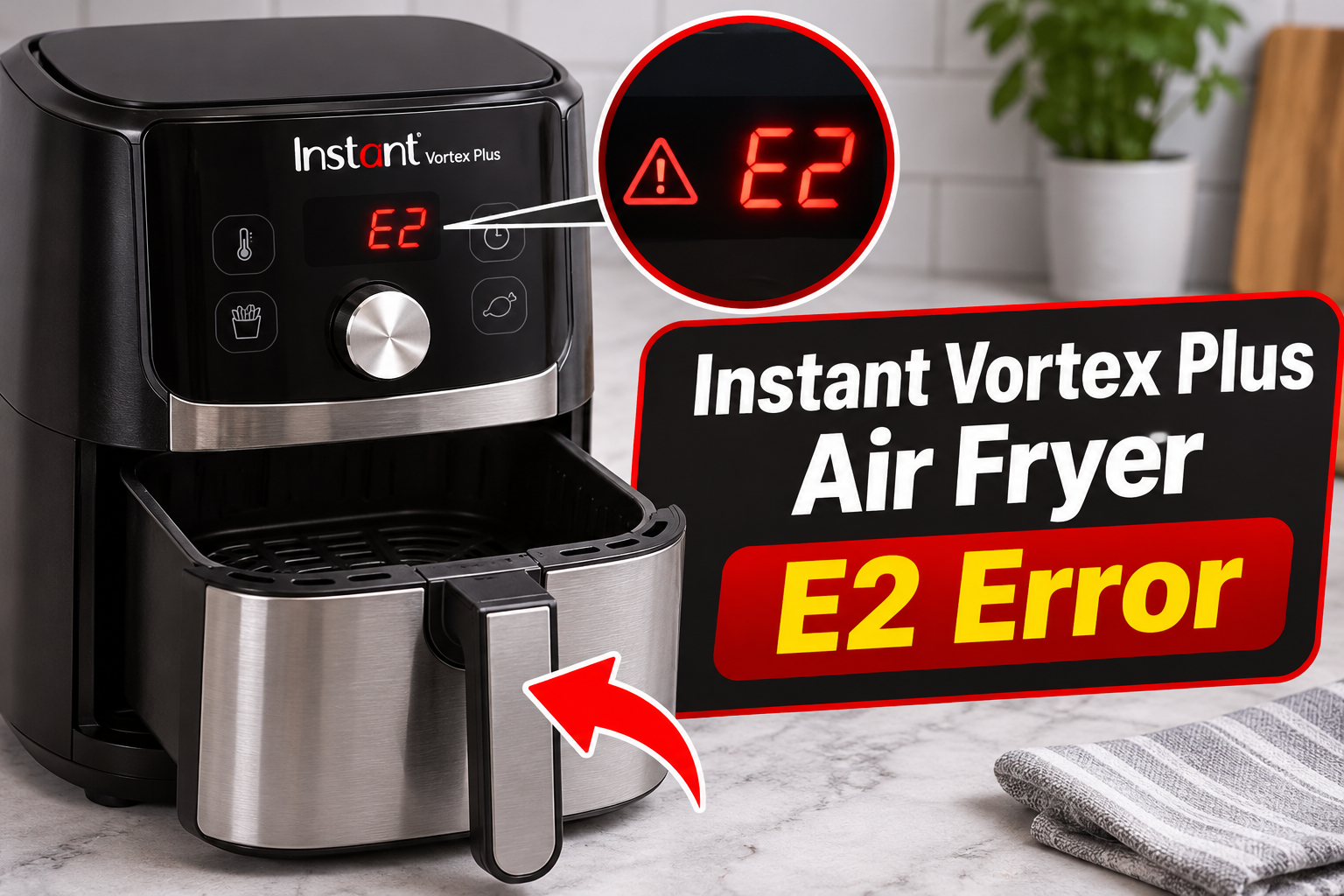
The E2 error on an Instant Vortex air fryer indicates a temperature sensor short circuit, according to the manufacturer’s troubleshooting information. The appliance has detected an electrical problem in the circuit responsible for monitoring cooking temperature.
Your air fryer relies on a temperature sensor to monitor heat inside the cooking chamber. The sensor sends information to the electronic control board, which uses it to regulate the heating element and maintain the selected cooking temperature. Without reliable temperature information, the appliance cannot control heating as intended.
When the control system detects the E2 fault, the air fryer may stop its cooking program, refuse to start another cycle, or display flashing controls alongside the error code. Depending on the model, the message may appear immediately after you plug in the appliance or after it has been operating for some time.
It’s also important to distinguish E2 from E1. Instant Vortex manuals generally identify E1 as an open temperature sensor circuit and E2 as a shorted temperature sensor circuit. Although both concern temperature monitoring, they describe different electrical conditions. Neither code should be ignored, and the manufacturer recommends contacting Customer Care when an E2 fault occurs.
Instant Vortex Air Fryer E2 Error: Common Causes
The E2 error points to a specific electrical condition, but several faults can potentially produce it. Understanding these possibilities can help you recognize warning signs and determine when professional diagnosis is necessary.
1. Defective Temperature Sensor
A defective temperature sensor is one possible explanation for the E2 error. This component measures the temperature inside the air fryer and provides information that the control board uses to regulate heating.
Temperature sensors can develop internal electrical faults. If a sensor becomes shorted, its electrical reading may fall outside the range the control system expects. The appliance can then recognize the condition as an E2 fault and prevent normal operation.
One possible clue is an error that repeatedly appears despite the appliance being clean, cool, and properly connected to power. The code may show up immediately after the air fryer starts or partway through cooking.
However, an E2 code doesn’t prove the temperature sensor itself has failed. Damaged wiring or faulty electronics elsewhere in the sensor circuit can produce a similar result. Confirming the defective component requires electrical testing by a qualified technician.
2. Damaged Temperature Sensor Wiring
The temperature sensor communicates with the control board through electrical connections. If the wiring becomes damaged, the control system may receive an incorrect signal even when the sensor itself is working properly.
Wire insulation can deteriorate because of excessive heat, mechanical damage, or an internal component rubbing against it. If exposed conductors come into contact with one another, they may create an unintended electrical connection. Depending on the circuit design, this can produce a short circuit fault.
This possibility becomes relevant when the E2 error appears intermittently or starts after the appliance has developed other electrical problems. However, these symptoms cannot confirm damaged wiring. Because the connections are inside the appliance, checking them requires professional attention.
3. Moisture Around Electrical Components
Moisture can interfere with electronic circuits when it reaches areas that should remain dry. Although air fryers are designed to handle moisture released from food during normal cooking, their internal electrical components must remain protected from liquid.
Problems may develop if water enters the appliance through improper cleaning, accidental spills, or exposure to unusually wet conditions. Depending on where the liquid travels, it can create an unwanted electrical path between connections or contribute to corrosion over time.
For example, washing the main appliance housing under running water or allowing liquid to enter its openings can damage electrical components. The removable cooking basket can usually be washed separately, but the main housing should only be cleaned according to the manufacturer’s instructions.
If the E2 error appears after the appliance has been exposed to liquid, moisture damage becomes a concern. However, drying the outside doesn’t guarantee that hidden electrical components are safe or that the fault has disappeared. An appliance with suspected internal water damage should remain unplugged until it has been assessed.
4. Loose, Corroded, or Damaged Internal Connections
Electrical connectors allow the temperature sensor circuit to communicate with the control board. If these connections deteriorate, the signals received by the electronics may become unreliable.
Corrosion, damaged connector housings, or electrical contacts touching incorrectly can interfere with normal circuit operation. A loose connector more commonly causes an interrupted connection, but a damaged connection may also contribute to a short circuit under certain circumstances.
One clue may be an error that appears and disappears unpredictably. Still, intermittent operation doesn’t identify a particular connector as faulty. Diagnosing connection problems involves accessing internal electrical parts, so it isn’t a suitable task for an ordinary user.
5. Faulty Electronic Control Board
The control board manages the air fryer’s heating system, cooking programs, display, and temperature monitoring. It receives information from the sensor and determines how the appliance should respond.
If the circuitry responsible for reading the temperature sensor develops a fault, the appliance may display E2 even when the sensor and its wiring are functioning correctly. Such failures can involve damaged electronic components or faults in the sensor input circuit.
A control board problem becomes a possibility when the sensor and wiring have been tested and found to be working correctly. Other unusual electronic behavior may also justify a closer inspection, although it doesn’t establish that the board has failed.
Replacing the control board without proper testing can be expensive and may leave the original fault unresolved. A qualified technician should identify the defective component before recommending replacement.
Instant Vortex Air Fryer E2 Error: DIY Fixes
Although E2 generally concerns an internal electrical fault, Instant Pot recommends a few basic checks, including cooling the appliance and ensuring adequate ventilation. These steps may help with a temporary warning, but they cannot repair a genuinely shorted temperature sensor.
1. Turn Off and Unplug the Air Fryer
The first thing to do when the E2 error appears is stop using the appliance. Continuing to attempt cooking while the temperature monitoring system reports a fault is unsafe.
Follow these steps to shut down the air fryer properly.
-
Press the Cancel button if the controls are still responding.
-
Switch off the appliance and unplug it from the wall outlet.
-
Place it on a stable, heat resistant surface with sufficient ventilation.
-
Allow it to cool completely before touching the cooking chamber or removing hot accessories.
-
Check whether there are any obvious signs of damage, smoke, or unusual smells.
Cooling is particularly useful if the warning appeared during cooking. It allows the appliance to return to room temperature before you consider any further checks.
However, cooling doesn’t repair a defective sensor or shorted wiring. If the appliance smells burnt, has visible damage, or shows signs of electrical overheating, keep it unplugged and contact Customer Care rather than attempting to restart it.
2. Check the Air Fryer’s Ventilation
Instant Pot’s troubleshooting guidance recommends ensuring that enough space surrounds the air fryer when addressing E1 or E2 warnings. Proper ventilation helps the appliance release heat and operate under its intended conditions.
If your air fryer sits directly against a wall, underneath low cabinets, or beside another heat producing appliance, its airflow may be restricted. Blocked ventilation can contribute to excessive heat around the housing, although it doesn’t directly establish the cause of an E2 short circuit.
With the appliance unplugged and cool, examine its position. Move it away from nearby objects and ensure that the air intake and exhaust openings are unobstructed.
Some Instant Vortex manuals specify at least 5 inches of clearance above and around the appliance, but requirements can differ by model. Follow the clearance instructions in your particular manual.
Improving ventilation is a useful preventive measure. If the E2 warning continues, however, additional airflow won’t correct a damaged sensor circuit.
3. Check for Moisture and Clean Accessible Areas
If your Instant Vortex air fryer recently experienced a spill or was cleaned with excessive water, inspect it for visible moisture. Any liquid near electrical openings deserves attention because it can create a safety risk.
Start by unplugging the appliance and allowing it to cool. Remove the cooking basket and detachable tray, then check for visible grease, food debris, or liquid inside the accessible cooking area.
For routine cleaning, follow these steps.
-
Wash the removable basket and tray according to your model’s instructions.
-
Use a soft cloth or sponge with mild dish soap to remove grease from washable parts.
-
Wipe accessible cooking chamber surfaces with a lightly damp cloth.
-
Avoid spraying cleaning products directly into electrical openings.
-
Dry the removable components and accessible surfaces thoroughly before reassembly.
This cleaning process helps maintain the appliance and remove food residue that could contribute to smoke or other cooking problems. However, food buildup is not an established direct cause of the E2 sensor short circuit.
Never attempt to dry hidden electrical components with a hair dryer or other heating device. If water may have entered the internal housing, stop troubleshooting and arrange a professional inspection.
4. Inspect the Power Cord and Exterior for Damage
Before considering a restart, check the appliance’s visible electrical parts. A damaged power cord or plug may create a separate electrical hazard, even if it isn’t responsible for the E2 error.
Make sure the air fryer is disconnected from power, then examine the entire accessible length of the cord. Look for cracked insulation, melted areas, exposed wires, discoloration around the plug, or other visible damage.
Also, inspect the appliance housing for cracks, dents, or signs of overheating. If you’ve noticed a burning plastic smell or unusual electrical sounds, include that information when contacting the manufacturer.
Avoid using the air fryer if anything appears damaged. Don’t attempt to repair the cord with electrical tape, replace the plug yourself, or open the appliance housing.
If everything looks normal, this inspection only confirms that no obvious exterior damage is visible. It cannot establish that the internal temperature sensor circuit is safe or functioning correctly.
5. Perform a Manufacturer Recommended Test Run
Instant Pot’s official troubleshooting guidance suggests unplugging the appliance, allowing it to cool, checking ventilation, and performing a test run when an E1 or E2 warning appears.
A test run may help determine whether the warning was temporary. However, it should only be considered if the appliance has no signs of damage, suspected liquid entry, burning smells, or other unsafe conditions.
If those conditions are satisfied, follow these steps.
-
Ensure the air fryer has cooled completely and is sitting in a properly ventilated location.
-
Confirm that the power cord and plug appear undamaged.
-
Insert the empty cooking basket correctly.
-
Reconnect the appliance to a suitable wall outlet.
-
Follow the test run procedure specified in your model’s user manual.
-
Stop the test immediately if E2 returns or the appliance behaves abnormally.
Different Instant Vortex models can have different controls and test run instructions, so don’t assume that one button sequence applies to every appliance.
If the error disappears and the appliance completes the recommended test normally, the warning may have been temporary. Nevertheless, monitor for any recurrence and stop using the air fryer if the code returns.
If E2 remains on the display immediately after restarting, don’t repeatedly attempt to run cooking programs. A persistent sensor fault needs professional diagnosis. Factory resetting cooking presets or repeatedly disconnecting the power won’t repair damaged electrical components.
6. Contact Instant Pot Customer Care or a Qualified Technician
If you’ve completed the appropriate external checks and the E2 error persists, contact Instant Pot Customer Care. The manufacturer’s troubleshooting manuals identify E2 as a temperature sensor short circuit and recommend professional assistance.
For customers in the United States, the manufacturer’s published contact information includes the following.
-
Phone: 1-800-828-7280
-
Email: support@instantpot.com
Before contacting support, find your air fryer’s model number, serial number if available, and proof of purchase. You should also explain when the E2 error first appeared and whether it occurs immediately or after the appliance starts heating.
Customer Care can advise whether your particular model qualifies for warranty service or replacement. Many Instant Vortex appliances sold through authorized US retailers have a one year limited warranty, subject to the applicable terms.
For appliances outside warranty coverage, a qualified technician can assess the temperature sensor, wiring, connections, and control board. This helps establish whether a repair is technically possible and financially reasonable.
Avoid purchasing replacement sensors or control boards solely because the display shows E2. These components can vary between models, and replacing the wrong part won’t resolve the underlying problem.
Wrapping Up
The Instant Vortex air fryer E2 error indicates a problem with the temperature sensor circuit. Although cooling the appliance, improving ventilation, and checking for visible damage are worthwhile first steps, a persistent error usually requires professional diagnosis.
Most importantly, avoid attempting internal electrical repairs or repeatedly operating an appliance that continues displaying E2. Following the manufacturer’s troubleshooting guidance and seeking qualified assistance when necessary will help you identify the appropriate repair while protecting your safety and preventing further damage to the appliance.