Seeing E1 on your Salter air fryer can be frustrating, especially when the appliance suddenly stops heating or refuses to start. You may notice the warning immediately after switching it on or halfway through preparing a meal.
Although some air fryer errors are easy to resolve, E1 can indicate an internal electrical fault that needs careful attention. Understanding what causes this warning, how to recognize the possible problems, and which troubleshooting steps are safe can help you avoid unnecessary repairs and further damage.
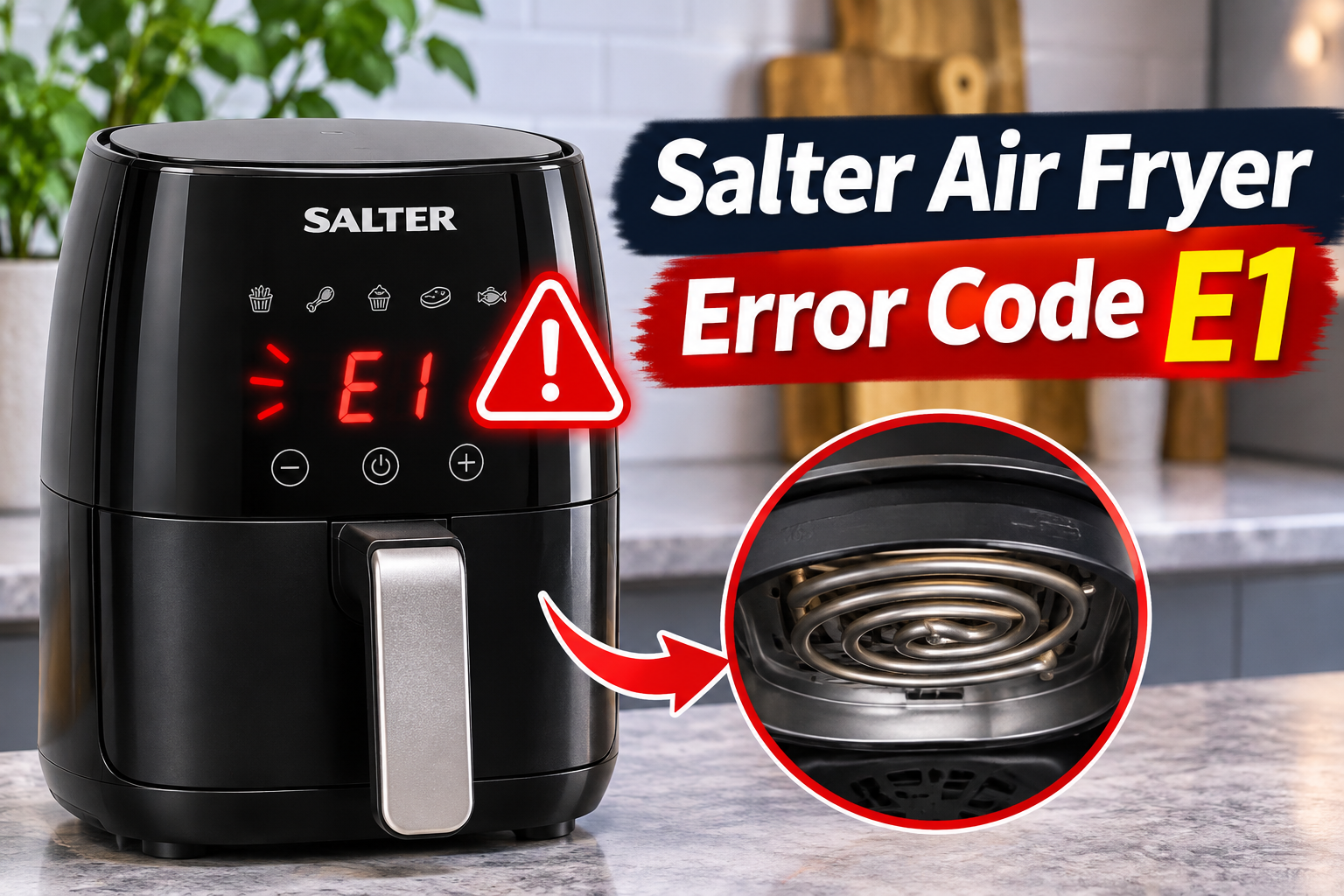
What Does Error Code E1 Mean on a Salter Air Fryer?
Error code E1 on certain Salter air fryers indicates a possible fault with an internal electrical component, such as the temperature sensor or electronic control board. It can prevent the appliance from operating normally because its control system has detected a condition that may affect safe cooking.
The temperature sensor helps your air fryer monitor heat inside the cooking compartment. It sends temperature information to the control board, which uses that information to regulate the heating element. If the sensor or its electrical connections stop working correctly, the appliance may be unable to monitor cooking temperatures reliably.
Depending on your model and the nature of the fault, E1 might appear when you first connect the appliance to power, select a cooking program, or during an active cooking cycle. The fan may stop, the heating element may switch off, or the control panel may refuse to accept further commands.
However, E1 doesn’t have an identical meaning across every Salter model. For example, the instruction manuals for the Salter EK6757 and EK6808 identify E1, E2, and E3 as possible internal component faults. They advise users to stop using the appliance immediately. Therefore, checking your model’s instructions is essential before attempting any troubleshooting.
Salter Air Fryer Error Code E1: Common Causes
Several electrical problems can trigger the E1 warning, although the exact cause depends on your air fryer’s design. Understanding the possibilities can help you recognize relevant symptoms without assuming that a particular component has failed.
1. A Faulty Temperature Sensor
One possible cause of E1 is a defective temperature sensor. This small component helps the air fryer determine how hot the cooking compartment is, allowing the control system to regulate cooking temperatures.
Many electronically controlled air fryers use a thermistor, which is a component whose electrical resistance changes as temperatures rise or fall. The control board interprets these changes to monitor heat. If the sensor becomes defective, it may send an invalid signal or stop communicating with the control board.
Temperature sensor problems can develop because of component deterioration, physical damage, or excessive heat exposure. In some cases, the sensor’s internal electrical circuit may become damaged, preventing it from providing reliable readings.
You might suspect a sensor fault if E1 appears immediately after switching on the appliance, even when the cooking compartment is completely cold. However, damaged wiring and circuit board problems can produce similar symptoms.
A qualified technician must test the sensor to determine whether it has failed. Replacing it without proper diagnosis may not resolve the warning, particularly if the problem lies elsewhere in the electrical system.
2. Loose or Damaged Internal Wiring
The temperature sensor relies on electrical connections to communicate with the control board. If one of these connections becomes loose or damaged, the appliance may receive incorrect information or lose communication with the sensor entirely.
Internal wiring can suffer damage from physical impacts, manufacturing defects, or prolonged exposure to unsuitable operating conditions. Repeated heating and cooling may also place stress on electrical connectors over time.
A damaged connection may sometimes interrupt the signal intermittently, causing the error to appear during certain cooking sessions. More severe wiring damage can prevent normal operation altogether.
However, E1 alone cannot tell you whether a wire is loose, broken, or working correctly. Because these components are located inside the appliance, examining them involves electrical hazards that should be handled by a qualified repair technician.
3. A Defective Electronic Control Board
The electronic control board manages several important functions in your Salter air fryer. These include controlling the heating element, processing temperature readings, operating the display, and managing cooking programs.
If the board develops an electrical fault, it may incorrectly process the temperature sensor’s signal or lose the ability to monitor the sensor. As a result, the appliance may display E1 even when the sensor itself remains functional.
Control board faults can occur because of failed electronic components, electrical stress, moisture damage, or manufacturing defects. Sometimes, the problem appears suddenly without any earlier warning signs.
You may notice that the display becomes unresponsive, cooking programs stop unexpectedly, or E1 appears whenever the appliance receives power.
However, these symptoms aren’t enough to confirm a defective control board. Sensor faults can produce similar behavior, so technicians generally need to examine the relevant components before deciding what requires replacement.
4. Heat or Moisture Damage to Electrical Components
Excessive heat and moisture can damage electronic components inside an air fryer. Although these appliances are designed to withstand high cooking temperatures, their electrical systems still depend on proper ventilation and protection from water.
For example, operating an air fryer with blocked ventilation openings can affect its ability to release heat. Similarly, placing it too close to another heat source or covering its air vents may expose internal components to unnecessary thermal stress.
Over time, excessive heat could contribute to damage involving the temperature sensor, wiring, or electronic control board.
Moisture can create similar problems. Water entering the electrical housing during cleaning, accidental spills, or storage in damp conditions can damage sensitive components and connections.
If E1 appeared shortly after the appliance was exposed to water or operated with poor ventilation, these circumstances are worth mentioning during professional diagnosis. However, neither condition automatically confirms the cause of the warning.
Salter Air Fryer Error Code E1: How to Fix
The appropriate solution depends on which component is responsible for the warning. Since E1 can indicate an internal electrical fault, start with safe external checks and avoid attempting repairs that require opening the appliance.
1. Switch Off and Unplug Your Salter Air Fryer
The first step is to disconnect your air fryer from its power supply. This is particularly important because Salter advises users of certain models to stop operating the appliance immediately when E1 appears.
If your air fryer develops the warning during cooking, stop the cooking program if the controls still respond. Then, unplug it carefully using dry hands.
Follow these steps to make the appliance safe for inspection.
- Switch off the air fryer using its power control.
- Remove the plug from the wall outlet.
- Place the appliance on a stable, heat resistant surface if necessary and safe.
- Allow the cooking compartment and exterior surfaces to cool completely.
- Leave the appliance disconnected while investigating the problem.
If the appliance is producing smoke, sparks, or an electrical burning smell, avoid touching it while the hazard is present. Disconnect the electricity only if you can do so safely.
Once the air fryer has cooled, you can inspect its exterior without exposing yourself to hot surfaces.
Some online troubleshooting advice recommends unplugging an air fryer for several minutes and reconnecting it to clear error messages. Although disconnecting power may reset some electronic displays, a reset cannot repair a faulty temperature sensor, damaged wiring, or defective control board.
If your model’s manual identifies E1 as an internal component fault, don’t repeatedly reconnect the appliance to test whether the error disappears. Follow the manufacturer’s instructions and arrange an appropriate assessment instead.
2. Check Your Air Fryer’s Model Number and Instruction Manual
Before deciding what to repair, confirm the exact model of your Salter air fryer. The meaning of E1 can vary between appliances, even when they’re manufactured by the same company.
You’ll usually find the model number on the product’s rating label, often located underneath or behind the appliance. Many Salter kitchen appliances have product codes beginning with EK, followed by a series of numbers.
Once the appliance is unplugged and cool, locate this label and write down the model number.
Next, visit Salter’s official instruction manual page and search for the corresponding product.
Look through the troubleshooting section for E1 and follow the manufacturer’s specific recommendations.
For instance, the Salter EK6757 manual identifies E1, E2, and E3 as warnings that may indicate a fault involving an internal component, such as the temperature sensor or circuit board. Its recommended action is to stop using the product immediately.
The same manual identifies E4 separately as an overheating protection warning. This distinction matters because the recommended response to overheating protection may differ from the response to an internal electrical fault.
If your manual doesn’t explain E1, contact Salter customer support rather than applying instructions intended for another model.
3. Inspect the Air Vents and Surrounding Area
Once your air fryer is disconnected and completely cool, inspect its external ventilation openings.
Air fryers depend on airflow to circulate heat through the cooking compartment and help manage operating temperatures. If ventilation openings are blocked, heat may accumulate in areas where it shouldn’t.
Start by examining the space around the appliance.
Check whether it was positioned directly against a wall, underneath a low cabinet, or beside another appliance that produces significant heat. You should also look for anything that may have covered the ventilation openings during cooking.
Some Salter air fryer manuals specify at least 20 cm, approximately 8 inches, of clearance around the appliance. Use the clearance requirements stated in your own model’s manual.
Next, look for visible dust, food particles, or grease around accessible ventilation openings.
If necessary, gently remove loose debris using a soft, dry brush or cloth. Avoid pushing dirt farther into the appliance or inserting sharp objects through its vents.
Don’t spray water or cleaning products into the electrical housing.
After completing the inspection, ensure the appliance has sufficient space for ventilation when it’s eventually returned to service.
However, clearing blocked air vents isn’t a confirmed repair for E1. If the error indicates an internal component fault, the appliance still needs appropriate assessment before you resume cooking.
4. Check for Visible Damage and Moisture Exposure
Physical damage and moisture exposure are other issues worth investigating when your Salter air fryer displays E1.
With the appliance unplugged and completely cooled, examine the power cord, plug, and external housing. Look for cracked insulation, unusual discoloration, damaged plastic, or other signs that the appliance may have experienced electrical or physical damage.
You should also check whether the control panel or surrounding surfaces show evidence of liquid exposure.
If the error appeared after cleaning the air fryer, consider whether water may have entered the main electrical housing.
It’s generally safe to wash removable baskets and cooking trays according to the manufacturer’s instructions. However, the main appliance must never be immersed in water because it contains electrical components.
If you suspect liquid has entered the air fryer, don’t attempt to dry its internal components using a hair dryer, heater, or other external heat source.
Similarly, avoid removing the casing to inspect the wiring or circuit board. Internal electronic components may present electrical hazards even after the appliance has been unplugged.
Visible damage provides useful information for a repair technician, but the absence of external damage doesn’t prove that the internal components are functioning correctly.
If the plug, cable, housing, or control panel appears damaged, leave the air fryer disconnected and seek professional advice.
5. Check Your Warranty and Available Repair Options
If your Salter air fryer is still relatively new, checking its warranty could save you the cost of unnecessary repairs or replacement parts.
Start by locating your receipt, order confirmation, or other proof of purchase. Then, review the guarantee information supplied with your appliance.
Salter products are generally supplied with a manufacturer’s guarantee, although the coverage period and conditions can vary by product and purchase date. Some models also qualify for extended coverage when registered within the required period.
If your air fryer remains covered, contact Salter or the retailer before arranging repairs elsewhere.
You’ll usually need to provide the following information.
- Model number. The product code printed on the appliance’s rating label.
- Purchase information. The date and place of purchase, along with proof of payment.
- Error details. Whether E1 appeared immediately after startup or during cooking.
- Other symptoms. Any unusual sounds, smells, display problems, or changes in performance.
- Relevant circumstances. Whether the appliance was recently moved, dropped, cleaned, or exposed to moisture.
These details can help the support team determine the appropriate next step without requiring you to operate the faulty appliance again.
Depending on your warranty conditions and the assessment, the manufacturer or retailer may arrange a repair, replacement, or another suitable remedy.
Avoid dismantling the appliance before contacting support because unauthorized repairs may affect warranty coverage.
If your guarantee has expired, consider the cost of professional diagnosis and replacement parts before deciding whether to repair the appliance.
For relatively inexpensive air fryers, replacing a defective electronic control board may cost enough to make purchasing a replacement appliance the more practical option.
6. Contact a Qualified Appliance Repair Technician
If E1 is caused by a faulty temperature sensor, damaged internal wiring, or a defective control board, professional diagnosis is the safest way to identify and resolve the problem.
An experienced appliance repair technician can examine the relevant electrical components and perform the necessary tests to determine why the warning appeared.
For example, the technician may check the temperature sensor’s electrical characteristics, inspect its connections, and evaluate whether the control board is receiving valid information.
These checks help distinguish between faults that produce similar symptoms.
If the temperature sensor has failed, replacing it with a suitable component may restore normal operation. However, if the fault involves the control board or associated wiring, a different repair may be required.
Never attempt to bypass the temperature sensor, connect damaged wires together, or disable a protective circuit simply to make the appliance start.
The temperature monitoring system is essential for safe cooking, and interfering with it could allow the appliance to operate without reliable heat regulation.
You can contact Salter through its official customer support page. For kitchen electrical appliances, the company lists customerservices@salterhomewares.com as a customer service contact.
A professional can advise whether suitable replacement parts are available and whether the repair is financially worthwhile.
Once the underlying fault has been corrected, the appliance should be checked for safe operation before returning to regular use. If repair isn’t practical, replacing the air fryer is generally safer than continuing to operate a unit with an unresolved electrical warning.
Wrapping Up
The Salter air fryer E1 error can indicate a problem involving the temperature sensor, internal wiring, or electronic control board. While you can safely inspect the exterior, check ventilation, and review your model’s instructions, repairing an internal electrical fault generally requires professional attention.
Start by unplugging the appliance and identifying what E1 means for your specific model. If the manufacturer’s instructions identify an internal fault, don’t continue operating the air fryer. Proper diagnosis and timely repairs will help you avoid unnecessary expense while keeping your cooking routine safe.