KitchenAid dishwasher error code 6-2 can be frustrating, especially when your dishwasher stops filling with water or interrupts a wash cycle. You might hear the machine running without water entering the tub, notice that your dishes remain dirty, or find that the dishwasher refuses to complete its usual operation.
Fortunately, a few simple checks can help you identify what’s happening. However, this error often points to an electrical problem involving the water inlet valve, which may require professional repair.
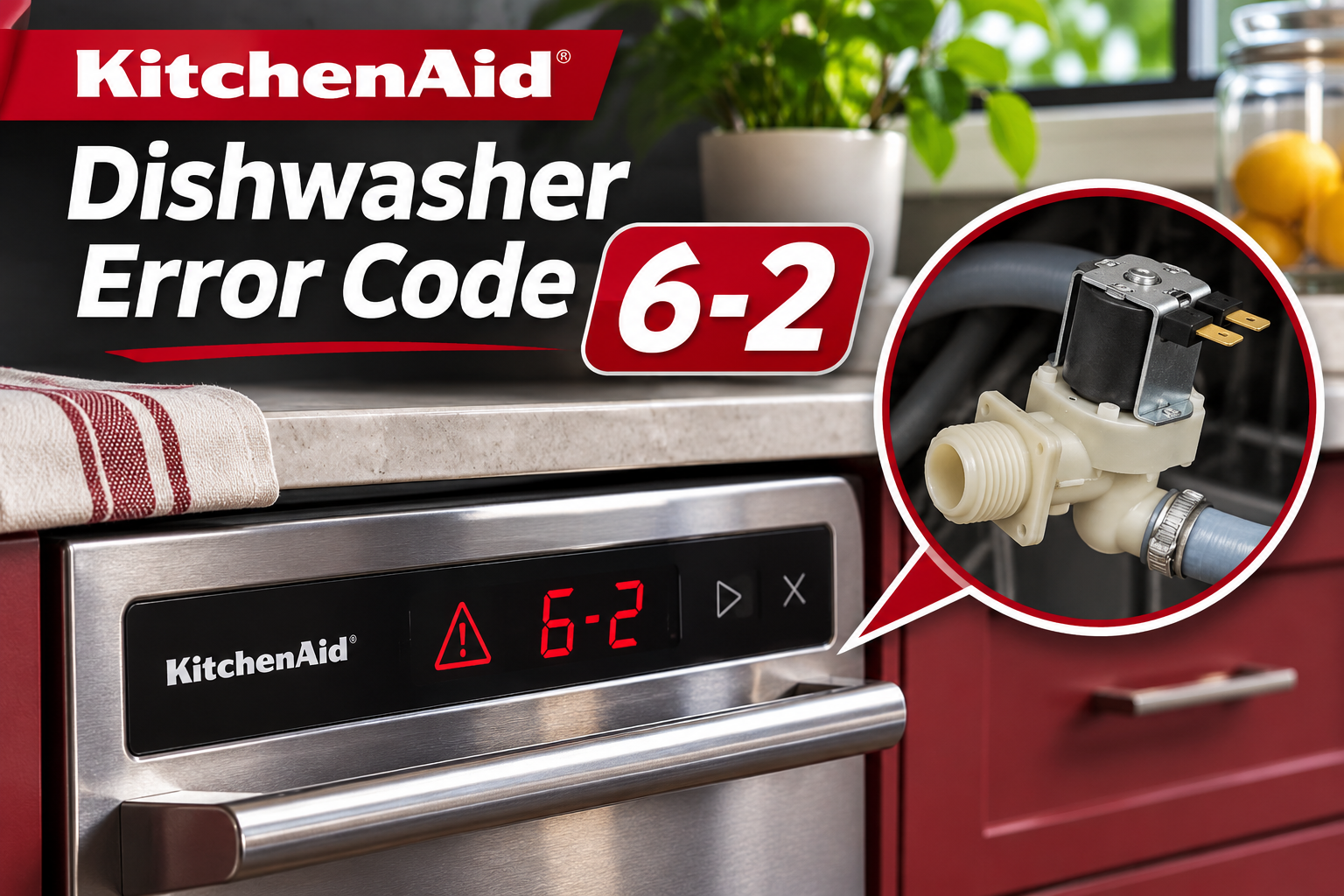
What Does KitchenAid Dishwasher Error Code 6-2 Mean?
KitchenAid dishwasher error code 6-2 indicates a water inlet valve electrical problem on models that use this diagnostic code. It may also appear as F6E2. The dishwasher’s control system has detected a fault in the electrical circuit responsible for operating the water inlet valve.
The water inlet valve controls how water enters your dishwasher. When a wash cycle begins, the electronic control board sends an electrical signal to the valve’s solenoid, which is an electromagnetic component. This allows the valve to open and admit water. Once the dishwasher receives the required amount, the control board stops the signal, allowing the valve to close.
If the solenoid develops an electrical fault, its wiring becomes disconnected, or the control board fails to operate it correctly, the dishwasher may display error code 6-2. You might notice that the machine starts a cycle without filling, stops unexpectedly, or makes its usual operating sounds without beginning the washing process.
However, not every dishwasher that fails to fill has an electrical valve problem. A closed water supply valve, blocked hose, or faulty door latch can produce similar symptoms. Those problems are generally associated with other diagnostic conditions, so confirming the exact error code is essential before replacing parts.
The meaning of F6E2 can also vary between dishwasher models and control systems. Therefore, check the technical documentation for your specific KitchenAid model before attempting repairs.
KitchenAid Dishwasher Error Code 6-2: Common Causes
Several electrical faults can prevent the water inlet valve from operating correctly. Some develop inside the valve itself, while others affect the connections or control board responsible for supplying electricity.
1. A Faulty Water Inlet Valve Solenoid
The water inlet valve solenoid is one of the main components associated with KitchenAid dishwasher error code 6-2. It uses an electromagnetic coil to operate the valve whenever the electronic control system requests water.
Over time, the coil can develop an electrical fault. If its internal winding breaks, the circuit becomes open, preventing electricity from flowing through the solenoid as intended. As a result, the valve may remain closed even when the dishwasher attempts to fill.
You might notice that the dishwasher begins its normal startup sequence but never takes in water. In some cases, the machine stops and displays an error shortly afterward. However, a silent fill valve doesn’t automatically prove that its solenoid has failed because an interrupted electrical supply can cause the same symptom.
A technician can confirm the condition of the solenoid by measuring its electrical resistance and comparing the result with the specifications for your dishwasher model. A completely open winding generally means the valve assembly needs replacement.
2. Loose Electrical Connections
A loose electrical connector can interrupt the power supplied to the water inlet valve. Even when the valve itself is working correctly, an unstable connection may prevent it from receiving the electrical signal needed to open.
Dishwashers experience small vibrations during operation. Over time, poorly seated connectors may loosen, particularly if the appliance has previously been serviced or moved. Moisture exposure can also affect metal terminals and interfere with electrical contact.
An intermittent connection may allow the dishwasher to fill normally during one cycle but fail during another. This can make the problem difficult to identify because the symptoms aren’t always consistent.
If error code 6-2 appears occasionally and disappears after restarting the machine, a loose connection is one possibility. However, the same pattern can occur with a failing solenoid or electronic control board. Internal wiring should be inspected by a qualified technician.
3. Damaged Wiring Between the Valve and Control Board
The water inlet valve connects to the dishwasher’s electronic control board through an electrical wiring harness. This harness carries the signals needed to operate the valve during each wash cycle.
If a wire breaks, becomes pinched, or develops damaged insulation, the electrical connection may fail. Wiring can sometimes be damaged during installation, previous repairs, or movement of the dishwasher.
A broken conductor can prevent the valve from receiving electricity, while damaged insulation may create a short circuit under certain conditions. Both problems can interfere with normal filling and may contribute to the 6-2 error.
Unlike a loose connector, a damaged wiring harness may require wire repair or replacement. A technician must examine the affected circuit and perform appropriate electrical tests to identify the problem safely.
4. An Open Fuse in the Electronic Control Circuit
Some KitchenAid dishwashers have electrical protection components built into their electronic control boards. These components help protect circuits that operate parts such as the water inlet valve.
If a fuse associated with the fill valve circuit opens, electricity may no longer reach the solenoid. The dishwasher can then detect an electrical problem and record error code 6-2.
A blown or open fuse may indicate an underlying electrical fault rather than an isolated failure. For example, a damaged valve coil or wiring problem might place an abnormal load on the control circuit.
Because these protective components are inside the electronic control assembly, diagnosis requires specialized testing. Replacing a control board without checking the valve and wiring first could leave the original fault unresolved.
5. A Faulty Electronic Control Board
The electronic control board coordinates the dishwasher’s operations, including filling, washing, draining, and drying. It determines when the inlet valve should open and sends the electrical signal required to operate it.
If the circuit that controls the fill valve fails, the valve may stop receiving the correct signal. Some failures involve the electronic switching component responsible for supplying electricity to the solenoid.
This problem can resemble a defective inlet valve because both conditions may prevent water from entering the dishwasher. However, replacing the valve won’t solve a failure originating from the control board.
A technician should check the solenoid, wiring harness, and relevant electrical connections before concluding that the board is defective. If the fill valve drive circuit has failed, replacing the appropriate electronic control assembly may be necessary.
KitchenAid Dishwasher Error Code 6-2: DIY Fixes
Although error code 6-2 usually indicates an electrical fault, several safe checks can help you rule out other reasons your dishwasher isn’t filling. Start with the accessible parts and basic controls before considering repairs that involve internal components.
1. Reset Your KitchenAid Dishwasher
A power reset is a reasonable first step because temporary electronic control problems can sometimes interfere with normal dishwasher operation.
Resetting the dishwasher allows the electronic control system to restart. However, it won’t repair a failed solenoid, damaged wiring, or defective control board.
Follow these steps to reset your KitchenAid dishwasher.
- Press the Cancel button if the control panel is responding.
- Allow any active operation to finish.
- Unplug the dishwasher from its electrical outlet if the plug is accessible.
- If the dishwasher is hardwired, switch off its dedicated circuit breaker.
- Wait at least 60 seconds.
- Restore power and check whether the error has disappeared.
After restarting, select a short wash cycle and observe whether the dishwasher begins filling normally. You should hear water entering the tub during the filling stage.
If the dishwasher works normally, monitor it during subsequent cycles. If error code 6-2 returns, the underlying electrical fault may still be present.
Avoid repeatedly resetting a machine that trips its circuit breaker or produces a burning smell. Disconnect power and arrange professional service instead.
2. Check the Dishwasher’s Water Supply
A closed or restricted household water supply can prevent your dishwasher from filling. Although this generally causes a water supply problem rather than the electrical fault represented by code 6-2, checking the supply helps rule out another possible issue.
Start by locating the dishwasher’s water shutoff valve. It’s commonly installed beneath the kitchen sink, although its position depends on your plumbing arrangement.
Check that the valve is fully open. If it has a round handle, it will generally open by turning counterclockwise. A quarter-turn valve normally opens when its handle is aligned with the pipe, but valve designs can differ.
Next, check whether water flows normally from your kitchen faucet. Weak water flow may indicate a household plumbing issue.
KitchenAid installation guidance commonly specifies an incoming water pressure of 20 to 120 psi for compatible dishwasher models. The exact requirements should be confirmed using your model’s installation instructions.
If the household water supply was closed, opening it may restore normal filling. However, if the dishwasher continues displaying error code 6-2, the fill valve’s electrical circuit still needs attention.
3. Inspect the Accessible Water Supply Hose
The water supply hose carries water from your home’s plumbing to the dishwasher’s inlet valve. If the hose becomes bent, crushed, or restricted, the dishwasher may receive little or no water.
Before examining the hose, switch off the dishwasher and disconnect its electrical power. Look beneath the kitchen sink for the visible section of the supply line.
Check for sharp bends, crushed areas, or objects pressing against the hose. If stored items beneath the sink are restricting it, carefully move them away.
Also, look for moisture around accessible connections. A damp cabinet floor, water droplets, or a small puddle may indicate a leaking fitting or damaged supply line.
If you find an obvious kink in an accessible flexible hose, gently correct its position without twisting or pulling the connections. Avoid forcing the dishwasher out of its cabinet because doing so could damage hidden electrical or plumbing connections.
Don’t disconnect the water inlet valve or remove its internal screen as a routine DIY fix. These components may require dishwasher disassembly, and incorrect reassembly can cause leaks.
If the hose appears damaged or a connection is leaking, turn off the water supply and arrange the necessary plumbing repair.
Once an external restriction has been corrected, you can restore power and check whether the dishwasher fills. If error code 6-2 remains, the problem is unlikely to be resolved through hose adjustments alone.
4. Check the Dishwasher Door and Overfill Float
KitchenAid dishwashers generally require a properly closed door before beginning a wash cycle. Some models also have an overfill float that helps prevent excessive water from entering the tub.
These components don’t normally cause the electrical fault identified by code 6-2. However, checking them can help distinguish a genuine fill valve failure from other problems that prevent water from entering the dishwasher.
First, open the dishwasher door and check the latch area for food residue, utensils, or other objects that could prevent proper closure. Make sure the racks are pushed fully into position and that nothing is blocking the door.
Close the door firmly without forcing it. If the Start/Resume indicator flashes because the cycle was interrupted, follow your model’s instructions to resume operation.
Next, check whether your dishwasher has an accessible overfill float. On some KitchenAid models, this is a small plastic component near the front of the dishwasher tub.
With the dishwasher switched off and disconnected from power, gently lift and lower the float if your owner’s manual allows this check. It should move freely without becoming stuck.
Remove any visible food residue or loose debris preventing movement. Don’t force the float or attempt to remove its electrical switch.
If the float was stuck, cleaning the accessible area may correct a separate filling problem. However, a persistent 6-2 error still points toward an electrical issue that needs further diagnosis.
5. Test the Dishwasher’s Filling Operation
After completing the external checks, a brief observation of the filling process can help you determine whether the dishwasher is receiving water.
Make sure all accessible parts are correctly positioned, the water supply is open, and the dishwasher is properly assembled. Then restore electrical power.
Select a normal wash cycle and start the dishwasher according to the instructions for your model. Some machines begin by running the drain pump for a short period before admitting fresh water.
Listen carefully as the cycle progresses. Under normal conditions, you should hear water flowing into the dishwasher during the filling stage.
If the machine remains silent when it should be filling, the inlet valve may not be opening. A damaged solenoid, loose connection, or faulty control circuit could be responsible.
However, silence alone doesn’t identify the defective component. Likewise, hearing water enter the tub doesn’t completely rule out an intermittent electrical problem.
If the dishwasher reports error code 6-2 again, stop the cycle and record when the fault appeared. For example, note whether it happened immediately after starting or after the machine had already completed one fill.
You should also watch for signs of unwanted filling. If water continues entering the dishwasher when the cycle is stopped, shut off the household water supply and disconnect electrical power. A valve that remains open can cause flooding and requires prompt professional attention.
Don’t add water manually to bypass a filling problem. KitchenAid advises against manually filling a dishwasher, and doing so won’t correct a defective inlet valve circuit.
6. Contact a Qualified Appliance Repair Technician
If your KitchenAid dishwasher continues displaying error code 6-2 after these checks, it’s time to arrange professional diagnosis.
A qualified technician can inspect the inlet valve circuit and determine whether the problem comes from the solenoid, wiring harness, electrical connectors, or electronic control board.
The technician may use a multimeter to check the resistance of the inlet valve solenoid. Some KitchenAid service specifications list values around 890 to 1,600 ohms for particular valve designs, but the correct resistance depends on the model and installed component.
An open winding, damaged connector, or failed control circuit can then be identified using the appropriate service procedures.
If the inlet valve is defective, replacing the valve assembly is generally the appropriate repair. Damaged wiring may require a harness repair or replacement, while a confirmed failure of the control board’s fill valve circuit may require replacing the electronic control assembly.
These repairs involve electrical connections and water supply components. They should be performed by someone with the appropriate training because incorrect installation can create electrical hazards or water leaks.
Before scheduling service, locate your dishwasher’s model and serial numbers. You’ll usually find them on an identification label around the dishwasher door opening or tub frame.
Explain when the error appears, whether the dishwasher fills at all, and which troubleshooting checks you’ve already completed. This information can help the technician identify the fault without replacing unnecessary parts.
Wrap-Up
KitchenAid dishwasher error code 6-2 usually indicates an electrical problem involving the water inlet valve or its control circuit. Although a temporary electronic issue may disappear after a reset, persistent errors can point to damaged wiring, a defective solenoid, or a control board failure.
Start with safe checks, including confirming the water supply, inspecting accessible hoses, and checking the dishwasher’s basic controls.
If the error returns, professional electrical testing is the most reliable way to identify the faulty component and restore normal operation without unnecessary repairs.