Seeing error code 5E on your Samsung refrigerator can be concerning, particularly if the appliance is still running but something seems wrong with its cooling performance. This code points to a problem with the refrigerator’s defrost sensor, which helps the control system monitor temperatures during the defrost cycle. Identifying the fault early can help you prevent additional cooling problems and protect your stored food.
The right solution depends on whether the sensor itself has failed, its wiring is damaged, or another electrical component is responsible. Understanding these possibilities will help you take the appropriate next steps.
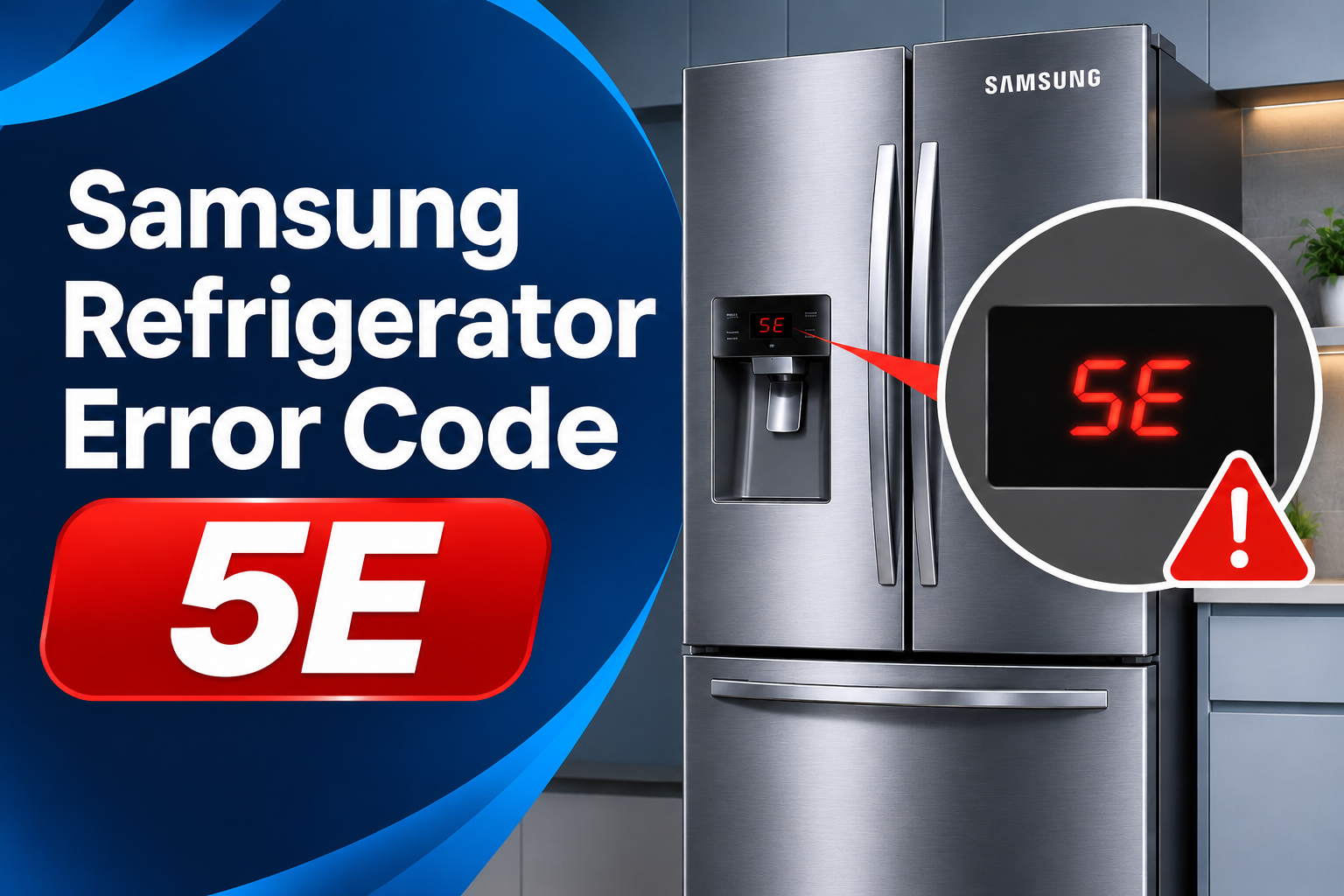
What Does Samsung Refrigerator Error Code 5E Mean?
Samsung refrigerator error code 5E indicates a fridge defrost sensor error. Samsung identifies this code in its official refrigerator error code guide. The affected sensor monitors temperature in the refrigerator’s defrost system and sends readings to the electronic control board.
During normal operation, moisture can freeze on an evaporator coil as the refrigerator removes heat from the air. The defrost system periodically warms the coil to remove accumulated frost. The defrost sensor helps the control board monitor the temperature and manage this process.
When the sensor produces an abnormal reading, the control board may be unable to manage the defrost cycle correctly. The refrigerator may continue running even while the error appears on its display. In some cases, cooling performance gradually deteriorates as frost accumulates and interferes with normal airflow.
The symptoms vary by model and by the underlying fault. You might notice that the refrigerator maintains its temperature initially, displays the error intermittently, or begins to cool less effectively over time. Excessive frost on an internal panel can also indicate a developing defrost problem, although it does not confirm that the sensor is defective.
Error code 5E does not identify the exact component that must be replaced. It indicates a detected fault associated with the defrost sensor. The sensor, its electrical connections, the wiring harness, or the control board may require testing.
Samsung advises contacting its support service for error codes that do not have specific owner troubleshooting instructions. Avoid unplugging the refrigerator or pressing buttons to clear the code unless Samsung directs you to do so, because these actions can make diagnosis more difficult.
Samsung Refrigerator Error Code 5E: Common Causes
Several electrical or component faults can trigger error code 5E. The code helps narrow the investigation, but the underlying cause must be confirmed through appropriate testing.
1. A Defective Defrost Sensor
The defrost sensor, commonly called a thermistor, measures temperature changes in the refrigerator’s defrost system. It sends signals to the control board, allowing the refrigerator to monitor conditions around the evaporator during defrosting.
A defective thermistor may produce an incorrect reading, fail to respond to temperature changes, or stop providing a usable signal. The control board can then register the condition as a sensor error and display 5E.
Sensor failure can develop through normal component aging or an internal electrical defect. Since the display code does not provide a direct measurement of the sensor’s condition, a technician must test it before deciding whether replacement is necessary.
2. Damaged or Broken Sensor Wiring
Even a functioning sensor cannot communicate properly with the refrigerator’s control board if its wiring is damaged. The electrical circuit carries the sensor signal, so an interrupted connection can cause the board to detect an abnormal reading.
Wiring faults may result from damaged insulation, a broken conductor, or a harness that has deteriorated over time. A wire may also be pinched or damaged during an earlier repair. These problems can produce symptoms similar to those of a failed thermistor.
A technician can examine the relevant harness and test electrical continuity to determine whether the signal path is intact. Replacing the sensor alone will not resolve error code 5E if the actual problem lies in the wiring.
3. A Loose or Corroded Electrical Connection
The sensor and its wiring connect to other electrical components through connectors. If a connector becomes loose or its contacts deteriorate, the sensor signal may become unreliable or disappear altogether.
Corrosion can affect electrical contact, while a loose connection can interrupt the signal intermittently. This may explain why the error appears at certain times or returns after temporarily disappearing.
A qualified technician can inspect the relevant connections for damaged pins, corrosion, poor contact, or incorrect seating. These checks should be performed with the appliance safely isolated from power according to the model’s service procedures. Internal connectors are not appropriate inspection points for an inexperienced owner.
4. A Fault in the Electronic Control Board
The main control board processes information from the refrigerator’s sensors and coordinates functions such as cooling and defrosting. If the part of the board responsible for reading the defrost sensor develops a fault, it may report an error even when the sensor and its wiring are functioning correctly.
An electrical fault, damaged circuit, or failed input component can interfere with the board’s ability to interpret the sensor signal. The resulting display code may look exactly like the one produced by a defective thermistor.
However, a displayed 5E code alone does not prove that the control board has failed. A technician should test the sensor circuit and connections first. Replacing the board without establishing the cause can lead to unnecessary expense while leaving the actual fault unresolved.
5. A Defrost Problem That Has Begun Affecting Cooling
The 5E code specifically identifies a fridge defrost sensor error, but a sensor-related fault can interfere with the refrigerator’s ability to manage frost removal correctly. As frost accumulates on the evaporator, it can obstruct airflow and reduce the system’s ability to distribute cold air.
You might notice excessive frost behind an internal rear panel, uneven cooling, or food that feels warmer than usual. These symptoms suggest that the refrigerator needs further diagnosis, particularly if the problem has continued for some time.
Frost accumulation does not automatically mean that the defrost sensor is the only defective part. A technician may need to assess the sensor, heater, wiring, and other relevant components to determine whether additional faults are present.
Samsung Refrigerator Error Code 5E: DIY Fixes
Because Samsung identifies 5E as a defrost sensor error and does not provide a universal owner repair for this code, the safest approach is to carry out external checks and arrange suitable service. The following steps can help you establish the severity of the problem without attempting hazardous internal repairs.
1. Confirm the Error Code and Refrigerator Model
Start by checking that the displayed code is actually 5E. Depending on the display design, a character may be difficult to distinguish, so record the exact combination shown rather than relying on memory.
Locate the refrigerator’s model and serial number on its product label, usually found inside a compartment or on another manufacturer-designated area. The precise location varies by model. You can consult your user manual if you cannot find the label.
Write down when the error first appeared and whether it remains on the display. This information helps Samsung support or a repair technician identify the correct service documentation and determine which diagnostic procedures apply.
Do not press combinations of control-panel buttons simply to remove the error. Samsung specifically warns that attempts to clear an error without proper guidance can interfere with diagnosis.
2. Check Whether the Refrigerator Is Still Cooling
The next step is to establish whether the refrigerator is maintaining a safe temperature. An error code can appear while the appliance is still operating, so the absence of an obvious cooling problem does not mean the sensor fault has disappeared.
Use a refrigerator thermometer to check the temperature in the fresh-food compartment. Food should generally be kept at 40°F (4°C) or below, while the freezer should be maintained at 0°F (-18°C). These are recommended food-storage temperatures, not diagnostic readings for the 5E fault.
If the refrigerator is too warm, the temperature continues rising, or frozen food begins thawing, treat the cooling problem seriously. Move vulnerable food to another properly cooled appliance if possible.
Keep the doors closed as much as practical while assessing the situation. Opening them repeatedly allows warm air to enter and makes it harder to maintain a stable temperature.
3. Check the Door Seals and Airflow
Poor door closure can worsen a refrigerator’s cooling performance. Although a damaged gasket or blocked vent does not establish the cause of error code 5E, correcting these external issues can help prevent additional cooling difficulties.
Inspect the visible door seals for dirt, tears, gaps, or sections that no longer sit against the cabinet properly. Make sure packages and containers are not preventing the doors from closing fully.
Next, check whether food containers are blocking the interior air vents. Leave the vents clear so cold air can circulate through the compartment as intended. Follow the storage guidance in your user manual, particularly if your model has multiple cooling zones.
These checks will not repair a defective defrost sensor or its wiring. If the error persists, professional diagnosis is still necessary even if the doors and vents appear normal.
4. Look for External Signs of Frost or Cooling Trouble
Observe the accessible interior surfaces of the refrigerator for unusual frost, moisture, or water accumulation. Pay attention to changes you have noticed over several days, including food spoiling sooner than expected or one area feeling warmer than another.
A patch of frost or a layer of ice on an internal panel may indicate that the defrost system is not operating as intended. However, several faults can produce similar symptoms, so appearance alone cannot confirm which component has failed.
Do not remove the rear interior panel, reach behind covers, or attempt to access the evaporator, heater, sensor, or wiring. These components are part of an internal system that requires the appropriate service procedure.
Record what you observe and share it with the technician. Clear information about frost buildup and cooling changes can help direct the diagnosis.
5. Prepare the Refrigerator for Professional Diagnosis
Once you have confirmed the code and checked the accessible parts of the appliance, contact Samsung support or a qualified refrigerator repair specialist. Provide the model number, the exact error code, and details of any cooling changes or unusual frost.
Ask whether the refrigerator is covered by a warranty before authorizing repairs. Using the correct model-specific parts and service procedures is especially important because sensor designs and diagnostic requirements can differ across Samsung refrigerator models.
Avoid ordering a replacement sensor based solely on the code. The technician should verify whether the sensor, wiring, connections, or control board is responsible before replacing anything.
Samsung’s refrigerator support page provides its official error-code guidance and a route to further support. Follow any additional instructions supplied for your particular model.
6. Contact a Qualified Appliance Technician
Professional diagnosis is necessary if error code 5E remains on the display, returns after appropriate manufacturer-directed checks, or appears alongside reduced cooling. Seek assistance promptly if the refrigerator is becoming warm or the freezer is no longer keeping food frozen.
A qualified technician can test the defrost sensor against the model’s specifications, inspect its wiring and connectors, and determine whether the electronic control board is receiving the correct signal. The technician can then identify the failed component and carry out the required repair.
Depending on the findings, the repair may involve replacing the defrost sensor, repairing a damaged connection, correcting a wiring fault, or addressing a control-board problem. The appropriate solution depends on the test results, rather than on the code alone.
If internal frost buildup is present, the technician can also assess whether the defrost system has sustained a related fault. Avoid using sharp tools to remove ice or dismantling internal components to reach the affected area.
Once the repair is complete, the refrigerator should be checked to confirm that the error has cleared under the applicable service procedure and that normal cooling and defrost operation have been restored.
Wrap-Up
Samsung refrigerator error code 5E indicates a problem with the fridge defrost sensor. A defective sensor, damaged wiring, poor electrical connections, or a control-board fault may be responsible, and the displayed code cannot identify the exact failed component by itself.
You can help protect your food by checking the refrigerator’s temperature, keeping the doors closed, and recording any signs of frost or reduced cooling. Avoid opening internal panels or attempting to clear the code without manufacturer guidance. When the error persists, professional diagnosis is the safest way to identify the fault and restore reliable refrigerator operation.