The code deserves attention because the underlying problem may require an electrical component to be repaired or replaced. Understanding what triggers the error can help you perform safe preliminary checks and determine when professional service is necessary.
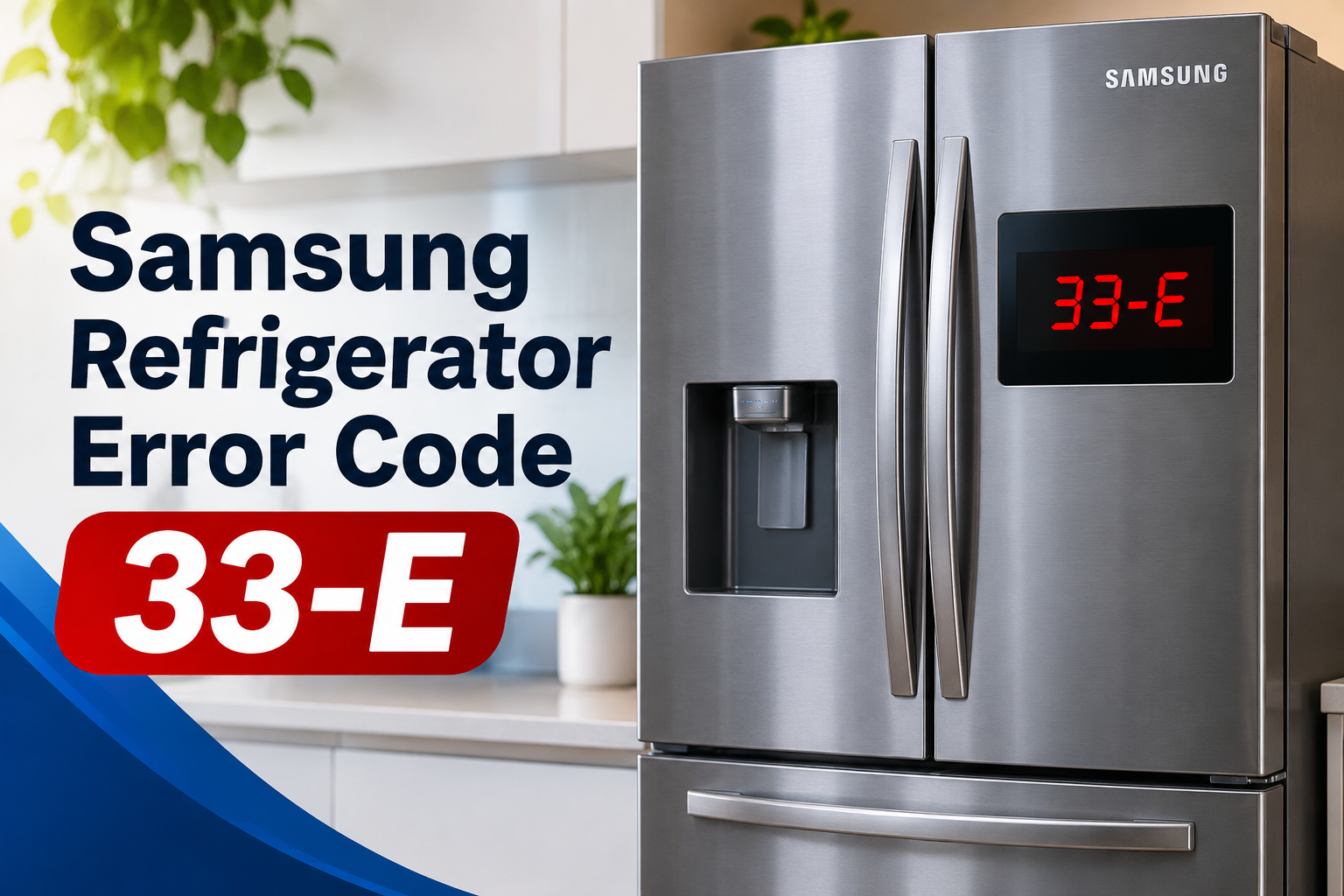
What Does Samsung Refrigerator Error Code 33-E Mean?
Samsung refrigerator error code 33E indicates an ice pipe heater error. Samsung lists this code among its refrigerator fault codes, and its support documentation explains that the problem may involve an open heater circuit or a loose or faulty wire connector.
The ice pipe heater is a small heating element associated with the water fill pipe that supplies the ice maker. Water travels through this pipe before entering the ice maker mold, where it freezes into cubes. Because parts of the water delivery system sit in a cold environment, the heater helps prevent water in the fill pipe from freezing before it reaches the mold.
When the heater circuit develops a fault, the refrigerator’s control system may detect an abnormal electrical reading and display the error. Depending on the model and the extent of the fault, the ice maker may stop producing ice or become unable to complete its normal filling cycle.
Several symptoms can accompany this code. The ice bin may remain empty, ice production may become irregular, or visible ice may accumulate around an accessible part of the fill pipe. However, a refrigerator can continue cooling normally while the ice maker system has a separate fault.
Code 33E does not automatically mean that the entire refrigerator is failing. The problem may be limited to the ice pipe heater or its electrical connections. The exact cause must be confirmed using the refrigerator’s model number and the appropriate diagnostic procedure.
Samsung Refrigerator Error Code 33-E: Common Causes
Several electrical and mechanical problems can trigger error code 33E. The code points toward the ice pipe heater system, but it does not identify the precise component that has failed.
1. A Defective Ice Pipe Heater
The heater itself is one of the main components to investigate. Over time, an internal break or electrical failure can prevent the element from producing the heat needed to keep the fill pipe clear.
When the heater circuit becomes open, the refrigerator’s control system may no longer detect the expected electrical characteristics. This can trigger the 33E code, even when the rest of the ice maker appears intact.
A failed heater may also allow ice to accumulate in the water fill pipe. The ice maker might stop receiving water, produce fewer cubes than usual, or cease making ice completely. These symptoms support further diagnosis, but they do not independently prove that the heater has failed.
Testing the heater’s electrical resistance can help establish its condition. Samsung’s support documentation for a specific refrigerator model gives a resistance value of approximately 62 ohms. That figure should not be treated as universal because the correct specification depends on the exact model.
Support
2. Loose or Damaged Heater Wiring
The ice pipe heater depends on electrical wiring and connectors to receive power and communicate with the refrigerator’s control system. If a wire breaks, becomes pinched, or develops a poor connection, the heater may stop operating correctly.
A connector can also become loose following previous appliance repairs, component replacement, or work involving nearby wiring. In some cases, the heater itself remains functional, but the damaged electrical connection prevents the system from operating as intended.
This type of fault can be difficult to identify from the refrigerator’s exterior. A technician may need to examine the relevant wire harness, inspect the connectors, and test electrical continuity. Exposed wiring should not be handled while the refrigerator is energized.
3. Ice Accumulation Around the Fill Pipe
Ice buildup around the water fill pipe can interfere with the ice maker’s normal operation. If the pipe becomes obstructed, water may fail to reach the ice maker mold, leaving the refrigerator unable to produce fresh cubes.
A malfunctioning heater can contribute to this condition because it may no longer provide sufficient heat to limit freezing in the pipe. A poorly closing door or other temperature related problem can also contribute to excess frost in parts of a refrigerator.
Visible ice does not automatically confirm that the heater is defective. An obstruction may be a consequence of the original fault rather than the component that triggered the code. The heater circuit should still be checked if error 33E remains displayed.
Avoid trying to force ice out of the pipe with sharp objects or applying direct heat. The fill pipe and nearby plastic components can be damaged, and an aggressive thawing attempt may create leaks or additional repair work.
4. A Poor or Corroded Electrical Connector
Even when the heater and its wiring appear intact, an electrical connector may prevent reliable contact. Moisture, corrosion, damaged terminals, or an improperly seated plug can interfere with the electrical path between the heater and its control circuit.
A poor connection may produce an intermittent fault. The refrigerator could appear to operate normally for a period before displaying the error again. Inconsistent ice production may accompany the problem, although that symptom alone does not identify the connector as the cause.
Confirming this fault requires access to the relevant connection points and an appropriate inspection. A qualified technician can check for loose terminals, corrosion, damaged insulation, or signs of overheating and then determine whether the connector or wiring requires repair.
5. A Faulty Main Control Board
The refrigerator’s main control board manages various appliance functions and monitors electrical signals from connected components. If its heater control or monitoring circuit develops a fault, the refrigerator may report an error even when the heater and wiring are in acceptable condition.
This possibility should generally be investigated after the heater, wiring, and connectors have been tested. Replacing the control board without checking those components can lead to unnecessary expenses and may leave the original problem unresolved.
Control board diagnosis involves electrical testing and model specific procedures. Because the board is part of the refrigerator’s electrical system, this work is best handled by a qualified appliance technician.
Samsung Refrigerator Error Code 33-E: DIY Fixes
You can perform several safe checks before arranging a repair. The aim is to establish the symptoms, rule out simple operating conditions, and provide useful information for diagnosis without disturbing the refrigerator’s electrical components.
1. Confirm the Error Code and Refrigerator Model
Start by checking the refrigerator’s display and confirming that the code is 33E. If your particular model displays 33C or another similar looking code, record the exact characters because error codes can differ between models and appliance types.
Next, find the model number on the refrigerator’s identification label. Its location varies, but it is commonly found on a label inside the refrigerator compartment or on an interior wall.
Use the model number to locate the correct owner’s manual and Samsung support information. Keep a photograph of the error display, along with a note of when it first appeared and whether ice production has stopped.
Samsung advises against unplugging the refrigerator or pressing control panel buttons simply to make an error code disappear unless its instructions specifically direct you to do so. Clearing the display can make it harder for a technician to identify the original fault.
Samsung be
2. Check the Door Seal and Freezer Conditions
A freezer door that does not close completely can allow warm, moist air to enter. This can cause frost to form in places where it should not accumulate and may interfere with normal operation.
Inspect the visible door gasket for tears, hardened sections, dirt, or areas that do not sit against the cabinet. Remove any food packaging that prevents the door from closing fully, and make sure drawers and shelves are seated correctly.
Check the freezer temperature setting against the recommended setting in your owner’s manual. For many household refrigerators, the recommended freezer temperature is around 0°F (-18°C), although the model’s instructions should take priority.
These checks may help address conditions that contribute to frost buildup. They will not repair a failed heater circuit, so arrange further diagnosis if 33E remains displayed.
3. Inspect Accessible Areas Around the Ice Maker
If your refrigerator’s design allows you to see the ice maker or its fill area without removing panels, look for obvious signs of ice buildup, displaced parts, or water leakage.
Do not dismantle the ice maker compartment to reach the heater, and do not pull on any wiring. Avoid using a knife, screwdriver, hair dryer, heat gun, or boiling water to remove ice from the fill pipe. Such methods may damage components or create an electrical hazard.
If the ice maker has a normal user accessible off switch or control setting, consult the manual before using it. Turning off ice production may be appropriate while waiting for service, especially if the ice maker repeatedly attempts to fill an obstructed line.
Take a photograph of any visible ice buildup or leakage. This information can help the technician distinguish a possible obstruction from a heater circuit fault.
4. Review the Refrigerator’s Diagnostic Information
Some Samsung refrigerators provide built in diagnostic tools that record active or previous error codes. If your appliance has a Family Hub display, Samsung provides a self check feature that can show its error history.
On supported Family Hub models, the documented procedure is to open Apps, select Fridge Manager, open Fridge Settings, and choose Self Check. Follow the prompts displayed on the appliance. Menu names or available functions may vary by model.
Samsung be
A diagnostic result can help confirm the code and give a technician additional information. It does not establish that a particular component has failed, and you should not enter service modes or change technician settings without instructions specific to your refrigerator.
If you cannot access a suitable diagnostic feature, simply record the code and contact Samsung support or an appliance repair specialist. A self check is optional and should not delay service when a fault persists.
5. Arrange Testing of the Heater and Wiring
If the error remains after the basic checks, the next step is to test the heater circuit. This involves examining the heater, its connectors, and the wiring for an open circuit, damage, or an abnormal electrical reading.
A technician may use a multimeter to measure the heater’s resistance against the specification for your exact refrigerator model. Samsung’s documentation for one model cites approximately 62 ohms, but a different model may have a different specification. The correct service information must be used before drawing a conclusion.
Support
Do not attempt live electrical testing or remove internal panels to access the heater unless you have the appropriate technical training. The safest course for most owners is to arrange professional diagnosis rather than risk electrical injury or damage to the refrigerator.
6. Contact a Qualified Appliance Technician
Professional service is necessary if error 33E persists, ice production stops, the fill pipe repeatedly freezes, or the refrigerator has visible leakage or electrical damage.
Ask the technician to inspect the ice pipe heater circuit, relevant connectors, wiring harness, and control board as appropriate. The technician should verify the fault through testing before replacing a component. This approach helps avoid replacing a heater or control board when a damaged connector is responsible.
Provide the refrigerator’s model number, the exact code, any visible ice buildup, and details of when the problem began. Mention whether the refrigerator still cools normally and whether the error appeared after a power interruption or previous repair.
If the refrigerator is leaking, producing a burning smell, or showing signs of electrical damage, stop using the affected ice making function and seek qualified assistance promptly. If the appliance itself appears electrically unsafe, avoid touching damaged components and follow the manufacturer’s safety instructions.
Wrap-Up
Samsung refrigerator error code 33E points to a fault in the ice pipe heater system, but the display alone cannot confirm which component has failed. A defective heater, damaged wiring, a poor connection, or a control board problem may require different repairs.
Start with the model number, visible symptoms, door seal, and freezer conditions. Avoid forcing ice out of the fill pipe or resetting the refrigerator simply to clear the message. If the code remains, professional testing can identify the actual fault and help prevent unnecessary component replacement.