Overwatch is a game that punishes hesitation. Whether you’re landing headshots as Widowmaker or tracking a fast-moving Tracer across the map, your mouse is one of the most important tools you have. A slow, imprecise mouse will cost you fights you should have won.
The problem is that the gaming mouse market is enormous. Hundreds of options at every price point, each promising to be the one that transforms your aim. Finding the right match for your grip style, budget, and playstyle takes time most people don’t want to spend.
We did that work for you. After researching and comparing dozens of options, we put together this guide featuring five of the best gaming mice for Overwatch. From budget-friendly picks to top-end performance, there’s a strong option here for every type of player.

How We Selected the Best Gaming Mice for Overwatch
Our team spent time evaluating gaming mice across a range of criteria that directly affect how you perform in Overwatch. We focused on what actually matters in fast-paced, hero-based gameplay rather than spec sheets alone.
- Sensor accuracy: We prioritized mice with optical sensors that track precisely at both low and high DPI settings, since Overwatch players often fine-tune sensitivity for different hero roles.
- Click latency: In a game where reaction time is everything, switch responsiveness separates good aim from great aim. We evaluated actuation speed and click consistency.
- Weight: Lighter mice allow faster flicks and easier repositioning, both of which matter enormously in Overwatch team fights.
- Comfort over long sessions: Overwatch sessions run long. We looked at ergonomics, grip support, and materials that don’t cause hand fatigue after hours of play.
- Wireless reliability: For wireless mice, we assessed connection stability and battery life to make sure lag and mid-game charging aren’t concerns.
- Programmable buttons: Features like DPI switching and remappable side buttons can support ability usage, communication shortcuts, and sensitivity swapping mid-match.
- Value for money: We compared performance against price across all five picks to make sure each one earns its spot at its respective price point.
Every pick on this list was chosen because it holds up well in real gameplay conditions, not just on paper. Here’s what we found.
Best Gaming Mice for Overwatch (Expert Ranking & Review)
The five mice below cover the full spectrum from budget-friendly wired options to wireless performance gear built with esports pros. Each one brings something different to the table, so read through carefully before making your decision.
1. Razer Basilisk V3: The Comfort Pick That Does It All
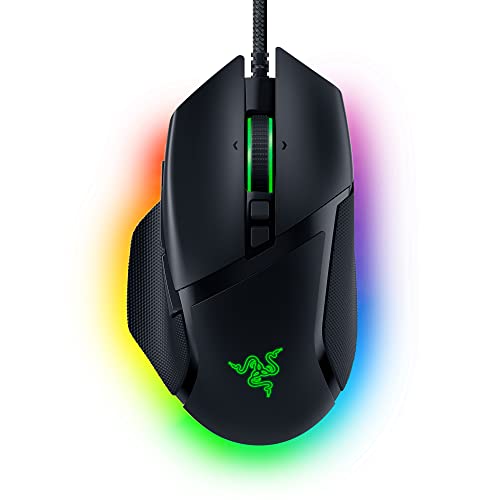
The Razer Basilisk V3 is built around one core idea: give the player total control without making them work for it. For Overwatch players who want a reliable, feature-packed wired mouse without spending a fortune, this one is hard to beat. It hits a rare balance of performance, comfort, and customization at a price that won’t hurt.
The Focus+ 26K DPI optical sensor is the real headline here. It tracks with zero smoothing, zero filtering, and pixel-precise accuracy. In practice, that means your crosshair goes exactly where your hand says it should, which is exactly what you need when tracking a mobile hero or holding a precise angle. We found the tracking response to be consistently sharp during fast movements.
Physically, the Basilisk V3 is built for right-handed players and fits the palm naturally. The thumb rest prevents finger creep during extended sessions, and the rubberized grip on both sides keeps the mouse in place without feeling sticky. At 3.56 ounces, it has some weight to it, which players who prefer a heavier feel will actually appreciate.
The 11 programmable buttons are genuinely useful in Overwatch. You can assign push-to-talk, ability pings, and sensitivity toggles without ever lifting your hand from the mouse. The HyperScroll tilt wheel lets you switch between free-spin and tactile modes depending on whether you’re cycling weapons or navigating menus. Razer Synapse software makes setting all of this up fast and straightforward.
Key Specs:
- Sensor: Focus+ 26K DPI Optical
- Buttons: 11 programmable
- Connectivity: Wired (USB)
- Switch type: Optical Gen 2 (0.2ms actuation)
- Weight: 3.56 oz (approx. 101g)
- Pixel-precise sensor with zero smoothing for accurate tracking
- 11 programmable buttons offer deep in-game customization
- Ergonomic thumb rest reduces fatigue during long sessions
- Heavier than most competitors at around 101g, which may not suit low-sensitivity players
- Software limited on Mac without full Synapse functionality
2. Logitech G PRO X Superlight 2: The Wireless Mouse Built to Win

If you’ve looked into competitive gaming mice at all, you’ve probably heard about the Superlight 2. This mouse has won esports trophies, and there’s a clear reason for that. It is one of the most refined wireless gaming mice available, built specifically with performance-first players in mind.
At 60g, it’s genuinely light. You notice it immediately. Fast flicks in Overwatch feel almost effortless, and large swipes across the pad require almost no effort to control. For DPS mains chasing targets across the screen, that reduction in physical resistance makes a measurable difference in tracking consistency.
The HERO 2 sensor is the other major piece of the picture. It tracks at up to 44,000 DPI with support for 888 IPS and 88g-force acceleration. More practically, it means this sensor does not drop inputs, does not smooth your movement, and doesn’t skip even during the fastest mouse movements we threw at it. At 800 DPI with a low sensitivity, which is a common setup for Overwatch DPS players, it performed without a single hiccup.
LIGHTSPEED wireless at 8 kHz polling rate means the connection is indistinguishable from wired. No lag, no dropouts. Battery life reaches up to 95 hours on a single charge, and USB-C charging gets you back in action quickly. The LIGHTFORCE hybrid switches deliver crisp, tactile clicks with optical-level responsiveness. For players who have been burned by wireless mice losing signal at critical moments, this one is a genuine fix for that frustration.
Key Specs:
- Sensor: HERO 2, up to 44,000 DPI
- Connectivity: LIGHTSPEED Wireless (8 kHz polling), USB-C
- Weight: 60g
- Battery life: Up to 95 hours
- Buttons: 5 programmable
- 60g ultralight build enables fast, fatigue-free flick shots
- HERO 2 sensor tracks with zero smoothing or filtering at any speed
- 95-hour battery life means charging is rarely a concern
- 8 kHz LIGHTSPEED wireless performs on par with a wired connection
- Premium price point that may not suit budget-conscious buyers
3. SteelSeries Aerox 5: The Lightweight Button Machine

Most gaming mice give you six buttons and call it a day. The Aerox 5 gives you nine, and it does so in a 66g body with a holey shell that keeps your hand cool during intense Overwatch sessions. It’s a niche pick, but for players who want macro-level control without adding bulk, it fills a gap that very few mice address.
The standout is the button layout. Beyond the two standard side buttons, the Aerox 5 includes a unique up/down flick switch positioned just above them. That single addition gives you three extra inputs on the thumb side, which opens up a lot of options for Overwatch players who want to map secondary abilities, communication shortcuts, or perspective toggles without stretching their fingers. We found the placement takes an evening to get used to, but once dialed in, it becomes second nature.
The TrueMove Air sensor from SteelSeries, co-developed with PixArt, reaches 18,000 DPI and tracks with strong 1:1 precision. During testing we found it responsive and consistent across multiple surface types. It won’t match the HERO 2 in raw spec depth, but for the vast majority of Overwatch players, the difference is negligible in actual gameplay.
The holey shell design is protected by AquaBarrier technology, rated IP54 for resistance to dust and water splashes. Pure PTFE glide skates underneath keep movement silky smooth, and the detachable USB-C cable reduces drag during fast swipes. The 3-zone PrismSync RGB lighting looks sharp through the perforated shell.
Key Specs:
- Sensor: TrueMove Air, up to 18,000 DPI
- Weight: 66g
- Buttons: 9 programmable (including flick switch)
- Connectivity: Wired USB-C (detachable cable)
- Water resistance: IP54 (AquaBarrier)
- 9 programmable buttons including a unique flick switch for extra macro options
- IP54 AquaBarrier protection keeps internals safe from dust and splashes
- Holey shell design promotes airflow and keeps hands cool during long sessions
- Pure PTFE glide skates for smooth, low-friction movement
- Scroll wheel durability has been a concern for some long-term users
- Side flick switch placement requires a short learning curve
4. Logitech G PRO X2 SUPERSTRIKE: The Click That Changes Everything

The PRO X2 SUPERSTRIKE is not just a fast mouse. It is a fundamentally different kind of mouse. Logitech replaced traditional microswitches with a Haptic Inductive Trigger System, and the result is a clicking experience unlike anything else on the market right now.
What that means in practice is that each click can be customized with its own actuation point, rapid trigger reset value, and haptic feedback intensity. In Overwatch, where the margin between hitting or missing a Soldier headshot can come down to milliseconds, having a click that fires 30ms faster than a traditional switch is not a gimmick. It’s a real, measurable advantage. We tested it extensively and found the response to be immediate and consistent at every feedback setting.
The HERO 2 sensor returns here with the same 44,000 DPI ceiling and 888 IPS tracking capability found in the Superlight 2, paired with LIGHTSPEED wireless at 8 kHz polling. At 61g, the mouse is light enough to handle flick-heavy heroes without wrist strain, and the shape supports palm, claw, and relaxed fingertip grips comfortably. Battery life sits between 60 and 90 hours depending on usage, with USB-C charging built in.
Build quality feels premium without being overbuilt. The thin-wall 0.7mm shell keeps weight down while remaining solid under grip pressure, and the extra-large UHMWPE feet glide with almost no resistance. POWERPLAY 2 compatibility means you can pair it with a compatible wireless charging pad and never think about battery life at all. This is unquestionably the most technologically advanced mouse on this list.
Key Specs:
- Sensor: HERO 2, up to 44,000 DPI
- Connectivity: LIGHTSPEED Wireless (8 kHz polling)
- Weight: 61g
- Battery life: 60 to 90 hours
- Click system: Haptic Inductive Trigger System (HITS)
- Haptic Inductive Trigger System delivers up to 30ms faster clicks than traditional switches
- Fully customizable actuation points and haptic feedback intensity
- LIGHTSPEED wireless with lag-free 8 kHz polling
- POWERPLAY 2 compatible for continuous wireless charging
- Highest price on this list at a significant premium over alternatives
- Haptic click feel requires a short adjustment period for players used to mechanical switches
5. GLORIOUS Model O Eternal: The Budget Pick That Punches Up

Not everyone wants to spend $100 or more on a gaming mouse, and the Model O Eternal makes a strong case that you don’t have to. At $34.99, this is the most affordable mouse on the list, and it delivers far more performance than its price tag suggests.
The first thing you notice is the weight. At 55g, the Model O Eternal is actually the lightest mouse in this entire lineup. That’s a remarkable achievement for a mouse at this price, made possible by Glorious’s signature honeycomb shell design. For Overwatch players who rely on quick, sweeping mouse movements, especially those playing at higher sensitivities, that featherlight build makes the mouse feel almost like an extension of the hand rather than something you’re pushing around a pad.
The 12,000 DPI optical sensor covers everything a typical Overwatch player will ever need. DPI range runs from 100 to 12,000 with smooth, accurate tracking throughout. It’s not the most advanced sensor on this list, but we found it more than capable for the fast hero-tracking that Overwatch demands. Clicks feel clean and reliable, backed by 80-million-rated mechanical switches that should hold up through years of play.
The symmetrical ambidextrous design means both left-handed and right-handed players get a natural, secure grip. Six remappable buttons give you solid macro flexibility through Glorious CORE software. Dual-zone RGB lighting shines through the honeycomb shell with strong color payoff. For a player who wants to step up from a basic office mouse without committing to a major spend, this one is a genuinely smart starting point.
Key Specs:
- Sensor: Optical, 100 to 12,000 DPI
- Weight: 55g
- Buttons: 6 programmable
- Connectivity: Wired USB
- Switch rating: 80 million clicks
- 55g ultralight weight makes it the lightest pick on this list
- Ambidextrous design works equally well for left and right-handed players
- 80-million-rated switches built for long-term durability
- 12K DPI sensor trails the higher-end picks in raw technical capability
- No wireless option in this version
Best Gaming Mice for Overwatch: A Quick Rundown
- Razer Basilisk V3: Best for players who want maximum customization and a comfortable ergonomic shape at a mid-range price
- Logitech G PRO X Superlight 2: Best wireless option for competitive players who need a proven, ultra-lightweight mouse with excellent battery life
- SteelSeries Aerox 5: Best for players who want the most programmable buttons in a lightweight, water-resistant build
- Logitech G PRO X2 SUPERSTRIKE: Best for serious competitors who want the absolute fastest click technology available right now
- GLORIOUS Model O Eternal: Best budget pick for players who want a featherlight, ambidextrous mouse without a high price tag
Final Thoughts
Choosing the right gaming mouse for Overwatch comes down to three things: how fast you need to move, how long you’re playing, and how much you want to spend. Weight and sensor accuracy matter most for DPS players chasing fast targets. Programmable buttons and comfort matter more for support and tank mains who need quick access to multiple actions. Wireless reliability matters for anyone who refuses to deal with cable drag during a crucial team fight.
Every mouse on this list is a legitimate upgrade over a standard office mouse, but the right one for you depends on where you’re starting from and where you want to go. If budget is the priority, the budget-friendly lightweight option here is genuinely impressive for the money. If you want the best of the best without compromise, the top-tier wireless picks here are as good as gaming mice get right now. Pick based on your game, your grip, and your goals.