Samsung VRF error code E152 usually indicates a fault involving the electronic expansion valve (EEV) in an indoor unit on supported DVM systems. This valve regulates refrigerant flow through the heat exchanger, so a malfunction can interfere with cooling or heating and may stop the affected unit from operating normally.
Because E152 is a second-stage fault, restarting the system may not resolve the underlying problem. Identifying the affected unit, checking for related symptoms, and arranging the correct diagnosis can help prevent unnecessary repairs.
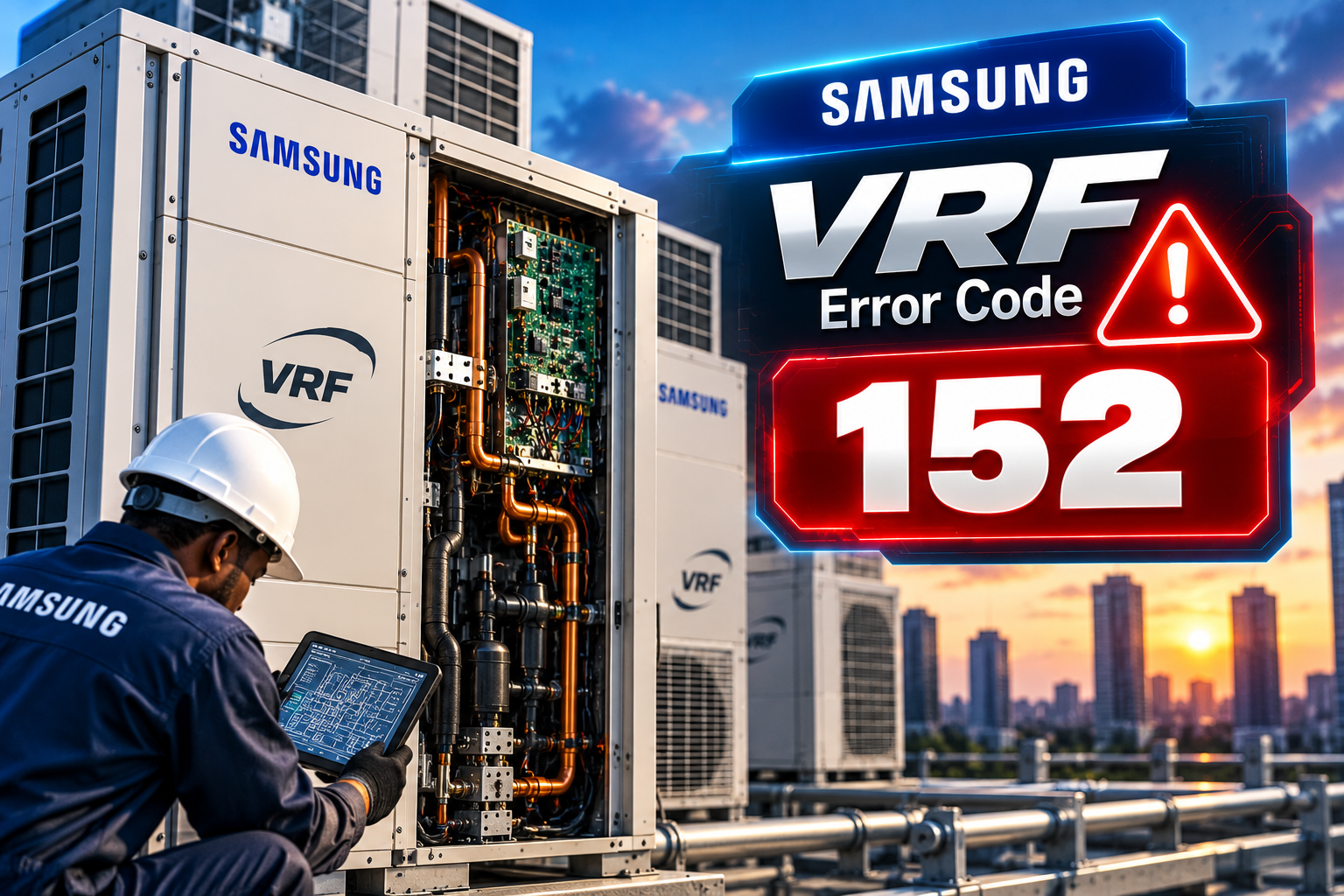
What Samsung VRF Error Code 152 Means
A Samsung VRF system uses electronic controls to distribute refrigerant according to the heating or cooling needs of connected indoor units. The electronic expansion valve adjusts refrigerant flow into the heat exchanger, allowing the system to regulate its operation as demand changes.
When the valve fails to respond as expected, the system may detect an EEV malfunction and display E152. Samsung DVM S service documentation identifies this code as an electronic expansion valve closure fault detected at the second stage. Some model-specific documentation also associates the fault with an indoor unit EEV that cannot operate correctly.
The effects can vary depending on the equipment and the nature of the failure. You may notice weak cooling, inadequate heating, unusual temperature changes, or an affected indoor unit that stops operating. Other indoor units may continue to work, although the actual response depends on the system configuration.
The code does not automatically mean that the entire VRF system needs replacement. A faulty connection, a damaged valve coil, a problem with the valve mechanism, or an incorrect setting on a compatible EEV kit may be responsible. The exact cause must be established through model-specific testing rather than the error code alone.
Samsung VRF Error Code 152: Common Causes
E152 generally directs attention to the electronic expansion valve and its associated electrical connections or settings. The following faults are among the main possibilities identified in Samsung service documentation and related troubleshooting guidance.
1. A Malfunctioning Electronic Expansion Valve
The electronic expansion valve controls how much refrigerant enters the indoor unit’s heat exchanger. It opens and closes in response to commands from the system’s control electronics, helping the unit maintain the required operating conditions.
If the valve becomes stuck, wears internally, or fails to respond to control commands, the system may detect an abnormal valve operation. Refrigerant flow can then differ from what the system requires, affecting the indoor unit’s ability to cool or heat effectively.
A persistent E152 fault, particularly when accompanied by poor performance from one indoor unit, makes the valve assembly a reasonable area to investigate. However, the symptoms alone cannot prove that the valve body has failed. Wiring, the valve coil, and other related components must be checked first.
2. A Damaged or Defective EEV Coil
The EEV coil is the electrical component that helps actuate the valve. If the coil develops an internal break or short circuit, it may fail to produce the movement required for proper valve operation.
The coil can also become damaged through deterioration or other electrical faults. In such cases, the valve body may still be mechanically sound, but the actuator cannot operate it correctly.
Samsung troubleshooting procedures specifically include checking the coil for an open circuit or short circuit when diagnosing valve faults. If testing confirms a defective coil, replacing the appropriate coil may resolve the problem without requiring replacement of the complete valve assembly.
3. Loose, Disconnected, or Damaged Valve Wiring
The EEV needs a reliable electrical connection to the indoor unit’s printed circuit board (PCB), which sends the control signals required for valve operation. A disconnected wire, damaged conductor, or poorly seated connector can interrupt those signals.
This possibility deserves attention when E152 appears shortly after maintenance, indoor unit replacement, or other work involving the equipment’s electrical connections. A connection may have been disturbed during servicing, even if the rest of the unit appears normal.
A wiring fault can produce symptoms similar to a defective valve coil. For this reason, replacing the EEV immediately may not solve the problem. A qualified technician should verify the relevant connections against the correct wiring diagram before deciding which component needs replacement.
4. Incorrect EEV Kit Address Settings
Some compatible Samsung installations use an EEV kit to control an electronic expansion valve. On these configurations, the kit’s address settings must be correct for the equipment to operate as intended.
An incorrect address setting can interfere with the valve’s control arrangement and cause a persistent fault. This is especially relevant when the error appears after a new kit has been installed, a component has been replaced, or the system’s configuration has changed.
Samsung’s service troubleshooting procedure specifically instructs technicians to verify the address setting when an EEV kit is used. The procedure distinguishes an address problem from a fault that requires replacement of the valve assembly.
This cause does not apply to every Samsung VRF installation. The equipment model and its control arrangement must be checked before any address settings are changed.
5. Internal Damage or Contamination Within the Valve
The EEV contains moving internal parts that regulate refrigerant flow through a small opening. Damage to the valve’s internal surfaces or interference with its movement can prevent it from responding correctly.
Samsung VRF troubleshooting material describes internal damage associated with foreign material affecting the valve’s orifice and pin surfaces. Such damage can interfere with valve operation and may require replacement of the affected assembly.
This type of problem cannot usually be confirmed through an external visual inspection. A technician must determine whether the valve is mechanically damaged and whether further checks of the refrigerant circuit are needed. Replacing the valve without assessing the underlying cause may allow the same problem to recur.
Samsung VRF Error Code 152: DIY Fixes
Although E152 often involves components that require professional attention, a few safe checks can help narrow down the problem. Start with the controller and the operating symptoms before attempting any reset or arranging internal repairs.
1. Confirm the Error Code and Identify the Affected Unit
Begin by verifying that the displayed code is E152 or 152. On supported Samsung DVM systems, the controller or outdoor unit display may also identify the address of the affected indoor unit.
Write down the full error display, including any accompanying unit address or other fault codes. This information helps distinguish a fault affecting a single indoor unit from a wider system issue.
Also check whether the problem occurs during cooling, heating, or both. Note when the error first appeared and whether it followed maintenance or component replacement. These observations give the service technician useful diagnostic information without requiring you to open the unit.
2. Check the Controller Settings and Operating Mode
Confirm that the affected indoor unit is set to the intended operating mode and temperature. If your system uses a central controller, verify that the unit has not been disabled by the building’s controls or operating schedule.
Conflicting commands or restrictions can affect normal operation, although they do not establish the cause of E152. Correcting an incorrect user setting may restore normal operation in some circumstances, but it will not repair a defective valve coil, damaged wiring, or a mechanically faulty valve.
If the code remains visible after checking the settings, proceed with the remaining safe checks rather than repeatedly changing the controls.
3. Check the Accessible Air Filter and Airflow
A dirty filter or blocked air intake can reduce airflow through the indoor heat exchanger. Although these conditions are not established causes of E152 in the cited Samsung diagnostic procedure, they can contribute to poor cooling or heating performance and make the symptoms harder to interpret.
If the indoor unit has a user-accessible filter, follow the manufacturer’s cleaning instructions. Remove visible obstructions around accessible air inlets and outlets, and allow any washed filter to dry completely before reinstalling it.
This step will not repair an electrical or mechanical EEV fault. Its purpose is to eliminate a separate airflow problem that may be contributing to the unit’s poor performance. If E152 persists, the valve and its associated components still require diagnosis.
4. Perform Only a Manufacturer-Approved Restart
A restart may help establish whether the error persists after the system has been returned to a normal operating state. However, it should be attempted only through the operating procedure approved for your particular model.
First, record the error code and affected unit address. Then use the normal controller shutdown procedure, following the waiting period specified in the user manual before restoring operation if the procedure permits it.
Avoid repeatedly resetting the equipment. Samsung service documentation cautions that excessive resetting can damage the heat exchanger. Its service procedure also involves additional diagnostic checks before the valve is replaced.
If E152 returns, stop repeating the reset and arrange a technical inspection. Do not open the outdoor unit or operate its service reset controls unless you are qualified and following the applicable service procedure.
5. Review Recent Maintenance or Installation Work
Consider whether the fault appeared after an indoor unit, control board, EEV coil, or EEV kit was installed or replaced. Recent work can help the technician identify which components and connections need closer examination.
If a contractor recently serviced the equipment, contact them and provide the error code, the affected unit address, and any changes made during the work. Ask them to verify the valve wiring, coil connection, and any applicable EEV kit address settings against the model-specific service manual.
Avoid removing electrical covers, disconnecting connectors, measuring coil resistance, or adjusting internal settings yourself. These tasks can expose you to electrical hazards and may cause further damage if performed incorrectly.
6. Contact a Qualified Samsung VRF Technician
Professional diagnosis is necessary when E152 remains after the approved basic checks or repeatedly returns after a restart. It is also the appropriate next step if the affected unit has stopped cooling or heating, or if the fault began after component replacement.
A qualified technician can follow the Samsung service procedure to:
-
Verify the wiring connection between the EEV and the indoor unit PCB.
-
Check whether the EEV coil is correctly fitted and electrically functional.
-
Confirm applicable EEV kit address settings.
-
Test whether the valve operates correctly after the required diagnostic procedure.
-
Replace the defective coil or valve assembly if testing confirms that it has failed.
Samsung service documentation identifies these checks as part of the investigation for an EEV closure malfunction. It also warns that valve replacement is involved work because refrigerant must be handled and recovered using the appropriate service procedure.
Do not attempt to open the refrigerant circuit, remove the valve body, or top up refrigerant as an experiment. Those actions require suitable equipment, training, and compliance with the applicable refrigerant handling requirements.
Wrap-Up
Samsung VRF error code 152 generally points to a fault involving the electronic expansion valve or its control arrangement on supported DVM systems. A defective coil, damaged wiring, incorrect EEV kit settings, or internal valve damage may prevent normal operation.
Start by confirming the code, identifying the affected unit, and checking the accessible controller settings and airflow. Use only the restart procedure approved for your equipment. If E152 persists, have a qualified technician test the valve, electrical connections, and relevant settings before replacing parts. Accurate diagnosis helps restore operation while avoiding unnecessary repairs.