Although some initial checks are safe to perform at home, the code may indicate a mechanical or electrical problem that requires professional diagnosis.
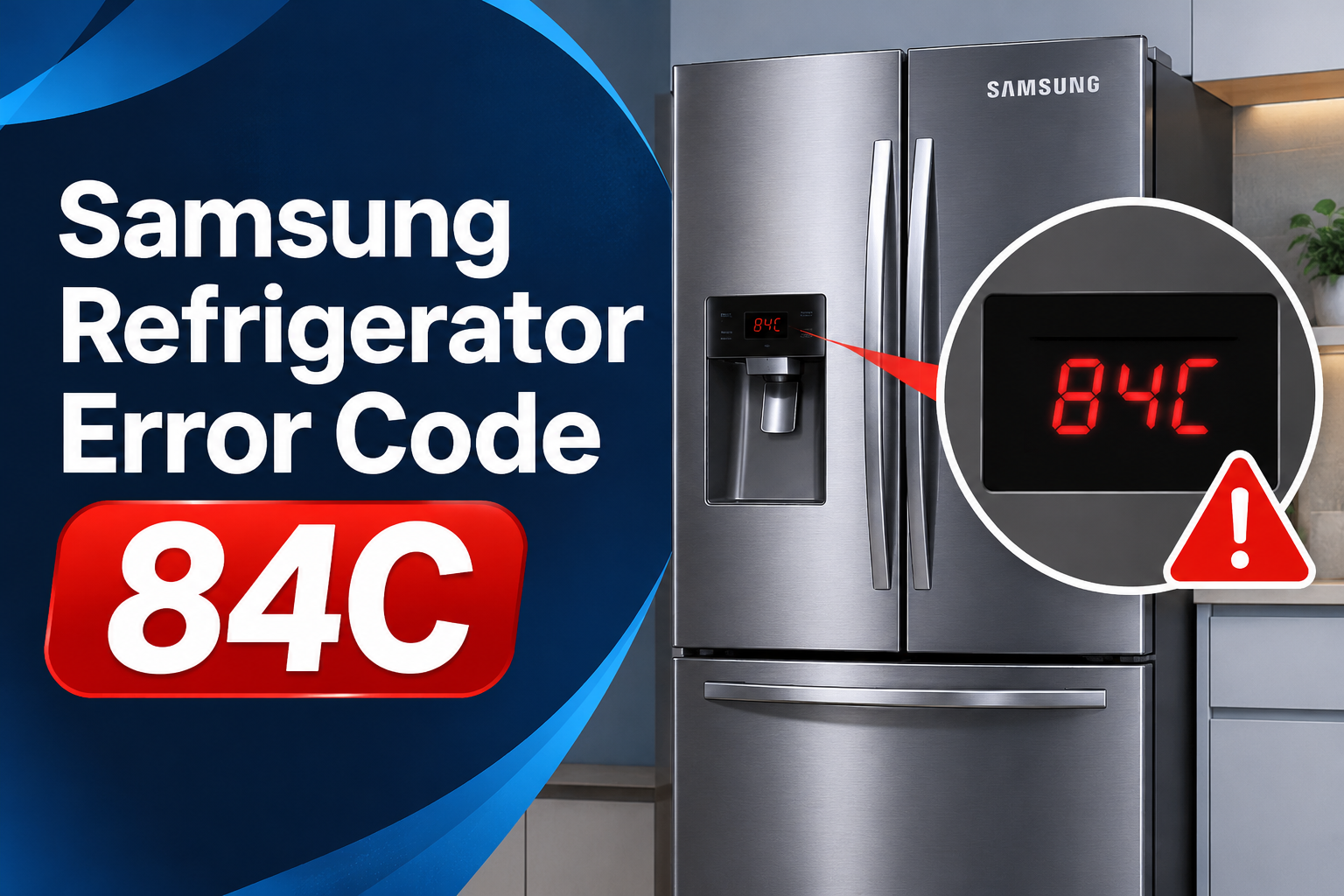
What Does Samsung Refrigerator Error Code 84C Mean?
Samsung refrigerator error code 84C indicates a compressor lock error on compatible models. Samsung’s official refrigerator error-code guide identifies 84C as a compressor lock condition. Related Samsung technical documentation describes codes 84C and 84E as compressor motor locked or over-RPM errors, associated with a restriction that affects compressor operation. The precise diagnostic procedure depends on the refrigerator model.
Samsung be+1
The compressor acts as the driving component of your refrigerator’s sealed cooling system. It compresses refrigerant and helps circulate it through the condenser, expansion device, and evaporator. This process allows heat to leave the refrigerator compartments and maintains the temperatures needed to preserve food.
When the compressor cannot start or rotate as expected, the refrigerator may be unable to cool properly. You might notice that the freezer is getting warmer, the fresh food compartment is losing its chill, or the appliance is producing repeated clicking or humming sounds without cooling effectively. Some models may stop normal compressor operation after detecting the fault.
However, the code doesn’t automatically mean the compressor itself has failed. A problem with its inverter control board, electrical connections, or another part of the compressor system may prevent normal operation. The code identifies the affected system, while further testing establishes the actual cause.
Samsung’s general guidance is to avoid unplugging the refrigerator or manipulating its control panel simply to clear an error code unless directed to do so. These actions may remove useful diagnostic information. If your display shows 84C, preserve the code and consult the instructions for your exact model or arrange service through Samsung Support.
Samsung be
Samsung Refrigerator Error Code 84C: Common Causes
Several faults can prevent the compressor from operating correctly and trigger this error. The most likely explanation depends on the refrigerator’s design, its recent operating history, and the results of electrical and mechanical tests.
1. A Mechanically Locked or Failed Compressor
The compressor contains moving internal components that must operate correctly for refrigerant to circulate. If its motor or internal mechanical parts become damaged or seize, the compressor may be unable to start despite receiving a demand for cooling.
Internal wear, mechanical damage, or a developing compressor fault can contribute to this condition. When the compressor cannot turn as expected, the refrigerator’s monitoring system may register the lock condition and prevent normal operation.
You may notice repeated clicking, a brief humming sound followed by silence, or a gradual loss of cooling in both compartments. However, these symptoms don’t prove that the compressor is mechanically locked. A defective inverter board or an electrical supply problem can produce similar behavior.
A technician must test the compressor and its associated components before recommending replacement. Attempting to force the motor to turn or striking the compressor housing can cause further damage.
2. A Faulty Inverter Control Board
Many Samsung refrigerators use an inverter system to control compressor operation. Depending on the model, the inverter board regulates the electrical power delivered to the compressor and controls its speed according to cooling demand.
If the board develops an electrical fault, it may fail to start the compressor or supply the correct operating signals. The refrigerator can then report a compressor-related error even though the compressor itself is still functional.
A control board problem may occur alongside other irregular behavior, but code 84C alone cannot confirm it. The technician may need to test the board’s power supply, output signals, and associated circuitry to distinguish a board fault from a failed compressor.
Replacing the inverter board without proper testing can be expensive and may leave the original problem unresolved. The appropriate repair depends on the refrigerator’s particular inverter design and the results of diagnostic measurements.
3. Damaged Compressor Wiring or Electrical Connections
The compressor depends on electrical connections between its motor, control electronics, and other components. A loose connector, damaged conductor, or faulty connection can interrupt the power or signals needed for proper operation.
Electrical faults may result from damaged wiring, deteriorated connections, or a component that has developed an internal failure. In some cases, an interrupted connection may prevent the compressor from starting even when the motor is mechanically sound.
The resulting symptoms can resemble compressor failure. The refrigerator may stop cooling, attempt to start the compressor, or display the error repeatedly.
Diagnosing this cause requires access to internal electrical components and appropriate testing equipment. Because compressor inverter circuits can carry dangerous voltages, inspection and repair should be performed by a qualified appliance technician.
4. An Unstable Electrical Supply
Voltage fluctuations, a brief power interruption, or another electrical disturbance can interfere with refrigerator operation. If the compressor doesn’t receive suitable electrical power, it may fail to start normally.
This possibility deserves consideration if the error appeared after a power outage, a noticeable voltage fluctuation, or an electrical problem elsewhere in the building. A damaged outlet or power connection may also warrant investigation.
However, 84C should not be treated as proof of an incoming-voltage problem. Samsung lists separate compressor-related codes, including 85E for undervoltage on applicable models, so each displayed code must be interpreted according to its meaning.
Samsung be
You can safely note whether a power interruption occurred before the error appeared. Determining whether the supply voltage or compressor circuit is responsible requires suitable electrical measurements. Don’t open electrical panels, test live connections, or repeatedly reset a circuit breaker that continues to trip.
5. A Restriction or Fault Within the Refrigeration System
Samsung’s technical documentation associates the 84C and 84E error family with a compressor restriction condition. A problem within the compressor or sealed refrigeration circuit may interfere with normal operation and contribute to the fault.
Support
The refrigerator’s sealed system contains refrigerant that circulates through connected pipes and heat exchangers. If a technician identifies a restriction, leak, or another abnormal condition in this system, the repair may involve specialized refrigeration tools and testing.
Symptoms such as poor cooling or a compressor that repeatedly attempts to start are insufficient to identify a specific restriction. Similar symptoms can occur when the compressor or inverter electronics have failed.
Don’t attempt to open refrigerant lines, add refrigerant, or dismantle the compressor system. These procedures require specialized equipment and appropriate technical training. A qualified refrigerator technician must determine whether a sealed-system fault is actually present.
Samsung Refrigerator Error Code 84C: How to Fix
Because error code 84C concerns the compressor, most internal repairs aren’t suitable for an ordinary DIY repair. The following steps focus on safe checks, protecting your food, and gathering useful information without disturbing the refrigerator’s diagnostic evidence.
1. Confirm the Error Code and Model Number
Start by checking the complete code displayed on the refrigerator. Record whether it reads 84C, 84E, 85C, or another combination. Similar-looking codes can refer to different faults, so accuracy is essential.
Find the refrigerator’s model number on the manufacturer’s identification label, commonly located inside the fresh food compartment or on another accessible part of the cabinet. Photograph the display and label for reference.
Use the model number to locate the appropriate Samsung refrigerator error-code guide or contact Samsung support. This helps establish whether the code has a model-specific interpretation and identifies the correct service procedure.
What to expect: You’ll have the information needed to obtain the correct guidance. If the display confirms 84C, proceed with safe external checks and arrange service rather than assuming a particular internal component has failed.
2. Preserve the Error Code Instead of Repeatedly Resetting the Refrigerator
It can be tempting to unplug the refrigerator whenever an error appears. However, Samsung advises against unplugging the appliance or interacting with its panel merely to clear a displayed error unless the manufacturer directs you to do so.
Samsung be
Leave the code visible when possible. Record when it appeared, whether the refrigerator was cooling normally beforehand, and whether any clicking, humming, or other unusual sounds occurred.
Avoid repeatedly switching the refrigerator on and off to force the compressor to restart. If the underlying fault remains, repeated attempts won’t repair the affected component and may complicate diagnosis.
What to expect: Keeping the original error and symptom history available makes it easier for a technician to investigate the fault. Because 84C is a compressor-related code, use model-specific manufacturer guidance before attempting any reset procedure.
3. Check the External Power Connection Safely
Consider whether the code appeared after a power outage, voltage fluctuation, or problem with the electrical supply. This information can help a technician distinguish a possible supply issue from an internal compressor fault.
Without moving the refrigerator or opening any electrical compartment, visually check the accessible power cord for obvious damage. If the cord, plug, or outlet appears scorched, melted, or damaged, or you notice a burning smell, stop using the appliance and seek qualified assistance. Don’t touch a damaged or unusually hot electrical connection.
You can also check whether the refrigerator’s circuit breaker has tripped, provided you can do so safely. Don’t repeatedly reset a breaker that trips again, and don’t use an extension cord as a workaround for a power connection problem.
What to expect: This check may reveal an obvious external electrical concern, but it cannot confirm that the supply voltage is correct or that the inverter board is functioning properly. Those checks require appropriate testing.
4. Protect Perishable Food and Monitor Cooling
A compressor fault can interrupt cooling, so check whether the fresh food and freezer compartments are maintaining their normal temperatures. An error code may appear before you have fully noticed the effect on stored food.
Keep the refrigerator and freezer doors closed as much as practical while arranging service. Opening them repeatedly allows cold air to escape and can accelerate warming.
If the compartments are warming, move vulnerable perishable food to another functioning refrigerator or suitable cold storage. Don’t assume the appliance is cooling properly simply because its interior lights and display remain on. Electrical functions may continue even when the cooling system has a fault.
What to expect: These steps help limit food loss while the fault is being investigated. They won’t resolve a locked compressor, and continued use should not be relied upon to maintain safe food temperatures when cooling has failed.
5. Check the Installation Area for Obvious Problems
Look around the refrigerator without pulling it away from the wall or removing any covers. Make sure accessible ventilation openings haven’t been blocked by stored items, and check whether the appliance is positioned as instructed in its user manual.
Restricted ventilation can interfere with heat dissipation and contribute to operating problems. However, a blocked opening isn’t a confirmed explanation for code 84C, so don’t assume that improving clearance will fix the compressor.
If the refrigerator has been moved recently or its installation area has changed, mention this when booking service. Follow the manufacturer’s clearance requirements rather than applying measurements intended for a different model.
What to expect: Correcting an obvious external obstruction may improve normal ventilation, but a persistent 84C error still requires professional diagnosis. Don’t remove the rear access panel or attempt to inspect the compressor yourself.
6. Contact a Qualified Samsung Refrigerator Technician
If the display continues to show 84C, the compressor fails to operate normally, or cooling has stopped, arrange professional service. Samsung’s official error-code guidance directs users to its support service for codes that require further diagnosis.
Samsung be
A qualified technician can test the compressor, examine its inverter control board, assess the associated wiring, and investigate any suspected refrigeration-system restriction. These checks help establish whether the problem involves the compressor itself, its electrical controls, or another part of the cooling system.
When booking the repair, provide the model number, a photograph of the displayed code, the date the fault began, and any relevant history of power interruptions or cooling changes. Mention unusual noises and whether both compartments are affected.
Don’t attempt compressor replacement, inverter board repair, live-voltage testing, or sealed-system work yourself. These jobs can involve dangerous electrical voltages and pressurized refrigerant. The technician’s findings should guide the repair rather than replacing expensive components based on the error code alone.
Wrap-Up
Samsung refrigerator error code 84C signals a compressor lock condition that can interfere with normal cooling. A mechanical compressor fault, inverter board problem, damaged wiring, electrical supply issue, or refrigeration-system restriction may be responsible. The exact cause depends on the model and the results of proper testing.
You can safely confirm the code, check for obvious external problems, preserve diagnostic information, and protect your food while arranging service. If the error persists or the refrigerator stops cooling, qualified diagnosis is the appropriate next step.