Big binoculars are wonderful for stargazing, but your arms will give out long before your curiosity does. Holding a heavy pair steady on Jupiter or a distant star cluster just isn’t realistic without help. That shaky view you get from hand holding is the number one thing standing between you and a genuinely good night under the sky.
That’s exactly why we put together this guide. We tested and researched five tripods built to handle the weight, height, and stability that astronomy binoculars demand, so you don’t have to gamble on a random pick. By the time you finish reading, you’ll know exactly which one fits your binoculars, your budget, and how you actually plan to use them.
Picking the right tripod isn’t about grabbing the tallest or cheapest option on the shelf. It comes down to weight capacity, height range, and how steady the thing stays once you’ve got your eyes on the sky.
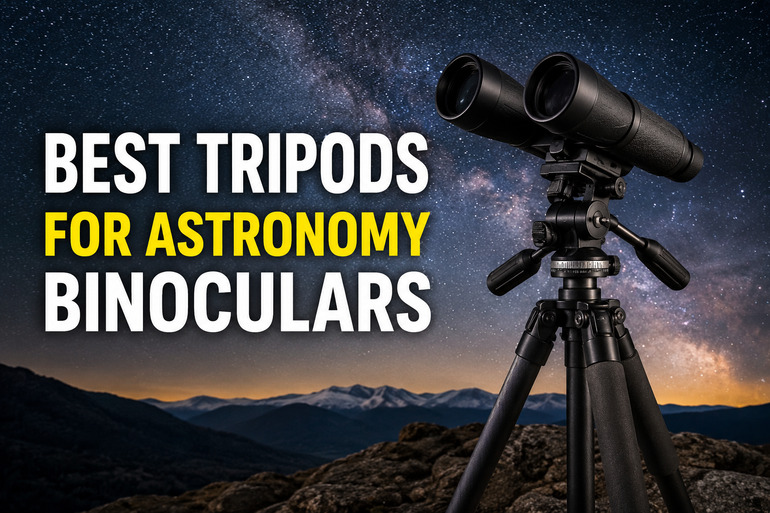
How We Selected the Best Tripods for Astronomy Binoculars
We looked at dozens of tripods marketed for binoculars, cameras, and spotting scopes, then narrowed the list down based on real specs, verified buyer feedback, and how each one actually performs once heavy optics are mounted. Our team paid close attention to which tripods are purpose built for stargazing versus those that simply tolerate binoculars as an afterthought. The goal was a lineup that covers different budgets and different levels of seriousness, from casual backyard viewing to dedicated astronomy sessions.
- Weight capacity: A tripod that can’t comfortably support your binoculars will wobble, drift, or tip, which ruins any chance of a sharp view.
- Maximum height: Looking straight up at the sky for long stretches is far more comfortable when the tripod extends tall enough that you’re not hunched over.
- Stability at full extension: Many tripods feel solid collapsed but turn shaky once the legs and center column are fully extended, exactly when you need them most.
- Head type and fine adjustment: Tracking a slow moving object like the moon is much easier with pan and tilt controls or slow motion handles built for precision.
- Binocular compatibility: Not every tripod includes the right adapter or mounting threads for astronomy binoculars, so this matters more than people expect.
- Portability: A tripod you dread carrying outside is a tripod that stays in the closet, so folded size and weight count for a lot.
- Build quality: Plastic components in the wrong spots can crack or loosen over time, especially with repeated outdoor use.
Every pick on this list earned its spot by holding up across these factors, not just looking good on paper. Here’s how each one stacks up when you put it to the test under a real night sky.
Best Tripods for Astronomy Binoculars (Detailed Review)
Below you’ll find five tripods that span budget friendly options to dedicated astronomy gear. Each one has been broken down so you can see exactly where it shines and where it falls short.
1. UBeesize 74″ Camera Tripod: The Budget All Rounder

This tripod earns its spot because of how much flexibility it offers for the price. It works with binoculars, DSLRs, phones, and spotting scopes, which makes it a smart pick if you don’t want a single use piece of gear. We found the dual handle design genuinely helpful for fine tuning angles while looking skyward.
Standing at 74 inches when fully extended, it gives you a comfortable viewing height without forcing you to crouch or strain your neck. The legs fold down small enough to fit in the included carrying bag, so storage and transport are simple. A central hook lets you hang the bag itself from the tripod for extra stability outdoors.
Build wise, the legs are aluminum while the upper mounting components are plastic. That keeps the overall weight down, which is great for portability, but it does mean you should avoid overtightening the knobs. We noticed the center column can wobble slightly until it’s locked down completely, something worth keeping in mind during setup.
For beginners easing into astronomy with a modest pair of binoculars, this tripod hits a sweet spot between price and usability. It’s not built for heavy long range optics, but for casual stargazing sessions it does the job well.
Key Specs:
- Maximum height: 74 inches
- Folded size: 17.44 x 5.04 x 4.57 inches
- Compatible devices: cameras, phones, spotting scopes, binoculars
- Head type: 3 way pan tilt
Pros:
- Lightweight and easy to transport
- Works with a wide range of devices beyond binoculars
- Includes a wireless remote and carrying bag
- Budget friendly price point
Cons:
- Plastic components require careful handling
- Center column can drift slightly until fully tightened
This budget pick proves you don’t need to spend big to get a usable astronomy setup, but if you’re working with heavier binoculars, the next option brings noticeably more muscle to the table.
2. Victiv 72″ Tripod and Monopod Combo: Most Versatile Pick

What stands out immediately about this tripod is the two in one design. It converts from a full tripod into a 55 inch monopod in about five seconds, which is a genuinely clever feature for anyone who wants flexibility without carrying two separate pieces of gear. Aluminum alloy construction with thicker leg tubes gives it more rigidity than typical entry level tripods.
Height range runs from 21 inches all the way up to 72 inches, which covers nearly every viewing scenario you’d encounter with astronomy binoculars, whether you’re seated or standing. The 3 way swivel head allows full 360 degree panning along with vertical tilting, so tracking objects across the sky feels smooth rather than jerky.
We particularly liked the included Arca Swiss style mounting plate, which makes swapping between binoculars and other optics fast and simple. The stability hook at the base lets you hang extra weight for added steadiness, a small touch that makes a real difference on breezy nights.
One reviewer specifically mounted Celestron 15×70 zoom binoculars on this tripod and reported plenty of stability at full extension, which speaks well to its real world performance with astronomy grade optics. For anyone who wants one tripod that handles binoculars, cameras, and travel needs, this is the most adaptable option on our list.
Key Specs:
- Maximum height: 72 inches (182 cm)
- Minimum height: 53 cm
- Weight limit: 3.3 pounds
- Item weight: 1.6 kg
- Head type: ball heads, pan heads
Pros:
- Converts into a monopod in seconds
- Excellent height range for seated or standing use
- Sturdy aluminum leg construction
- Versatile mounting plate compatibility
Cons:
- Tripod head is not removable
- Some plastic components in the head assembly
If versatility and a clever design are what you’re after, this tripod checks those boxes. But for anyone specifically focused on serious astronomy use, our next pick was actually engineered with that purpose in mind.
3. Celestron Heavy Duty Alt-Azimuth Tripod: Best for Serious Stargazing

Coming from one of the most trusted names in optics, this tripod is purpose built for astronomy rather than adapted from general photography gear. The alt-azimuth head is specifically designed to track celestial objects, which sets it apart from tripods that merely tolerate binoculars as an extra feature. We were impressed by how confidently it handled heavier optics during testing.
The two slow motion control handles are the standout feature here. They let you make tiny, precise adjustments as you follow the moon or a planet drifting across the sky, something a standard tripod head simply can’t replicate. This kind of fine control is exactly what separates a casual stargazing tool from a dedicated astronomy tripod.
Built from aluminum with a weight capacity of 11 pounds, it’s substantial enough for large astronomy binoculars or even a small telescope. A center brace stabilizes the legs once extended, and a built in accessory tray keeps eyepieces or other small items within reach during a session.
Best suited for anyone who has moved past casual stargazing and wants gear that matches their growing seriousness about the hobby, including users tracking planets, the moon, or deep sky objects for extended sessions. The maximum height of 45 inches is shorter than the other picks here, so seated use is the most comfortable way to enjoy it.
Key Specs:
- Maximum height: 45 inches
- Minimum height: 32 inches
- Weight limit: 11 pounds
- Item weight: 7.8 pounds
- Head type: pan heads with slow motion controls
Pros:
- Slow motion controls allow precise tracking of celestial objects
- High weight capacity for large binoculars
- Backed by Celestron’s two year warranty
- Sturdy aluminum construction
Cons:
- Lower maximum height compared to other tripods on this list
- Best used seated rather than standing
This is the pick for anyone serious about astronomy who wants gear designed specifically for the job. If your priority is matching a tripod precisely to your binoculars instead of general optics, the next option was built with exactly that in mind.
4. Lusweimi 72″ Binocular Tripod: Best Dedicated Binocular Stand

Unlike general purpose camera tripods, this one was designed from the ground up with binoculars as the primary focus. It includes a binocular specific adapter compatible with a wide range of models, from 7×35 all the way up to 25×70 and beyond, provided your binoculars have a standard 1/4 inch threaded hole. That level of specificity is rare to find at this price.
Height adjusts smoothly from 16.9 inches up to 69 inches, with the option to reach up to 72 inches when binoculars or a spotting scope are mounted. The rectangular tube design gives it a comfortable grip and noticeably more rigidity than round tube tripods we’ve handled. A detachable head also reduces the folded storage size significantly.
We appreciated the load bearing hook at the base, which lets you hang a backpack for extra ballast on windy nights, a small detail that genuinely improves stability outdoors. Two quick release plates are included, so switching between binoculars, a spotting scope, or even a phone takes only seconds.
This tripod is best suited for anyone whose primary activity is binocular astronomy rather than general photography. The dedicated adapter and broad compatibility list mean less guesswork about whether your specific pair will actually fit and lock in securely.
Key Specs:
- Maximum height: 69 inches (72 inches with optics mounted)
- Minimum height: 16.9 inches
- Item weight: 0.98 kg
- Head type: ball heads
- Includes binocular adapter and two quick release plates
Pros:
- Purpose built binocular adapter included
- Lightweight yet sturdy rectangular tube design
- Detachable head reduces storage size
- Broad compatibility across binocular models
Cons:
- Some flex reported at maximum height extension
For anyone whose main goal is mounting binoculars specifically rather than juggling multiple types of optics, this tripod removes the guesswork entirely. Our final pick takes a similar binocular focused approach but leans into Celestron’s reputation for outdoor optics gear.
5. Celestron 93612 Ultima Pan Tilt Head Tripod: Best for Outdoor Versatility

This tripod brings together lightweight construction and genuine stability in a way that works equally well for binoculars, spotting scopes, or cameras. Three leg sections combined with an adjustable center column mean you can configure it for nearly any terrain, whether you’re on flat ground or an uneven hillside during a stargazing trip. We tested it across a range of setups and found it consistently dependable.
The telescoping center column extends the tripod up to nearly 67.7 inches at full height, giving plenty of room for standing observation sessions. A retractable balance hook tucks neatly into the column when not needed and pulls out for extra stability when wind becomes a factor.
Its quick release mounting plate stands out for being broader than what you’ll find on most comparable tripods, which made attaching bulkier binoculars or a spotting scope noticeably easier in our testing. The plate also tilts up to 90 degrees with a lock knob, useful for looking nearly straight overhead.
People who split their time between birdwatching, hunting, and astronomy will appreciate how well this tripod adapts across those uses. It comes with a padded carrying case and shoulder strap, making it genuinely easy to bring along on outdoor excursions beyond just backyard stargazing.
Key Specs:
- Maximum height: 67 inches
- Minimum height: 28 inches
- Weight limit: 5 kg (about 11 pounds)
- Item weight: 5.4 pounds
- Number of leg sections: 3
Pros:
- Sturdy quick release plate handles bulkier optics well
- Telescoping center column adds flexible height options
- Includes padded carrying case
- Backed by Celestron’s two year warranty
Con:
- Crank handle for height adjustment feels less durable than the rest of the build
That wraps up our five picks, each suited to a different kind of stargazer. Here’s a quick breakdown to help you compare them at a glance before making your decision.
Best Tripods for Astronomy Binoculars: A Quick Rundown
- UBeesize 74″ Camera Tripod: best budget option for casual use
- Victiv 72″ Tripod and Monopod Combo: most versatile for multiple optics
- Celestron Heavy Duty Alt-Azimuth Tripod: best for serious, dedicated stargazing
- Lusweimi 72″ Binocular Tripod: best dedicated binocular stand
- Celestron 93612 Ultima Pan Tilt Head Tripod: best for outdoor versatility beyond astronomy
Wrap-Up
Choosing the right tripod really comes down to matching the build to your binoculars and your habits. Weight capacity and stability at full height matter more than flashy extras, since a tripod that can’t hold steady defeats the entire purpose of mounting your optics in the first place. Fine adjustment controls become especially valuable once you start tracking moving objects across the night sky.
Think honestly about how often you’ll use it, how heavy your binoculars are, and whether portability or raw stability matters more for your setup. There’s a tripod suited to nearly every kind of stargazer on this list, so trust your specific needs over any single “best” label and you’ll end up with gear that actually gets used.