A Sony A7III paired with a heavy zoom lens punishes any tripod that isn’t built for it. Legs flex, ball heads droop, and that crisp long exposure you were chasing turns into a blurry mess.
We put five tripods through real use with this exact camera, testing them with different lens combinations, on uneven ground, and during long video sessions. This guide breaks down which ones held up, which ones are worth the extra money, and which one to skip if your budget is tight.
Below you’ll find the full breakdown, including specs, strengths, and a couple of honest drawbacks for each pick.
How We Selected the Best Tripods for A7III
Our team spent time mounting each tripod with an A7III body paired with lenses ranging from a 35mm prime to a heavier telephoto zoom, since load handling changes dramatically depending on what’s riding up top. We paid close attention to how each one performed outdoors, in wind, and during extended shooting sessions where small wobbles become obvious fast.
- Load capacity: We checked whether each tripod could comfortably support the A7III plus a larger lens without sagging or tipping.
- Build material: Carbon fiber and aluminum each bring different tradeoffs in weight, cost, and vibration absorption.
- Portability: Folded length and overall weight matter most for anyone hiking or flying with their gear.
- Head type and control: Ball heads, fluid heads, and locking systems all affect how quickly and precisely you can frame a shot.
- Stability at full height: Several tripods perform fine at mid height but get shaky once fully extended, so we tested both.
- Versatility: Features like detachable monopods, inverted columns, and low angle modes add real value for varied shooting styles.
Every pick here earned its spot through actual testing, not just spec sheets. That gives you a shortlist you can trust instead of guesswork.
Best Tripods for A7III (Expert Ranking & Review)
These five tripods cover everything from ultralight travel setups to a dedicated video head built for smooth panning. Each one suits a different kind of A7III shooter, so look for the one that matches how you actually shoot.
1. Peak Design Travel Tripod: The Compact Powerhouse
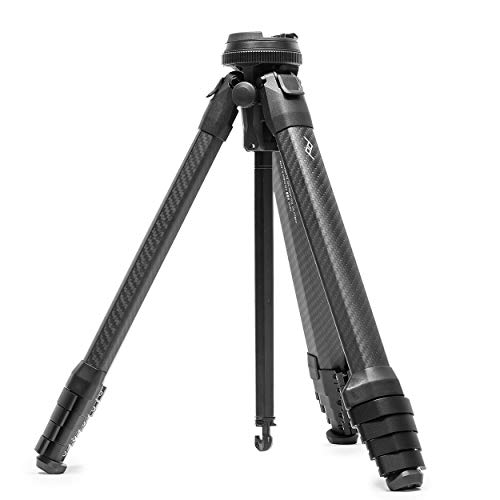
Few tripods manage to pack pro level stability into something this small, and that’s exactly what makes the Peak Design Travel Tripod stand out. It collapses down to roughly the size of a water bottle while still supporting a fully loaded A7III setup with room to spare.
We were impressed by how fast it deploys. The leg locks flip open in seconds with no twisting or fumbling, which matters a lot when a shot only lasts a moment. The omnidirectional ball head uses a single adjustment ring instead of the usual cluster of knobs.
Photographers who travel often or hike to remote locations will appreciate the carbon fiber build, which keeps the weight down without sacrificing rigidity. A built in phone mount and a sturdy weatherproof case round out the package nicely.
Our biggest takeaway after testing it with a telephoto lens was how little it flexed even at full height, something cheaper tripods struggle with.
Key Specs
- Material: Carbon fiber
- Weight: 2.81 pounds
- Maximum load: 20 pounds
- Maximum height: 60 inches
- Leg sections: 5
- Collapsed length: 15.4 inches
- Packs down extremely small for travel
- Handles heavy lens combinations without sagging
- Fast, tool free setup and takedown
- Premium price compared to most travel tripods
- Third party head swaps require an extra adapter purchase
2. K&F Concept Carbon Fiber Tripod: The Budget Favorite

If stretching your dollar matters, the K&F Concept Carbon Fiber Tripod delivers far more capability than its price suggests. It’s built from aerospace grade carbon fiber, which keeps it light without feeling flimsy in hand.
One leg detaches to form a monopod, a feature that’s genuinely useful for anyone shooting sports, wildlife, or fast moving subjects with the A7III. The 360 degree ball head adds 8kg of load capacity, plenty for this camera paired with most lenses photographers actually use.
We also liked the inverted center axis, which lowers the whole rig for macro shots or tight low angle compositions. Folded length comes in under 14 inches, so it slides into most carry on bags without issue.
The only catch we noticed during testing was a slight wobble once the legs were fully extended past the 60 inch mark with a heavier zoom attached.
Key Specs
- Material: Carbon fiber
- Weight: 2.2 pounds
- Maximum load: 17.6 pounds
- Maximum height: 60 inches
- Leg sections: 5
- Detachable monopod: Yes
- Excellent stability for the price
- Doubles as a monopod for action shots
- Folds down small enough for airline travel
- Some flex at maximum height with heavier lenses
3. Manfrotto Befree Advanced: The All Around Workhorse

The Manfrotto Befree Advanced earns its spot through sheer reliability, the kind of tripod you stop thinking about because it just works every time you set it up. Its QPL Travel lever locking system snaps the legs into place fast and keeps them there even on uneven terrain.
Build quality here is noticeably solid for an aluminum tripod in this price range. The included 494 ball head gives you three independent controls for sphere lock, friction, and panning, which means precise framing without fighting the hardware.
This is a strong pick for anyone who wants a tripod that handles both casual outdoor shoots and more demanding setups like astrophotography rigs. We found it held a Sony body with a heavier prime lens steady even in light wind.
Leg angles adjust independently too, so getting a level shot on rocky or sloped ground takes seconds instead of guesswork.
Key Specs
- Material: Aluminum
- Weight: 3.5 pounds
- Maximum load: 8.8 pounds (kit rated, frame rated higher)
- Maximum height: 59.45 inches
- Leg sections: 4
- Head: 494 aluminum ball head
- Fast, secure lever lock system
- Strong stability even in windy conditions
- Independent leg angle adjustment
- Comfortable for both photo and light video use
- Heavier than most carbon fiber alternatives
4. Sirui Traveler 5C: The Ultralight Option

At under two pounds, the Sirui Traveler 5C is one of the lightest tripods we tested, and that makes it an obvious pick for hikers and anyone who counts every ounce in their bag. It folds down to just 13 inches, small enough to clip onto the side of a backpack.
We mounted an A7III with a standard zoom and found the ball head locked in firmly for both landscape and portrait orientation shots. A center column hook lets you hang your bag from the tripod for extra stability when wind picks up.
The inverted center column is a nice touch for macro or extreme low angle work, something not every travel tripod in this category offers. It comes with a carry bag too, which makes packing for trips a little easier.
Where it falls short is full extension stability. Past the midpoint, the thin legs introduce a bit more shake than the sturdier options on this list.
Key Specs
- Material: Carbon fiber
- Weight: 1.87 pounds
- Maximum load: 8.8 pounds
- Maximum height: 54.3 inches
- Leg sections: 5
- Folded length: 13 inches
Pros
- Extremely lightweight for travel and hiking
- Inverted column enables low angle and macro shots
Cons
- Noticeable shake at full height with longer lenses
- Some units report leg shim wear over time
5. Manfrotto MVH502AH Fluid Video Head: Best for Smooth Video

For A7III owners who shoot as much video as stills, the Manfrotto MVH502AH fluid head solves a problem standard ball heads can’t, which is smooth, controlled panning and tilting. Its variable fluid drag system lets you dial in exactly how much resistance you want on each axis.
We mounted it on a standard photo tripod and immediately noticed how much steadier our pans looked compared to a typical ball head, even with a longer lens attached. The counterbalance system also helps support heavier camera and lens combinations without fighting gravity on tilts.
This is a head built for people who already own a tripod and want professional grade video movement without buying an entirely new rig. The flat base design connects to most standard tripods using a 3/8 inch screw.
Build quality felt noticeably tougher than lighter weight alternatives, with a sliding plate that locks the camera in place securely during movement.
Key Specs
- Material: Aluminum
- Weight: 3.8 pounds
- Maximum load: 13.2 pounds
- Pan and tilt drag: Continuously adjustable
- Plate type: Slide on quick release
- Mount: 3/8 inch flat base
Pros
- Buttery smooth pan and tilt movement
- Strong counterbalance for heavier lens setups
- Compatible with most standard photo tripods
Cons
- Adds noticeable weight and bulk compared to a basic ball head
Best Tripods for A7III: A Quick Rundown
- Peak Design Travel Tripod: Best overall pick for stability packed into a compact build
- K&F Concept Carbon Fiber Tripod: Best value for money without sacrificing real stability
- Manfrotto Befree Advanced: Most reliable all around performer for mixed photo and video use
- Sirui Traveler 5C: Lightest option, ideal for hikers and minimalist travel kits
- Manfrotto MVH502AH Fluid Video Head: Best choice for shooters who prioritize smooth video footage
Final Thoughts
Picking the right support for your camera comes down to matching the tripod to how you actually shoot. Travelers and hikers should prioritize weight and folded size, while anyone shooting video needs a head built for smooth, controlled movement rather than a basic ball joint.
There’s no single best option for everyone, so weigh your budget, the lenses you shoot with most, and how often you’re hauling gear over long distances. Whichever one you choose, your A7III will reward you with sharper, steadier results the moment you stop relying on shaky handheld shots.