Hauling a camera up a mountain trail only to get home and find your shots are blurry from a wobbly setup is one of the most frustrating things a backpacker can experience. A bad tripod adds weight you don’t need and steadiness you can’t count on, which defeats the whole point of bringing one along. You deserve gear that earns its place in your pack.
We spent weeks comparing tripods built specifically with hikers and backpackers in mind, weighing stability against pack weight and looking closely at how each one performs once you’re miles from the trailhead. This guide breaks down five standout options, from budget aluminum builds to premium carbon fiber models.
By the end, you’ll know exactly which tripod fits your style of adventure, your budget, and the gear you’re carrying. Here’s how we narrowed the field down to these five picks.
How We Selected the Best Tripods for Backpacking
Our team tested each tripod’s setup speed, packed size, and stability across uneven terrain before narrowing the list. We also looked closely at how well each model balanced weight savings with real world durability, since backpackers can’t afford gear that falls apart on the trail.
Here’s what we weighed most heavily during evaluation.
- Packed weight and size: A tripod that adds bulk to your pack defeats the purpose, so we prioritized compact, lightweight builds.
- Maximum load capacity: We checked whether each tripod could comfortably hold the camera gear most backpackers actually carry.
- Setup speed: Flip locks and twist locks were tested for how quickly they let you get a shot before the light changes.
- Material and build quality: Aluminum and carbon fiber each bring different tradeoffs in weight, cost, and rigidity.
- Versatility: Features like monopod conversion, invertible center columns, and phone mounts add real value on the move.
- Stability on rough ground: We paid attention to leg locks, rubber feet, and how each tripod handled wind and uneven trails.
These factors line up directly with what you’ll read about in each review below, so you can trust that nothing here is a passing mention. Now let’s get into the tripods themselves.
Best Tripods for Backpacking (Detailed Review)
Below you’ll find detailed breakdowns of all five tripods, covering what each one does well, who it suits best, and where it might fall short. We’ve ordered them to give you a clear sense of the range available, from wallet friendly options to premium carbon fiber builds.
1. Victiv 72 Inch Tripod and Monopod: Two Tools for the Price of One

This tripod earns its spot by doing double duty as both a full tripod and a 55 inch monopod, switching between the two in about five seconds. That kind of flexibility matters when you’re trying to pack light but still want options once you reach your shooting spot. The ball and pan head combination gives you smooth 360 degree movement for framing shots quickly.
It’s especially well suited to hikers who shoot a mix of landscapes, wildlife through binoculars, and the occasional selfie video. The aluminum legs are noticeably thicker than what you’ll find on most tripods in this price range, which helps with long exposure shots where the smallest wobble shows up. A weight hook at the base lets you hang your pack for extra ballast in windy conditions.
We found the extendable height range, from 21 inches up to a full 72 inches, genuinely useful across different terrain and shooting angles. The included carrying bag and ARCA Swiss mounting plate round out a package that feels more complete than its price suggests.
Key Specs:
- Maximum height: 72 inches
- Minimum height: 21 inches
- Weight limit: 3.3 pounds
- Tripod head type: Ball and pan heads
- Number of leg sections: 4
Pros:
- Converts to a monopod in seconds
- Thick, sturdy aluminum legs for the price
- Versatile head with full panoramic movement
Cons:
- The plastic head connection can loosen with heavy use
- Carrying bag fits snugly with little extra room
This combo unit is a strong starting point, but if you want a tripod built purely for height and reach without the monopod feature, the next option might suit you better.
2. Victiv NT70 74 Inch Tripod: Tall, Light, and Easy to Pack Down
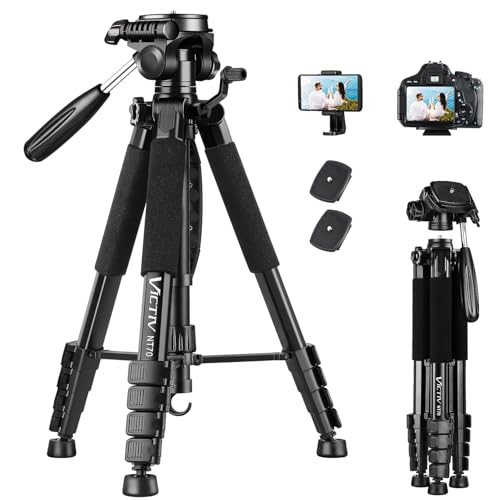
Backpackers who need serious height without serious bulk will appreciate what the NT70 brings to the table. It stretches from 19 inches all the way to 74 inches, giving you plenty of flexibility for overhead shots or shooting on a slope where one leg needs to sit lower than the others. At just 3 pounds, it disappears into a backpack without you noticing the extra weight.
The 3 way pan head allows 360 degree horizontal rotation along with 180 degree vertical tilt, which we found intuitive even for first time tripod users. Non slip pads on the legs add grip on rock and packed dirt, and the weight hook underneath gives you an easy way to add stability when the wind picks up.
This is a strong pick for anyone shooting both DSLRs and smartphones, since it ships with a universal phone holder alongside the standard camera mount. The whole kit, including an extra quick release plate and carrying bag, folds down to about 20 inches.
Compared to the Victiv T72, this model trades the monopod feature for a higher weight capacity and a slightly more refined head, which is worth considering based on what you actually shoot.
Key Specs:
- Maximum height: 74 inches
- Minimum height: 19.5 inches
- Weight limit: 9.5 pounds
- Tripod head type: Pan head
- Folded size: 20 inches
Pros:
- High weight capacity for an aluminum tripod this light
- Smooth, easy to learn pan head controls
- Includes both a phone mount and camera plate
Con:
- No monopod conversion option
If a higher load capacity and a slightly more polished head matter more to you than the monopod trick, this is the better fit. For backpackers who want a ball head built specifically for precision angles, our next pick takes a different approach.
3. K&F Concept 64 Inch Tripod with 36mm Ball Head: Built for Quick, Precise Adjustments

What makes this tripod stand out is its 36mm ball head, which lets you nail an angle in seconds rather than fiddling with multiple knobs. We particularly liked the one hand flip lock system, since it means setup takes only a few seconds even when you’re working with cold hands at altitude. The ball head can hold up to 17.6 pounds, well above what most backpackers will ever need to carry.
Photographers shooting landscapes or long exposure night sky images will get the most out of this model, especially with its invertible center column for low angle and macro shots. At just 2.53 pounds with the head attached, it’s one of the lighter options here despite its higher load rating.
The compact folded length of 15.5 inches makes it easy to strap to the side of most hiking packs. We were impressed by how stable the legs felt even on uneven ground, thanks to the adjustable leg angle system that lets each leg sit independently.
One thing worth flagging before you buy is the collapsed diameter, which runs a bit wider than some competing models and may not slide into narrower backpack side pockets.
Key Specs:
- Maximum height: 64.1 inches
- Minimum height: 20.4 inches
- Weight limit: 17.6 pounds
- Tripod head type: 36mm ball head
- Folded length: 15.5 inches
Pros:
- High load capacity relative to its weight
- Fast, intuitive one hand leg locks
- Inverted center column for creative low angle shots
Cons:
- Wider folded diameter than some rivals
- Phone mount accessory feels like an afterthought
If budget and capability are your priorities, this tripod hits a sweet spot. For those ready to spend more on premium materials and refined engineering, the next two picks move into a different category entirely.
4. Peak Design Carbon Fiber Travel Tripod: The Compact Powerhouse
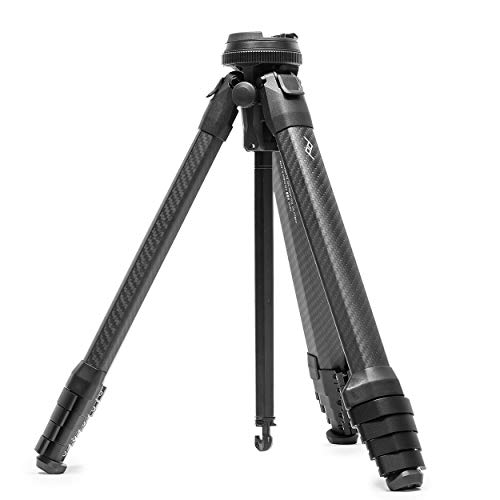
Few tripods manage to pack down to the size of a water bottle while still supporting up to 20 pounds, but that’s exactly what Peak Design pulled off here. The trapezoidal leg design eliminates wasted space between sections, which is why this tripod collapses so impressively small for its height and strength. A single adjustment ring controls the omnidirectional ball head, cutting out the usual fumbling with three separate knobs.
This tripod is built for backpackers and travel photographers who refuse to compromise on stability just to save space, including those carrying full frame cameras with longer lenses. The five section carbon fiber legs use fast locking cams that snap into place almost instantly, and the integrated phone mount pops out of the center column when you need it.
We were impressed by how the legs lock down with zero sag once tightened, which matters a lot when you’re shooting in wind or on a sloped trail. The included weatherproof soft case adds protection without adding noticeable bulk to your load.
There’s no denying the price puts this tripod out of reach for casual users, and the lack of an included L-bracket means serious shooters may need to budget for one separately.
Key Specs:
- Maximum height: 60 inches
- Minimum height: 5.5 inches
- Weight limit: 20 pounds
- Tripod head type: Ball head
- Leg sections: 5
Pros:
- Exceptionally compact for its weight capacity
- Fast, ergonomic single ring ball head
- Built in phone mount and weatherproof case
Con:
- Premium price tag that puts it well above competitors
This is the tripod for backpackers who treat their gear as a long term investment rather than a quick fix. If you want similar build quality with a lower price and a built in monopod, our final pick offers a compelling middle ground.
5. SIRUI Traveler 7C Carbon Fiber Tripod: The 2 in 1 Hiker’s Companion

The SIRUI Traveler 7C wins points for combining a full carbon fiber tripod with a removable leg that converts into a complete monopod, giving backpackers two tools in one lightweight package. Its E-10 ball head allows full 360 degree rotation, and the quick release plate makes swapping gear painless on the trail. At only 3.46 pounds, it’s light enough to forget you’re carrying it.
Hikers who want a tripod capable of handling longer exposures while also doubling as a walking aid will find a lot to like here. The legs fold back 180 degrees for a compact 18.9 inch carrying size, and the three position leg angle system adapts well to rocky or sloped terrain.
We were impressed by how solid the leg locks felt despite the low overall weight, and the invertible center column opens up creative options for macro and low angle shots. The included carbon fiber spikes add extra grip on soft or uneven ground when you need it most.
One small drawback worth knowing about ahead of time involves the thin plastic end caps on the legs, which some owners have needed replaced after extended heavy use.
Key Specs:
- Maximum height: 65.55 inches
- Minimum height: 18.9 inches (folded)
- Weight limit: 17.6 pounds
- Tripod head type: 360 degree ball head
- Convertible to monopod: Yes
Pros:
- True 2 in 1 tripod and monopod design
- Excellent weight to stability ratio
- Adjustable leg angles for rough terrain
Cons:
- Plastic leg end caps can wear over time
- Included carrying bag offers minimal padding
Best Tripods for Backpacking: A Quick Rundown
- Victiv 72 Inch Tripod and Monopod: Best tripod and monopod combo
- Victiv NT70 74 Inch Tripod: Best budget pick for maximum height
- K&F Concept 64 Inch Tripod: Best ball head for the price
- Peak Design Carbon Fiber Travel Tripod: Best overall for serious backpackers
- SIRUI Traveler 7C: Best carbon fiber value with monopod versatility
Final Thoughts
When choosing a tripod for backpacking, weight and packed size should sit at the top of your list, right alongside how much load capacity you actually need for your camera setup. A tripod that’s too heavy gets left behind, while one that’s too flimsy won’t hold steady when it counts most.
Think honestly about your budget, the terrain you typically hike, and whether features like a monopod conversion or invertible column would genuinely get used. Pick the option that matches your real shooting habits, not just the one with the longest spec sheet, and you’ll end up with gear you actually reach for on every trip.