A washing machine that stops partway through a cycle and flashes 9C4 can feel alarming, especially with a drum full of wet clothes. The code points to an electrical fault rather than a clogged filter or a kinked hose.
Knowing what Samsung means by this code helps you decide which checks are safe to try at home and when a technician should take over. The sections below cover likely causes, practical checks, and signs that call for a professional.
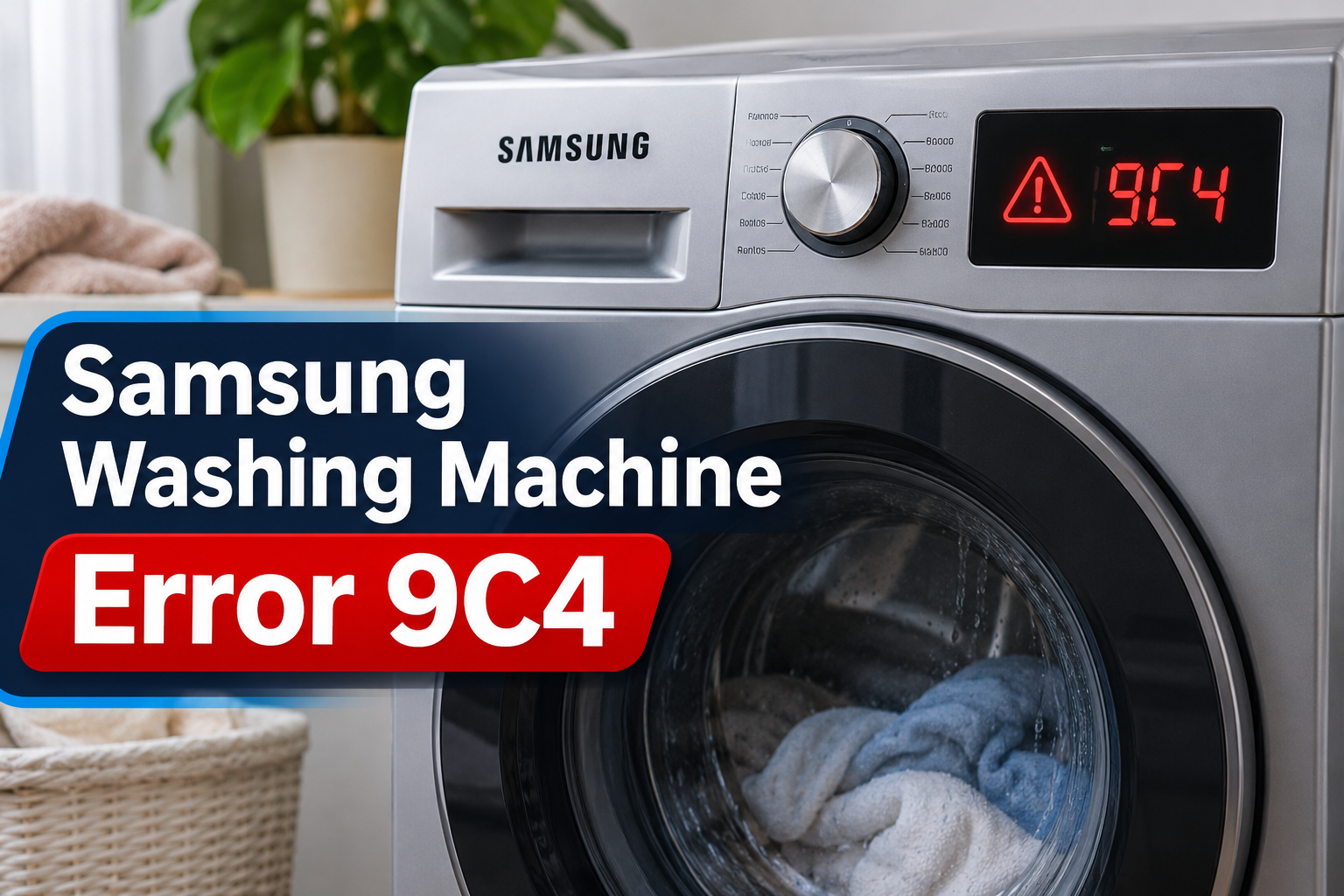
What Error 9C4 Means on a Samsung Washer
Samsung’s support pages describe 9C4 as a DC sensor electrical leakage problem. The control board has picked up a reading that suggests electricity is escaping from where it should be flowing, or a sensor in the power circuit is reporting values the board can’t accept. Samsung doesn’t publish which exact component sets off the code, and the layout differs between models. The label is best treated as a warning about the machine’s electrical system rather than the failure of one specific part.
Most modern Samsung washers use an inverter style drive that feeds the motor a carefully controlled supply of power. Sensors along that path keep checking the readings throughout every cycle. When one reading falls outside the safe range, the board stops the machine to protect it and you. That explains why the code can appear suddenly, sometimes right after you press start and sometimes halfway through a wash.
In everyday use, you’ll see 9C4 flashing on the display while the cycle halts. Certain Samsung codes also lock the buttons for roughly three minutes, so give the panel a short wait before assuming it has failed. Other codes in the 9C family relate to the power supply, including low voltage, which makes your power connection a sensible place to begin. That doesn’t prove the supply is at fault.
Ignoring a persistent code carries real risk, because electrical leakage and moisture are a poor combination. A single appearance that clears after a restart is usually less worrying than a code that returns every time. Stop using the machine and unplug it if you feel a tingling sensation when you touch the cabinet, or notice a hot or burning smell, scorch marks, or water around the back panel or power cord.
Samsung Washing Machine Error 9C4: Common Causes
Samsung’s description points to electrical leakage, yet more than one fault can create that kind of reading. The possibilities below fit the way Samsung describes the code, though only testing can confirm which one applies to your machine.
1. Moisture Reaching Electrical Parts
Water and electronics don’t get along, and even a small amount in the wrong place can create a path for current to leak. A worn door seal, a loose drain or inlet hose connection, an overfilled detergent drawer, or a cabinet sitting in a damp laundry room can all let moisture reach the control board or wiring. Steam and condensation can do the same over time.
A useful clue is timing. If the code appears after a leak, after heavy use in a humid space, or after you’ve cleaned near the control panel with a spray, moisture becomes a more likely suspect. When the code clears after the machine has sat unplugged and dry for a day, that pattern supports the idea, although it doesn’t prove it.
Look for damp spots, mineral stains, or rust marks near the back panel and under the machine. Water that has been escaping for a while often leaves a faint white or brownish trail along the floor or the cabinet edge.
2. A Damaged or Loose Wiring Harness
Inside the cabinet, wires and connectors carry power between the control board, the motor, and the sensors. Constant vibration from spinning loads can slowly loosen a connector or rub through the insulation on a wire, especially where it touches a metal edge. Once insulation wears thin, current may escape to the frame, and the sensors may record that as leakage.
This cause tends to show up in machines that have been moved, repaired, or run with badly unbalanced loads. The code may come and go, appearing mostly during the spin phase when vibration peaks. Checking harness connections means opening the cabinet, so this one belongs with a technician rather than a home project.
3. A Faulty Main Control Board or Sensor Circuit
A code that returns the moment you switch the machine on, with no load, a dry floor, and a clean outlet, points away from outside influences and to the electronics themselves. The main control board contains the circuits that measure current and voltage. A failing component there can report leakage that isn’t actually happening, or misread a perfectly normal value.
Boards age through heat cycles, power surges, and moisture exposure, and a damaged board often behaves inconsistently. It may work for several washes and then fail without warning. Because the sensor and the board that reads it are tightly connected, a fault in either one can look identical from the outside.
Testing requires meters and knowledge of your specific model, so this diagnosis belongs to a qualified technician. Replacing a board without confirming the cause can waste money, since moisture or wiring damage might ruin the new board as well.
4. Motor and Drive Faults
The motor and the circuitry that controls it sit at the heart of the electrical system, so trouble there can trip a leakage reading. Windings inside a motor can break down with age or heat, allowing small amounts of current to leak to the motor housing. A related fault in the drive circuit that powers the motor could produce a similar result.
If the code appears just as the drum starts turning, or comes with a grinding noise, a burning smell, or a drum that struggles to spin, this cause deserves attention. A motor problem rarely fixes itself, and continuing to run the machine can worsen the damage. Samsung doesn’t tie 9C4 to the motor specifically, so treat this as a possibility rather than a finding.
5. Unstable or Poorly Connected Household Power
Because other 9C codes relate to the power supply, a poor electrical connection is worth ruling out. A worn outlet, a loose plug, an extension cord, or a power strip can introduce voltage drops or unusual readings. Surges and brownouts, which often show up as flickering lights, can confuse the sensors as well.
Clues include a plug that feels warm, a code that appears when another large appliance starts, or a washer that shares a circuit with a dryer or space heater. Washers need a properly grounded outlet, and a missing or faulty ground may contribute to leakage readings. An electrician can verify the outlet if you suspect a wiring problem.
Samsung Washing Machine Error 9C4: DIY Fixes
The safe fixes below focus on the external causes, which are the ones you can check without opening the machine. Work through them in order, because the first few take only minutes and sometimes clear a temporary fault.
1. Power Cycle the Machine
Start by pressing the power button to turn the washer off, then unplug it from the wall. A commonly suggested wait is at least five minutes, which gives the control board time to discharge and clear a temporary fault. Plug it back in firmly and switch it on.
Run a short cycle or the rinse and spin option to see whether the code returns. If the display stays clear, the code may have been a one off glitch, though keep an eye on it over the next few loads. If 9C4 returns right away, move on to the next checks.
2. Check the Plug, Cord, and Outlet
With the machine unplugged, look over the power cord for cuts, crushed sections, or discoloration. Examine the plug for bent prongs or darkened spots that suggest overheating. Any visible damage means the cord should be replaced by a technician, and the machine should stay unplugged until then.
Next, connect the washer directly to a wall outlet and avoid extension cords, power strips, or adapters. Those add resistance and can cause voltage drops during the heavy startup demand of the motor. The plug should fit snugly with no wobble, and the outlet should never feel hot after a cycle.
Washers also work best without another large appliance sharing the same line. If the code only appears when a dryer or air conditioner is running, that overlap is a strong clue worth sharing with an electrician.
3. Inspect for Moisture and Leaks
Pull the washer out gently if you can reach the back, and check the floor, hoses, and rear panel for damp patches. Look at the inlet hose connections at the wall and at the machine, the drain hose, and the area under the detergent drawer. Wipe any moisture away with a dry cloth, and never spray water or cleaner onto the control panel or the back.
Tighten loose hose couplings by hand, and replace hoses that are cracked, bulging, or stained at the fittings. Leave the door open and the detergent drawer pulled out for several hours so the interior can dry. In a humid room, a fan or dehumidifier speeds things up.
Once the leak is addressed and everything is dry, plug the machine back in and try a short cycle. A code that disappears afterward supports a moisture cause. If water has clearly reached the back panel or the electronics, keep the machine unplugged and call a technician, since damp internal parts can stay hazardous even when the outside looks dry.
4. Run an Empty Test and Level the Machine
Remove all laundry and run a short empty cycle, such as a rinse and spin. A washer working with no load shows whether the fault depends on weight and vibration. Place a small spirit level on top of the cabinet and adjust the front feet until the machine doesn’t rock when you push on each corner.
A level machine vibrates less, which reduces strain on internal wiring and connectors. If the code appears only with heavy loads or during spin, balance your loads and avoid overstuffing the drum. A code that appears even with an empty drum on level ground points to an internal fault that needs professional attention.
5. Test a Different Outlet or Circuit
If the washer’s outlet is a ground fault protected type, with small TEST and RESET buttons, press RESET firmly while the machine is unplugged. A tripped outlet or breaker can leave the supply unstable, and a reset sometimes restores normal operation. Also check the breaker panel for a switch sitting in a middle position, which can look on but isn’t fully engaged.
If the cord reaches another grounded outlet without strain, try the washer there, preferably on a separate circuit. Keep the cord uncoiled and avoid stretching it across the room.
If the code vanishes on the second outlet, the original outlet or circuit is the likely source, and a licensed electrician can inspect it. If the code stays, the washer itself is more likely at fault. Either result narrows the problem before a service visit.
6. Contact a Qualified Appliance Repair Technician
Samsung’s guidance for 9C4 is to contact customer service if the code remains, and that advice makes sense given the nature of the fault. Leakage involves the internal electrical system, which should only be opened by someone trained to test it safely. Reach out to a Samsung authorized service center or a qualified appliance technician when the code returns after the checks above, keeps coming back, or appears with a burning smell, tingling shocks, or water around electrical parts.
Before calling, note the exact model number, which is usually on a label inside the door opening or on the back of the machine. Write down when the code appears, whether at power on, during fill, or during spin, because those details help a technician narrow the cause. Check your warranty or any extended coverage first, since some repairs may be covered.
Professional repair isn’t always extensive. A technician may find a loose connector or a damp component that’s quickly corrected. If a board or motor does need replacing, you’ll know the diagnosis rests on testing and not guesswork. Until then, leave the machine unplugged if there’s any sign of danger.
Wrapping Up
Error 9C4 deserves attention because it involves electricity and water in the same appliance, yet it may have a manageable cause. Acting early, while the symptoms are still limited to a code on the display, gives you the best chance of a simple repair.
Start with the safe checks, and keep the machine unplugged if anything seems unsafe. A technician can take over from there with the right test equipment, and an early visit gives a small fault less time to grow into a larger one.