The exact meaning depends on your air conditioner model. By checking the complete error code, performing a few safe maintenance checks, and understanding when professional help is necessary, you can narrow down the possible cause without spending money on unnecessary repairs.
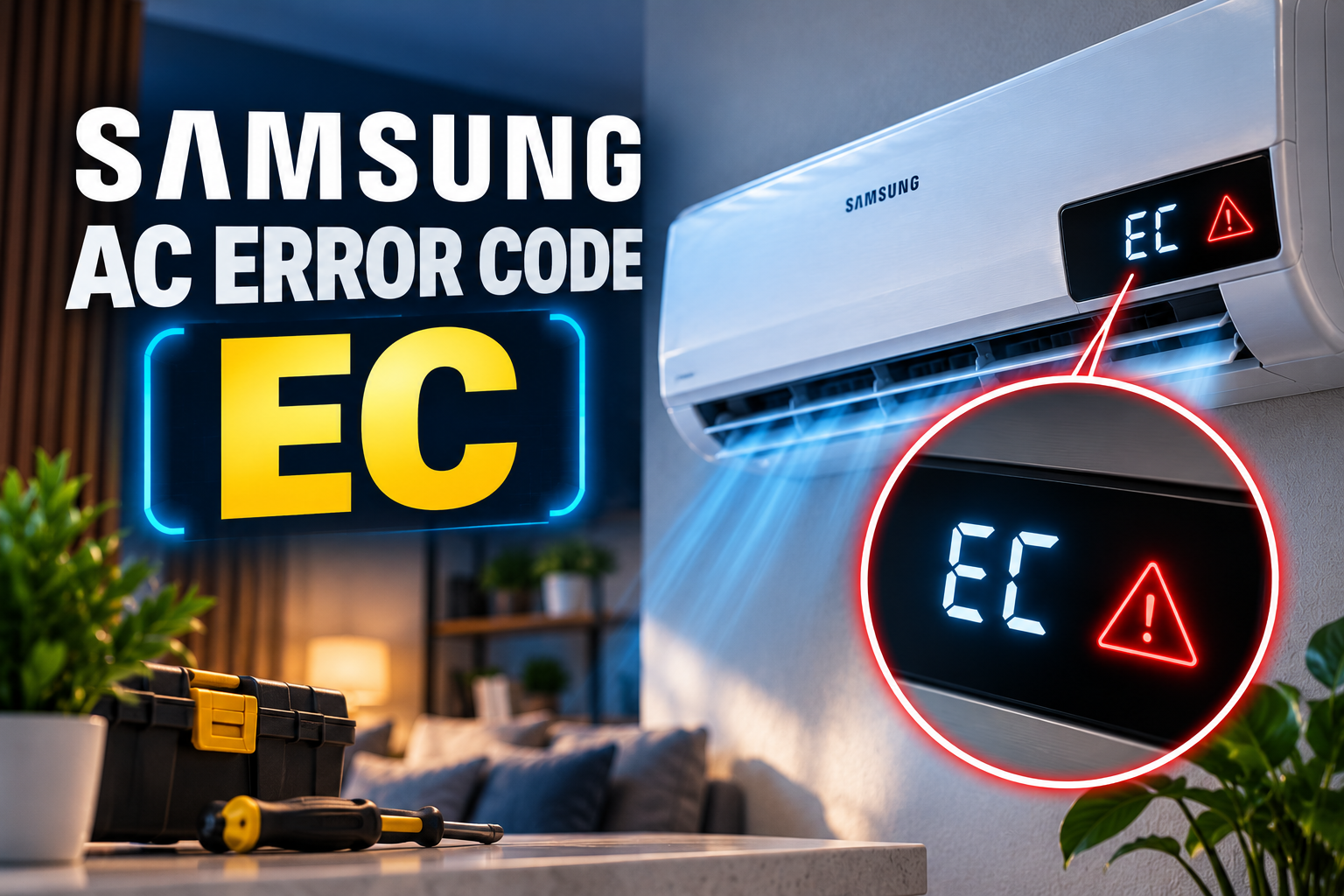
What Does the Samsung AC EC Error Mean?
The EC error code can indicate a suspected refrigerant leak or a problem with the relevant detection sensor on certain Samsung inverter air conditioners. Refrigerant circulates through the cooling system, absorbing heat from indoor air and releasing it outside. If the system loses refrigerant, its cooling performance may decline.
You may notice that the air conditioner blows warm air, takes longer to cool the room, or shuts down after the error appears. Some units may continue running briefly before stopping. These symptoms can also occur because of restricted airflow, electrical faults, or other refrigeration problems, so they don’t confirm a leak by themselves.
The EC code may have a different meaning on other Samsung models, including certain commercial systems. Check the model number and consult the correct manual before deciding which repair is necessary. If the code persists, avoid repeatedly restarting the unit to force it to operate.
Samsung AC Error Code EC: Likely Causes
Several problems can trigger abnormal operation or a diagnostic warning, depending on the air conditioner’s design. The following are possible causes to investigate, not confirmed diagnoses for every model displaying EC.
1. A Refrigerant Leak
Refrigerant circulates between the indoor and outdoor units, absorbing heat inside the room and releasing it outside. If a pipe, flare connection, coil, or another part of the sealed circuit develops a leak, the system can lose refrigerant and struggle to cool effectively.
You may notice weak cooling, longer operating times, or an error appearing after the air conditioner has been running for a while. However, these symptoms alone cannot confirm a refrigerant leak. A dirty filter, restricted airflow, or another system fault can produce similar results.
If a leak is suspected, switch off the air conditioner and arrange a professional inspection. A technician can locate the leak, repair the affected part, and restore the refrigerant charge according to the manufacturer’s specifications. Simply adding refrigerant without correcting the leak may allow the problem to return.
2. A Faulty Refrigerant Detection Sensor
Some Samsung inverter air conditioners use sensors to detect conditions associated with refrigerant leakage. If a sensor fails, its wiring becomes damaged, or its electrical connection is interrupted, the system may report a fault even when an actual leak has not been established.
This possibility deserves attention when the EC code appears suddenly and the unit’s cooling performance seems normal. However, normal cooling does not rule out a developing leak, and the display alone cannot distinguish a faulty sensor from a genuine refrigerant problem.
A qualified technician can inspect the sensor, check its connections, and test its operation against the manufacturer’s specifications. Replacing the sensor without testing it first may leave the original problem unresolved.
3. Damaged Refrigerant Pipes or Loose Connections
The copper pipes connecting the indoor and outdoor units carry refrigerant under pressure. Damage from physical impact, corrosion, poor installation, or a deteriorated connection can allow refrigerant to escape.
Problems may develop after the air conditioner has been installed, moved, or serviced. In some cases, cooling performance declines gradually before an error appears. Visible oily residue around a refrigerant connection can be a useful clue, although its absence doesn’t rule out a leak.
Don’t tighten refrigerant fittings, loosen pipe connections, or attempt to repair the tubing yourself. These components require specialized tools and proper procedures. A technician should inspect the circuit and repair any leak before recharging the system.
4. An Electrical or Control Board Fault
The air conditioner’s electronic control system monitors operating conditions and communicates with its sensors and other components. A damaged connection, unstable power supply, or malfunctioning circuit board can interfere with normal operation.
If the EC error appeared after a power interruption, electrical work, or a surge, mention this when requesting service. Other clues may include a display that repeatedly resets, the unit failing to start, or unexpected shutdowns.
These symptoms don’t establish that the control board is defective. Electrical testing is necessary to distinguish a board fault from a sensor problem or another condition that triggers the same display. Don’t open the electrical compartment or test live circuits yourself.
5. A Refrigeration System Fault That Reduces Cooling
A restriction in refrigerant flow, a faulty valve, or another problem within the refrigeration circuit can interfere with heat transfer. Depending on the model and its diagnostic system, these operating conditions may contribute to an error or resemble the symptoms of a refrigerant leak.
Weak cooling, unusual frost formation, or changes in operating noise can help a technician narrow down the possibilities. None of these signs confirms the EC fault’s precise cause.
Because refrigeration problems can produce similar symptoms, a proper diagnosis should include the complete error code and relevant operating measurements. Avoid purchasing replacement valves, sensors, or other parts based on the EC code alone.
Samsung AC Error Code EC: DIY Fixes
A few safe checks can help determine whether the EC code is temporary or requires professional repair. Start with the display, power supply, and accessible maintenance areas, then stop if the error persists or there are signs of a refrigerant or electrical fault.
1. Check the Full Error Code and Model Number
Before attempting a reset, record exactly what appears on the display. Some Samsung air conditioners alternate between letters and numbers, and a longer code may provide more specific information than EC alone.
Next, locate the model number on the identification label of the indoor or outdoor unit. Use it to find the correct troubleshooting instructions through Samsung Support.
This step matters because EC can indicate a suspected refrigerant leak or sensor issue on certain inverter models, while other systems may use the same letters differently. Confirming the code prevents you from applying an unsuitable repair procedure.
2. Perform a Safe Power Reset
A temporary operating fault may sometimes clear after a reset. However, a reset won’t repair a damaged sensor, refrigerant leak, faulty control board, or persistent electrical problem.
If the unit shows no signs of electrical damage and its manual permits a reset, follow these steps.
-
Turn off the air conditioner using the remote control.
-
Isolate its power at the dedicated breaker or accessible isolator if you can do so safely.
-
Wait for the interval specified in the manufacturer’s instructions.
-
Restore power and restart the unit.
-
Observe whether the EC code returns.
Don’t repeatedly reset the air conditioner if the code reappears. If cooling remains poor, the unit shuts down again, or you suspect a refrigerant leak, leave it off and arrange professional diagnosis.
3. Clean the Indoor Air Filter
A dirty air filter can restrict airflow and reduce cooling efficiency. Although a blocked filter doesn’t establish the cause of an EC code, cleaning it is sensible maintenance if the unit has also been blowing weakly or cooling poorly.
Turn off the air conditioner and follow the manual’s instructions for removing the filter. Clean it using the method recommended for your model, then allow it to dry completely before reinstalling it.
Check that the filter fits correctly and that curtains, furniture, or other objects aren’t blocking the air inlet or outlet. If the EC code remains, don’t assume that filter cleaning has fixed the underlying fault.
4. Inspect the Accessible Indoor and Outdoor Areas
With the air conditioner switched off, look for visible signs of trouble around the indoor unit and the accessible area surrounding the outdoor unit. Check for unusual water dripping, visible pipe damage, or obstructions around the outdoor unit’s air intake and outlet.
Keep the outdoor unit clear of leaves, plastic bags, and other objects that could restrict airflow. Don’t remove covers, handle electrical wiring, or touch refrigerant pipes.
If you notice oily residue around a pipe connection, mention it to the technician because it may help identify a possible leak. Avoid touching the residue or attempting to tighten the connection yourself. A visual inspection can provide useful clues, but it can’t establish whether the refrigerant charge is correct.
5. Check the Power Supply for Obvious Problems
An unstable electrical supply or an interrupted connection can affect air conditioner operation. If the EC code appeared after a power outage, record when it occurred and whether other appliances experienced problems at the same time.
Check that the air conditioner’s accessible power controls are in their normal positions. Don’t remove electrical panels, test exposed wiring, or repeatedly reset a breaker that trips.
If you notice a burning smell, sparks, unusual electrical buzzing, or repeated breaker trips, switch off the unit if you can do so safely and seek qualified assistance. Electrical faults require proper testing before the air conditioner is returned to service.
6. Contact a Qualified Air Conditioning Technician
If the EC code returns after a permitted reset, or the air conditioner continues to cool poorly, professional diagnosis is the appropriate next step.
A technician can identify the exact code for your model and determine whether the problem involves a refrigerant leak, detection sensor, electrical connection, control board, or another refrigeration component. If a leak is confirmed, it should be located and repaired before the system is recharged.
Avoid adding refrigerant yourself, bypassing a sensor, or replacing the control board without a confirmed diagnosis. These approaches can create additional problems and leave the original fault unresolved.
If you suspect a refrigerant leak, leave the air conditioner switched off until it has been assessed. Contact Samsung support or a qualified refrigeration technician familiar with your unit.
Wrap-Up
The Samsung AC EC error can indicate a suspected refrigerant leak or a sensor problem on certain inverter models. Other Samsung systems may use the same code differently, making the complete error code and model number essential for accurate troubleshooting.
Start with safe checks, clean the filter if needed, and perform a power reset only when the manufacturer’s instructions permit it. If the error persists, avoid repeated restarts or attempts to add refrigerant. A qualified technician can identify the actual fault and carry out the appropriate repair, helping restore cooling while preventing further damage.
For model-specific guidance, consult Samsung’s official EC error troubleshooting instructions.