The cause could be ice restricting the fan, a failed motor, damaged wiring, or a problem with the electronic control board. Identifying the source matters because replacing a working component won’t solve the underlying fault.
What Does Samsung Refrigerator Error Code 40-C Mean?
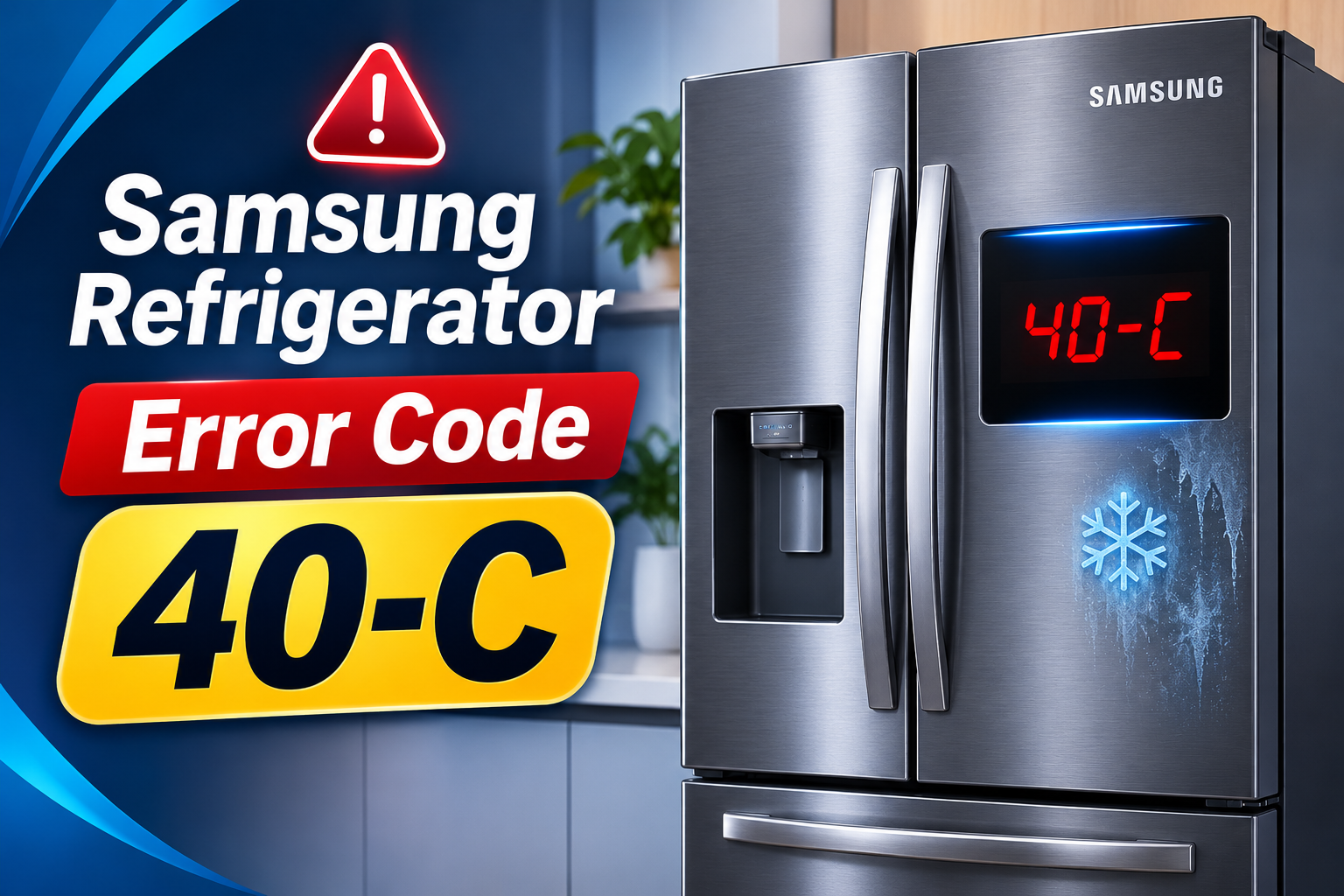
Error code 40-C indicates an ice room fan error on compatible Samsung refrigerators. Samsung’s technical support documentation also identifies codes 40C and 40E with the ice room fan in refrigerators that have an ice maker inside the refrigerator compartment. The code generally means the control board isn’t receiving the expected feedback from the fan motor. Samsung’s technical support documentation.
The ice room fan helps maintain the conditions needed for the ice maker to produce ice. When it operates correctly, air circulates through the designated compartment and supports the ice-making process. If the fan becomes obstructed or stops turning, the ice maker may struggle to operate as expected.
You may notice that ice production slows down, stops completely, or becomes inconsistent. Some refrigerators may also produce unusual noises if ice is interfering with the fan. However, these symptoms don’t automatically confirm that the motor has failed. Several electrical and mechanical faults can trigger the same code.
It’s also important to distinguish an ice room fan error from a general refrigerator cooling problem. Code 40-C specifically concerns the ice room fan system on applicable models. If your fresh food compartment or freezer is also becoming warm, that issue deserves separate attention because the error code alone doesn’t establish the condition of the refrigerator’s main cooling system.
Samsung advises against unplugging the refrigerator or manipulating its display simply to clear an unfamiliar error code unless directed to do so. Preserving the displayed code can help a technician identify the fault. Samsung’s refrigerator error-code guide provides further guidance on handling refrigerator errors.
Samsung Refrigerator Error Code 40-C: Common Causes
Several faults can prevent the ice room fan from operating or communicating properly with the refrigerator’s control board. The error code identifies the affected system, but further checks are needed to establish which component is responsible.
1. Ice Buildup Around the Ice Room Fan
Ice accumulation is one possible reason the fan cannot operate normally. Moisture entering the ice room can freeze around moving parts, restricting the fan blade or preventing it from rotating freely.
This can happen when moisture conditions in the compartment are abnormal or when the refrigerator has difficulty maintaining a proper seal around an applicable door or compartment. If the fan becomes obstructed, the control board may fail to receive the expected rotational feedback and register code 40-C.
You may notice reduced ice production, an unusual buzzing or scraping noise near the ice maker, or visible frost around accessible parts of the ice compartment. These clues can support the possibility of an obstruction, but they don’t prove that ice is the cause. A motor or electrical fault can produce similar symptoms.
2. A Faulty Ice Room Fan Motor
The fan motor itself may have failed. Like other small motors, it can develop an internal electrical fault or mechanical wear that prevents it from operating correctly.
In this situation, the motor may fail to start, stop intermittently, or run without providing the feedback signal the control board expects. The refrigerator may therefore register the same error even when there is no visible ice obstruction.
A failed motor becomes a stronger possibility when the error persists despite normal conditions in the ice compartment. However, replacing the fan without testing the associated wiring and control circuit can lead to an unnecessary repair. A technician should confirm the motor’s condition before ordering a replacement.
3. Damaged Wiring or a Loose Electrical Connector
The ice room fan depends on electrical connections to receive power and send operating feedback to the refrigerator’s control board. If a connector becomes loose, a wire is damaged, or a connection develops excessive resistance, the system may fail to recognize that the fan is running.
Possible causes include damaged insulation, a poor connection, or an open circuit in the fan wiring. These faults can prevent the fan from starting or interrupt its feedback signal even when the motor itself is functional.
This type of problem is difficult to identify from the display alone. The fan may appear to have failed, yet the actual fault could be in its wiring. Accessing electrical connectors and testing the circuit requires appropriate training and equipment, so this diagnosis is best left to a qualified appliance technician.
4. A Faulty Main Control Board
The main printed circuit board, commonly called the PCB, controls various refrigerator functions and receives signals from components such as the ice room fan. If the relevant circuit on the board malfunctions, the refrigerator may report a fan error even when the motor and its wiring are in working order.
Electrical disturbances, component failure, or damage to the board can contribute to this condition. A board problem may also produce other unusual behavior, although code 40-C by itself doesn’t establish that the board is defective.
Control board replacement should never be the first response to this error. The fan, its wiring, and the electrical connections should be tested first. Otherwise, you could pay for an expensive component that doesn’t resolve the problem.
Samsung Refrigerator Error Code 40-C: How to Fix
The safest approach is to begin with simple observations and checks that don’t involve opening electrical compartments. These steps may help identify an obvious issue, but the error often requires a technician to test the fan circuit and determine which component needs repair.
1. Confirm the Error Code and Refrigerator Model
Start by checking the complete error code on the display. Take a photograph of the screen and record your refrigerator’s full model number, which is usually found on a label inside the refrigerator compartment or in the user manual.
This matters because error codes and recommended procedures can vary between refrigerator models. Although Samsung documentation associates 40C and 40E with an ice room fan error on applicable models, the correct service procedure depends on the particular appliance.
Use the model number to locate the appropriate Samsung refrigerator support page or user manual. If the error code is listed differently in your manual, follow the instructions provided for your exact model rather than applying a procedure intended for another refrigerator.
What to expect: Confirming the model helps you obtain the correct instructions and prevents confusion with unrelated error codes.
2. Check That the Refrigerator Doors Close Properly
Poor door closure can allow warm, moisture-laden air to enter a refrigerator. Depending on the model and affected compartment, this can contribute to frost accumulation that interferes with fan operation.
Open and close the refrigerator doors normally, checking that food containers, shelves, or other items aren’t preventing them from sealing. Examine the visible door gaskets for dirt, tears, or sections that appear folded out of position.
Clean accessible gasket surfaces with a soft cloth and mild soapy water, then dry them. Avoid pulling, stretching, or removing the seals yourself. If a gasket is damaged or a door doesn’t align correctly, it may need adjustment or replacement.
This check is particularly useful if the door has been left open for an extended period or you have noticed condensation around the opening. It cannot confirm that the ice room fan is functioning, and a correctly sealed door won’t resolve an independent motor or circuit fault.
What to expect: Properly closing doors helps reduce unwanted moisture entering the refrigerator. If code 40-C remains on the display, further diagnosis is necessary.
3. Inspect the Accessible Ice Compartment
If your refrigerator’s user manual allows access to a removable ice bucket, check whether it is seated correctly and whether there is visible ice or frost around the accessible compartment.
Remove the bucket only if the manufacturer’s instructions permit it and it can be released without force. If it is stuck, don’t pull aggressively. Ice may be holding it in place, and excessive force can damage the bucket or surrounding parts.
Look for unusual ice accumulation, visible obstructions, or signs that the bucket isn’t positioned properly. Do not insert tools into openings or reach behind protective covers to turn the fan manually.
If you notice heavy frost or ice around the fan area, arrange for model-specific defrost instructions or professional service. Avoid using a hair dryer, heat gun, sharp object, or boiling water to remove ice. Samsung warns that applying a hair dryer or another heat source can damage refrigerator components. Samsung’s refrigerator noise and fan guidance.
What to expect: This inspection may reveal an accessible obstruction or incorrectly positioned bucket. If the fan is concealed or the ice buildup is extensive, stop and seek qualified assistance.
4. Avoid Repeated Resets and Follow Model-Specific Instructions
A power reset sometimes helps with certain electronic faults, but code 40-C identifies an ice room fan error, so repeatedly restarting the appliance is unlikely to resolve a failed motor, obstructed fan, damaged wire, or defective control board.
Before attempting a reset or manual defrost, consult the documentation for your exact refrigerator or contact Samsung support for instructions specific to the model. Don’t unplug the appliance simply to make the code disappear unless Samsung’s guidance directs you to do so.
This precaution also preserves useful diagnostic information. A technician may need the original error code to establish what happened before any restart or change in operating conditions.
What to expect: If a manufacturer-approved procedure resolves the issue, monitor the refrigerator and ice maker for normal operation. If the code returns, or ice production remains abnormal, arrange a proper inspection rather than repeating the same reset.
5. Monitor Ice Production and Check for Other Cooling Symptoms
After completing the safe checks, observe the refrigerator’s operation without opening its panels or attempting electrical tests. Note whether the ice maker is producing ice, whether unusual noises are present, and whether the displayed code remains active.
If ice production has slowed, note when the problem began and whether it followed a prolonged door opening, heavy frost accumulation, or another noticeable event. This information can help the technician narrow down the possible causes.
Also pay attention to the actual temperature of the refrigerator and freezer compartments. If food is becoming warm or the appliance is no longer maintaining safe storage temperatures, treat that as a separate cooling concern. Check the refrigerator’s displayed temperatures and move perishable food to appropriate cold storage when necessary.
Don’t assume that normal cooling proves the ice room fan is working, or that code 40-C alone means the entire refrigeration system has failed. Those conclusions require separate evidence.
What to expect: These observations provide useful diagnostic information. If the code persists or the ice maker continues to malfunction, professional testing is the next step.
6. Contact a Qualified Samsung Refrigerator Technician
Professional diagnosis is appropriate when code 40-C remains after the basic checks, the fan makes persistent scraping or buzzing noises, or ice production has stopped without an obvious external cause.
A qualified technician can inspect the ice room fan for obstruction, test the motor and its feedback signal, examine wiring and connectors, and evaluate the relevant PCB circuit. Samsung’s technical documentation identifies the absence of fan motor feedback as the central issue associated with codes 40C and 40E on the applicable model. The correct diagnosis therefore depends on testing rather than replacing parts based on the code alone.
When arranging service, provide the full model number, a photograph of the error code, the symptoms you’ve observed, and any recent changes in operation. Mention visible frost or unusual noises as well. These details can help the technician prepare for the inspection.
The repair may involve removing an obstruction, correcting a wiring problem, replacing a failed fan motor, or repairing the control circuit. The exact remedy depends on the test results and the refrigerator model.
Don’t attempt to measure live voltages, bypass the fan circuit, or replace an internal component without the necessary training. These procedures involve electrical parts and can cause injury or further damage when performed incorrectly.
Wrap-Up
Samsung refrigerator error code 40-C points to an ice room fan problem on compatible models. Ice buildup, a faulty motor, damaged wiring, and a control board fault are all possible explanations, but the code alone cannot identify the failed component.
Begin by confirming the model and inspecting accessible areas for obvious problems. Avoid forced defrosting, unnecessary resets, and internal electrical repairs. If the error persists, qualified diagnosis can establish the actual cause and prevent unnecessary part replacements. Paying attention to changes in ice production and other symptoms will also help you explain the problem clearly when arranging service.