Samsung’s model specific support documentation identifies 81C or 81E as a compressor starting failure, potentially involving the inverter circuit or a compressor fault. Confirm the exact code and model before attempting any repair, since error descriptions can vary across refrigerator models.
What Does Samsung Refrigerator Error Code C-81 Mean?
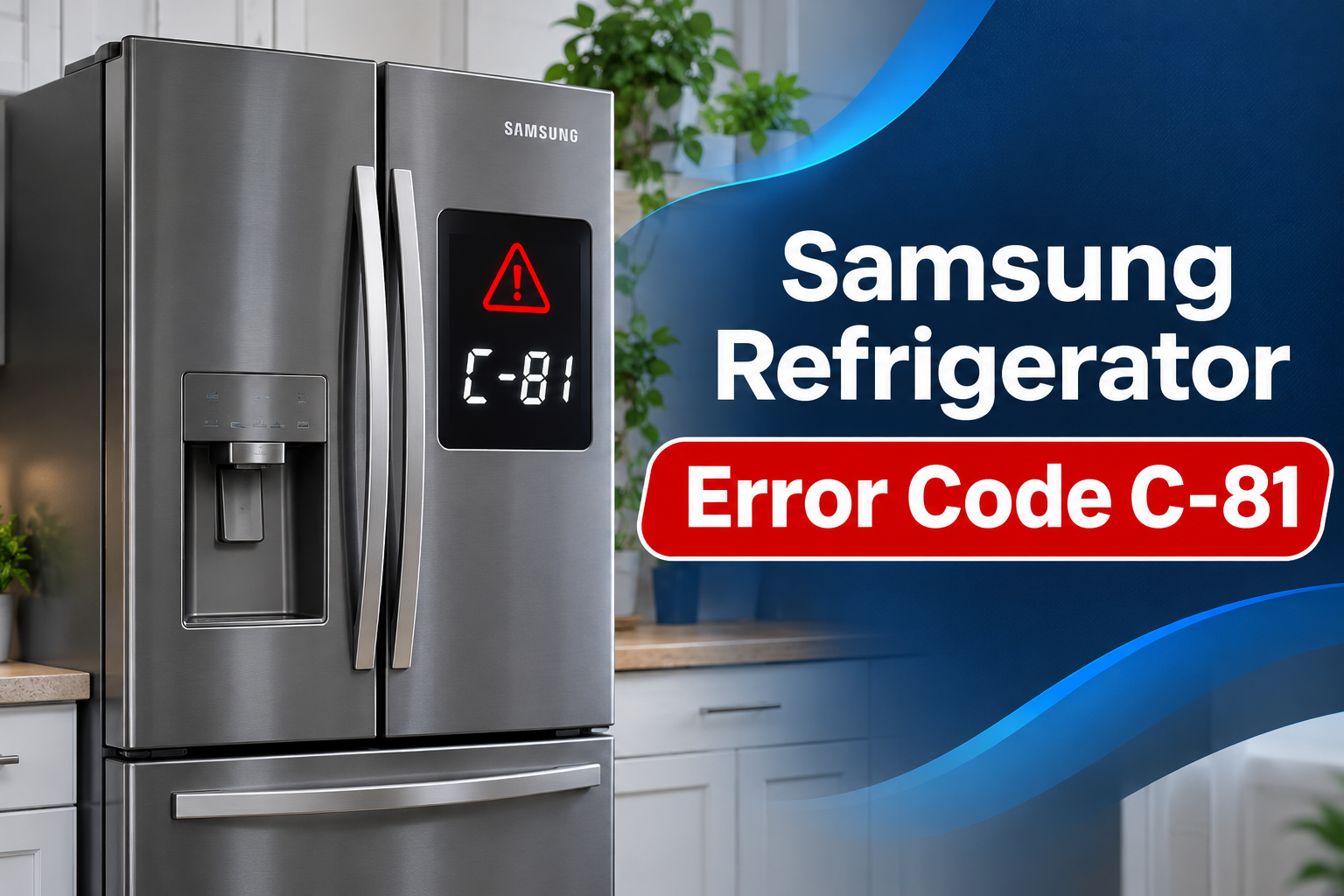
Samsung refrigerator error code C-81 is commonly associated with the 81C compressor starting failure code on applicable models. Samsung’s support documentation explains that this fault may occur when the inverter printed circuit board’s Intelligent Power Module (IPM) operates abnormally or when the compressor has an electrical short circuit. The precise cause requires testing. Samsung’s model specific support documentation provides details for the 81E and 81C codes.
The compressor normally starts when the refrigerator needs to maintain its target temperature. The inverter circuit supplies and controls the electrical power required by the compressor. If the compressor cannot start or the inverter cannot operate correctly, the refrigerator’s control system may detect the failure and display an error.
You might notice that the refrigerator lights work and the control panel remains active while the interior gradually becomes warmer. Some units may produce clicking sounds or repeated starting attempts, although these symptoms do not confirm a particular component failure.
A C-81 or 81C error should be taken seriously if cooling has stopped. The refrigerator may be unable to maintain safe food storage temperatures until the underlying fault is resolved. Samsung advises against unplugging the appliance or pressing control panel buttons simply to clear an error unless the manufacturer specifically instructs you to do so.
Because the inverter circuit and compressor involve electrical hazards, internal diagnosis and repair should be handled by a qualified appliance technician.
Samsung Refrigerator Error Code C-81 [FIXED]: Likely Causes
Several electrical and mechanical faults can prevent a Samsung refrigerator compressor from starting. The displayed code helps narrow the diagnosis, but it does not prove that the compressor itself must be replaced.
1. An Abnormal Power Supply
Your refrigerator needs a suitable electrical supply to operate its compressor and inverter circuit. If the supply voltage falls outside the required operating range, the compressor may fail to start correctly.
Power interruptions, voltage fluctuations, or an electrical fault affecting the refrigerator’s circuit can contribute to starting difficulties. A refrigerator may also develop an error after a power disturbance, particularly if it cannot complete its normal startup sequence.
Check for clues such as a recent power outage, repeated interruptions, or other appliances losing power at the same time. These observations can help an electrician determine whether the household supply requires attention.
A power supply issue is only one possibility. If the supply is stable and the code remains, the inverter circuit and compressor require further investigation.
2. A Faulty Inverter PCB or Intelligent Power Module
The inverter printed circuit board, commonly called the inverter PCB, regulates the power supplied to the compressor. Its Intelligent Power Module, or IPM, is an electronic component that helps control the compressor’s operation.
Samsung’s documentation associates the 81C and 81E codes with abnormal inverter IPM operation, including a condition involving a DC voltage below 13.5 volts. That specification relates to the relevant internal inverter circuitry, not to the voltage measured at your household wall outlet.
An inverter fault can prevent the compressor from receiving the correct electrical drive signals. The refrigerator may remain powered while its cooling system fails to operate normally.
A technician can test the inverter circuit using the specifications for the particular model. Replacing the inverter PCB without confirming the fault may result in unnecessary expense, especially if the compressor or its electrical connections are responsible.
3. An Electrically Defective Compressor
The compressor contains an electric motor that drives the refrigeration cycle. If its internal electrical windings develop a short circuit or another electrical fault, the motor may fail to start properly.
This type of failure can trigger a compressor starting error even when the refrigerator’s other functions remain operational. In some cases, you may hear clicking or humming as the system attempts to start, while other faults may produce little or no noticeable sound.
A qualified technician can carry out appropriate electrical tests to assess the compressor’s condition. The test results help determine whether the compressor is defective or whether the fault originates elsewhere in the starting circuit.
Compressor replacement can be a substantial repair because the component is connected to the sealed refrigeration system. It should not be recommended solely because C-81 appears on the display.
4. Damaged Electrical Wiring or Loose Connections
The inverter board and compressor rely on properly connected electrical wiring. A damaged conductor, loose connector, or deteriorated electrical contact can interrupt the power or signals required for the compressor to start.
These faults may occur following previous repairs, physical damage, or deterioration of electrical components. A poor connection can also create intermittent operation, making the fault appear and disappear before becoming persistent.
A technician can inspect the relevant harnesses and connectors for damage and test the electrical circuit using the model’s service procedures. The wiring should be examined before expensive components are replaced.
Avoid opening the compressor compartment or touching internal connectors yourself. Even when the refrigerator appears to be off, internal electrical components may present a hazard if they have not been isolated and tested correctly.
5. A Compressor or Refrigeration System Fault
Mechanical problems affecting the compressor can also prevent normal operation. An internal restriction or mechanical failure may interfere with the compressor’s ability to start or run as intended.
The symptoms can resemble an inverter or electrical fault. For example, the refrigerator may stop cooling, the compressor may fail to start, or unusual operating sounds may occur. However, these signs alone cannot distinguish a mechanical compressor failure from an electrical problem.
A qualified refrigerator technician can assess the compressor and refrigeration system to identify the actual cause. The inspection may involve electrical measurements and other model specific diagnostic procedures.
Because this work can involve high voltage components and pressurized refrigerant, it should not be attempted as an ordinary household repair.
Samsung Refrigerator Error Code C-81 [FIXED]: DIY Fixes
The safest troubleshooting process begins with confirming the error, assessing cooling performance, and checking for external power issues. Internal inverter and compressor repairs require qualified service.
1. Confirm the Error Code and Model Number
Start by recording the code exactly as it appears on the display. Depending on the display and model, you may see C-81, 81C, or another similar combination. Do not assume these codes are interchangeable without checking the product documentation.
Find the refrigerator’s model number on the manufacturer’s product label. The label is often located inside the refrigerator compartment or in another location specified by the user manual.
Visit Samsung’s official refrigerator support page and consult the documentation for your model. If the exact code is not listed, contact Samsung support and provide a photograph of the display.
This step helps prevent an incorrect diagnosis based on a similar looking code. It also allows a technician to identify the correct service procedures and compatible replacement parts.
2. Check Whether the Refrigerator Is Still Cooling
Determine whether the refrigerator and freezer are maintaining their normal temperatures. An illuminated display and working interior lights do not necessarily mean the compressor is operating correctly.
Use an appliance thermometer to measure the temperature inside the refrigerator. The fresh food compartment should generally remain at 40°F (4°C) or below, while the freezer should be kept at 0°F (-18°C).
If the temperature is rising, move perishable food to another properly cooled appliance as soon as possible. Keep the refrigerator doors closed as much as practical to limit the loss of cold air.
If cooling has stopped completely, arrange service promptly. Do not continue using the refrigerator as though the error were harmless, particularly if food has started warming or frozen items are thawing.
3. Check for Recent Power Interruptions
Think about whether the error appeared after a power outage, a sudden interruption, or another electrical disturbance. This information may help the technician determine whether the power supply contributed to the compressor starting failure.
Check the household circuit breaker visually to see whether it has tripped. If the refrigerator’s power cord and plug are accessible, look for visible damage without pulling the appliance away from the wall or handling a damaged connection.
Do not open electrical panels, measure live voltage, or attempt to test the inverter circuit. If lights are flickering, the breaker repeatedly trips, or other appliances are experiencing similar problems, contact a qualified electrician.
Avoid repeatedly switching the refrigerator on and off to force the compressor to start. Unless Samsung’s instructions for your specific model recommend a reset, leave the error available for proper diagnosis.
4. Make Sure the Refrigerator Has Adequate Ventilation
Although poor ventilation does not establish the cause of C-81, adequate clearance helps the refrigerator release heat and operate under normal conditions.
Check the space around the exterior of the appliance against the clearances specified in its user manual. Make sure stored items, packaging, or other objects are not blocking the required ventilation openings.
If the model’s manual identifies an accessible external ventilation area that needs routine cleaning, follow the manufacturer’s instructions. Do not remove protective panels to access internal electrical components or fans.
Correcting an external ventilation problem may help with heat management, but it will not repair a defective inverter circuit or compressor. If C-81 remains on the display, continue with the manufacturer’s service guidance.
5. Gather Information Before Requesting Repairs
Before contacting Samsung support, note when the code first appeared, whether the refrigerator still cools, and whether the problem followed a power interruption. Record any unusual sounds, recurring electrical problems, or changes in temperature.
Take a clear photograph of the display and have the model number available. This information can help the technician distinguish a compressor starting failure from another error code.
Check your warranty or service coverage before authorizing a repair. Ask the technician to test the electrical supply, inverter PCB, relevant wiring, and compressor before recommending replacement parts.
Avoid buying a compressor or inverter board based solely on the displayed code. A confirmed diagnosis helps ensure that the repair addresses the actual fault.
6. Contact a Qualified Refrigerator Technician
If error code C-81 persists, the refrigerator stops cooling, or the compressor repeatedly fails to start, professional diagnosis is the appropriate next step.
A qualified technician can check whether the electrical supply meets the model’s requirements, test the inverter’s IPM circuit, inspect wiring and connectors, and assess the compressor for electrical or mechanical faults.
The repair depends on the findings. A faulty inverter PCB may require replacement, a damaged connection may need repair, or a defective compressor may require more extensive service. Compressor replacement should only be considered after appropriate testing confirms that the component has failed.
If there is a burning smell, visible electrical damage, smoke, or repeated breaker tripping, stop using the appliance and seek qualified assistance. Do not touch damaged wiring or attempt to access the inverter circuit.
Once the repair is complete, the technician should verify that the error has cleared according to the model’s service procedure and that the refrigerator is cooling normally.
Wrap-Up
Samsung refrigerator error code C-81 is commonly associated with the 81C compressor starting failure code on applicable models. Possible causes include an unstable power supply, a defective inverter circuit, damaged wiring, or a compressor fault.
Start by confirming the exact code, checking the refrigerator’s temperature, and recording any recent power interruptions. Avoid repeatedly resetting the appliance or opening its internal electrical compartments. If the code persists or cooling has stopped, arrange a professional diagnosis before replacing any components. This approach helps identify the actual fault and reduces the risk of unnecessary repairs.