KitchenAid dishwasher error code 6-1 can be frustrating, especially when your dishwasher suddenly refuses to start or stops cleaning dishes properly. You may notice flashing lights, unresponsive buttons, or a machine that runs without enough water.
The tricky part is that this error has different meanings depending on your dishwasher model. Some machines use it for water supply problems, while newer models associate it with electronic control faults. Identifying the correct meaning will help you find a suitable solution.
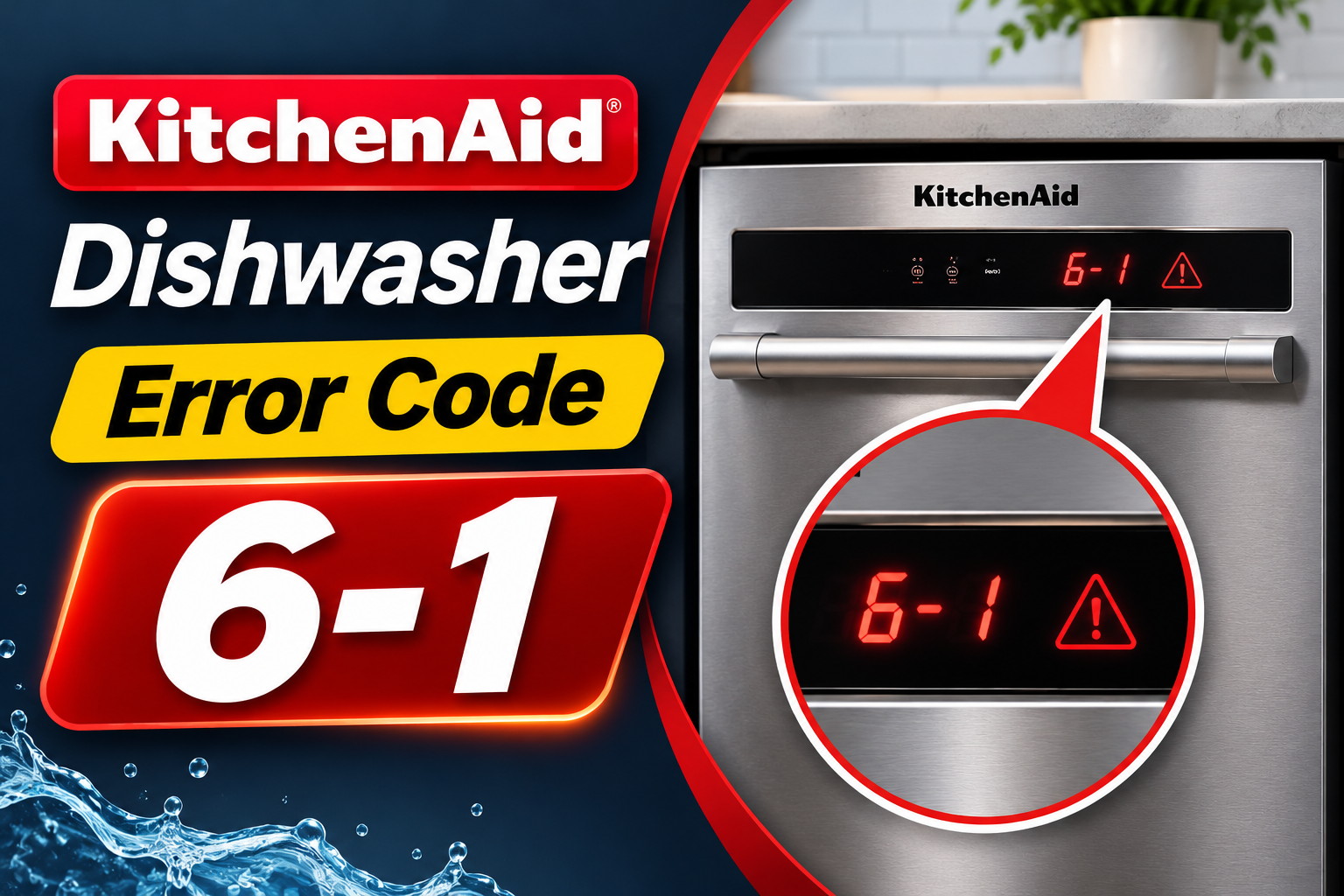
What Does KitchenAid Dishwasher Error Code 6-1 Mean?
KitchenAid dishwasher error code 6-1 can indicate either a water filling problem or a communication fault between electronic controls, depending on the model.
On many older KitchenAid dishwashers, code 6-1 means the machine isn’t receiving enough water during its filling process. The dishwasher needs a sufficient water supply to operate its wash pump and spray arms effectively.
If water cannot enter the machine properly, the dishwasher may stop washing, produce unusual pump sounds, or leave dishes dirty. In some cases, water enters initially but drains away before the machine can use it.
However, newer KitchenAid dishwashers use F6E1 to identify a communication problem involving the user interface and main control board. The user interface is the electronic system behind the buttons or touch controls, while the main board manages the dishwasher’s operations.
When these components cannot communicate correctly, the dishwasher may refuse to start or respond to commands. Therefore, checking your model number is essential before assuming the water inlet valve or another component has failed.
KitchenAid Dishwasher Error Code 6-1: Common Causes
Several problems can trigger this warning, although they don’t all apply to the same dishwasher models. The most relevant causes involve the electronic control system on newer machines and the water supply system on older ones.
1. Faulty Electronic Control Board
The electronic control board manages important dishwasher functions, including water filling, washing, draining, and communication with the control panel.
On newer KitchenAid models, error code F6E1 may appear when the user interface cannot communicate properly with the main control board. If the board develops a communication circuit fault, the dishwasher may become unresponsive or refuse to start.
Electrical component failures can interfere with the signals exchanged between the controls. Sometimes the problem appears intermittently, allowing the machine to operate during one cycle but fail during another.
You might notice that the display lights up while the Start button fails to work. In other cases, the dishwasher may show the warning immediately after power is restored.
However, these symptoms don’t automatically confirm a defective control board. Loose wiring connections can produce similar problems, making further diagnosis necessary before replacing expensive components.
2. Loose or Damaged Control Panel Wiring
The dishwasher’s control panel communicates with its main control board through an electrical wiring harness.
If a connector becomes loose or a wire breaks, communication between the components may be interrupted. The machine can then register error code F6E1 even when both control boards are working.
Vibration, moisture exposure, damaged connector terminals, or previous repairs may contribute to wiring problems.
One possible clue is an intermittent error accompanied by controls that occasionally stop responding. However, identifying the exact fault requires checking internal electrical connections, which should be handled by a qualified technician.
3. Restricted or Interrupted Water Supply
On older KitchenAid dishwashers that use code 6-1 for low water conditions, an inadequate water supply is one of the first things to investigate.
The dishwasher receives water through a supply hose connected to your home’s plumbing. A shutoff valve controls whether water can reach the appliance.
If that valve is closed or partially closed, the dishwasher may receive little or no water. A kinked supply hose or an interruption to the household water supply can produce similar symptoms.
You may hear the dishwasher attempt to begin a cycle without the usual sound of water entering. The machine might also stop shortly afterward.
If your kitchen faucet has weak water flow at the same time, the problem could involve the household plumbing rather than the dishwasher itself.
4. Blocked or Faulty Water Inlet Valve
The water inlet valve regulates the water entering the dishwasher. It opens when the control system requests water and closes when the required amount has entered.
Over time, sediment or debris from the plumbing system can collect around the valve’s inlet screen. This may restrict water flow and prevent the dishwasher from filling properly.
The valve can also develop mechanical or electrical faults. For example, a damaged internal component may prevent it from opening even when the water supply is available.
A dishwasher with a restricted inlet valve may fill slowly or stop before enough water enters. You might hear a faint humming sound, although this alone doesn’t confirm the valve is defective.
On older models, KitchenAid’s service documentation identifies blocked inlet screens and valve problems as possible causes of error code 6-1.
An inlet valve problem should be distinguished from a household supply issue. If the nearby faucet works normally and the dishwasher’s shutoff valve is open, the appliance’s inlet system may need professional inspection.
5. Improper Drain Hose Installation or Float Problems
A dishwasher can experience low water conditions even when water enters normally.
One possible cause is an incorrectly installed drain hose. If the hose lacks the required elevated loop, water may siphon out of the dishwasher during operation.
Siphoning occurs when water is unintentionally drawn through the drain hose. The dishwasher may fill initially but lose water before completing the washing process.
Another possible cause is a stuck overfill protection float on older models. This component helps prevent excessive water from entering the dishwasher. If the float remains in its raised position, it may prevent the inlet valve from allowing water into the machine.
Food debris or a misplaced object can sometimes restrict the float’s movement. An incorrectly leveled dishwasher may also contribute to float operation problems.
These conditions can produce similar filling symptoms, but the appropriate repair depends on which component is responsible.
KitchenAid Dishwasher Error Code 6-1: How to Fix
The correct troubleshooting method depends on your dishwasher’s model and the symptoms accompanying the warning. Start with simple checks that don’t require opening electrical compartments or disconnecting internal plumbing.
1. Confirm Your Dishwasher Model and Error Meaning
Before attempting repairs, identify your KitchenAid dishwasher’s model number.
You can usually find it on a label along the inside edge of the dishwasher door or tub frame.
Use the model number to check the manufacturer’s documentation and confirm whether code 6-1 refers to an electronic communication fault or a low water condition.
The distinction is straightforward.
| Dishwasher type | Error 6-1 meaning | Area to investigate |
|---|---|---|
| Many older models | Low or insufficient water | Water supply, inlet valve, float, and drain hose |
| Newer models using F6E1 | Electronic communication fault | Control panel, wiring, and main control board |
If your dishwasher displays the warning through flashing lights, count the flashes carefully.
For example, six flashes followed by a short pause and one additional flash may indicate F6E1 on compatible models.
Once you’ve confirmed the error’s meaning, you can concentrate on the appropriate troubleshooting steps.
2. Reset the Dishwasher
A power reset is a sensible first step, especially for newer KitchenAid dishwashers displaying F6E1.
Temporary interruptions can sometimes affect electronic communication between the dishwasher’s controls. Disconnecting power allows the control system to restart.
Follow these steps:
- Stop the current wash cycle if the controls respond.
- Disconnect the dishwasher from its power supply.
- If the appliance is permanently wired, switch off its designated circuit breaker.
- Leave the power disconnected for at least 30 seconds.
- Restore power and check whether the error remains.
If the warning disappears, try starting a cycle and observe how the dishwasher responds.
However, resetting the machine won’t repair a damaged control board, broken wiring, or defective water inlet valve.
If the error returns, avoid repeatedly resetting the dishwasher. The recurring warning suggests that further troubleshooting is necessary.
3. Check the Control Panel for Moisture or Unresponsive Buttons
If your model uses F6E1 for an electronic communication problem, examine the accessible control panel.
Look for buttons that don’t respond, visible moisture around the controls, or damage to the panel.
Water exposure can interfere with electronic components, particularly if moisture enters the control housing.
Unplug the dishwasher before cleaning the exterior panel. Use a soft, slightly damp cloth to remove visible dirt, then dry the surface thoroughly.
Avoid spraying cleaning products directly onto the controls or allowing water to enter the button openings.
After cleaning, restore power and check whether the buttons respond normally.
However, surface cleaning cannot repair damaged internal wiring or electronic circuits. If moisture has entered the electrical housing or the controls remain unresponsive, professional inspection is necessary.
4. Check the Water Supply Valve
If your older KitchenAid dishwasher uses code 6-1 for low water conditions, verify that water can reach the appliance.
Locate the dishwasher’s water supply shutoff valve. It’s commonly installed beneath the kitchen sink, although its position may differ.
Check whether the valve is fully open. If it’s closed, open it according to the valve’s design.
Next, turn on the kitchen faucet and confirm that the household water supply is working normally.
If the faucet also has weak water flow, the problem may involve the plumbing supply.
You should also check any visible section of the dishwasher’s supply hose for obvious kinks or damage.
Don’t pull the dishwasher from its cabinet or disconnect water fittings to inspect hidden sections.
If the shutoff valve is open and water pressure appears normal, but the dishwasher still doesn’t fill, the inlet valve or another internal component may need attention.
5. Inspect the Overfill Float and Drain Hose
On older models, a stuck overfill float can prevent normal water filling.
The float is usually a small plastic component inside the dishwasher tub. Its location and design vary, so consult your model’s manual before attempting to move it.
Turn off the appliance and remove the lower rack if necessary.
Check whether food debris, utensils, or other visible objects are restricting the float.
If your model has an accessible movable float, gently lift and lower it. It should move freely without sticking.
Don’t force a float that resists movement or attempt to dismantle its switch.
Next, examine the accessible drain hose connection beneath the sink.
KitchenAid recommends that the drain hose connection be at least 20 inches above the floor on models with this installation requirement. The hose must also be installed according to the specific dishwasher’s drainage instructions.
If the hose has fallen from its support or appears incorrectly positioned, consult the installation manual before making adjustments.
An improperly installed drain hose may allow water to leave the dishwasher during filling, causing a low water condition.
If you’re unsure about the installation, have a qualified appliance installer or plumber inspect it.
6. Check for Improper Loading and Visible Leaks
Certain loading problems can affect how water circulates inside older KitchenAid dishwashers.
For example, large bowls or pots positioned in a way that traps substantial amounts of wash water can reduce the water available for circulation.
Rearrange large cookware so water can flow freely and drain from the items during washing.
Also check the area around the dishwasher for visible leaks.
Look for damp flooring, water collecting beneath the door, or moisture around accessible plumbing connections.
If the appliance is actively leaking, stop using it. Shut off its water supply if safely accessible and disconnect electrical power without touching wet electrical equipment.
Don’t continue running wash cycles to determine where a leak originates.
If there are no leaks and you’ve corrected an obvious loading or water supply issue, try one monitored cycle.
If the dishwasher fills and washes normally without the error returning, the issue may have been resolved. However, a recurring code requires further diagnosis.
7. Contact a Qualified Appliance Technician
If error code 6-1 continues after the appropriate checks, the dishwasher may need professional repairs.
On newer models, a technician can inspect the user interface, communication wiring, and main control board to identify the electrical fault.
On older models, professional diagnosis may involve checking the inlet valve, water filling circuit, float switch, or drain installation.
Depending on the findings, repairs might involve replacing a defective water inlet valve, correcting damaged wiring, or installing a replacement electronic control component.
Avoid replacing parts based on the error code alone. Different faults can produce similar symptoms, and unnecessary replacements can increase repair costs.
You can contact KitchenAid customer support at 1-800-422-1230 in the United States for service assistance.
Have your dishwasher’s model number, exact error code, and troubleshooting details available before contacting support.
Wrapping Up
KitchenAid dishwasher error code 6-1 has different meanings across models. Older machines may use it for insufficient water, while newer models associate F6E1 with an electronic communication problem.
Start by checking your model number and confirming the error’s meaning. A power reset, water supply inspection, or simple float check may help resolve the issue, depending on the machine. If the warning persists, professional diagnosis can identify the faulty component and help restore reliable dishwasher operation.