KitchenAid dishwasher error code 8-2 can be frustrating, especially when your dishwasher stops draining, leaves dirty water at the bottom, or refuses to complete a wash cycle. You may also hear an unusual humming sound or notice that the drain pump doesn’t operate when expected.
Fortunately, some drainage problems can be resolved with simple checks and cleaning. However, error code 8-2 can also indicate an electrical fault that requires professional repair. Identifying the exact cause helps you avoid unnecessary expenses.
What Does KitchenAid Dishwasher Error Code 8-2 Mean?
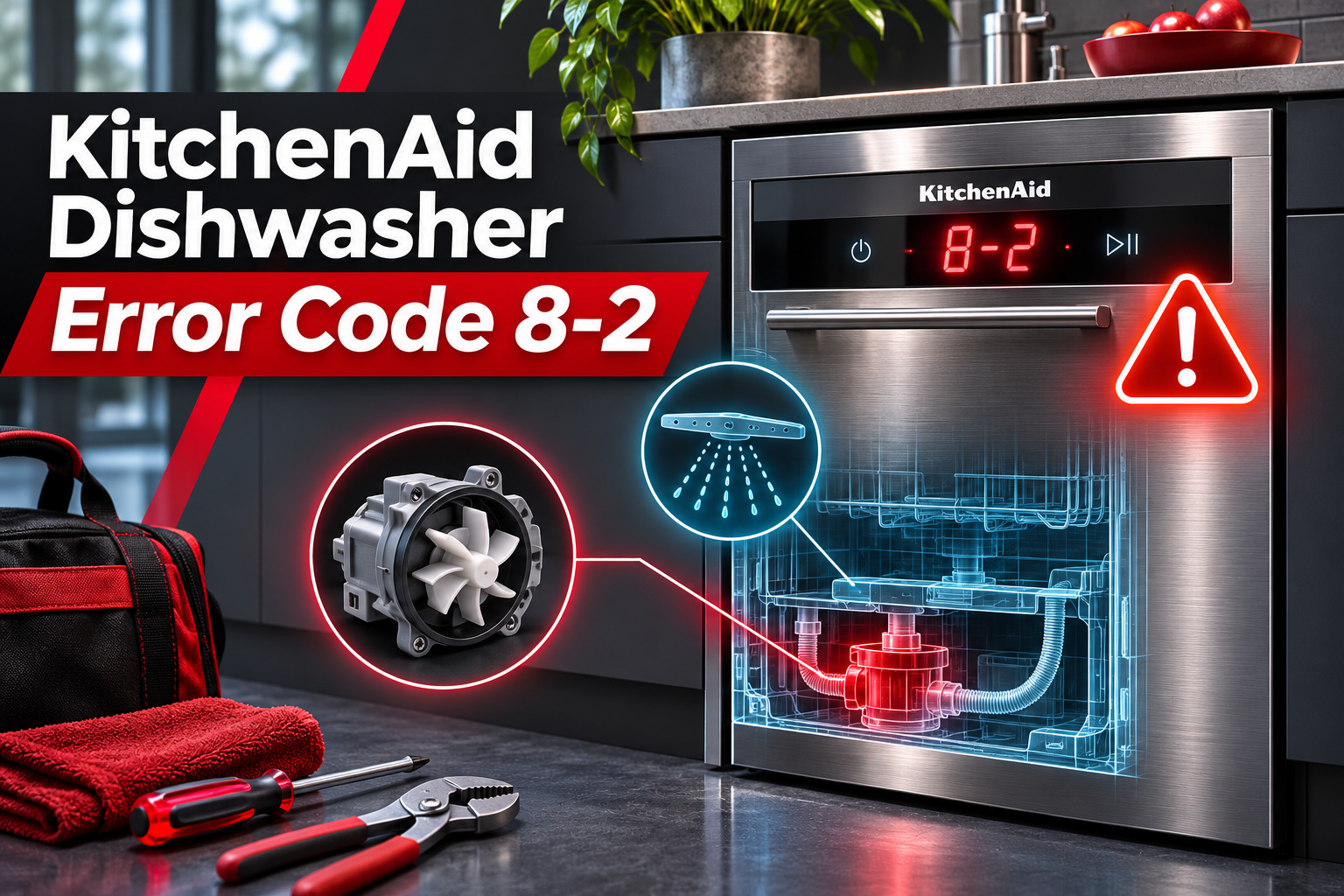
KitchenAid dishwasher error code 8-2 generally indicates a drain motor electrical problem on models that use the older 8-2 diagnostic system. The dishwasher’s electronic control has detected an electrical fault involving the drain pump motor or the circuit responsible for operating it.
The drain pump removes dirty water from the dishwasher during and after a wash cycle. When the control board activates the pump, an electric motor turns an impeller that pushes water through the drain hose and into your home’s drainage system. If the motor fails or its electrical connection becomes faulty, the dishwasher may struggle to remove water properly.
Common symptoms include standing water inside the tub, a dishwasher that stops during a cycle, unusual humming or buzzing from underneath the appliance, and repeated drainage errors. However, a drain motor electrical fault doesn’t always cause complete drainage failure. An intermittent connection may allow the pump to work occasionally before the problem returns.
One important distinction is that error code meanings vary between KitchenAid models. Some newer dishwashers use F8E2 to identify a water inlet valve electrical fault rather than a drain motor problem. Therefore, check your model’s technical documentation before replacing any component. The instructions below primarily address the older 8-2 drain motor fault, with guidance for newer models where necessary.
KitchenAid Dishwasher Error Code 8-2: Common Causes
Several mechanical and electrical problems can trigger this error on models that use 8-2 for the drain motor circuit. Some involve the pump itself, while others affect the wiring or electronic controls that supply power to it.
1. A Faulty Drain Pump Motor
The drain pump motor is one of the main components associated with KitchenAid error code 8-2. Its job is to spin the impeller and force wastewater out of the dishwasher whenever the control system starts a drain operation.
Inside the motor are electrical windings that produce the magnetic force needed for rotation. If a winding breaks or develops another electrical fault, the motor may stop operating correctly. The dishwasher’s electronic control can then detect an abnormal condition in the drain motor circuit.
A faulty motor may produce a humming or buzzing sound without moving water. In other cases, the pump remains completely silent when the dishwasher attempts to drain. However, these symptoms can also occur with damaged wiring or a mechanical obstruction.
Some pump problems are intermittent. For instance, a motor affected by heat or internal wear might work during one cycle but fail during another. If the dishwasher repeatedly reports error code 8-2 despite having a clear drainage path, the pump motor becomes a stronger suspect.
2. Loose or Damaged Drain Pump Wiring
The drain pump receives electricity through wiring connected to the dishwasher’s electronic control board. If that connection becomes loose, damaged, or corroded, the pump may not receive the power it needs to operate.
Electrical connectors can develop problems because of vibration, moisture exposure, or previous repairs. Damaged wire insulation and broken conductors can also interrupt the circuit, especially near locations where wires bend or pass through mounting areas.
A loose connection may cause the dishwasher to drain occasionally before stopping unexpectedly. You might notice the error appearing at different points during a wash cycle. However, confirming a wiring fault requires electrical testing, so internal inspection should be left to a qualified technician.
3. Debris Stuck in the Drain Pump Impeller
Small pieces of broken glass, food particles, labels, and other debris can sometimes reach the drain pump area. When these objects become lodged around the impeller, they may prevent it from rotating freely.
The impeller is a small rotating component that moves water through the pump housing. If something blocks it, the motor may struggle to turn or become completely locked. Some KitchenAid technical documents identify a blocked impeller as a possible cause of the 8-2 drain motor fault.
A jammed pump may produce a low humming sound as the motor attempts to operate. You might also see water remaining in the dishwasher after a drain command. However, a humming sound alone doesn’t prove that debris is responsible.
Another clue is a problem that develops shortly after a glass breaks inside the dishwasher or a large amount of food debris enters the filter area. Although the filter normally helps prevent foreign objects from reaching the pump, small pieces can sometimes get past it.
If an obstruction is suspected, begin with the removable filter and other areas that your owner’s manual identifies as safe to access. Reaching inside a concealed pump housing or removing the motor requires additional precautions and is better handled by a technician.
4. A Damaged Fuse or Electrical Protection Circuit
Some KitchenAid dishwashers have electrical protection components built into the electronic control board. These components help protect certain circuits when an electrical fault occurs.
If a control board fuse opens, electricity may no longer reach the drain motor. The dishwasher can then detect an electrical problem because the pump doesn’t respond as expected.
An open fuse can sometimes indicate another underlying problem, such as a shorted component or damaged wiring. Replacing the electronic control without finding the original fault could result in another failure.
Since these fuses and circuits are inside the control assembly, checking them involves electrical measurements and handling electronic components. This diagnosis should be performed by a qualified appliance repair technician.
5. A Faulty Electronic Control Board
The electronic control board manages the dishwasher’s operations, including when the drain pump starts and stops. It sends electrical power to the pump through a dedicated control circuit.
If that circuit fails, the pump may not receive the correct electrical supply even when the motor and wiring are functioning properly. The dishwasher may consequently report error code 8-2.
Control board problems can also produce other symptoms, such as cycles stopping unexpectedly or particular components failing to operate. Nevertheless, these symptoms don’t automatically confirm that the board is defective.
A technician should first test the drain motor and its wiring before recommending control board replacement. This is especially important because electronic control assemblies can be expensive, and replacing a working board won’t resolve a faulty pump.
KitchenAid Dishwasher Error Code 8-2: How to Fix
The most effective repair depends on whether the error comes from a blocked pump, damaged wiring, a failed motor, or another electrical component. Start with the following safe troubleshooting methods before considering internal repairs.
1. Confirm the Error Code and Dishwasher Model
Before attempting any repair, make sure your dishwasher is reporting the correct error code. KitchenAid uses different diagnostic systems across its dishwasher models, so identifying the model helps prevent incorrect troubleshooting.
Some models display codes directly on a digital screen, while others communicate errors through flashing indicator lights. For example, a dishwasher using a two-part flashing code may flash eight times, pause, flash twice, and then repeat the sequence.
You can usually find the model number on an identification label around the dishwasher door opening or tub frame. Open the dishwasher door and look along the edges for a sticker or metal label.
Once you have the model number, check the corresponding owner’s manual or technical documentation to confirm what error code 8-2 means for your dishwasher.
This step is especially important if the appliance displays F8E2 rather than an older 8-2 code. On newer KitchenAid models, F8E2 may indicate a fill valve electrical problem. In that case, the drain pump troubleshooting methods below may not apply.
2. Reset the KitchenAid Dishwasher
A power reset can sometimes clear a temporary electronic fault that causes the dishwasher to display an error code.
KitchenAid recommends disconnecting the dishwasher from electricity for at least 30 seconds when resetting its electronic controls. Waiting approximately one minute is also reasonable.
Follow these steps to reset the dishwasher safely.
- Press the Cancel button if the control panel still responds.
- Allow any active draining operation to finish.
- Unplug the dishwasher if its power cord is accessible.
- For a hardwired dishwasher, switch off the dedicated circuit breaker.
- Wait at least 60 seconds.
- Restore power and check whether the error has disappeared.
After the reset, try a drain operation using the instructions provided for your model. If the dishwasher responds normally, monitor it during subsequent cycles to see whether the problem returns.
However, resetting the controls won’t repair damaged wiring, a failed drain motor, or a defective control board. If the same error appears again, further troubleshooting is necessary.
Avoid repeatedly resetting a dishwasher that trips its circuit breaker, produces a burning smell, or shows signs of an electrical problem. Disconnect it from power and arrange professional service.
3. Clean the Dishwasher Filter and Check for Debris
A dirty or blocked filter can interfere with normal drainage. Although a clogged filter doesn’t directly establish an electrical fault, cleaning it is a useful first step when the dishwasher leaves water behind.
Start by disconnecting power to the dishwasher. Remove the lower dish rack to access the filter area at the bottom of the tub. If standing water is present, carefully remove the excess with a small container or sponge before handling the filter.
On KitchenAid models with removable filters, follow these steps.
- Locate the filter assembly at the bottom of the dishwasher.
- Turn the upper filter in the direction specified by your owner’s manual, usually counterclockwise, and lift it out.
- Remove the lower filter if your model has one.
- Rinse the filters under warm running water to remove trapped food and grease.
- Gently clean stubborn residue using a soft brush.
- Check the accessible filter compartment for food particles or other loose debris.
- Reinstall the filters correctly before restoring power.
Use caution if you suspect broken glass is present. Wear suitable protective gloves, and avoid reaching into areas where you can’t clearly see.
Some KitchenAid dishwashers use different filtration systems, so don’t force a filter assembly that doesn’t lift out according to your model’s instructions.
Once the filters are clean and correctly installed, restore power and try the dishwasher’s drain function. If water now drains normally and the error doesn’t return, an obstruction may have contributed to the problem.
If the code persists, the fault may be inside the drain pump or its electrical circuit. Cleaning the filter cannot repair those components.
4. Check the Drain Hose and Sink Connection
Another useful check is the external drainage path. A kinked or blocked hose can prevent water from leaving the dishwasher, producing symptoms similar to a failed pump.
Although drain hose restrictions are usually associated with drainage performance errors rather than electrical faults, checking accessible sections can help you identify whether multiple problems are present.
Begin by switching off the dishwasher and disconnecting its power supply. Then examine the visible drain hose where it connects beneath the kitchen sink.
Look for crushed sections, sharp bends, or obvious damage. If the hose has become pinched by stored items beneath the sink, carefully move those items away without pulling or disconnecting the plumbing.
Next, check the sink drain connection. If your dishwasher drains through a garbage disposal, make sure the disposal and sink drain aren’t blocked. If the dishwasher was recently installed, a technician may also need to verify that the disposal’s dishwasher inlet knockout plug was removed.
For installations with a countertop air gap, check whether water or debris is collecting around it. Follow the air gap manufacturer’s cleaning instructions if it has a removable cap.
After correcting any visible restriction, restore power and try draining the dishwasher. If the machine drains successfully but error code 8-2 returns, don’t assume the problem is resolved. The pump motor and electrical circuit may still require professional testing.
5. Observe the Drain Pump’s Operation
Once you’ve ruled out obvious filter and hose problems, observing how the drain pump behaves can provide useful clues about the remaining fault.
Restore power only after reinstalling all removed filters and ensuring the dishwasher is properly assembled. Then use the Cancel/Drain function or another drain command specified in your owner’s manual.
Listen for the pump during the drain operation. A functioning pump normally makes a steady operating sound while moving water through the drain system.
Different sounds can suggest different problems.
- A steady pump sound with water leaving the tub: The drain pump is operating, although an intermittent electrical problem may still be present.
- A humming or buzzing sound without drainage: The pump may be jammed, mechanically damaged, or unable to rotate properly.
- Complete silence when the pump should run: The motor may have failed, or the electrical supply to it may be interrupted.
- Intermittent operation: A loose connection, internal motor problem, or control circuit fault may be affecting performance.
These observations help narrow down the possibilities, but they aren’t enough to identify the defective component with certainty.
If you hear grinding, notice an electrical burning smell, or see water leaking beneath the dishwasher, stop the test immediately and disconnect power.
Avoid removing the lower access panel to touch electrical connections or checking the pump voltage yourself. Internal drain pump testing requires knowledge of electrical safety and the correct service procedures for your particular model.
If the pump still doesn’t work, a technician can test the motor windings, wiring connections, and electronic control circuit to identify the cause.
For newer models with a fill valve F8E2 fault, check that the household water supply is turned on and look for visible leaks around the accessible supply connection. If water is leaking or the code returns after a reset, shut off the dishwasher’s water supply and arrange service. Don’t remove electrical covers or disconnect the inlet valve wiring.
6. Contact a Qualified Appliance Repair Technician
If the dishwasher continues showing error code 8-2 after the basic checks, professional diagnosis is the safest next step.
A qualified appliance technician can test the drain pump motor and its electrical connections using the specifications for your KitchenAid model. These tests help determine whether the motor has an open winding, a wiring connection has failed, or the electronic control board is responsible.
If the impeller is blocked by debris, the technician may be able to remove the obstruction and inspect the pump for damage. However, a motor with failed windings or significant mechanical damage generally needs replacement.
For control board faults, the technician should confirm that the drain pump and wiring are functioning correctly before recommending a new board.
Before scheduling service, have your dishwasher’s model number, serial number, and error code available. Also, explain whether the machine leaves water behind, makes unusual sounds, or stops at a particular stage of the wash cycle.
These details can help the technician identify which components need attention and reduce unnecessary part replacement.
Wrap-Up
KitchenAid dishwasher error code 8-2 often points to an electrical problem involving the drain pump on models that use the older diagnostic system. However, newer models may assign a different meaning to F8E2, making the model number an essential part of troubleshooting.
Start by confirming the code, resetting the dishwasher, and checking the accessible drainage system for obstructions. If the fault persists, have a qualified technician examine the electrical components.
Taking the right approach can help restore normal dishwasher operation while avoiding unnecessary repairs and replacement costs.