The E2 error on your Midea air fryer can be frustrating, especially when the appliance suddenly stops cooking or refuses to start. You may notice the error appearing immediately after switching it on or halfway through preparing a meal.
This warning usually indicates a problem with the temperature sensor circuit. While a simple restart may sometimes clear the error, a damaged sensor or electrical component may require repair. Understanding the possible causes will help you identify the problem and take the appropriate action.
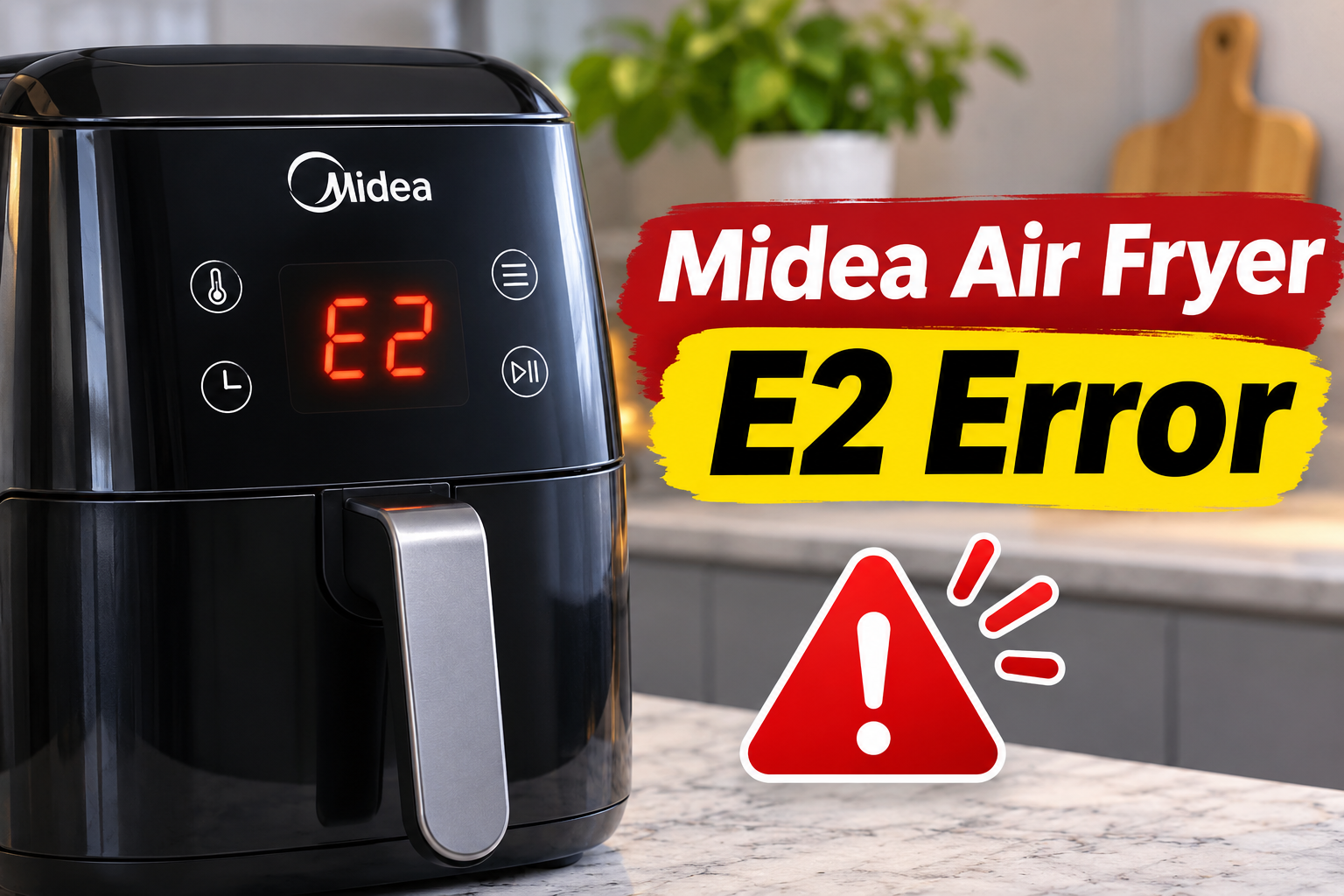
What Does the E2 Error Mean on a Midea Air Fryer?
The E2 error on many Midea air fryers indicates a short circuit in the temperature sensor system. This means the appliance has detected an abnormal electrical condition that prevents it from monitoring cooking temperatures properly.
Your air fryer uses a temperature sensor to measure the heat inside the cooking chamber. The sensor communicates with an electronic control board, which regulates the heating element to maintain your selected temperature. When the sensor circuit develops a short circuit, the control board may detect an unexpected electrical reading and activate the E2 warning.
Depending on your model, the appliance may stop heating, refuse to begin cooking, or display E2 repeatedly after being switched on. The error can also appear during an active cooking cycle if the electrical fault develops or becomes detectable while the appliance is running.
However, the exact meaning depends on the model. For example, Midea’s MAD50109APK manual identifies E2 as sensor short circuit protection. On the MAD861D8ADKL two-zone air fryer, E2 specifically refers to the upper temperature sensor in the left cooking chamber, while U2 identifies the corresponding fault in the right chamber.
These differences make it essential to check your model’s instructions before attempting any troubleshooting.
Midea Air Fryer E2 Error: Common Causes
Several electrical problems can interfere with the temperature sensing system and trigger E2. Although the warning identifies a possible sensor circuit fault, it doesn’t necessarily reveal which component has failed.
1. Faulty Temperature Sensor
A defective temperature sensor is one of the most likely causes of the E2 error on your Midea air fryer.
Many Midea models use a temperature sensing component known as an NTC thermistor. Its electrical resistance changes as the temperature changes, allowing the control board to monitor the heat inside the appliance.
If the sensor develops an internal short circuit, its electrical resistance may fall outside the expected operating range. The control board can then recognize the abnormal signal and display E2 to indicate a fault.
Sensor problems can develop through component deterioration, electrical damage, or physical damage. In some cases, a fault may become noticeable only after the appliance has warmed up.
You may find that E2 appears immediately after plugging in the air fryer, before you select a cooking program. Alternatively, the appliance might begin heating normally before suddenly stopping and displaying the warning.
Both situations can occur with temperature sensor faults. However, the timing alone cannot confirm that the sensor needs replacement because wiring and control board problems may produce similar symptoms.
2. Damaged Temperature Sensor Wiring
The temperature sensor connects to the electronic control board through internal electrical wiring. These connections allow the sensor’s readings to reach the board.
If the insulation around a wire becomes damaged, exposed conductors may touch each other or another conductive component. This can create an unintended electrical connection and interfere with the sensor signal.
Wiring damage can result from excessive heat, physical stress, manufacturing defects, or deterioration over time.
An intermittent E2 warning may suggest a connection problem, particularly if the appliance sometimes operates normally before displaying the error. However, this behavior doesn’t confirm that damaged wiring is responsible.
Because the affected wires are inside the air fryer, identifying the exact fault requires professional inspection and electrical testing.
3. Moisture Affecting Electrical Components
Moisture entering the electrical housing can sometimes interfere with an air fryer’s temperature sensing system.
Although the cooking chamber is designed to handle moisture released from food, the internal wiring, connectors, and electronic control board must remain protected from liquid.
Water entering these areas may create an unintended electrical connection or damage sensitive components. Over time, moisture exposure can also contribute to corrosion, which may interfere with normal electrical operation.
You might suspect this problem if E2 appeared after an accidental spill or shortly after cleaning the appliance.
For example, spraying cleaning liquid directly into the ventilation openings or allowing water to enter the control panel can expose internal electrical parts to moisture.
However, E2 doesn’t automatically mean water has entered the appliance. A sensor can develop a short circuit without any moisture exposure.
If you suspect that liquid has reached the electrical housing, stop using the air fryer. Even when its exterior appears dry, moisture or damage may remain inside.
4. Faulty Electronic Control Board
The electronic control board manages the air fryer’s heating system, cooking settings, and temperature monitoring functions.
When the temperature sensor sends its readings, the control board processes the information and adjusts the heating element accordingly.
If the board’s temperature sensing circuit develops a fault, it may receive or interpret the sensor signal incorrectly. A damaged electronic component or unwanted electrical connection on the board can potentially trigger an E2 warning.
Control board problems may develop because of electrical damage, component failure, or moisture exposure.
You might suspect a control board issue if E2 persists after a permitted restart or if the appliance also shows unusual electronic behavior.
However, these symptoms can also occur with a damaged sensor. A technician must test the relevant components before determining whether the control board needs repair or replacement.
Midea Air Fryer E2 Error: How to Fix
Some basic troubleshooting steps can help you identify obvious problems or determine whether E2 is a temporary warning. However, because the error may indicate an internal short circuit, avoid opening the appliance or attempting electrical repairs yourself.
1. Switch Off the Air Fryer and Disconnect It From Power
The first thing to do when E2 appears is to stop using your Midea air fryer.
Switch off the appliance if the controls still respond, then unplug it from the electrical outlet. If the plug or outlet is damaged, sparking, or unusually hot, avoid touching the affected equipment and arrange safe isolation of the electrical supply.
Allow the appliance to cool completely before handling its removable cooking components.
While it cools, pay attention to any unusual symptoms that occurred before the error appeared. These may include a burning smell, unexpected shutdown, unusual noise, or changes in heating performance.
Also, note whether E2 appeared before cooking started or while the appliance was already heating.
These observations can help a technician understand the fault. However, don’t restart the air fryer if you notice smoke, sparks, a burning smell, or visible electrical damage.
2. Try a Power Restart
Midea recommends disconnecting and reconnecting the power supply as an initial troubleshooting step for E2 on certain models.
For example, the MAD861D8ADKL manual instructs users to unplug the appliance, wait 30 seconds, and reconnect it to reset the unit. Other models may provide slightly different instructions.
If your model permits a restart and the appliance shows no signs of electrical damage, follow these steps.
- Switch off the air fryer and unplug it from the electrical outlet.
- Allow the appliance to cool completely.
- Check that the plug and exterior are dry and undamaged.
- Wait for the period specified in your instruction manual.
- Reconnect the appliance to a suitable wall outlet.
- Observe whether E2 returns without starting another cooking cycle.
If the warning appears again, disconnect the air fryer and stop testing it.
A power restart may clear a temporary electronic problem, but it cannot repair a physically damaged temperature sensor, shorted wire, or defective control board.
Even if E2 disappears, an intermittent fault may still be present. Contact Midea support for guidance before returning the appliance to regular cooking use.
3. Inspect the Power Cord and Electrical Outlet
Although the E2 warning generally concerns the temperature sensor circuit, checking the external power connection can help identify other electrical problems.
Start by inspecting the power cord and plug while the appliance is unplugged.
Look for cracked insulation, exposed wires, melted plastic, burn marks, or damaged plug pins.
Also, examine the electrical outlet for discoloration or visible damage. If the outlet is loose, damaged, or produces a burning smell, stop using it and contact a qualified electrician.
Make sure the outlet supplies the voltage specified on your air fryer’s rating label. An appliance purchased in another country may have different electrical requirements.
A damaged power cord isn’t an established cause of the E2 sensor error. However, it can create a separate safety hazard that must be addressed.
If you find damaged wiring or a defective plug, don’t attempt to repair it with electrical tape or an improvised connection. Contact the manufacturer or a qualified repair professional.
4. Check for Moisture and Clean Accessible Areas
If E2 appeared after cleaning the appliance or spilling liquid nearby, inspect its accessible areas for signs of moisture.
First, unplug the air fryer and allow it to cool completely.
Remove the cooking basket, tray, or drawer according to your model’s instructions. Check whether water has collected around the removable accessories or whether liquid appears to have entered the main housing.
If the accessible components need cleaning, follow these steps.
- Remove leftover food particles from the cooking basket and tray.
- Wash removable accessories using the method approved in your instruction manual.
- Wipe permitted exterior surfaces with a soft, slightly damp cloth.
- Dry the removable components thoroughly.
- Check for visible moisture near the control panel or ventilation openings.
Avoid spraying water directly into the appliance or immersing the electrical housing in water.
Midea’s cleaning guidance also warns against allowing excessive moisture to enter the appliance because this can create electrical hazards.
If you believe liquid has entered the housing, leave the air fryer unplugged and seek professional assistance. Don’t use a hair dryer, oven, or other heat source to dry its internal electrical components.
Cleaning can remove grease and food residue, but it won’t repair a shorted temperature sensor or electronic circuit.
5. Check Your Midea Air Fryer Model and Instruction Manual
Before purchasing replacement parts or arranging repairs, identify the exact model of your Midea air fryer.
You can usually find the model number on the rating label attached to the underside or rear of the appliance. It may also appear on the packaging or instruction booklet.
Once you’ve identified the model, check its troubleshooting instructions.
For example, different Midea manuals describe E2 as follows.
- MAD50109APK: E2 indicates sensor short circuit protection. The manufacturer recommends reconnecting the power supply or arranging service.
- MAD861D8ADKL: E2 indicates a short circuit involving the left cooking chamber’s upper temperature sensor. U2 identifies the corresponding right chamber fault.
- MAD111D8APKW: The manual groups E1 and E2 together as temperature sensor circuit errors and recommends reconnecting the power supply or seeking professional repair.
- MF-CN55A2: This model uses the code E02 for an abnormal short circuit involving its NTC temperature sensor. Its manual recommends authorized servicing.
These examples show why instructions for one model may not apply exactly to another.
If your air fryer displays E2 repeatedly, follow the service recommendation in its manual rather than experimenting with unrelated settings.
6. Contact Midea Support or a Qualified Appliance Technician
If E2 continues appearing after the permitted troubleshooting steps, your air fryer may need professional repair.
A qualified appliance technician can assess the temperature sensing circuit and determine whether the problem involves a damaged sensor, internal wiring, electrical connections, or control board.
Depending on the findings, replacing the defective component may restore normal operation.
However, don’t purchase a replacement sensor based solely on the error code. Different Midea models use different parts, and replacing the wrong component may leave the problem unresolved.
If your appliance is still under warranty, contact Midea or the authorized retailer before arranging repairs.
For customers in the United States, Midea’s customer support number is 1-866-646-4332. Customers elsewhere should use the support details for their country or region.
When contacting support, have the following information available.
- Your air fryer’s model number.
- The approximate purchase date and proof of purchase.
- When E2 first appeared.
- Whether the error occurs immediately or during cooking.
- Any other unusual symptoms.
- The troubleshooting steps you’ve already tried.
These details can help the support representative determine whether the appliance needs inspection, repair, or replacement.
If the air fryer is outside its warranty period, request a repair estimate before approving any work. Depending on the model, the cost of replacing electronic components may make purchasing another appliance a more practical option.
Most importantly, don’t continue using an air fryer that repeatedly displays E2. A suspected electrical short circuit requires proper attention, even if the appliance occasionally appears to work normally.
Wrap-Up
The Midea air fryer E2 error generally indicates a short circuit involving the temperature sensing system. A defective sensor, damaged wiring, moisture exposure, or electronic control board problem may be responsible, although the warning alone cannot identify the exact fault.
Start by unplugging the appliance, allowing it to cool, and checking for visible damage. A permitted power restart may help rule out a temporary error, but it won’t repair damaged electrical components. If E2 persists or returns, contact Midea support or a qualified technician to determine the safest repair option.