This error generally points to a problem with the temperature sensing circuit. Understanding what causes it, how the affected components work, and which troubleshooting steps are safe can help you determine the appropriate solution.
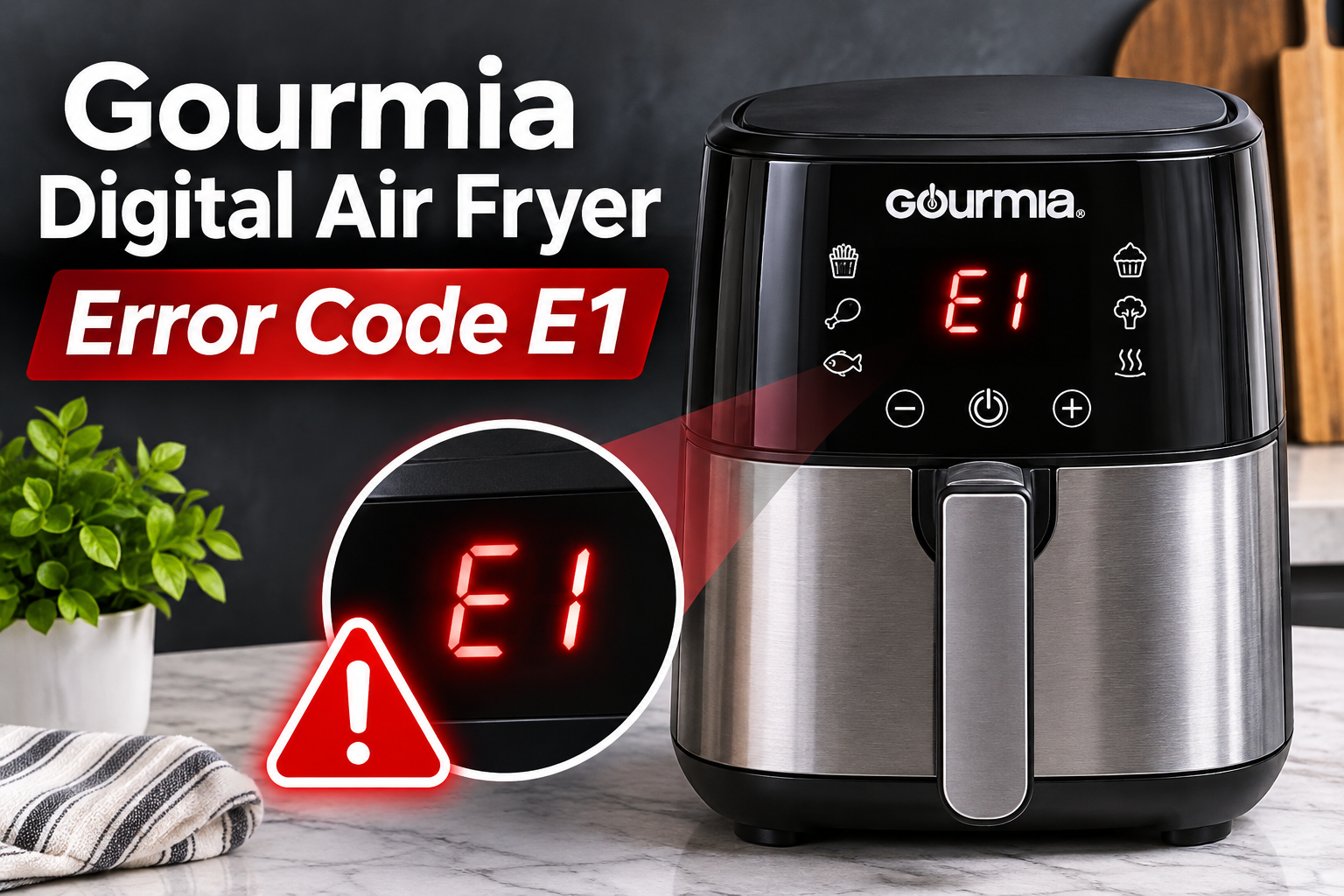
What Does Error Code E1 Mean on a Gourmia Digital Air Fryer?
The E1 error code on a Gourmia digital air fryer indicates an open circuit in the NTC temperature sensor system. According to Gourmia’s troubleshooting instructions for models such as the GAF1190, GAF414, and GAF784, an NTC open circuit triggers the E1 error and requires customer service assistance.
gourmia.com+1
NTC stands for Negative Temperature Coefficient. It’s a type of temperature sensor called a thermistor, which changes its electrical resistance as the surrounding temperature changes. Your air fryer uses information from this sensor to monitor cooking temperatures and control the heating system.
When the temperature sensor circuit becomes disconnected or develops an electrical fault, the control board may stop receiving reliable temperature information. As a result, the appliance displays E1 and may prevent further cooking to avoid operating without proper temperature monitoring.
You might notice that E1 appears immediately after plugging in the appliance or while preparing food. The controls may stop responding normally, and the heating element may remain inactive.
However, Gourmia uses different error code formats across its products. Some models display E001 instead of E1, while E2 generally indicates an NTC short circuit. Therefore, checking your exact model’s instructions is essential before attempting any troubleshooting.
Gourmia Digital Air Fryer Error Code E1: Common Causes
The E1 error occurs when the air fryer’s electronic control system detects an open temperature sensing circuit. Several internal faults can produce this condition, although the error code alone cannot identify which component has failed.
1. A Faulty NTC Temperature Sensor
The NTC temperature sensor is one of the main components to consider when your Gourmia air fryer displays E1. Its job is to provide temperature information that helps the control board regulate cooking heat.
As the temperature changes inside the appliance, the sensor’s electrical resistance changes. The control board interprets this change to determine when heating should continue or stop.
If the sensor develops an internal break, it may stop providing a usable electrical signal. The control system can then interpret the interrupted circuit as a malfunction and display E1.
Sensor failure can occur because of a defective component, deterioration, or damage caused by abnormal operating conditions. However, normal use doesn’t automatically mean the sensor will eventually develop this particular fault.
One possible clue is an error that appears immediately after the air fryer receives power, even when the cooking chamber is completely cool.
Another is an E1 warning that interrupts cooking without any obvious external damage.
These symptoms are consistent with a temperature sensing problem, but they don’t confirm that the sensor itself is defective. Damaged wiring or a failed connection can produce the same error.
A qualified technician must check the complete sensor circuit before deciding whether replacement is necessary.
2. Loose or Disconnected Sensor Wiring
Inside your Gourmia digital air fryer, electrical wires connect the temperature sensor to the control board. These connections allow the board to receive the resistance information needed for temperature monitoring.
If a wire becomes disconnected or a connector loses electrical contact, the control board may detect an open circuit even when the sensor itself is functioning correctly.
This means the E1 error can potentially result from a wiring problem rather than a defective temperature sensor.
Loose connections may develop because of manufacturing defects, physical damage, or deterioration of electrical contacts.
You might notice the error appearing unexpectedly after the appliance has worked normally for several months. In some cases, an intermittent electrical connection may cause the error to appear at different stages of operation.
However, the timing of the fault cannot reliably distinguish loose wiring from sensor failure.
The affected connections are located inside the appliance, making them unsuitable for ordinary household inspection.
Opening the air fryer to reconnect wires can expose you to electrical hazards and may affect your warranty. Any internal wiring repair should be handled by a qualified professional.
3. Damaged Temperature Sensor Wires
Temperature sensor wiring must remain electrically continuous for the control system to receive accurate information.
If a wire breaks inside its insulation or becomes damaged near a connection point, the electrical path between the sensor and control board may be interrupted.
Excessive heat, physical damage, or deterioration can contribute to wiring faults in electrical appliances.
For example, damage to a wire near a hot component could affect its insulation and eventually interfere with the electrical connection.
However, an E1 code doesn’t establish that overheating caused the damage. A technician must inspect the relevant components to determine what happened.
You might suspect internal damage if the error appears alongside an unusual burning smell, visible discoloration, or signs that the appliance has overheated.
If you notice any of these warning signs, disconnect the air fryer immediately when safe to do so. Don’t attempt to restart it or examine the internal wiring yourself.
4. A Defective Electronic Control Board
The electronic control board manages the air fryer’s cooking settings, heating functions, and temperature monitoring system.
It receives electrical signals from the NTC sensor and uses that information to regulate the heating element. If the circuitry responsible for reading the sensor becomes defective, the board may fail to recognize a functioning temperature sensor.
This could potentially result in an E1 warning even when the sensor and its wiring remain intact.
Control board problems may develop because of defective electronic components, electrical damage, or other internal failures.
An air fryer with a control board fault may display E1 whenever power is supplied. In some situations, other controls may also behave unexpectedly.
However, E1 is not proof of a defective control board. Gourmia’s troubleshooting instructions identify an open NTC circuit, which can involve several possible components.
Replacing the board without checking the sensor circuit could be unnecessary and expensive. Professional diagnosis is needed to distinguish a control board problem from a disconnected or defective sensor.
Gourmia Digital Air Fryer Error Code E1: DIY Fixes
Because E1 indicates a temperature sensing circuit problem, most confirmed repairs require professional assistance. Gourmia’s troubleshooting guidance recommends contacting customer service rather than attempting internal repairs.
Still, there are several safe steps you can take to understand the problem, check for external damage, and determine the appropriate action.
1. Turn Off the Air Fryer and Disconnect the Power
The first step is to stop using your Gourmia air fryer when E1 appears.
Since the control system may not be receiving reliable temperature information, continuing to operate the appliance isn’t recommended.
Follow these steps.
-
Press the power or stop button if the control panel still responds.
-
Unplug the air fryer from the electrical outlet if the plug is safe to touch.
-
Leave the appliance on a stable, heat-resistant surface.
-
Allow it to cool completely before handling any removable parts.
-
Avoid pressing buttons repeatedly to force another cooking cycle.
If you notice smoke, sparks, a burning smell, or an unusually hot plug, don’t touch the affected electrical connection. Have the power disconnected safely and seek qualified assistance.
Some troubleshooting guides recommend unplugging electronic appliances briefly to reset their control systems.
Although disconnecting power may clear a temporary display condition, there is no established reset procedure that repairs a genuine NTC open circuit on Gourmia air fryers.
A broken sensor wire or defective thermistor will remain faulty even after the appliance has been disconnected for several minutes.
Therefore, avoid repeatedly unplugging and restarting the appliance in an attempt to bypass E1.
2. Confirm the Error Code and Check Your Model Number
Before assuming the temperature sensor has failed, make sure the display actually shows E1.
Gourmia produces several digital air fryer models, and their error code formats may differ.
For example, certain models display E001 instead of E1. The GAF612 manual identifies E001 as an NTC open circuit, E002 as an NTC short circuit, and E003 as an excessive temperature condition.
gourmia.com
These distinctions matter because different error codes can require different responses.
To identify your model, check the appliance’s rating label, packaging, or original user manual.
The model number usually contains letters and numbers, such as GAF612, GAF784, or GAF1190.
Make sure the appliance is unplugged and completely cool before turning it to examine the label.
Next, visit Gourmia’s official website and locate the user manual for your particular model.
Read the troubleshooting section to confirm the manufacturer’s explanation of E1 and its recommended solution.
If your manual identifies an NTC open circuit, treat the error as an internal temperature monitoring fault rather than a routine cooking problem.
3. Allow the Air Fryer to Cool and Examine Its Exterior
Letting the appliance cool is important if E1 appears during cooking.
Although an NTC open circuit isn’t necessarily caused by excessive temperature, allowing the air fryer to cool makes it safer to handle and inspect.
Once the appliance has cooled completely, examine the accessible exterior for visible damage.
Pay particular attention to these areas.
-
Power cord: Look for cuts, exposed insulation, crushed sections, or burn marks.
-
Electrical plug: Check for discoloration, melted plastic, or other signs of overheating.
-
Outer housing: Look for cracks, unusual discoloration, or damaged surfaces.
-
Air vents: Check for visible obstructions without inserting objects into the openings.
-
Basket compartment: Look for signs of spilled liquids or damage that may have affected the appliance.
These checks don’t require opening the air fryer or touching electrical components.
If you notice damage, leave the appliance disconnected and contact Gourmia customer support.
Keep in mind that exterior inspection cannot confirm whether the NTC sensor is working. A temperature sensor circuit can develop an electrical fault without leaving visible marks on the housing.
Similarly, cooling the appliance won’t repair broken sensor wiring or restore a defective electrical connection.
If the air fryer has already displayed E1, don’t assume it’s safe to resume cooking simply because the housing feels cool.
4. Check the Power Cord and Electrical Supply
Although Gourmia doesn’t identify a faulty wall outlet as the established cause of E1, checking the external electrical supply can help identify a separate power problem.
Start by examining the power cord and plug while the appliance remains disconnected.
Look for obvious signs of damage, particularly around the area where the cord enters the appliance.
If the cord has become frayed, melted, or unusually stiff in one section, don’t use it again.
You should also examine the wall outlet for visible damage or discoloration.
A damaged outlet may cause electrical problems and should be inspected by a qualified electrician.
If you’ve been using an extension cord or power strip, check whether it’s appropriate for the electrical rating of your appliance.
However, changing outlets or replacing an extension cord isn’t an established repair for an NTC open circuit.
The temperature sensor is connected to the air fryer’s internal electronic system, so an interrupted sensor connection normally requires internal diagnosis.
For that reason, don’t move an air fryer displaying E1 between multiple outlets in repeated attempts to restart it.
The purpose of this inspection is to identify additional safety concerns, not to bypass the error.
5. Check Accessible Parts and Clean the Air Fryer Safely
Food residue and grease can accumulate inside an air fryer during normal cooking.
Although dirt inside the basket isn’t an established cause of Gourmia’s E1 code, cleaning the accessible parts can help maintain the appliance and identify visible damage.
Before cleaning, make sure the air fryer is disconnected from electricity and completely cool.
Remove the basket and crisper tray according to your model’s instructions.
Wash the removable parts using warm water, mild dish soap, and a soft sponge.
For models with dishwasher-safe parts, follow the specific cleaning instructions provided in the user manual.
Use a lightly dampened cloth to clean accessible surfaces of the appliance’s main housing.
Avoid pouring water into the cooking chamber or allowing moisture to enter electrical openings.
You should also avoid inserting metal objects, brushes, or other tools into the air vents.
After cleaning, dry the removable parts thoroughly.
Inspect the basket for visible damage and make sure it fits correctly when reinstalled.
However, don’t confuse a basket positioning problem with an NTC sensor circuit fault. An improperly installed basket may prevent normal operation on certain models, but it isn’t a documented cause of E1.
Cleaning may improve general maintenance, but it won’t restore electrical continuity to a broken sensor circuit.
Therefore, if E1 has appeared, leave the appliance disconnected until the manufacturer or a qualified technician confirms that it’s safe to use again.
6. Contact Gourmia Customer Support or a Qualified Technician
If your Gourmia digital air fryer displays E1, contacting customer support is the manufacturer’s recommended solution.
The official troubleshooting instructions for several Gourmia models identify an NTC open circuit and direct users to customer service for assistance.
Before contacting support, gather the following details.
-
Your air fryer’s complete model number.
-
The approximate purchase date.
-
Proof of purchase, if available.
-
A description of when the E1 error first appeared.
-
Whether the error appeared during cooking or when the appliance received power.
-
Any unusual smells, noises, or visible damage.
-
The safe troubleshooting checks you’ve already performed.
You can contact Gourmia through the following channels.
Gourmia Customer Support
Email: info@gourmia.com
Phone: 1-888-552-0033
Website: www.gourmia.com
Gourmia’s published warranty information for several digital air fryer models describes a limited one-year warranty for qualifying purchases from authorized sellers. Coverage is subject to the applicable terms and may vary by region.
If your appliance is still covered, the manufacturer may arrange a repair, replacement, or another remedy according to its warranty conditions.
For an appliance outside warranty coverage, ask whether professional servicing is available.
A qualified technician may need to assess the temperature sensor, wiring connections, and control board to locate the open circuit.
Depending on the diagnosis, the appropriate repair could involve replacing a defective sensor, repairing damaged wiring, or addressing a faulty control board.
However, repairing the control board or replacing internal parts isn’t always economical, especially if the cost approaches that of a replacement air fryer.
Don’t attempt to bypass the temperature sensor or operate the appliance with the sensor disconnected. Doing so could interfere with temperature regulation and create a serious overheating or fire risk.
Also, avoid opening the housing, handling internal wiring, or testing electrical components without appropriate training.
Even when the appliance is unplugged, electrical components may present hazards. Professional assistance is the safer choice for internal repairs.
Wrapping Up
The Gourmia digital air fryer E1 error code generally indicates an open circuit in the NTC temperature sensing system. A defective temperature sensor, damaged wiring, loose connection, or possible control board problem may be responsible. However, identifying the exact fault requires proper electrical diagnosis.
When E1 appears, disconnect your air fryer, confirm the code using your model’s manual, and check for visible external damage. If the error indicates an NTC open circuit, contact Gourmia customer support for guidance. Addressing the problem correctly helps prevent unsafe operation and unnecessary repair expenses.