Seeing an E01 error on your air fryer can be frustrating, especially when the appliance suddenly stops heating or refuses to start. You might notice the error immediately after switching it on or halfway through cooking, leaving you wondering whether something inside has failed.
In many air fryer models, E01 indicates a problem with the temperature sensor or its electrical connection. Although some faults require professional repairs, a few simple checks can help you understand what’s happening and determine the safest way to fix it.
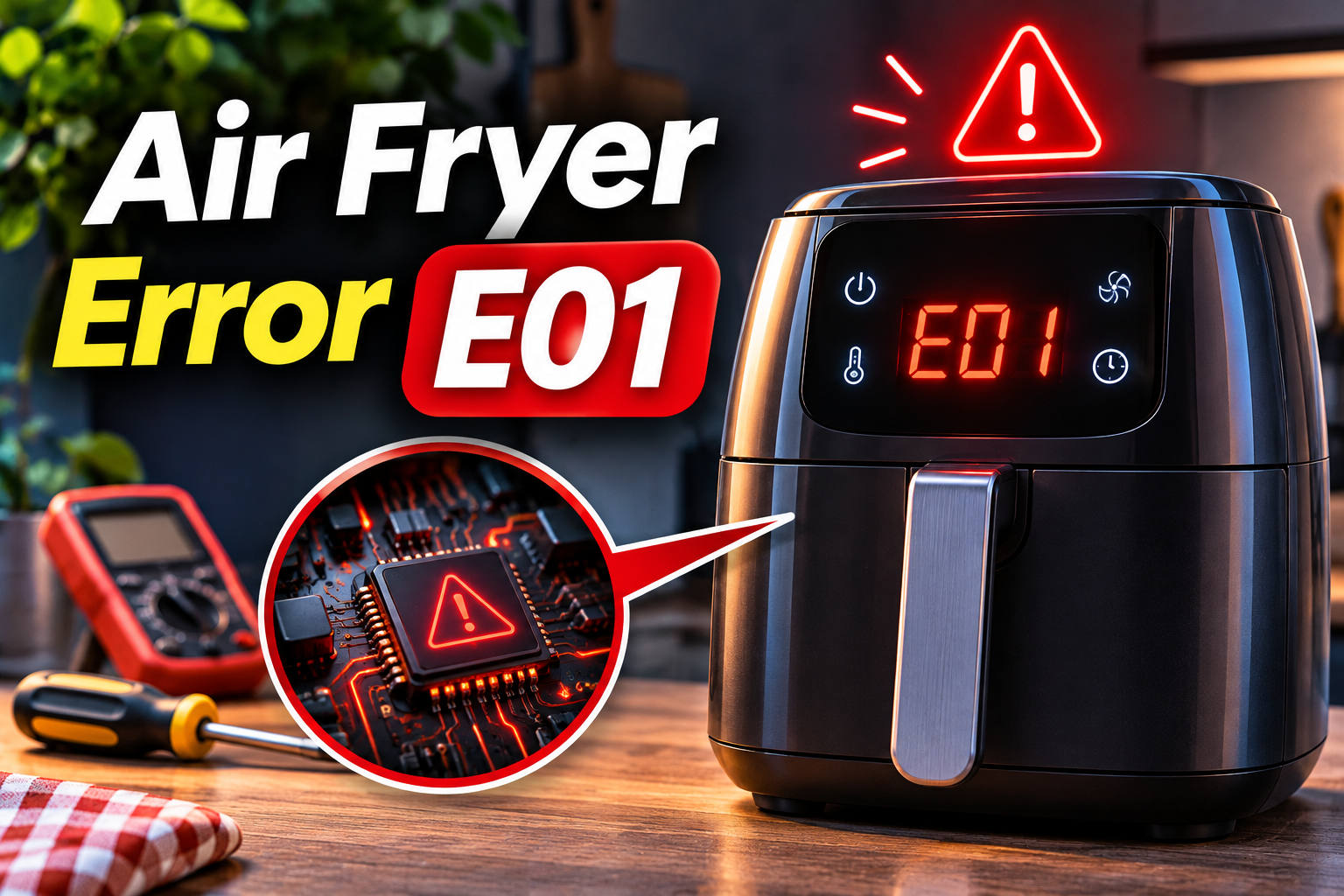
What Does Air Fryer Error E01 Mean?
An E01 error commonly indicates a problem with the air fryer’s temperature sensing system. Many manufacturers use this code when the appliance detects an open circuit in the temperature sensor, meaning the electrical connection needed to read the temperature has been interrupted.
For example, Xiaomi identifies E01 on its Air Fryer 6.5L as an open circuit in the NTC temperature sensor. Other manufacturers also use E01 for temperature sensor faults. However, error codes aren’t standardized across all air fryer brands, so the exact meaning depends on your appliance’s model.
The temperature sensor is a small component that monitors heat inside the cooking chamber. It sends temperature information to the electronic control board, allowing the air fryer to adjust its heating element and maintain the selected cooking temperature.
When the control board stops receiving reliable temperature information, the appliance may display E01 and prevent cooking. You might notice the fan and heating element stop working, the controls become unresponsive, or the warning returns whenever you restart the appliance.
Although a temporary operating problem may sometimes clear after restarting, a persistent E01 warning can indicate a damaged sensor, disconnected wiring, or another internal electrical fault. The important thing is to identify the likely cause without attempting unsafe repairs.
Air Fryer Error E01: Common Causes
Several electrical faults can interfere with your air fryer’s temperature monitoring system. Understanding how these problems develop can help you recognize when a simple restart might help and when the appliance needs professional attention.
1. Faulty Temperature Sensor
A damaged temperature sensor is one of the main possible causes of an E01 error, particularly on models where the code indicates an open sensor circuit.
Most digital air fryers use a temperature sensing component called an NTC thermistor. Its electrical resistance changes as the temperature changes, allowing the control board to estimate how hot the cooking chamber has become.
If the sensor’s internal circuit breaks, the control board can no longer obtain the expected reading. The appliance may respond by displaying E01 and stopping the cooking process.
Sensor failure can result from component deterioration, heat exposure, or physical damage. However, normal cooking temperatures shouldn’t damage a properly functioning sensor in an appliance used according to its instructions.
A useful clue is an E01 warning that appears immediately after switching on the air fryer, even when the appliance is completely cold. This can suggest an electrical sensing fault rather than a problem caused by the chamber becoming too hot.
However, the error alone cannot confirm that the sensor itself needs replacement. A disconnected wire can produce a similar warning.
2. Loose or Disconnected Sensor Wiring
The temperature sensor connects to the air fryer’s electronic control board through electrical wires and connectors. These connections carry the information the control board needs to regulate cooking temperatures.
If a connector becomes loose or a wire breaks, the appliance may lose communication with the sensor. On models that use E01 for an open circuit, this interruption can trigger the warning.
Electrical connections may deteriorate due to repeated heating and cooling, physical damage, or manufacturing defects. A significant impact can also damage components inside the appliance.
Sometimes, a wiring problem causes the error to appear intermittently. The cooker might start normally on one occasion but display E01 the next time you use it.
Although this behavior can suggest an unstable connection, it doesn’t prove that the wiring is responsible. Confirming the problem requires internal electrical testing, which should be handled by a qualified technician.
3. Moisture or Grease Damage
Air fryers regularly handle hot food, cooking vapors, and grease. These conditions are expected during normal operation, but moisture or oil entering electrical areas can cause problems.
For example, water may reach internal components if the main appliance is accidentally immersed, cleaned with excessive liquid, or exposed to a significant spill.
Moisture can damage electrical connections and, over time, contribute to corrosion. If the affected connection belongs to the temperature sensing circuit, the air fryer may register a sensor error.
You might suspect this problem if E01 appeared shortly after liquid entered the main unit or after the appliance was cleaned improperly.
However, ordinary grease inside the cooking basket doesn’t automatically cause E01. The concern is contamination or damage affecting the appliance’s electrical components.
If water has entered the main unit, avoid switching it on to check whether it still works. The appliance should be inspected before being used again.
4. Faulty Electronic Control Board
The electronic control board manages the air fryer’s cooking programs, heating element, fan, and temperature monitoring system.
It receives signals from the temperature sensor and uses that information to control the appliance. If part of the board fails, it may stop receiving or interpreting sensor information correctly.
A damaged connector, faulty electronic component, or broken circuit on the board could produce an error that resembles a sensor failure.
You may notice E01 appearing alongside other unusual behavior, such as controls that stop responding, unexpected shutdowns, or a display that behaves inconsistently.
However, these symptoms can also result from other electrical problems. A control board shouldn’t be replaced simply because the appliance displays E01.
Professional testing is necessary to determine whether the problem involves the sensor, its wiring, or the electronic board.
Air Fryer Error E01: How to Fix
If your air fryer displays E01, begin with safe checks that don’t require opening the appliance. These methods can help eliminate temporary operating problems, although an actual temperature sensor failure generally requires professional repair.
1. Unplug and Restart the Air Fryer
The first step is to disconnect the appliance from its power supply. This allows the electronic control system to restart and may clear a temporary operating problem.
Start by pressing the power button to switch off the air fryer, if the controls still respond.
Next, unplug the power cord from the wall outlet. Leave the appliance disconnected for about five minutes, or follow the restart instructions provided in your model’s manual.
While the appliance is unplugged, check whether it has an unusual smell or visible signs of overheating. If you notice melted plastic, smoke damage, or a burning smell, don’t reconnect it.
Otherwise, plug the air fryer back into a suitable outlet and switch it on.
If E01 disappears, the control system may have recovered from a temporary fault. However, this doesn’t prove that the temperature sensor is working correctly.
If the error returns immediately or appears again during cooking, stop using the appliance. Repeatedly restarting it won’t repair a broken sensor or damaged electrical connection.
2. Allow the Appliance to Cool Completely
If the error appeared during cooking, allow the air fryer to cool before attempting further checks.
Press the power button if possible, unplug the appliance, and place it somewhere safe with adequate ventilation. Avoid touching the heating element or other hot interior surfaces.
Let the appliance cool naturally until its accessible surfaces are no longer hot. Don’t use water, ice, or other methods to force it to cool.
Once the appliance has cooled, examine the surrounding area. Make sure the air intake and exhaust vents aren’t blocked by nearby objects.
Restricted airflow can contribute to overheating, although overheating isn’t the confirmed meaning of E01 on many models. Some manufacturers use separate error codes for that condition.
If your model’s manual specifically recommends restarting after cooling, follow those instructions. Otherwise, a persistent E01 warning should be treated as a possible sensor or electrical problem.
If the error remains after the appliance has cooled, further cooling won’t repair an open temperature sensor circuit.
3. Check the Air Fryer’s Model and Error Code
Because manufacturers use different error codes, checking your air fryer’s model number is essential.
Look for the identification label on the bottom, back, or another location specified in the manual. The label usually includes the brand, model number, and electrical specifications.
Find the troubleshooting section of your owner’s manual and check the exact meaning of E01.
For example, on the Xiaomi Air Fryer 6.5L, the manufacturer’s support information identifies:
- E01: An open circuit in the NTC temperature sensor.
- E02: A short circuit in the NTC temperature sensor.
Xiaomi recommends contacting its service center when either error appears.
Other manufacturers may use E01 differently. Also, don’t assume E1 and E01 mean the same thing. Some appliances use these codes for different conditions.
Pay attention to whether the error appears immediately after switching on the appliance or only after it has been cooking for some time.
This information can help you explain the fault clearly when contacting customer support.
If your manual confirms that E01 indicates an internal sensor problem, follow the manufacturer’s service instructions instead of attempting repairs that aren’t recommended for your model.
4. Inspect and Clean the Cooking Basket
A dirty or incorrectly fitted cooking basket can cause operating problems in some air fryers. Although these issues aren’t established causes of E01 on models where the code identifies an open temperature sensor circuit, checking the basket can help rule out separate problems.
First, unplug the appliance and allow it to cool completely.
Remove the cooking basket and look for food particles, heavy grease buildup, or objects preventing the drawer from closing properly.
Wash the removable basket and crisper plate using warm water, mild dish soap, and a soft sponge. Follow the manufacturer’s instructions regarding dishwasher use.
For the main unit, use a slightly damp cloth to clean accessible surfaces. Avoid allowing water to enter the air vents, heating assembly, or electrical openings.
Never immerse the main appliance in water.
Allow the cleaned parts to dry thoroughly before reinstalling them. Make sure the basket slides into place without being forced.
On models with a removable drawer, an incorrectly installed basket may cause a separate drawer detection warning. Correcting the basket position can resolve that problem, but it won’t repair a defective temperature sensor.
If E01 remains after cleaning and reassembly, don’t continue running the appliance in an attempt to clear it.
5. Check the Power Cord and Electrical Outlet
An unstable electrical connection can prevent an air fryer from operating normally. Although a faulty outlet doesn’t usually explain a confirmed open temperature sensor circuit, checking the external power supply is useful if the appliance also loses power unexpectedly.
Begin by unplugging the air fryer and inspecting its power cord.
Look for damaged insulation, exposed wires, bent plug pins, or dark marks around the plug. If you notice any damage, stop using the appliance.
Next, confirm that the electrical outlet is working properly. You can check it using another suitable household device, provided the outlet shows no signs of damage.
Make sure the outlet voltage matches the requirements printed on your air fryer’s rating label.
Avoid connecting the appliance through overloaded power strips, unsuitable adapters, or damaged extension cords.
If everything appears safe, reconnect the air fryer and check whether the display works normally.
A secure power connection may resolve an unrelated power interruption. However, if the display consistently shows E01, the temperature sensing system or another internal component may still be faulty.
Don’t attempt to solve a persistent sensor error by repeatedly changing outlets or power cycling the appliance.
6. Contact a Qualified Appliance Repair Technician
If your air fryer continues displaying E01 after the basic checks, professional assistance is usually the safest solution.
On models where E01 means an open temperature sensor circuit, a technician may need to inspect the sensor, its wiring, and the control board.
The repair could involve replacing a damaged temperature sensor, correcting an internal electrical connection, or replacing another faulty component.
However, the correct repair depends on the appliance’s design and the results of proper testing.
Before arranging service, contact the manufacturer’s customer support team and explain the problem.
Provide the following details:
- The air fryer’s brand and model number.
- The exact error code displayed.
- When the warning first appeared.
- Whether the error occurs immediately or during cooking.
- Any unusual smells, sounds, or shutdowns.
- Whether the appliance is still under warranty.
If your air fryer is under warranty, the manufacturer may provide an authorized repair or replacement according to its warranty terms.
Avoid opening the housing, bypassing temperature sensors, or attempting to repair exposed electrical components yourself.
A temperature sensor is part of the system that helps control cooking temperatures. Operating an appliance with an unresolved sensor fault may create unsafe conditions.
For older air fryers, compare the cost of professional repair with the price of a suitable replacement before making a decision.
Wrapping Up
An air fryer E01 error commonly points to a temperature sensor problem, particularly when the appliance detects an interrupted sensor connection. However, the exact meaning varies between manufacturers, so checking your model’s manual is essential before deciding on a repair.
Start by unplugging the appliance, allowing it to cool, and checking its external condition and power supply. If the error continues, professional diagnosis is the safest option. Addressing the problem promptly can prevent further damage and help you determine whether repairing or replacing your air fryer makes better sense.