Seeing E3 on your Salter air fryer can be frustrating, especially when the appliance suddenly stops working while you’re preparing a meal. You might notice that the display shows the error immediately after switching it on or that cooking stops unexpectedly.
Unlike some minor air fryer problems, E3 can indicate an internal electrical fault that requires professional attention. Understanding what the warning means, what might have caused it, and which checks are safe to perform will help you make an informed decision about repairing your appliance.
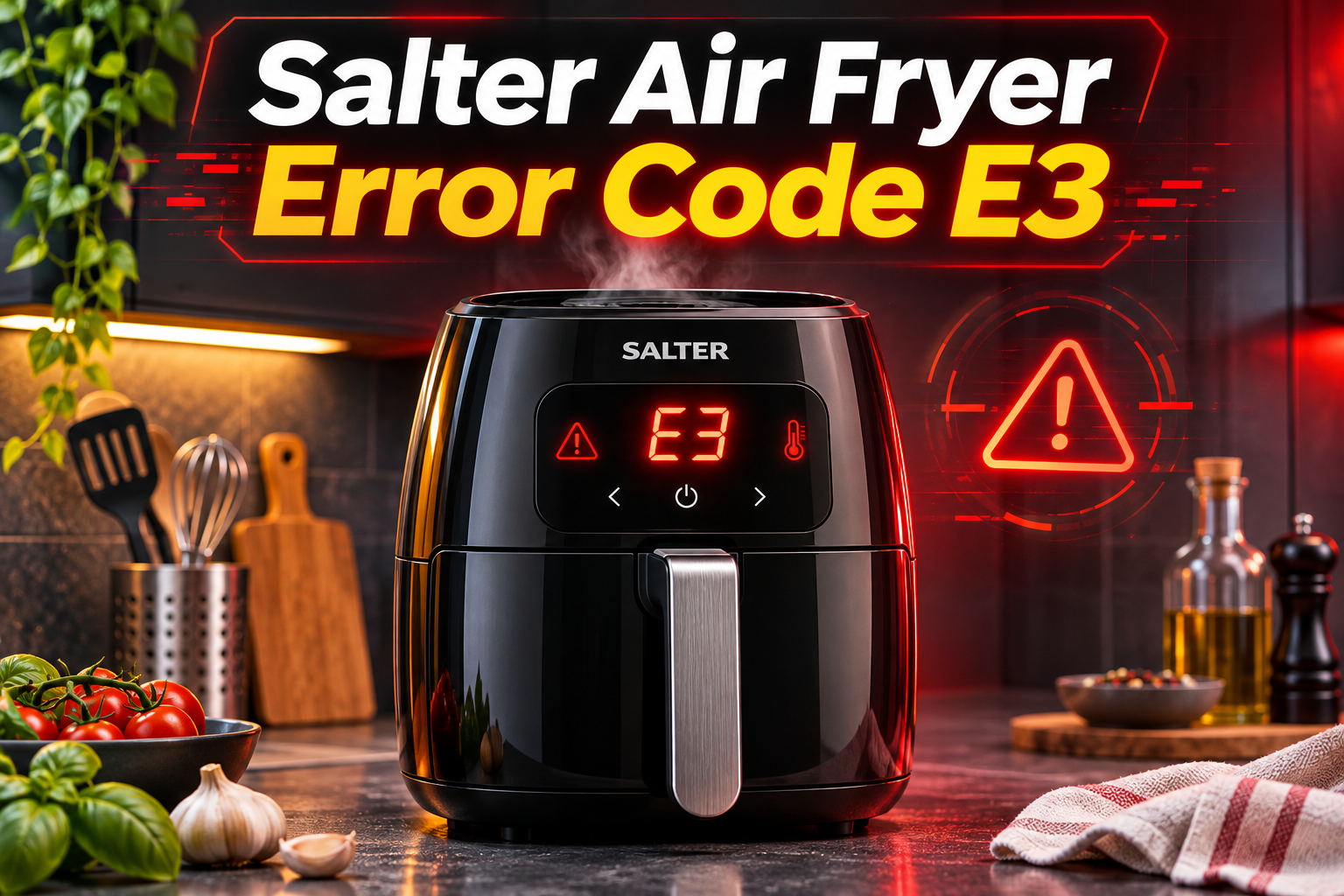
What Does Error Code E3 Mean on a Salter Air Fryer?
Error code E3 on certain Salter air fryers indicates a fault involving an internal component, such as the temperature sensor or electronic circuit board. The appliance may stop heating or refuse to start because its control system has detected a problem.
The temperature sensor plays an essential role in regulating heat inside your air fryer. It monitors cooking temperatures and provides information to the electronic control board, which manages the heating element and other functions.
When the control system detects an electrical fault, it may display an error instead of continuing to operate. Depending on the model, you could notice that the fan stops, the heating element doesn’t activate, or the display remains stuck on E3.
However, E3 doesn’t have one universal meaning across every air fryer model. For example, the manuals for the Salter EK6757 and EK6808 group E1, E2, and E3 together as warnings of possible internal component faults. On these models, E4 is associated with overheating protection.
Salter advises users of these models to stop using the appliance immediately when E3 appears. Therefore, although some external checks can help you identify possible contributing conditions, internal electrical repairs should be handled by a qualified professional.
Salter Air Fryer Error Code E3 [FIXED]: Common Causes
Several electrical problems can cause a Salter air fryer to display E3. The following are possible explanations, although the exact fault cannot be confirmed without checking the model and diagnosing the appliance.
1. A Faulty Temperature Sensor
The temperature sensor is one of the first components worth considering when investigating an E3 error. Its job is to monitor the temperature inside the cooking compartment and communicate that information to the appliance’s control system.
Many electronically controlled air fryers use a temperature sensitive resistor called a thermistor. Its electrical resistance changes with temperature, allowing the control board to monitor heat and adjust the heating element accordingly.
If the sensor develops an electrical fault, the control board may receive an invalid reading or lose the temperature signal entirely. Depending on the appliance’s design, this can activate a fault warning and interrupt cooking.
Sensor faults may result from component deterioration, damage to the sensing assembly, or exposure to excessive heat. However, normal cooking temperatures alone shouldn’t cause a properly functioning sensor to fail.
You may suspect a sensor problem if the E3 warning appears while the appliance is still cold or returns consistently during startup. Nevertheless, these symptoms can also occur with damaged wiring or a faulty control board.
A professional technician can determine whether the sensor is defective through appropriate electrical testing. Replacing it without confirming the fault could leave the original problem unresolved.
2. Loose or Damaged Internal Wiring
Another possible cause is a damaged electrical connection between the temperature sensor and the control board.
Inside an air fryer, electrical wires and connectors carry signals between the various components. If a connection becomes loose, damaged, or disconnected, the control board may stop receiving the information it needs to regulate cooking temperatures.
Repeated heating and cooling can place stress on electrical components over time. Physical damage during transportation or accidental impacts may also affect internal connections.
A loose connection might cause the warning to appear intermittently, while a completely broken wire could produce a persistent fault. However, the display alone cannot distinguish damaged wiring from a defective sensor.
Because these connections are located inside the appliance, checking them requires professional attention. Opening the casing exposes electrical components and may create additional risks if the appliance hasn’t been handled correctly.
3. A Malfunctioning Electronic Control Board
Sometimes, the temperature sensor is working correctly, but the electronic control board cannot process its signal.
The control board manages several important air fryer functions, including temperature regulation, cooking time, heating cycles, and communication with the digital display.
When components on this board fail, the appliance may report an error even when the temperature sensor itself is functioning normally.
Circuit board faults can result from damaged electronic components, manufacturing defects, moisture exposure, or electrical stress. However, the presence of E3 alone doesn’t establish which of these conditions occurred.
You might notice additional symptoms, such as unresponsive controls, unusual display behavior, or cooking programs that stop unexpectedly.
A persistent E3 warning immediately after startup can also be consistent with a control board fault. Still, this behavior isn’t enough to confirm the diagnosis because several internal problems can produce similar symptoms.
Professional testing is necessary to determine whether the board needs repair or replacement. On some models, replacing the entire appliance may be more practical than replacing an expensive control assembly.
4. Heat or Moisture Damage to Internal Components
Air fryers rely on controlled airflow to manage cooking temperatures and protect their electrical components. Although they’re built to withstand heat during normal use, blocked ventilation and unsuitable operating conditions can create unnecessary thermal stress.
For example, placing the appliance too close to a wall, covering its air vents, or operating it near another heat source can interfere with cooling.
Over time, excessive heat may contribute to the deterioration of internal electrical components. If the temperature sensor, its connections, or the control board becomes damaged, the appliance could develop a fault warning.
Moisture is another concern.
Water entering the electrical housing during cleaning, accidental spills, or storage in damp conditions can damage electronic components. The resulting fault may affect temperature monitoring or other control functions.
However, a blocked vent or recent spill doesn’t automatically explain an E3 error. These are possible contributing conditions that require further investigation, particularly if the warning appeared shortly afterward.
Salter Air Fryer Error Code E3 [FIXED]: How to Fix
Because E3 can indicate an internal electrical problem, the safest troubleshooting methods focus on identifying the fault without exposing you to electrical hazards. Start with the following checks, and avoid operating the appliance again until its safety has been established.
1. Switch Off and Unplug the Air Fryer
The first thing you should do when E3 appears is stop using the appliance and disconnect it from the electrical supply.
If your Salter air fryer stops during cooking, don’t repeatedly press the start button or attempt to force the cooking cycle to continue. The warning may indicate that the appliance cannot reliably monitor or control its operating temperature.
Follow these steps.
- Stop the cooking program if the controls still respond.
- Switch off the appliance.
- Carefully remove the plug from the wall outlet using dry hands.
- Place the appliance on a stable, heat resistant surface if it isn’t already on one.
- Allow it to cool completely without opening its casing.
If you notice smoke, sparks, or an electrical burning smell, avoid handling the appliance while the hazard is present. Disconnect power only if you can do so safely.
Once the appliance has cooled, you can carry out external inspections without energizing the heating element.
Don’t assume that unplugging and reconnecting the air fryer has permanently fixed E3. On Salter models whose manuals identify the code as an internal fault, the manufacturer’s guidance is to stop using the product immediately.
Although a power reset can sometimes clear temporary display problems on electronic appliances, it cannot repair a damaged sensor, broken connection, or defective control board.
2. Check Your Salter Air Fryer’s Model Number and Manual
Before deciding what needs repairing, identify your exact Salter air fryer model.
Different air fryers can use the same error code for different problems. Therefore, information intended for another brand or model may lead you to investigate the wrong component.
You can usually find the product code on the appliance’s rating label, often located on its underside or rear housing. Wait until the unit is cool before moving it to inspect the label.
Look for a model number beginning with EK, followed by several digits. Once you’ve identified it, visit Salter’s official instruction manual page and locate the corresponding manual.
Check the troubleshooting section for the exact meaning of E3.
For instance, the Salter EK6757 and EK6808 manuals associate E3 with a possible internal component fault and recommend stopping use immediately. Their separate E4 warning relates to overheating protection.
This distinction matters because an overheating protection warning may have different recovery instructions from a sensor or circuit board fault.
If your manual doesn’t explain E3, contact Salter customer support for model specific guidance rather than assuming that instructions for another air fryer apply.
3. Check the Air Vents and Exterior for Obstructions
Once the appliance is unplugged and completely cool, inspect its accessible air vents and surrounding surfaces.
Although blocked ventilation isn’t a confirmed cause of E3, poor airflow can expose the appliance to excessive heat and contribute to electrical component damage.
Check whether the air fryer was positioned against a wall, underneath low cabinets, or close to another appliance that produces heat.
Salter’s general air fryer safety guidance recommends maintaining at least 20 cm, approximately 8 inches, of clearance around the appliance. Follow your particular model’s manual if it specifies different requirements.
Next, look for visible grease, crumbs, or dust around the exterior vents.
You can gently remove loose debris using a soft, dry brush or cloth. However, don’t insert metal objects, cleaning tools, or liquids through the ventilation openings.
Avoid spraying cleaning solutions into the appliance or attempting to wash its internal electrical housing.
If the vents are clear and the exterior appears normal, an internal fault may still be present. Likewise, removing an obstruction doesn’t confirm that a temperature sensor or control board remains safe to use.
The purpose of this inspection is to identify and correct unsafe operating conditions before any professional assessment, rather than to bypass the error warning.
4. Look for Signs of Moisture or Physical Damage
If the error appeared after cleaning, moving, or accidentally dropping the air fryer, inspect the exterior for visible damage.
Start by examining the power cord and plug while the appliance remains disconnected. Look for cracked insulation, melted areas, unusual discoloration, or signs of damage around the cable connection.
Next, check the appliance’s outer housing for cracks, loose sections, deformation, or signs that liquid may have entered the control panel.
If you recently washed the basket or removable cooking accessories, confirm that they’re dry. Moisture on these removable parts doesn’t necessarily indicate damage to the electronics, but water entering the main unit is a different concern.
Never immerse the main air fryer housing in water.
If the appliance was exposed to a substantial spill, don’t attempt to dry the internal electronics with a hair dryer, heater, or other external heat source.
Also, avoid opening the casing to inspect the circuit board yourself. Even after unplugging, electrical appliances can contain components that require careful handling.
If the external inspection reveals damage or possible liquid entry, keep the appliance disconnected and arrange professional assessment.
Even when everything looks normal, an internal electrical problem may still exist. Therefore, a clean exterior cannot confirm that the E3 fault has been resolved.
5. Check the Warranty and Arrange an Appropriate Repair
If your Salter air fryer is relatively new, check its warranty or guarantee before paying for repairs.
Depending on the model, purchase date, and registration requirements, the manufacturer may provide repair, replacement, or another suitable remedy under the applicable guarantee.
Locate your receipt, order confirmation, or other proof of purchase. Then, check the guarantee information supplied with the appliance.
You should also record the model number and any relevant details about the fault.
For example, note whether E3 appeared immediately after switching on the air fryer or during cooking. If the warning interrupted a cooking session, record whether you noticed unusual sounds, smells, or changes in the display beforehand.
These details can help customer support assess the problem without requiring you to restart the appliance.
You can contact Salter through its official customer support page. For kitchen electrical appliances, the company’s published customer service email address is customerservices@salterhomewares.com.
If the product is covered by a guarantee, follow the manufacturer’s instructions before arranging repairs elsewhere.
Unauthorized repairs or modifications may affect your coverage, and fitting an unsuitable replacement component could introduce additional safety problems.
For older appliances, compare the estimated repair cost with the price of a suitable replacement. This is especially worthwhile when the suspected fault involves the electronic control board.
6. Contact a Qualified Appliance Repair Technician
If E3 indicates a defective temperature sensor, damaged wiring, or a malfunctioning control board, a qualified technician should handle the repair.
An appliance repair specialist can examine the electrical system, test the relevant components, and determine why the control board is reporting an error.
Depending on the diagnosis and availability of compatible parts, the repair may involve replacing a temperature sensor, repairing a damaged internal connection, or replacing the control board.
However, these components shouldn’t be replaced simply because E3 appears. Proper testing is necessary to establish which part has failed and whether additional damage exists.
Avoid following online instructions that recommend bypassing temperature sensors, connecting wires together, or disabling safety devices. These modifications can interfere with temperature regulation and create a risk of overheating or fire.
If suitable replacement parts aren’t available, or the repair would cost nearly as much as a new appliance, replacement may be the better option.
Once a qualified technician has completed the repair and verified that the appliance operates safely, you can return to normal use while following the manufacturer’s cooking, cleaning, and ventilation instructions.
Wrapping Up
The Salter air fryer E3 error can indicate an internal problem involving the temperature sensor, electrical connections, or control board. Although some external checks can help identify contributing conditions, they cannot reliably repair a defective electronic component.
Start by disconnecting the appliance, checking its model specific instructions, and examining it for visible damage. If your manual identifies E3 as an internal fault, avoid restarting the air fryer until it has been assessed. Taking the appropriate precautions and arranging a proper diagnosis will help you resolve the problem without compromising the appliance’s safety.