Since the problem often involves the temperature sensing system, ignoring it could lead to further complications. Fortunately, understanding what triggers this error and performing a few basic troubleshooting checks can help you determine the best course of action.
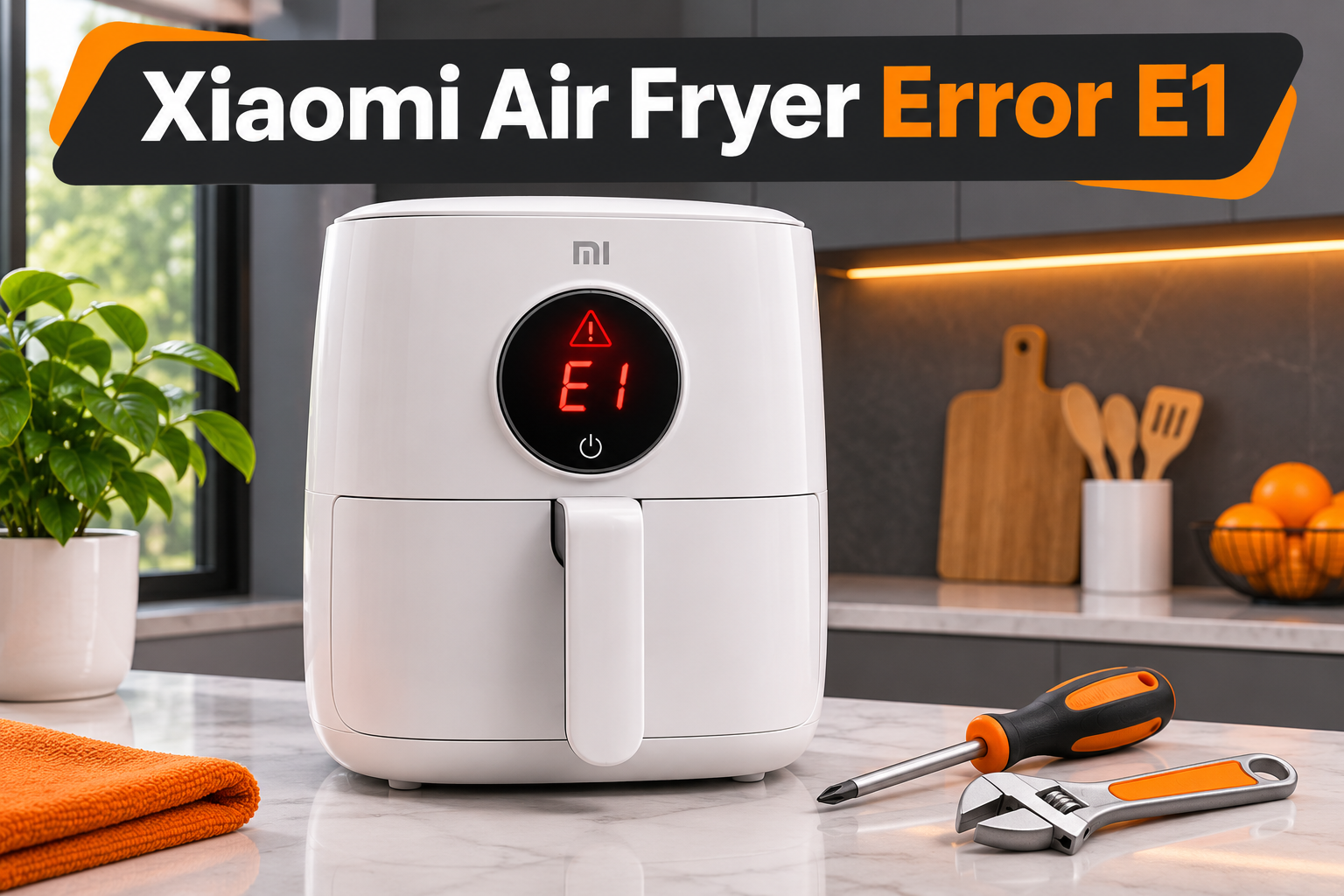
What Does the E1 Error Mean on a Xiaomi Air Fryer?
The E1 error on a Xiaomi air fryer indicates an open circuit within the temperature sensor system. Xiaomi confirms this meaning for several models, including the Smart Air Fryer Pro 4L, Smart Air Fryer 4.5L, 5.5L, and Smart Air Fryer 6.5L. Some newer models display E01 instead.
Your air fryer uses a temperature sensor known as an NTC thermistor to monitor the heat inside the cooking chamber. As the temperature increases, the sensor’s electrical resistance decreases. The control board uses this information to determine when the heating element should switch on or off.
However, if an electrical connection within this circuit breaks, the control board can no longer receive reliable temperature information. The appliance may display E1 and prevent normal cooking operations because it cannot accurately regulate the heat.
Unlike the E2 error, which indicates a short circuit, E1 generally means that the electrical path through the sensor circuit has been interrupted. The sensor itself isn’t necessarily damaged, as a broken wire or loose connection could produce the same error.
Xiaomi Air Fryer Error E1: Likely Causes
The E1 error can develop for several reasons, most of which involve the temperature sensor and its electrical connections. Understanding these potential faults can help you make sense of the symptoms your air fryer is displaying.
1. A Defective Temperature Sensor
A faulty temperature sensor is one of the most obvious suspects behind an E1 error. Although this component is built to withstand the operating temperatures inside your air fryer, it can eventually develop an internal fault.
The sensing material or its electrical connections may become damaged due to mechanical stress, excessive heat exposure, or deterioration. If the damage interrupts the electrical path through the sensor, the control board loses its ability to measure the cooking temperature.
One possible indication of a defective sensor is an E1 error that appears whenever you switch on the appliance, regardless of its temperature. Even after leaving the air fryer unplugged overnight, the error may remain. A technician can confirm the sensor’s condition through electrical resistance testing.
2. Loose or Disconnected Sensor Connector
The temperature sensor connects to the control board through internal wiring and electrical terminals. These connections allow the sensor to communicate temperature changes throughout the cooking process.
A connector that becomes partially or completely disconnected can interrupt this communication. This may happen following improper assembly, previous repair work, or mechanical stress caused by accidentally dropping the appliance.
If the connection is unstable, the E1 error might disappear occasionally and return unexpectedly. For example, the air fryer could start normally but stop working as its internal components warm up. Such behavior may indicate an intermittent connection rather than a completely failed sensor.
3. Damaged Internal Wiring
Even if the temperature sensor and its connector are in good condition, the wires linking them to the control board can develop faults. These wires carry the electrical signal necessary for accurate temperature monitoring.
A wire may break near a connection point or develop damage within its protective insulation. Repeated heating and cooling, physical pressure, or improper handling during previous repairs can contribute to this problem. Since internal wiring isn’t visible from outside the appliance, identifying the damaged section usually requires professional inspection.
4. Moisture and Corrosion
Cleaning your air fryer with excessive water can create problems that aren’t immediately noticeable. If liquid enters the main housing through ventilation openings or other gaps, it may reach sensitive electrical connections.
Over time, moisture can cause corrosion around the temperature sensor terminals. Severe corrosion may interfere with electrical contact, resulting in an intermittently functioning or completely disconnected sensor circuit.
This possibility deserves particular attention if the E1 error appeared after cleaning the appliance, spilling liquid onto it, or storing it in a damp environment. However, moisture can cause several types of electrical faults, so the timing alone doesn’t confirm the diagnosis.
5. A Faulty Electronic Control Board
The control board is responsible for interpreting temperature readings and managing the air fryer’s heating functions. A fault within the section of the board that receives temperature sensor signals can cause E1 even when the sensor is working correctly.
Damaged electronic components, deteriorated solder connections, or electrical damage may prevent the board from recognizing the sensor. You might also experience irregular display behavior or unexpected interruptions during cooking. Nevertheless, the sensor and its wiring should be tested before concluding that the control board is responsible.
Xiaomi Air Fryer Error E1: DIY Fixes
There are several safe checks you can perform before arranging repairs for your Xiaomi air fryer. However, because E1 often indicates an internal electrical fault, the available home troubleshooting options are somewhat limited.
1. Disconnect the Air Fryer From Power
Before attempting anything else, switch off your air fryer and disconnect it from the wall outlet. Xiaomi’s general troubleshooting guidance for Mi Smart Air Fryer temperature errors recommends restarting the appliance after temporarily disconnecting the power.
Where your model’s instructions permit restarting the appliance, follow these steps:
-
Turn off the air fryer.
-
Unplug the power cord from the electrical outlet.
-
Leave the appliance disconnected for several minutes.
-
Allow it to cool completely if you’ve recently used it.
-
Reconnect the power cord and switch on the appliance without starting a cooking program.
This process allows the electronic control system to restart and may clear a temporary error indication. However, the disappearance of E1 doesn’t necessarily mean an intermittent electrical fault has been resolved. If your specific model requires immediate servicing for this error, follow that guidance rather than restarting it.
2. Check the Air Fryer for Ventilation Problems
Your air fryer needs sufficient airflow to maintain its operating temperature. Obstructions around its ventilation openings can cause heat to build up unnecessarily, placing extra stress on internal components.
Once the appliance is unplugged and cool, inspect the air inlet and exhaust openings. Remove accumulated surface dust with a soft, dry brush or cloth. Make sure the air fryer isn’t positioned directly against a wall, underneath a low cabinet, or beside objects restricting airflow.
Although poor ventilation doesn’t directly explain an open sensor circuit, checking for obstructions is part of Xiaomi’s general troubleshooting advice for temperature errors. Follow the clearance requirements specified in your model’s manual.
3. Clean the Cooking Chamber Carefully
Food particles, grease, and other cooking residue can accumulate around the upper section of your air fryer. Excessive buildup may interfere with heat distribution and contribute to other operating problems.
After disconnecting the appliance and allowing it to cool, remove the basket and detachable cooking accessories. Use a soft cloth or sponge with a small amount of mild detergent to clean accessible surfaces according to the manufacturer’s instructions.
Pay particular attention to loose debris around the heating area. Avoid pressing against the heating element, pulling on exposed components, or scraping the temperature sensor. While cleaning can improve normal operation, it cannot repair a broken sensor circuit.
4. Check for Signs of Water Exposure
If the error developed shortly after cleaning, examine the air fryer for visible moisture. Water droplets around the cooking chamber, basket compartment, or ventilation openings may help establish whether liquid exposure is relevant.
For ordinary moisture remaining on accessible cooking surfaces, use a soft, dry cloth and allow the removable accessories to dry completely. Never pour water into the main housing or rinse the air fryer underneath a running faucet.
If you suspect water has entered the electrical compartment, keep the appliance disconnected from power. Don’t attempt to dry internal components using a hair dryer, heat gun, or the air fryer’s heating element. A qualified technician should inspect the appliance before you use it again.
5. Identify When the E1 Error Appears
Paying attention to when your air fryer displays E1 can provide useful clues about the underlying problem. This information is particularly valuable when the error occurs occasionally rather than remaining on the screen permanently.
Consider the following observations from previous cooking sessions:
-
E1 appears immediately after switching on: The temperature sensor circuit may be permanently disconnected.
-
E1 appears after several minutes of cooking: An electrical connection may become unstable as the appliance heats up.
-
E1 appeared after the appliance was dropped: Physical damage or a disconnected internal component may be responsible.
-
E1 appeared after cleaning: Moisture exposure or corrosion could be contributing factors.
-
E1 disappears occasionally: An intermittent connection or developing component fault may be present.
These symptoms can help narrow down the possibilities, but they cannot confirm which component has failed. Avoid deliberately running multiple cooking programs to reproduce the error.
6. Contact a Qualified Appliance Repair Technician
If the E1 error persists or returns, your Xiaomi air fryer needs professional diagnosis. Xiaomi recommends contacting an authorized service center when its air fryers experience a disconnected temperature sensor circuit.
A qualified technician will typically perform several checks to identify the faulty component, including:
-
Measuring the temperature sensor’s electrical resistance.
-
Checking the sensor wiring for interrupted electrical connections.
-
Examining connectors for looseness, corrosion, or physical damage.
-
Testing the control board’s temperature sensing circuit.
-
Checking for signs of internal overheating or moisture damage.
Depending on the findings, the repair may involve securing an electrical connection, replacing damaged wiring, installing a new temperature sensor, or repairing the control board.
Avoid buying a replacement thermistor based solely on its appearance. Temperature sensors have different resistance characteristics and operating specifications. Installing an incompatible component could prevent accurate temperature regulation and create a safety risk.
If your air fryer is relatively new, check whether it’s still covered by the manufacturer’s warranty before paying for repairs. Have your model number, proof of purchase, and a description of the symptoms available when contacting customer support.
Most importantly, stop using the air fryer immediately if you notice an electrical burning smell, melted plastic, unusual smoke, or uncontrolled heating. These warning signs require professional attention.
Wrapping Up
An E1 error on your Xiaomi air fryer generally indicates a problem with the electrical connection between the temperature sensor and the control board. Although basic troubleshooting can help eliminate temporary faults and identify contributing factors, internal component damage requires proper diagnosis.
Avoid repeatedly restarting the appliance or attempting to bypass its temperature sensor. These measures won’t address the underlying fault and could compromise safe operation. If the error persists, having the affected component professionally inspected and repaired is the safest way to restore your air fryer’s normal performance.