Although the error generally indicates a problem with an internal electrical component, there are a few things you can check yourself. Understanding what causes the error will also help you avoid unnecessary repairs and prevent further damage to the appliance.
What Does the E2 Error Mean on a Power XL Air Fryer?
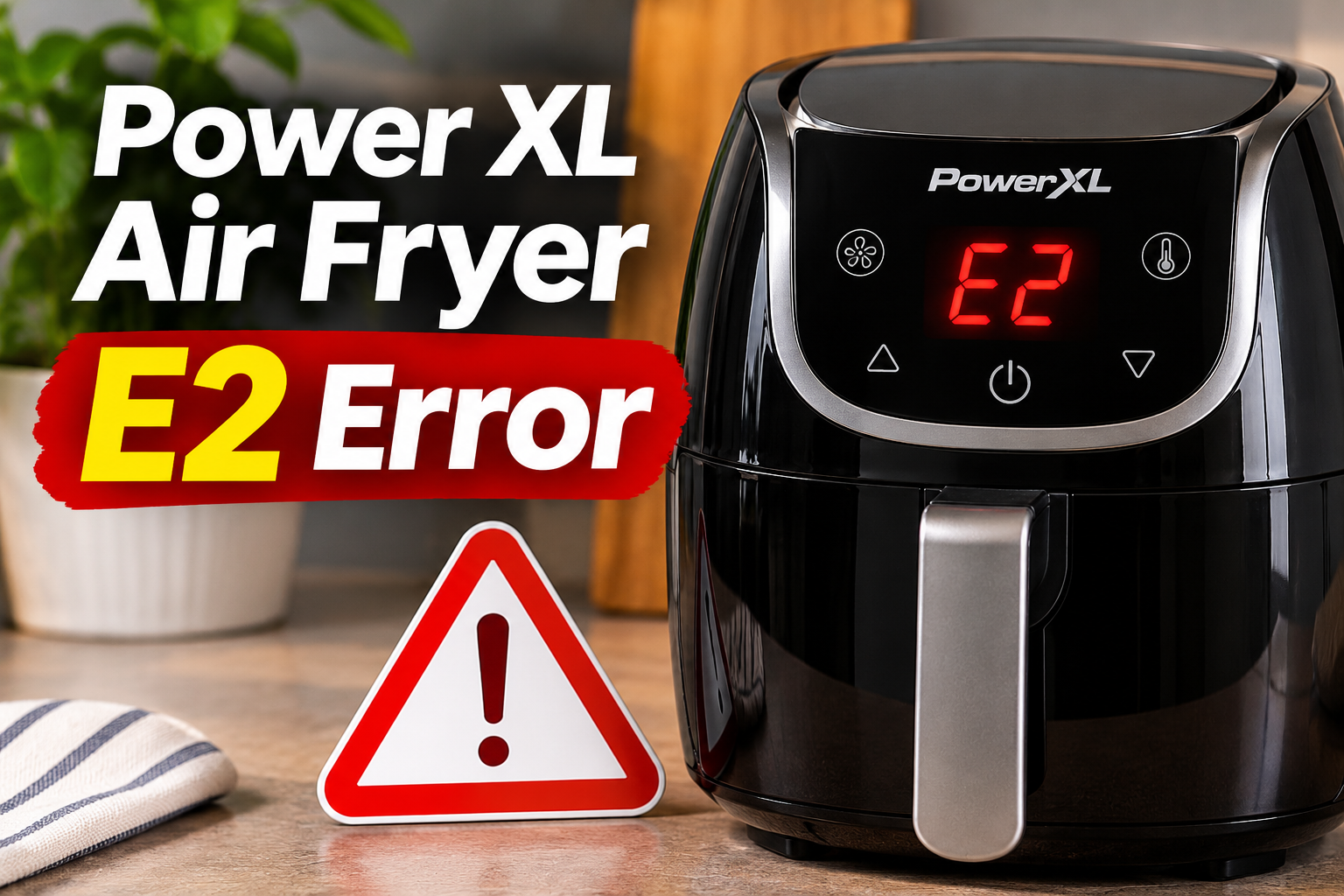
The E2 error on a Power XL air fryer indicates a short circuit in the thermal sensor system. According to the manufacturer’s owner’s manual, this error affects several models, including the Power XL Classic and Vortex air fryers. On certain Grill Air Fryer Combo models, E2 specifically refers to the bottom temperature sensor circuit.
The thermal sensor monitors the temperature inside the cooking chamber and sends information to the electronic control board. Using these readings, the control board regulates the heating element to maintain your selected cooking temperature.
When a short circuit develops, the electrical resistance within the sensor circuit may drop below its expected range. Consequently, the control board receives unreliable temperature information and may interrupt the cooking process. This explains why your air fryer can display E2 even when the cooking chamber is completely cold.
It’s worth distinguishing E2 from E1, which generally indicates a broken or disconnected thermal sensor circuit. Although both errors affect temperature monitoring, they represent different electrical problems. You shouldn’t continue cooking while either error is present, as accurate temperature readings are essential for safe operation.
Power XL Air Fryer E2 Error: Likely Causes
Several electrical faults can trigger the E2 error on your Power XL air fryer. While the temperature sensor is an obvious suspect, other components connected to it can also be responsible.
1. A Faulty Thermal Sensor
The thermal sensor operates under varying temperatures whenever you use your air fryer. Although it’s built to handle these conditions, damage can eventually affect its ability to provide accurate readings.
Many appliances use a temperature sensing component called an NTC thermistor. Its electrical resistance decreases as the surrounding temperature increases. If the component develops an internal short or its resistance falls outside the acceptable operating range, the control board may register an E2 error.
A defective sensor may cause the error to appear immediately after you switch on the appliance. Alternatively, the air fryer might work normally for several minutes before displaying E2. The exact behavior depends on the nature of the fault and how the sensor responds to temperature changes.
2. Damaged Thermal Sensor Wiring
Inside your Power XL air fryer are wires connecting the thermal sensor to the electronic control board. These wires have protective insulation that prevents unintended contact between their electrical conductors.
If the insulation becomes damaged, two conductors could touch and create a short circuit. Excessive heat exposure, physical damage, or improper handling during previous repairs are possible contributing factors.
Interestingly, wiring damage can sometimes produce an intermittent error. As internal components expand and contract during heating and cooling, the damaged wires may move slightly, causing the fault to appear and disappear. This could explain why your air fryer occasionally works without displaying the error.
3. Moisture Inside the Appliance
Your air fryer naturally encounters some moisture during everyday cooking. However, its electrical components must remain protected from direct liquid exposure.
Water that enters the main housing during cleaning or through an accidental spill can create unintended electrical connections around the sensor terminals. Over time, moisture may also contribute to corrosion and damage within the surrounding circuitry.
Consider this possibility if your air fryer started displaying E2 shortly after being cleaned. Using excessive water, spraying cleaning products into ventilation openings, or storing the appliance in a damp location can increase the risk of electrical problems.
4. Excessive Heat Exposure
Your Power XL air fryer depends on proper airflow to distribute heat throughout the cooking chamber and prevent unnecessary heat buildup. Obstructed ventilation openings or cooling system problems can expose internal components to temperatures beyond their intended operating conditions.
Prolonged exposure to excessive heat may damage the thermal sensor, electrical insulation, or nearby connections. If this damage results in a short circuit, the E2 error can appear.
However, overheating alone doesn’t necessarily mean the sensor circuit has shorted. Power XL air fryers also have separate overheating protection features. If E2 remains after the appliance has cooled completely, an electrical fault becomes a more likely explanation.
5. A Malfunctioning Electronic Control Board
The electronic control board receives temperature information from the thermal sensor and manages the heating process. A problem within the section of the board responsible for processing these readings can produce an E2 error even if the sensor itself is functioning correctly.
Damaged electronic components, moisture exposure, or unintended electrical connections on the circuit board may interfere with temperature measurement. Other symptoms, such as unexpected restarts or irregular display behavior, could accompany the error. Nevertheless, the sensor and its wiring should be examined before concluding that the control board needs replacement.
Power XL Air Fryer E2 Error: DIY Fixes
Troubleshooting your Power XL air fryer should begin with simple checks that don’t require dismantling the appliance. Since the manufacturer recommends professional assistance for E2 errors, these measures can help identify contributing problems but won’t repair a damaged internal circuit.
1. Disconnect the Air Fryer and Allow It to Cool
If the E2 error appears during cooking, switch off the appliance and disconnect it from the electrical outlet. This prevents further heating while allowing the internal components to return to their normal resting temperature.
Here’s what you should do:
-
Switch off your Power XL air fryer.
-
Unplug the power cord from the wall outlet.
-
Carefully remove the cooking basket using its handle.
-
Place the basket on a surface that can withstand heat.
-
Allow the appliance to cool completely.
Power XL recommends cooling and restarting certain models following an automatic shutdown caused by overheating. However, this procedure isn’t an established repair for the E2 error. Contact customer service before restarting an appliance that has displayed a thermal sensor fault.
If the manufacturer authorizes a restart and the error returns, disconnect the appliance again. Repeatedly switching it on won’t repair a shorted electrical component.
2. Clear Obstructions Around the Air Vents
Take a close look at where you’ve positioned your air fryer. If it’s sitting against a kitchen wall or surrounded by other appliances, there may be insufficient space for hot air to escape.
Many Power XL models require at least five inches of clearance around the sides, back, and top during operation. Check your owner’s manual for the exact requirements of your particular model.
With the appliance unplugged and cool, remove objects obstructing its ventilation openings. Use a soft, dry brush to remove accessible surface dust without pushing debris further inside.
Improving ventilation can prevent unnecessary heat buildup and protect sensitive internal components. However, if excessive heat has already damaged the thermal sensor or its wiring, clearing the vents won’t resolve the electrical fault.
3. Clean the Interior of Your Air Fryer
Grease and food residue can gradually accumulate inside the cooking chamber, particularly around the heating element. This buildup may produce smoke, unpleasant smells, and other heating problems if left unattended.
Once your air fryer has cooled, remove the basket and fry tray. Wash the removable components using warm water, mild dish soap, and a soft sponge, following your model’s cleaning instructions.
Use a slightly damp cloth to wipe accessible interior surfaces. If your owner’s manual permits it, remove loose food particles around the heating element with a soft cleaning brush. Avoid applying pressure to the heating element or temperature sensor.
Allow all cleaned components to dry completely before reassembling the appliance. Although cleaning helps maintain proper operating conditions, grease removal alone cannot restore a thermal sensor with an internal short circuit.
4. Check for Moisture and Liquid Exposure
If you recently cleaned your Power XL air fryer, check whether any moisture remains around the cooking chamber or basket compartment. Pay particular attention to areas where water may have accidentally collected.
Wipe away visible moisture using a clean, dry cloth. Leave the removable basket and accessories outside the appliance until they’re completely dry. Avoid spraying additional cleaning products or pouring water into the main housing.
If you suspect liquid has reached the internal electrical components, keep the appliance unplugged and arrange professional inspection. Never use a hair dryer, heat gun, or the air fryer’s heating element to dry its internal circuitry. An apparently dry exterior doesn’t guarantee that the electrical components are safe.
5. Identify When the E2 Error Occurs
The circumstances surrounding the E2 error can provide valuable clues about which component might be responsible. For instance, an error that appears immediately after switching on a cold appliance may indicate a different type of fault from one that occurs after prolonged cooking.
Consider what you observed before the appliance stopped working.
-
E2 appears immediately after switching on: The thermal sensor or its circuit may have a persistent electrical fault.
-
E2 appears during cooking: An electrical fault may become apparent as internal components heat up.
-
E2 appeared after cleaning: Moisture exposure could be responsible.
-
E2 appeared after the appliance was dropped: Internal wiring or component damage may have occurred.
-
E2 appears and disappears randomly: An intermittent electrical fault may be present.
These observations can help a technician narrow down the problem. However, you shouldn’t deliberately run the air fryer at different temperatures or repeatedly start cooking programs to reproduce the error. A faulty temperature monitoring system can compromise safe operation.
6. Contact Power XL Customer Service or an Appliance Repair Technician
If your Power XL air fryer displays E2, the manufacturer’s recommended solution is to contact customer service. The fault generally requires internal electrical testing that cannot be performed safely through external troubleshooting alone.
A qualified appliance repair technician may need to examine the following components:
-
The thermal sensor and its electrical resistance.
-
The wiring connecting the sensor to the control board.
-
Electrical connectors for signs of damage or corrosion.
-
The electronic control board and its temperature sensing circuitry.
-
Internal components for evidence of overheating.
Depending on the diagnosis, the repair may involve replacing a defective thermal sensor, repairing damaged wiring, or replacing the electronic control board.
Avoid purchasing a replacement temperature sensor based solely on its appearance. Different Power XL models may require sensors with specific electrical resistance characteristics and operating temperature limits. Installing an incompatible component could interfere with temperature regulation.
If your air fryer is still covered by a warranty, contact Power XL before allowing anyone to dismantle it. Opening the appliance yourself could affect your warranty coverage.
You should also check whether your model is affected by a product recall. The Power XL DUAF-10 and DUAF-005 models were recalled in December 2023 because of a burn hazard unrelated to the E2 error. Owners of affected models should stop using them and follow the manufacturer’s recall instructions.
Wrapping Up
The E2 error on your Power XL air fryer generally indicates an electrical problem within the thermal sensor circuit. Although cooling the appliance, improving ventilation, and checking for moisture are worthwhile precautions, a persistent sensor fault requires professional attention.
Avoid dismantling the appliance or attempting to bypass its temperature sensor to resume cooking. Doing so could interfere with essential safety functions. Identifying the underlying fault and having it properly addressed can prevent unnecessary component replacements, protect your appliance from further damage, and help restore safe cooking conditions.