The problem usually involves the air fryer’s temperature monitoring system. Understanding what causes this fault and knowing which checks you can safely perform will help you determine whether professional repairs are necessary.
What Does the E1 Error Mean on a Power Air Fryer XL?
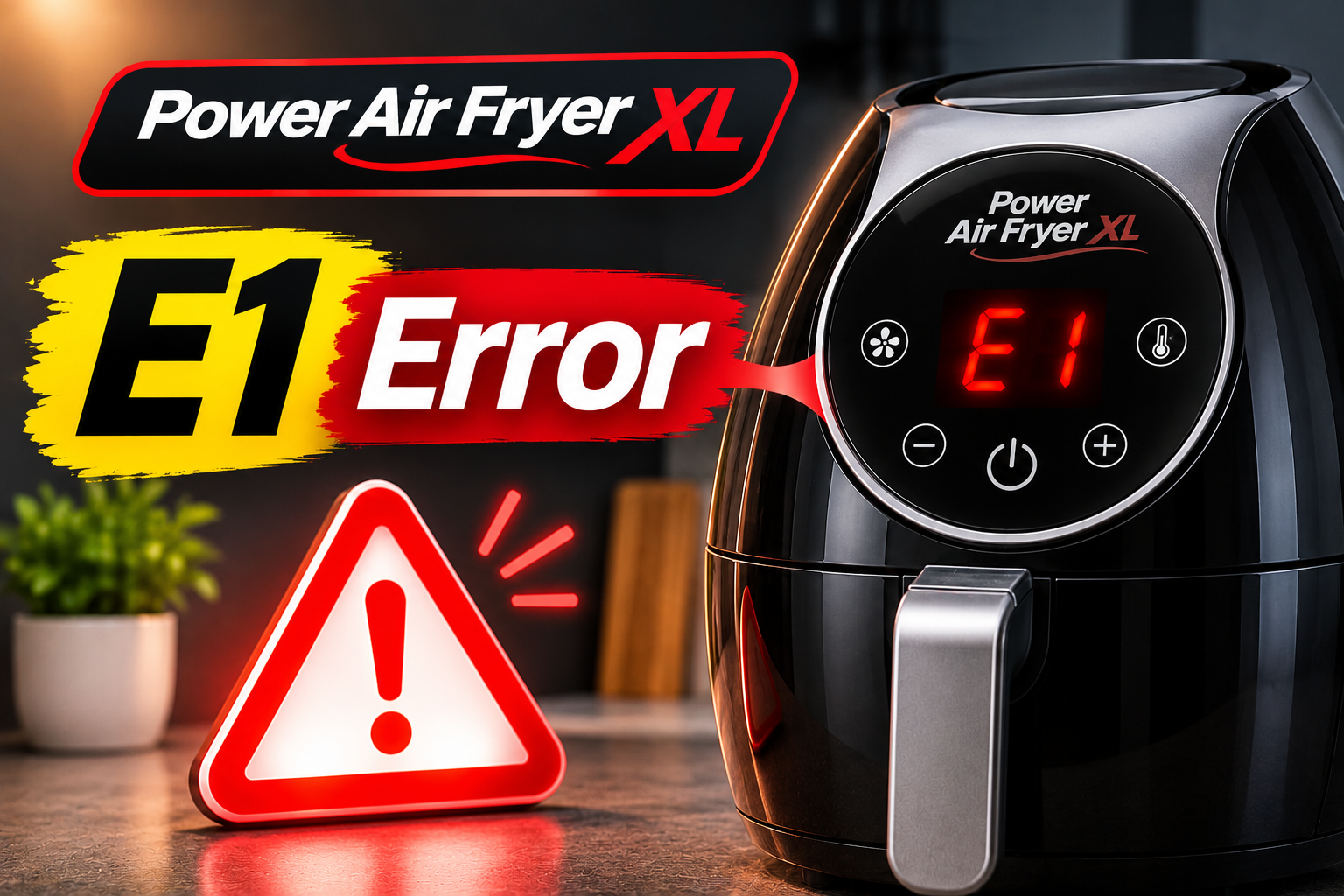
The E1 error on a Power Air Fryer XL indicates an open circuit within the thermal sensor system. The manufacturer’s owner’s manual confirms this meaning for the AF-240, AF-340, and AF-530 models.
Inside your air fryer is a thermal sensor that monitors the temperature during cooking. The electronic control board uses information from this sensor to regulate the heating element, allowing the appliance to maintain your selected cooking temperature without producing unnecessary heat.
When an electrical connection within the sensor circuit breaks, the control board can no longer obtain reliable temperature information. Consequently, your air fryer may display E1, stop heating, or prevent you from starting another cooking program. The fan and display may still function even though the heating system isn’t operating normally.
Unlike E2, which indicates a short circuit within the thermal sensor system, E1 points to an interrupted electrical connection. Therefore, the error doesn’t automatically mean that the sensor needs replacing. A damaged wire, loose connector, or defective control board could produce similar symptoms.
Power Air Fryer XL E1 Error: Likely Causes
Several electrical faults can interrupt communication between the thermal sensor and the control board. While some involve the sensor itself, others develop within the wiring and electrical connections surrounding it.
1. A Defective Thermal Sensor
The thermal sensor operates whenever you use your air fryer. Many digital cooking appliances use a component called an NTC thermistor, which changes its electrical resistance as the surrounding temperature increases or decreases.
Over time, physical stress or excessive heat exposure can damage the sensing element or its internal connections. If the electrical path through the component breaks completely, the control board may register an open circuit and display the E1 error.
A defective thermal sensor may explain why your air fryer displays E1 even after sitting unused for several hours. However, electrical resistance testing is necessary to establish whether the sensor itself is responsible.
2. Damaged Thermal Sensor Wiring
Several wires connect the thermal sensor to the electronic control board. Although these wires are protected by insulation, damage to the metal conductors inside them can interrupt the electrical connection.
Repeated heating and cooling, physical pressure, and careless handling during previous repair work may contribute to wiring damage. In some cases, a wire breaks internally while its protective insulation remains intact, making the fault difficult to identify through visual inspection alone.
A partially broken wire may also produce an intermittent E1 error. As internal components expand during cooking and contract afterward, the damaged connection may temporarily separate or reconnect.
3. Loose or Disconnected Electrical Connectors
If your Power Air Fryer XL developed the E1 error after being dropped, transported carelessly, or repaired, a disconnected sensor connector could be responsible. These connectors establish the electrical connection between the temperature sensor and the control board.
Even a partially disconnected terminal can interfere with temperature monitoring. Depending on the extent of the problem, the air fryer might display E1 continuously or work normally for short periods before the error returns. Confirming this fault generally requires internal inspection by a technician.
4. Moisture and Corrosion
Although your air fryer regularly produces steam during cooking, its internal electrical components must remain protected from direct liquid exposure. Problems can develop when water enters the main housing through ventilation openings or gaps around the control panel.
Moisture can gradually cause corrosion around electrical terminals and other connections. As corrosion becomes more severe, it may increase electrical resistance or interrupt the connection completely, preventing the control board from receiving accurate temperature information.
If the E1 error appeared shortly after washing your air fryer, accidentally spilling liquid onto it, or storing it somewhere damp, moisture damage is a possibility worth investigating.
5. A Malfunctioning Electronic Control Board
The electronic control board contains several components responsible for processing temperature readings and managing the heating system. Damage within its temperature monitoring circuit can cause the appliance to register an open sensor circuit even when the thermal sensor is functioning correctly.
Other symptoms, such as unexpected restarts or irregular display behavior, may accompany a control board problem. Nevertheless, replacing the board without first examining the thermal sensor and its wiring could result in unnecessary repair expenses.
Power Air Fryer XL E1 Error: DIY Fixes
Troubleshooting your Power Air Fryer XL should begin with simple checks that don’t require opening its electrical housing. Although these measures cannot repair every internal fault, they can help you identify contributing problems and prevent further damage.
1. Disconnect the Air Fryer and Allow It to Cool
If the error appears during cooking, turn off your air fryer and disconnect it from the electrical outlet. Allowing the appliance to cool makes it safer to handle and examine.
Follow these steps:
-
Press the power button to switch off the appliance.
-
Unplug the power cord from the wall outlet.
-
Leave the air fryer on a stable surface that can withstand heat.
-
Allow approximately 30 minutes for the appliance to cool, or longer if necessary.
-
Examine the appliance for visible signs of damage.
Disconnecting the power also allows the electronic control system to reset. However, Power Air Fryer XL’s manufacturer recommends contacting customer service for an E1 error rather than relying on a restart. If customer service advises restarting the appliance and the error returns, discontinue use.
2. Remove Obstructions Around the Air Vents
Your air fryer depends on proper airflow to circulate hot air and prevent excessive heat accumulation. Unfortunately, placing the appliance too close to surrounding objects can restrict this airflow and expose internal components to unnecessary heat.
With your air fryer unplugged and completely cool, inspect the air intake opening at the top and the exhaust opening at the back. Use a soft, dry cloth or brush to remove accessible dust. Avoid inserting objects through the vents, as this could damage internal components.
The owner’s manual for the original Power Air Fryer XL models recommends keeping the appliance away from walls and maintaining at least five inches of clearance from other appliances during operation.
Although correcting ventilation problems can help prevent overheating, it won’t repair a thermal sensor circuit that has already developed an electrical fault.
3. Check for Physical Damage
Sometimes, the circumstances surrounding an E1 error can provide valuable clues about its cause. For instance, an error that develops immediately after the appliance falls from a countertop could indicate damage to its internal wiring or electrical connections.
Examine the exterior housing for cracks, dents, separated panels, or other signs of impact. Check the power cord and plug for visible damage, particularly around the point where the cord enters the appliance.
Avoid shaking, hitting, or turning the appliance upside down to restore a suspected loose connection. These actions could worsen the damage. If you notice significant physical damage, keep the air fryer disconnected until a qualified technician has inspected it.
4. Clean the Cooking Chamber Carefully
Food particles and grease can accumulate around the upper section of your cooking chamber. Excessive buildup may produce smoke, restrict heat circulation, and make it difficult to distinguish maintenance problems from electrical faults.
Once the appliance has cooled completely, remove the cooking basket and outer basket. Wash these components using warm water, mild dish soap, and a soft sponge. Wipe accessible surfaces inside the cooking chamber with a damp, nonabrasive cloth.
The manufacturer’s cleaning instructions also permit using a suitable cleaning brush to remove food residue from the heating element. However, avoid pulling on the element, scraping the thermal sensor, or allowing water to enter the electrical housing.
Allow all components to dry thoroughly. Cleaning helps maintain normal cooking conditions, but it won’t restore a broken electrical connection inside the thermal sensor circuit.
5. Check for Moisture Exposure
If you’ve recently cleaned your air fryer, consider whether water may have accidentally entered areas containing electrical components. This can happen when the appliance is washed with excessive water or cleaning products are sprayed directly into its ventilation openings.
Inspect the accessible surfaces around the cooking chamber and basket compartment. If moisture remains on these surfaces, gently wipe it away using a clean, dry cloth. Allow the removable accessories to dry completely.
However, if you suspect water has reached the internal electrical components, keep the appliance unplugged and arrange professional inspection. Avoid using a hair dryer, heat gun, or the air fryer’s heating element to dry its internal circuitry. Visible dryness doesn’t guarantee electrical safety.
6. Determine When the E1 Error Appears
Understanding when your Power Air Fryer XL displays E1 can help narrow down the possible causes. This information is particularly useful when the error occurred occasionally before becoming persistent.
Consider the following observations from previous cooking sessions:
-
E1 appears immediately after switching on: The thermal sensor circuit may have a permanent electrical interruption.
-
E1 appears during cooking: An internal connection may become unstable as the appliance heats up.
-
E1 appeared after cleaning: Moisture exposure or corrosion could be responsible.
-
E1 appeared after dropping the appliance: A disconnected connector or damaged wire may be present.
-
E1 appeared after previous repairs: An improperly connected sensor or incompatible replacement component could be responsible.
-
E1 appears and disappears unexpectedly: An intermittent electrical connection may be causing the problem.
These observations can provide useful diagnostic clues, but they cannot confirm which component has failed. Avoid deliberately running multiple cooking programs to reproduce the error, as doing so could compromise safe temperature regulation.
7. Contact a Qualified Appliance Repair Technician
If your Power Air Fryer XL displays an E1 error, the manufacturer’s recommended solution is to contact customer service. Diagnosing this problem generally requires access to internal electrical components and appropriate testing equipment.
A qualified appliance repair technician can measure the thermal sensor’s electrical resistance and examine the wiring for interrupted connections. The technician can also inspect electrical terminals for corrosion, looseness, or physical damage before checking the electronic control board.
Depending on the findings, the repair may involve replacing the thermal sensor, securing a disconnected connector, replacing damaged wiring, or installing a replacement control board.
Avoid purchasing a generic temperature sensor simply because it resembles the original component. Temperature sensors have different electrical characteristics and operating limits. The correct resistance specifications must be established for your particular model before selecting a replacement.
Before arranging repairs, locate your air fryer’s model number and check its warranty coverage. If the appliance is relatively new, contacting PowerXL customer service may help you avoid unnecessary repair expenses.
Stop using the appliance immediately if you notice an electrical burning smell, melted plastic, unusual smoke, or uncontrolled heating. These warning signs require professional attention, even if the E1 error subsequently disappears.
Wrapping Up
The E1 error on your Power Air Fryer XL generally indicates an interrupted electrical connection within the thermal sensor system. Although external troubleshooting can help identify moisture exposure, physical damage, and ventilation problems, repairing a broken electrical circuit requires proper technical knowledge.
Avoid dismantling the appliance or bypassing its temperature sensor to resume cooking. Instead, follow the manufacturer’s troubleshooting recommendations and have the affected components examined by a qualified technician. Identifying the actual source of the fault can help you avoid unnecessary repairs while ensuring your air fryer remains safe to operate.