Although some operating problems are relatively easy to address, others involve internal components that require professional attention. Understanding the possible causes of Error 2 can help you troubleshoot your air fryer safely and avoid unnecessary repairs.
What Does Error 2 Mean on a Ninja Foodi Air Fryer?
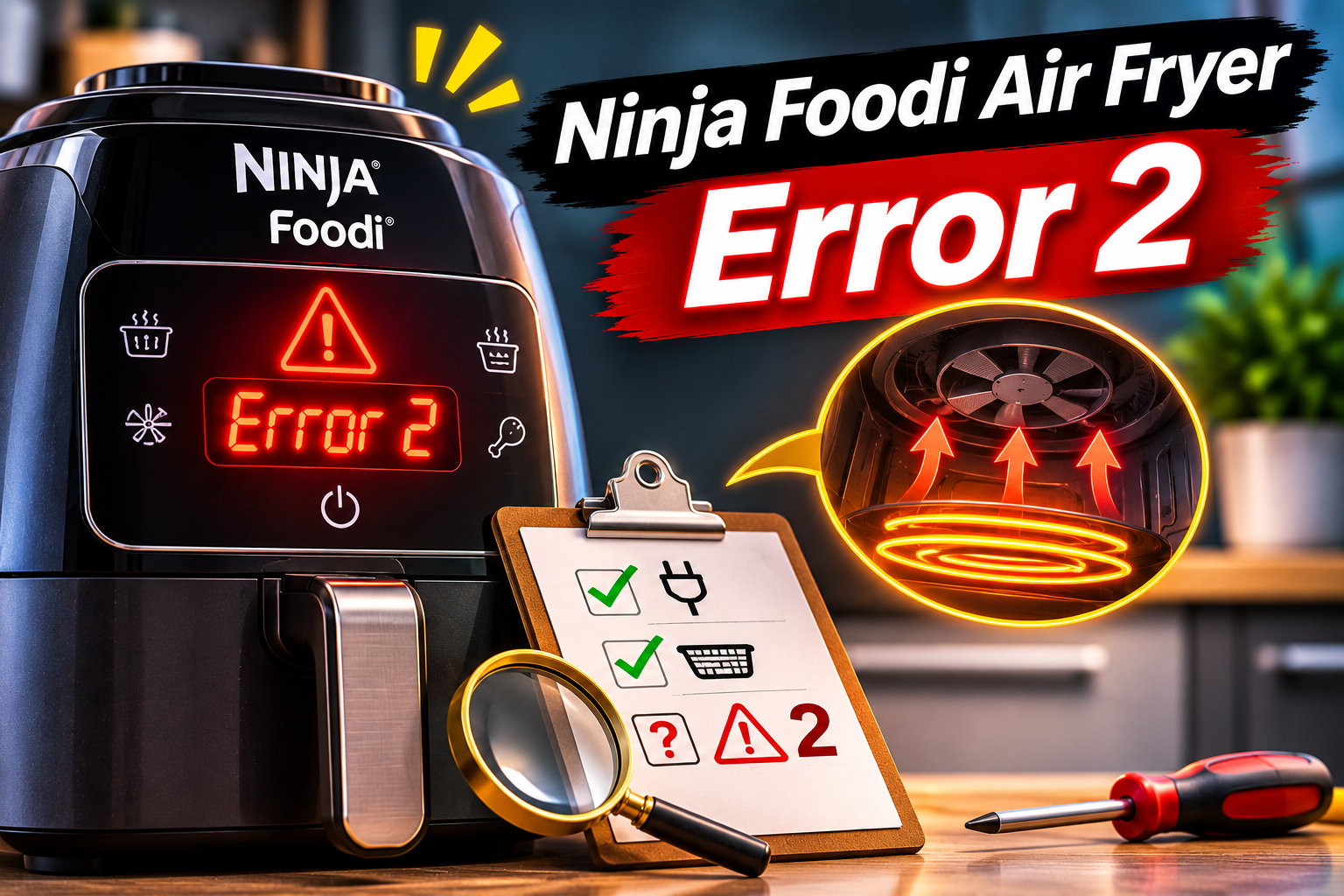
Error 2, commonly displayed as E2, indicates that your Ninja Foodi air fryer may have developed a malfunction. However, Ninja doesn’t provide a universal definition for this particular error across all its Foodi air fryer models.
According to the Ninja Foodi DZ201 owner’s manual, an error message beginning with E indicates that the appliance isn’t operating correctly. Similarly, the Foodi OL600 SmartLid series uses an ERR message to indicate a malfunction requiring assistance from customer service.
A temperature monitoring fault is one possibility worth investigating. Your air fryer relies on temperature sensors to measure internal heat, while its electronic control board uses these readings to regulate the heating element. Problems within this system can interfere with normal cooking.
Depending on the underlying fault, your air fryer may stop heating, become unresponsive, or display an error whenever you select a particular cooking function. On models with two cooking baskets, the error may appear in one zone. However, these symptoms alone cannot establish which component has failed.
Ninja Foodi Air Fryer Error 2: Likely Causes
Several electrical and mechanical problems can interfere with your Ninja Foodi air fryer’s operation and cause it to display an error. Although the following faults aren’t universally confirmed causes of E2, they’re relevant possibilities that can help narrow down the problem.
1. A Defective Temperature Sensor
Your Ninja Foodi air fryer contains temperature sensing components that monitor the heat generated during cooking. These components help the control board maintain your selected temperature without allowing the appliance to become excessively hot.
Repeated heating and cooling cycles can contribute to sensor deterioration over time. If a sensor develops an internal electrical fault, it may send inaccurate readings to the control board or stop providing temperature information altogether.
A temperature sensor problem is worth investigating if your air fryer previously struggled to maintain consistent cooking temperatures. The appliance might also stop heating shortly after starting a cooking program. However, a technician must test the sensor before establishing whether it needs replacing.
2. Loose or Damaged Internal Wiring
Electrical wires connect your air fryer’s temperature sensors, heating elements, fan motors, and electronic control board. These connections must remain intact for the appliance to operate correctly.
A damaged wire or loose connector can interrupt electrical communication between components. Such faults may develop because of physical impacts, deteriorating insulation, or repeated exposure to heat. If your air fryer sometimes works normally but displays an error on other occasions, an intermittent electrical connection could be responsible.
3. Overheating Due to Poor Ventilation
Your Ninja Foodi air fryer generates substantial heat during operation. Its ventilation openings allow air to circulate and help prevent excessive heat from accumulating around sensitive components.
Operating the appliance too close to a wall, inside a confined cabinet, or near another heat source can interfere with ventilation. Obstructed air openings and internal fan problems can also contribute to excessive temperatures.
Overheating is a possibility if the error consistently appears after prolonged cooking. You may notice unusually hot exterior surfaces or unexpected shutdowns. However, overheating isn’t a confirmed universal meaning of Error 2, so allowing the appliance to cool may not resolve the underlying fault.
4. A Faulty Fan Motor
The fan distributes heated air throughout the cooking chamber, allowing your food to cook evenly. On Ninja Foodi DualZone models, each cooking compartment has its own fan and heating element.
If a fan motor develops a fault, you might notice grinding sounds, unusual vibrations, or reduced airflow. A problem affecting one cooking compartment could explain why one basket previously experienced difficulties while the other appeared to function normally. Continuing to operate an appliance with a suspected fan fault could cause further damage.
5. A Malfunctioning Electronic Control Board
The electronic control board coordinates your air fryer’s cooking functions, processes temperature readings, and manages the operation of its heating elements and fans.
If part of the board becomes damaged, the appliance may struggle to interpret information from its internal sensors. Moisture exposure, electrical damage, and deteriorating electronic components are possible reasons for control board failure.
You may also experience unresponsive buttons, irregular display behavior, or unexpected interruptions during cooking. Since other electrical faults can produce similar symptoms, professional diagnosis is necessary before replacing the board.
Ninja Foodi Air Fryer Error 2: How to Fix
Troubleshooting Error 2 should begin with simple checks that don’t require opening your air fryer’s electrical housing. If you’ve confirmed that the appliance is displaying a genuine E2 error, follow Ninja’s recommendation to contact customer support before resuming operation.
1. Disconnect Your Ninja Foodi Air Fryer From the Power Supply
Start by switching off your air fryer and disconnecting it from the electrical outlet, provided it’s safe to do so. This prevents further operation while you investigate the problem and allows the appliance’s electronic components to shut down completely.
Follow these steps:
-
Press the power button to switch off the air fryer.
-
Remove the plug from the electrical outlet.
-
Allow the appliance to cool completely.
-
Examine its exterior for signs of damage.
-
Consult your owner’s manual for troubleshooting instructions.
If customer support recommends restarting the appliance, follow the instructions provided for your particular model. Disconnecting the power may clear a temporary electronic malfunction, but it cannot repair a defective temperature sensor or damaged circuit.
Avoid repeatedly restarting the appliance if the error persists. Also, if you own a Ninja Foodi pressure cooker with an air frying function, allow any remaining pressure to release safely before attempting to open its lid.
2. Identify the Affected Cooking Zone
If you own a Ninja Foodi DualZone air fryer, establish which cooking compartment was operating when the error appeared. This information can help narrow down the area that requires investigation.
Models such as the DZ201 and AF300 feature independent cooking compartments with separate heating elements and fans. Therefore, a malfunction affecting one compartment may produce different symptoms from a problem involving the appliance’s shared electronic controls.
Check whether E2 appeared on the left or right display, whether both compartments stopped working, and which cooking function was active at the time. You don’t need to restart the appliance to gather this information if you’ve already observed these symptoms.
Since the numerical error codes aren’t universally defined, don’t assume that E2 automatically refers to Zone 2. Furthermore, avoid continuing to cook in the unaffected compartment until Ninja confirms that it’s safe to do so.
3. Improve Ventilation Around the Air Fryer
Poor ventilation can contribute to overheating and place unnecessary stress on your air fryer’s internal components. Fortunately, correcting the appliance’s location is relatively straightforward.
Once the appliance has cooled, place it on a flat, dry countertop that can withstand heat. Remove nearby objects that could obstruct its air intake or exhaust openings, including kitchen towels, food packaging, and other appliances.
The Ninja Foodi AD-DZ series owner’s manual recommends leaving at least 6 inches of space above and on all sides of the appliance for adequate air circulation. Check your particular model’s instructions, as ventilation requirements may differ.
Avoid operating your air fryer inside an enclosed cabinet or directly beside a hot stovetop. If the appliance continues to experience overheating problems despite adequate ventilation, its temperature monitoring system or fan assembly may require professional attention.
4. Clean the Cooking Chamber and Accessible Surfaces
Grease and food particles gradually accumulate inside your air fryer, particularly when you regularly cook fatty foods. Excessive buildup around the cooking chamber can produce smoke and interfere with normal air circulation.
With the appliance unplugged and completely cool, remove the cooking baskets and crisper plates. Wash them with warm water, dish soap, and a soft sponge. If stubborn food residue remains, soak the affected accessories before cleaning them again.
Use a slightly damp cloth to wipe accessible interior surfaces, following your model’s cleaning instructions. Avoid touching or bending the temperature sensing components, and never insert sharp objects into the fan assembly or ventilation openings.
Allow everything to dry thoroughly before reassembling the appliance. Although cleaning won’t repair an electrically defective temperature sensor, it can eliminate maintenance problems that affect normal cooking.
If the error appeared immediately after cleaning, consider whether water may have entered the electrical housing. If you suspect internal moisture exposure, leave the appliance unplugged and arrange professional inspection.
5. Inspect the Power Cord and Electrical Outlet
Your Ninja Foodi air fryer requires a suitable electrical supply to operate its heating elements and electronic controls. Although electrical supply problems aren’t an established cause of E2, checking the external connections can help identify other operating and safety concerns.
Examine the entire length of the power cord while the appliance is disconnected. Look for damaged insulation, exposed wires, melted plastic, or discoloration around the plug. Check the wall outlet for visible signs of burning or physical damage.
The Ninja Foodi DZ201 owner’s manual identifies the appliance’s power consumption as 1,690 watts and recommends using an outlet on a 15 amp circuit. It also advises against operating another appliance from the same outlet simultaneously.
Check the electrical requirements printed on your own appliance’s rating label, particularly if you’ve purchased an imported model. Avoid using extension cords or unsuitable power adapters.
If the outlet becomes unusually hot or your circuit breaker repeatedly trips, stop using the air fryer and contact a qualified electrician. A damaged appliance cord should be replaced by an authorized repair service.
6. Check the Cooking Baskets, Inner Pot, or Lid
Depending on your Ninja Foodi model, incorrectly positioned cooking accessories can prevent certain functions from operating normally. Although this isn’t a verified cause of Error 2, it’s worth eliminating simple assembly problems.
For DualZone models, remove both baskets and inspect their edges and surrounding compartments. Clear away trapped food particles and ensure the crisper plates are correctly positioned. Both baskets should fit into their respective compartments without excessive force.
If you own a Ninja Foodi multifunction cooker, make sure its removable cooking pot is correctly installed. SmartLid models also require the lid and function selector to be in the appropriate positions for your selected cooking program.
Ninja uses separate messages, such as ADD POT, SHUT LID, and SLIDE, to identify these operating problems on compatible models. Therefore, if your display specifically shows E2, correcting the position of the cooking accessories may not clear it.
Never attempt to bypass a lid detection mechanism, pressure lock, or other safety feature to force the appliance to start.
7. Contact Ninja Customer Support or a Qualified Technician
If your Ninja Foodi air fryer continues to display Error 2, an internal electrical or mechanical fault may require professional diagnosis. Ninja recommends contacting customer service when its Foodi air fryers display an E error message.
Before contacting support, gather the following information:
-
Your air fryer’s model and serial numbers.
-
A photograph of the error message.
-
Your original purchase receipt.
-
Details of when the error first appeared.
-
The affected cooking compartment or function.
-
Any unusual sounds, smells, or heating problems.
Customers in the United States can contact Ninja customer service at 1-877-646-5288 or visit the Ninja customer support website.
Depending on the symptoms, a qualified technician may need to test the temperature sensor, examine internal wiring, inspect the fan motor, or assess the electronic control board.
If testing confirms a defective temperature sensor, installing a compatible replacement may restore normal operation. However, avoid purchasing replacement parts before the fault has been identified.
If you own a Foodi OP300 series pressure cooker, also check the May 2025 product recall concerning its pressure cooking lid. Although the recall doesn’t specifically concern air frying or E2, affected owners should obtain a replacement pressure cooking lid before using the pressure cooking function again.
Finally, check your warranty coverage before arranging independent repairs. You may qualify for a repair or replacement appliance, depending on its age and the applicable warranty conditions.
Wrapping Up
Error 2 on a Ninja Foodi air fryer can be difficult to diagnose because its specific meaning varies between models and isn’t clearly defined in many product manuals. Temperature monitoring problems, damaged electrical connections, and electronic faults are possibilities that require careful investigation.
While checking ventilation, cleaning accessible components, and inspecting external connections can help eliminate basic operating problems, persistent errors deserve professional attention. Avoid dismantling the appliance or bypassing its safety features. Contacting Ninja with your exact model number and a detailed description of the symptoms can help you obtain an accurate diagnosis and an appropriate solution.