KitchenAid dishwasher error code 10-2 can appear when the machine develops a problem with its ventilation system. You may notice excess moisture around the door, poor drying, or a warning that returns after resetting the dishwasher.
This error usually points to the vent wax motor circuit. The problem may involve damaged wiring, loose electrical connections, or a faulty component. Identifying the cause helps you avoid unnecessary repairs and choose the right solution.
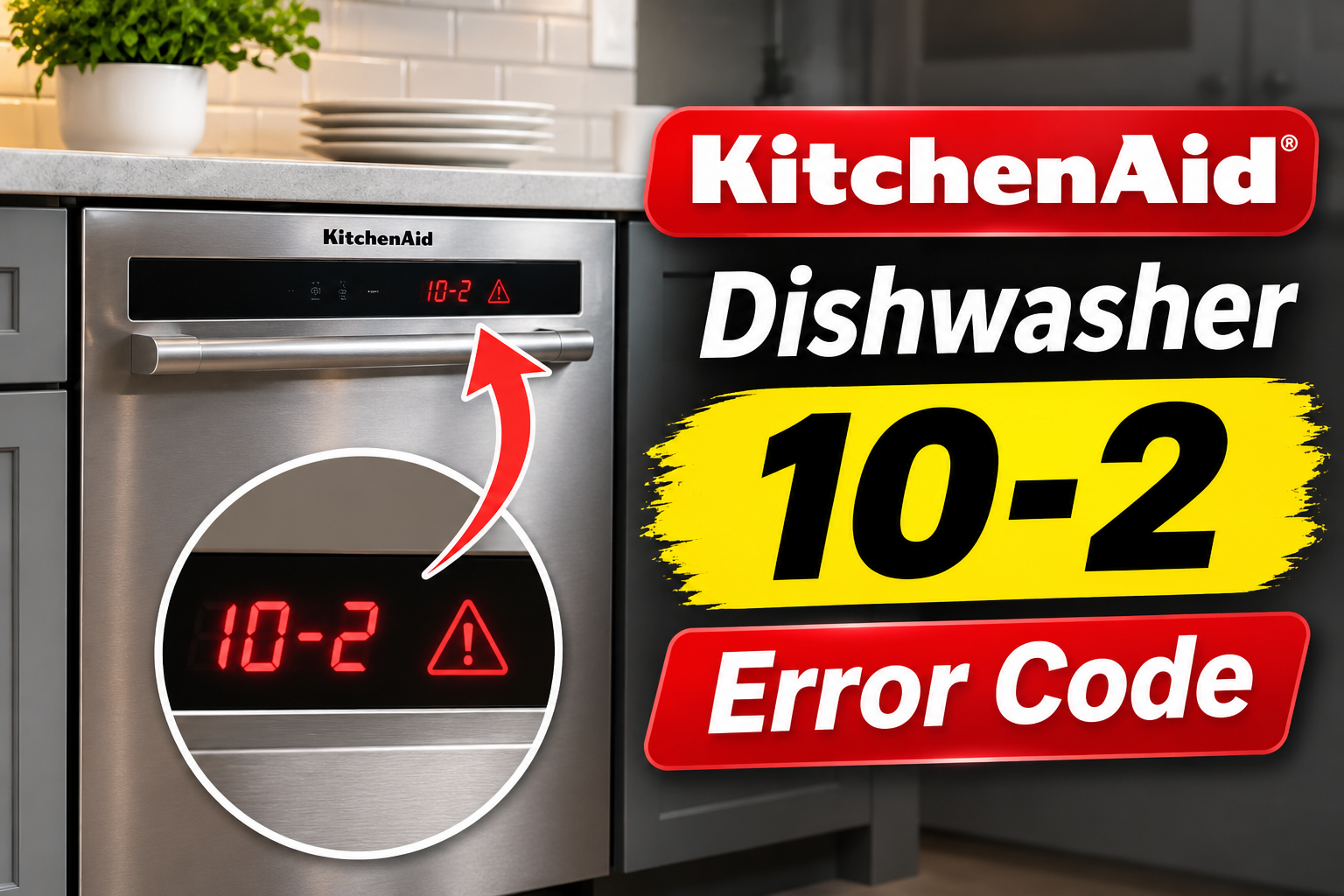
What Does KitchenAid Dishwasher Error Code 10-2 Mean?
KitchenAid dishwasher error code 10-2 indicates a problem with the vent wax motor circuit on models equipped with this system. The code may also appear as F10E2 or FAE2, depending on the model.
The vent system helps manage moisture during washing and drying. A wax motor controls the vent’s movement using a heated wax element that expands when electricity passes through it.
If the motor or its electrical circuit fails, the vent may stop working correctly. Depending on the dishwasher model, this can affect moisture control and drying performance.
Common symptoms include:
- Error code 10-2 appearing on the control panel.
- Excess moisture around the dishwasher door.
- Poor drying performance.
- Condensation on nearby cabinets.
- An error that returns after resetting the dishwasher.
However, these symptoms can have other causes. The error code identifies the affected circuit but doesn’t confirm which component needs replacement.
KitchenAid Dishwasher 10-2 Error Code [FIXED]: Common Causes
Several electrical problems can trigger error code 10-2. The most likely causes involve the vent wax motor, its wiring, and the electronic control system.
1. Faulty Vent Wax Motor
The vent wax motor controls the opening and closing of the dishwasher’s ventilation mechanism. It uses heat to expand an internal wax element, which moves the vent mechanism.
If the motor develops an internal electrical fault, it may stop operating. The dishwasher can then detect an open circuit and display error code 10-2.
A defective wax motor may also cause moisture to collect around the door or affect drying performance. However, electrical testing is necessary to confirm the motor has failed.
2. Loose or Corroded Electrical Connections
The vent wax motor connects to the dishwasher’s control board through electrical wiring and connectors.
If these connections become loose or corroded, the motor may stop receiving power. Moisture exposure, vibration, or previous repairs can contribute to connection problems.
A loose connection may cause intermittent faults, with the error appearing during some cycles but not others. The wiring and connectors need inspection before replacing the motor.
3. Damaged Vent Wiring
Broken, pinched, or damaged wires can interrupt electricity flowing between the control board and the vent wax motor.
Wiring damage may develop because of heat exposure, physical wear, or improper installation. Even a working wax motor cannot operate correctly when its electrical circuit is interrupted.
Since the symptoms resemble those of a defective motor, a qualified technician may need to test the wiring for continuity.
4. Faulty Electronic Control Board
The dishwasher’s electronic control board manages the vent wax motor and other operating components.
If the board develops a fault in the vent control circuit, it may fail to operate the motor properly. Some models may also register code 10-2 when a protective fuse on the control board opens.
However, the control board should only be replaced after the wax motor and wiring have been tested. Replacing it without confirming the problem may result in unnecessary repair costs.
KitchenAid Dishwasher 10-2 Error Code [FIXED]: How to Fix
Start with basic troubleshooting before considering replacement parts. Some temporary faults can clear after a reset, while damaged electrical components require professional repairs.
1. Reset the Dishwasher
A power reset may clear error code 10-2 if the warning resulted from a temporary electronic problem.
Follow these steps:
- Stop the dishwasher’s current cycle.
- Disconnect the appliance from its power source.
- If it’s permanently wired, turn off the dishwasher’s circuit breaker.
- Leave the power disconnected for at least 30 seconds.
- Restore power and check the display.
If the error disappears, the control system has restarted. However, this doesn’t confirm that the vent motor is working correctly.
If the code returns, avoid repeatedly resetting the dishwasher. The underlying problem may require electrical testing.
2. Check the Vent Area for Obstructions
On models with an accessible vent opening, dirt or debris may interfere with normal airflow.
Turn off the dishwasher and allow it to cool before examining the vent area.
Look for visible dirt, food residue, or objects blocking the opening. Remove accessible surface debris with a soft cloth.
Don’t insert tools into the vent or attempt to force its internal mechanism.
Although cleaning may improve airflow, it won’t repair a damaged wax motor or its electrical circuit. If error code 10-2 remains, further diagnosis is necessary.
3. Inspect the Door Area for Moisture
A malfunctioning vent can sometimes contribute to moisture collecting around the dishwasher door.
Check the door edges, nearby cabinets, and floor for water droplets or damp patches.
If the door gasket is dirty, gently clean its accessible surfaces with a damp cloth. Also make sure the door closes properly.
However, a dirty gasket is a separate issue and doesn’t directly explain the vent motor circuit error.
If water is leaking from the dishwasher or reaching electrical components, stop using the appliance and arrange professional service.
4. Test the Dishwasher After Resetting
If the warning disappears after resetting the dishwasher and there are no signs of leakage or electrical damage, try one monitored wash cycle.
Make sure the dishwasher is properly closed and the surrounding floor is dry.
Start a normal cycle and observe whether the machine operates correctly. Watch for recurring error messages, unusual moisture, or interruptions during washing.
If the cycle completes normally, continue monitoring the dishwasher during subsequent use.
However, if the error returns, stop further testing. Repeated operation won’t correct a failed wax motor or damaged electrical circuit.
5. Have the Vent Motor and Wiring Checked
If the basic troubleshooting steps fail, the vent wax motor and its electrical connections need further inspection.
A qualified technician can test the motor circuit, examine the wiring, and check the connectors for loose contacts or corrosion.
If the motor has failed, replacement may be necessary. Damaged wires or connectors may also require repair.
The technician should use the service information for your specific model to identify the correct components and testing procedures.
Avoid opening the electrical housing or testing internal circuits yourself. These repairs involve electrical hazards and require appropriate equipment.
6. Contact a Qualified Appliance Technician
If the error continues after resetting the dishwasher, professional diagnosis is the safest option.
A technician can determine whether the problem involves the wax motor, wiring, control board fuse, or another electronic component.
Depending on the findings, repairs may involve replacing the vent assembly, repairing electrical connections, or installing a replacement control board.
You can contact KitchenAid customer support at 1-800-422-1230 in the United States for assistance.
Have your dishwasher’s model number and error details available to help identify the correct repair procedure.
Wrapping Up
KitchenAid dishwasher error code 10-2 usually indicates an electrical fault affecting the vent wax motor circuit. The problem may come from a defective motor, damaged wiring, loose connections, or a faulty control board.
Resetting the dishwasher and checking the accessible vent area are sensible first steps. However, if the warning returns, the internal electrical components need proper testing. Identifying the faulty part before replacing anything can help restore normal operation without unnecessary repair costs.