Although this error can indicate an internal overheating problem, its exact meaning depends on your Ninja model. Understanding the possible causes and knowing which checks are safe can help you avoid unnecessary repairs and further damage.
What Does Error 7 Mean on a Ninja Air Fryer?
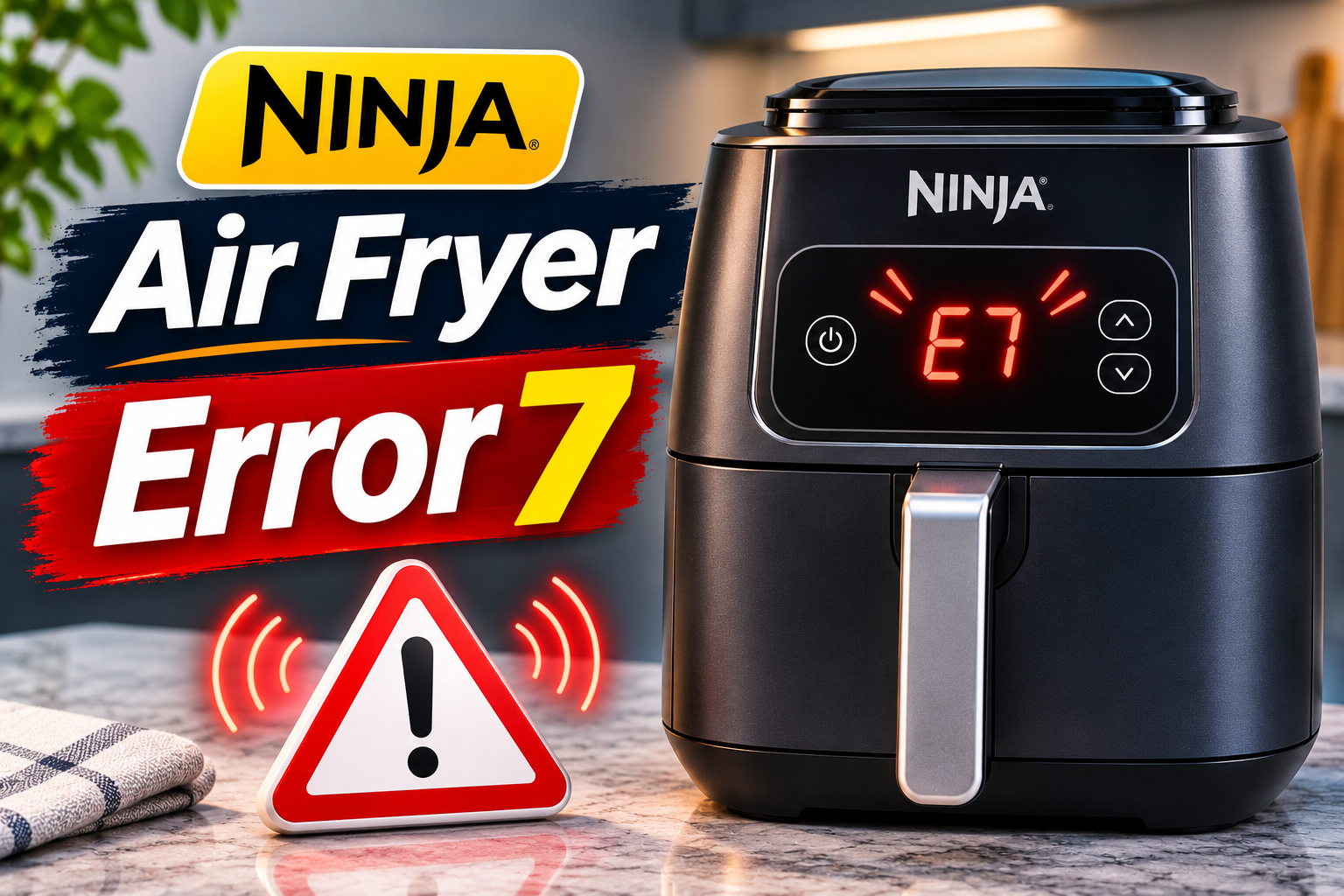
Error 7 indicates that your Ninja air fryer has detected a problem that may prevent it from operating correctly. However, Ninja uses different error code systems across its appliances, so E7 doesn’t have one universal meaning.
For example, the Ninja CRISPi DualZone DD100 series identifies E7 and E8 as internal circuit board overheating errors. This means the electronic control system has detected excessive heat affecting the appliance’s internal circuitry. The warning may interrupt cooking to prevent continued operation under potentially unsafe conditions.
Other Ninja appliances use Er7 as a more general service warning. The Ninja Foodi Dual Heat Air Fry Oven SP300 series, for instance, includes Er7 among the error messages that require customer service assistance. Its owner’s guide doesn’t identify a particular defective component responsible for the code.
Your air fryer depends on electronic controls to manage the heating element, temperature monitoring system, and fan. These components work together to maintain cooking temperatures and keep the appliance operating within its intended limits. If the control system detects a serious malfunction, it may stop cooking and display an error instead of continuing.
Depending on the fault, you might notice an unexpected shutdown, unusually hot surfaces, or an error appearing during preheating. Because these symptoms can indicate an electrical or overheating problem, avoid repeatedly restarting the appliance until you’ve checked the manufacturer’s instructions.
Ninja Air Fryer Error 7: Likely Causes
Several internal faults and operating conditions may explain why a Ninja air fryer displays Error 7. However, these possibilities don’t apply equally to every model, so it’s essential to distinguish documented error meanings from other suspected problems.
1. Internal Circuit Board Overheating
Internal circuit board overheating is a confirmed meaning of E7 on the Ninja CRISPi DualZone DD100 series. The circuit board contains electronic components that help control cooking functions, temperature monitoring, and other appliance operations.
During normal cooking, these components generate some heat while processing electrical signals and controlling the heating system. The appliance is designed to operate within safe temperature limits. However, if the circuit board becomes excessively hot, the control system may detect the condition and display an error.
An overheating circuit board can be associated with excessive surrounding heat, inadequate cooling, or a malfunctioning electronic component. However, the E7 warning alone doesn’t identify which condition caused the problem.
You might notice that the appliance operates normally for several minutes before the error appears. In other situations, the warning may occur immediately if an internal fault remains present from a previous cooking cycle.
The timing can provide useful information for customer support, but it cannot establish the exact cause without further testing.
Because the circuit board manages essential electrical functions, continued operation during an overheating fault may create additional risks. If your model specifically identifies E7 as circuit board overheating, stop using it and contact Ninja for guidance.
2. Restricted Airflow and Poor Ventilation
Your Ninja air fryer needs adequate ventilation to prevent excessive heat from accumulating around its internal components. Although the heating system produces high temperatures for cooking, other parts of the appliance must remain within their intended operating limits.
If the air intake or exhaust openings become blocked, heat may build up around the housing and internal electronics. Placing the appliance too close to a wall, operating it in an enclosed cabinet, or covering its ventilation openings can interfere with airflow.
Ninja warns against blocking the intake and exhaust vents because restricted airflow can cause overheating or damage the appliance.
For example, you may notice that the outer housing feels unusually hot after an extended cooking session. The appliance might also stop unexpectedly if its temperature monitoring system detects an abnormal condition.
However, blocked ventilation isn’t a confirmed explanation for E7 across every Ninja model. It’s an operating condition worth checking, particularly when your appliance identifies the warning as overheating.
If the vents are clear but the error continues, an internal electrical or cooling problem may be responsible.
3. Malfunctioning Internal Cooling Fan
Some Ninja air fryers and countertop air ovens contain cooling systems that help protect electronic components from excessive heat. These systems may use a fan to move air through areas surrounding the control panel and internal circuitry.
For example, the Ninja Foodi Dual Heat Air Fry Oven SP300 series has a cooling fan that can continue operating after cooking finishes. According to its owner’s guide, this fan may run for approximately 15 minutes or until the appliance reaches its specified cooling temperature.
If a cooling fan stops operating correctly, internal components may remain hotter than intended. Problems involving the fan motor, its electrical connections, or another part of the cooling system could interfere with normal heat management.
A possible warning sign is an unusual change in fan noise. You may hear grinding, rattling, or repeated clicking while the appliance operates. However, these sounds can have several causes and shouldn’t automatically be linked to E7.
It’s also worth distinguishing the cooling fan from the fan that circulates hot air around food. Depending on the model, these functions may involve different components.
A fan that continues running after cooking isn’t necessarily defective. On certain Ninja ovens, continued operation is a normal part of the cooling process.
However, Ninja hasn’t identified cooling fan failure as the specific cause of every Error 7 warning. Confirming a defective fan requires appropriate inspection and testing by a qualified technician.
4. Faulty Electronic Components or Internal Connections
Your Ninja air fryer contains electronic components that control heating, temperature monitoring, and cooking functions. These components depend on reliable electrical connections to operate correctly.
If part of the electronic control system becomes damaged, the appliance may lose its ability to manage certain functions. Possible problems include failed electronic components, damaged internal circuitry, or connections that no longer provide reliable electrical contact.
For example, a malfunctioning control component could interfere with the heating system or temperature monitoring process. Depending on the appliance’s design, this may cause an unexpected shutdown or error message.
You might suspect an internal electronic fault if the error appears immediately after connecting the appliance to electricity or returns consistently without any obvious external problem.
However, Er7 on models such as the Foodi SP300 series is documented as a service error rather than a confirmed diagnosis of a particular electrical component.
Consequently, replacing the control board or other internal parts without testing may be unnecessary.
Internal electronic components are connected to household electricity and aren’t intended for ordinary user repairs. Professional diagnosis is the safest way to identify the actual fault.
Ninja Air Fryer Error 7: How to Fix
The correct solution depends on your Ninja model and the condition responsible for the warning. Start with safe checks that don’t require opening the appliance, but follow the owner’s manual immediately if it instructs you to stop using the unit and contact customer service.
1. Identify Your Ninja Model and Confirm the Error
Before attempting any fix, check the exact message displayed on your air fryer.
Ninja uses different error codes across its basket air fryers, DualZone appliances, Foodi pressure cookers, and countertop air ovens. Therefore, a warning that means overheating on one appliance may represent a general service fault on another.
First, examine the display and confirm whether it reads E7, Er7, ERR7, or another combination. Take a photograph of the warning if possible.
Next, switch off the appliance. Once it has cooled sufficiently for safe handling, locate the identification label.
The model number is usually printed underneath or behind the main unit, although its position varies between appliances.
Look for a model designation such as DD100, SP300, or AF100.
Once you’ve identified the model, locate its owner’s guide through the official Ninja support website.
For example, E7 on the CRISPi DualZone DD100 series indicates internal circuit board overheating. Meanwhile, Er7 on the Foodi Dual Heat Air Fry Oven SP300 series requires customer service assistance.
If your manual identifies Error 7 as a service warning, follow that instruction instead of attempting undocumented resets or internal repairs.
2. Turn Off the Appliance and Allow It to Cool
If your Ninja air fryer displays Error 7 during cooking, stop the cooking cycle and allow the appliance to cool safely.
Press the Power or Stop button if the controls respond. Keep the appliance on a stable, heat resistant surface with its ventilation openings unobstructed.
For most basket air fryers, disconnecting the appliance from electricity after stopping it is a sensible precaution. However, some Ninja countertop ovens have cooling fans that must finish operating before the appliance is unplugged.
For example, the Ninja SP300 series specifically instructs users to leave the appliance connected after normal cooking until its FLIP indicator appears. This allows the cooling system to finish its cycle.
Therefore, follow your model’s shutdown instructions rather than assuming every Ninja air fryer should be disconnected immediately.
If you notice smoke, melting, a burning electrical smell, or damage around the power connection, stop using the appliance and disconnect it safely if possible.
Avoid touching the cooking basket, heating chamber, or other hot surfaces until they’ve cooled.
Allow sufficient time for the appliance to return to a safe temperature. The required cooling period depends on its design and how hot it became.
Although cooling can remove an immediate overheating condition, it doesn’t necessarily repair the fault responsible for E7.
If the warning identifies internal circuit board overheating, contact Ninja before attempting another cooking cycle.
3. Check the Ventilation Openings and Appliance Placement
Restricted ventilation can contribute to excessive heat buildup, so checking the surrounding area is worthwhile when E7 involves overheating.
Start by making sure the appliance is switched off and completely cool. Disconnect it from power according to its owner’s guide.
Examine the external ventilation openings for obvious obstructions, including nearby objects, accumulated dust, or materials covering the vents.
Next, check the appliance’s position on the countertop.
Make sure it stands on a stable, level, heat resistant surface with sufficient space around the air intake and exhaust openings.
Follow the clearance requirements specified in your owner’s manual. Avoid placing the appliance inside an enclosed cabinet or directly against surfaces that prevent heat from escaping.
If you notice loose dust around accessible external vents, gently remove it using a soft, dry cloth or brush.
Don’t insert sharp objects, cleaning tools, or your fingers through the openings. Doing so could damage internal components or expose you to electrical hazards.
Improving ventilation may help prevent excessive heat from accumulating during future use. However, it isn’t a guaranteed repair for a damaged circuit board.
If E7 has already appeared, follow Ninja’s service instructions before operating the appliance again.
4. Clean the Removable Cooking Parts
Food residue and grease can accumulate inside your Ninja air fryer, particularly when you frequently prepare foods with high fat content.
Although cleaning isn’t a documented repair for Error 7, keeping the cooking area clean helps maintain normal operation and reduces problems caused by burning food deposits.
Before cleaning, switch off the appliance, follow its cooling instructions, and disconnect it from electricity once it’s safe to do so.
Remove the cooking basket, crisper plate, cooking tray, or other accessories approved for removal.
Check these components for grease deposits, burnt food particles, and trapped crumbs.
For most removable Ninja air fryer accessories, you can follow these cleaning steps.
- Remove the basket and other approved accessories.
- Wash them using warm water, mild dish soap, and a soft sponge.
- Allow stubborn food deposits to soak in warm, soapy water.
- Gently remove loosened grease without damaging protective coatings.
- Rinse the components thoroughly.
- Allow every accessory to dry completely before reinstalling it.
For countertop air ovens, check whether your model has a removable crumb tray and clean it according to the manufacturer’s instructions.
You can wipe accessible exterior surfaces using a lightly damp cloth. However, never immerse the electrical main unit in water or spray cleaning products into its ventilation openings.
Avoid attempting to clean internal fans, wiring, or circuit boards by opening the appliance’s housing.
After cleaning, inspect the removable accessories for visible damage and reinstall them correctly.
If the error persists, additional cleaning is unlikely to repair an internal electronic fault. Contact Ninja rather than repeatedly restarting the appliance.
5. Check the External Power Connection
An unsuitable electrical connection can cause unexpected interruptions or prevent your Ninja air fryer from operating normally.
Although electrical supply problems aren’t a confirmed explanation for Error 7 across Ninja models, checking the external power connection may help identify a separate operating issue.
With the appliance safely disconnected, inspect the visible power cord and plug.
Look for cracked insulation, discoloration, damaged plug pins, or signs of overheating.
If you notice any damage, don’t attempt to repair the cord yourself.
Next, check whether the wall outlet works using another suitable household appliance, provided the outlet appears safe.
Make sure the electrical supply matches the voltage and power rating shown on your Ninja appliance’s identification label.
Avoid using overloaded power strips or unsuitable extension cords. Several Ninja air fryer owner’s guides recommend connecting the appliance directly to an appropriate wall outlet.
If the outlet repeatedly trips a circuit breaker or becomes unusually hot, stop using it and contact a qualified electrician.
Some appliances can recover from temporary electronic interruptions after an approved restart. However, Ninja doesn’t recommend one universal reset procedure for every E7 or Er7 warning.
If your model’s instructions specifically permit restarting after an error, follow that procedure exactly.
Otherwise, treat the warning as a possible service fault.
Repeatedly reconnecting the appliance without addressing the underlying problem could expose its electronic components to further stress.
6. Contact Ninja Customer Service or a Qualified Technician
If your Ninja air fryer displays E7 or Er7, manufacturer support is often the most appropriate solution.
This is particularly important for models that identify the warning as internal circuit board overheating or instruct users to contact customer service.
In the United States, Ninja lists 1-877-646-5288 as its customer service number in several appliance owner’s guides. You can also find support information through the official Ninja Kitchen website.
Before contacting support, gather the following information.
- Your appliance’s exact model number.
- The serial number on its identification label.
- The error message shown on the display.
- When the warning first appeared.
- Whether the appliance was heating or cooling when the error occurred.
- Any unusual noises, smells, or changes in operation.
- Your purchase date and warranty information, if available.
These details can help Ninja identify the affected appliance and recommend the appropriate service procedure.
Depending on the model, diagnosis, and warranty conditions, the manufacturer may recommend repair, replacement, or further inspection.
If your air fryer is outside its warranty period, a qualified appliance technician can assess whether a repair is practical.
Avoid attempting to replace the electronic control board, internal wiring, temperature sensors, or fan motor yourself.
These components are connected to the appliance’s electrical system and may present hazards even after the unit has been unplugged.
A technician can use appropriate diagnostic procedures to identify the failed component and determine whether the appliance can be repaired safely.
Professional attention is particularly important if Error 7 returns repeatedly, the appliance overheats, or the controls become unresponsive.
Wrap-Up
Ninja Air Fryer Error 7 can indicate internal circuit board overheating or another fault requiring customer service, depending on your model. Although poor ventilation and electronic problems may contribute to abnormal operation, the error code alone doesn’t identify every possible cause.
Start by confirming your model and checking the manufacturer’s instructions. Safe external checks can help identify maintenance or power problems, but persistent E7 warnings deserve professional attention. If the appliance shows signs of overheating or electrical damage, stop using it and contact Ninja support to determine the safest next step.