While these symptoms can indicate an electrical fault, something as simple as an incorrectly positioned basket could be responsible. Understanding the possible causes can help you troubleshoot your air fryer safely and avoid spending money on unnecessary repairs or replacements.
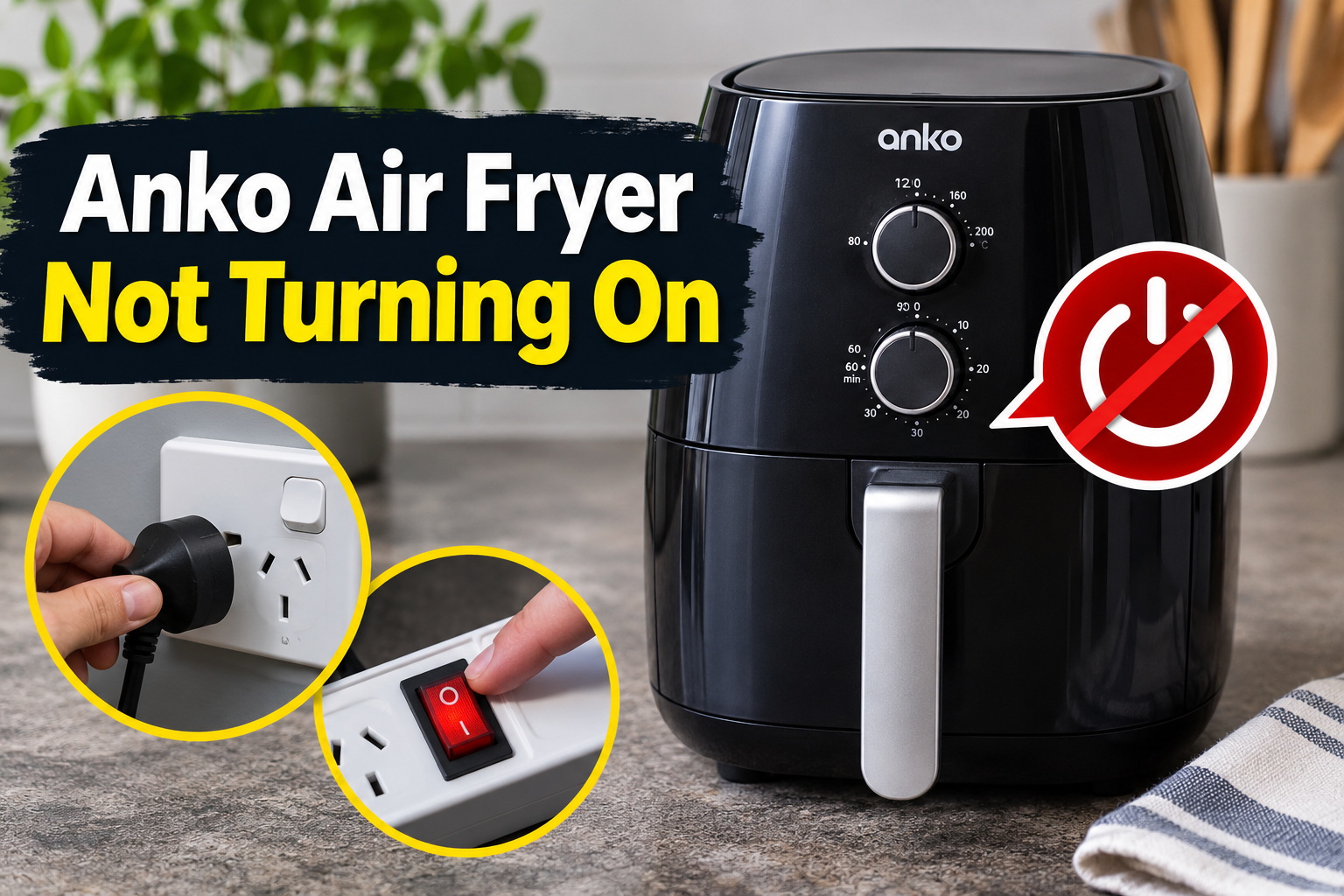
Understanding Why Your Anko Air Fryer Won’t Turn On
Your Anko air fryer uses a heating element and a motorized fan to circulate hot air around your food. Depending on the model, mechanical controls or an electronic control board regulate the cooking temperature, operating time, and other functions. These components depend on a steady supply of electricity to work properly.
The symptoms you experience can reveal a great deal about where the problem lies. For instance, a completely blank display may suggest a power supply issue, while an illuminated control panel that refuses to start a cooking cycle could indicate a problem with the settings or a safety mechanism.
Some Anko air fryers automatically interrupt cooking when you remove the basket or open the oven door. Others remain in standby mode until you activate the appropriate controls. Both features can make a perfectly functional appliance appear faulty under certain circumstances.
However, if your air fryer stopped working after producing a burning smell, unusual electrical noises, or excessive heat, the problem could be more serious. Stop using the appliance immediately if you notice these warning signs, and disconnect it from the power supply if it’s safe to do so.
Anko Air Fryer Not Turning On: Common Causes
Several issues can prevent your Anko air fryer from starting, ranging from everyday operating mistakes to defective electrical components. Paying attention to what happened before the appliance stopped working can help you narrow down the possibilities.
1. Power Supply Problems
Before suspecting a fault inside your air fryer, consider whether electricity is reaching the appliance. A loose plug, switched off wall outlet, faulty socket, or interrupted household power supply can prevent it from receiving the electricity it needs.
Air fryers consume a considerable amount of electricity while heating. If you’re running several powerful kitchen appliances on the same electrical circuit, an overload could trip the circuit breaker and interrupt the power supply. A safety switch may also trip if it detects an electrical fault.
One useful clue is whether other appliances connected to the affected outlet or circuit have stopped working. If they have, the problem may lie with your home’s electrical supply rather than the air fryer itself. Repeated tripping, however, requires professional investigation.
2. Incorrectly Positioned Basket or Door
Depending on your Anko air fryer model, a safety mechanism may prevent the appliance from operating when the basket or cooking compartment door isn’t properly closed. This feature helps prevent the appliance from continuing to heat while the cooking compartment is open.
An overloaded basket, trapped food particles, or an incorrectly fitted cooking tray can interfere with proper closure. Even if the basket appears to be in place, a small obstruction could prevent it from reaching its normal operating position. If your air fryer stopped working immediately after you removed the basket to turn your food, this is a possibility worth considering.
3. Incorrect Settings or Standby Mode
Plugging your air fryer into a power outlet doesn’t necessarily mean it will begin heating. Models with mechanical controls generally require you to set the cooking time and temperature using separate dials. Leaving the timer at zero can prevent the cooking cycle from starting.
Digital models operate differently. For example, the Anko model with product keycode 43462568 requires you to touch and hold the power button to activate the full control panel. You can then choose your cooking settings and initiate the cycle.
You may also encounter this issue after completing a previous cooking cycle. The appliance may have returned to standby mode as part of its normal operation. If the power symbol remains illuminated but the fan and heating element are inactive, check the operating instructions before assuming something has failed.
4. Overheating and Activated Thermal Protection
Air fryers generate considerable heat during operation, and adequate ventilation helps keep their internal components within safe operating temperatures. Placing your appliance against a wall, blocking its ventilation openings, or operating it in a confined space can interfere with heat dissipation.
Certain Anko air fryers feature thermal protection mechanisms that interrupt operation when the internal temperature becomes excessively high. Depending on the design, the protection mechanism may require a manual reset or professional servicing before the appliance can operate again. A sudden shutdown during cooking, particularly when the surrounding area is unusually hot, could indicate that thermal protection has activated.
5. Damaged Electrical or Internal Components
Frequent movement, improper storage, and exposure to hot surfaces can damage your air fryer’s power cord. Over time, the internal wires may deteriorate, interrupting the electrical connection even when the outer covering appears relatively intact.
Internal components can also fail. Possible faults include a damaged power switch, defective control board, failed timer, faulty basket detection switch, or blown thermal fuse where one is fitted. Moisture entering the appliance and excessive heat can contribute to electrical component damage.
Unfortunately, several of these faults produce similar symptoms. A completely unresponsive air fryer doesn’t automatically mean its control board has failed. Identifying the exact defective component requires proper electrical testing by a qualified technician.
Anko Air Fryer Not Turning On: DIY Fixes
You can resolve some startup problems without opening your air fryer or replacing any components. Start with the following checks and proceed according to the symptoms your appliance displays.
1. Check the Power Supply and Wall Outlet
Switch off the wall outlet, unplug your air fryer, and examine the plug for signs of damage. If everything looks normal, reconnect it firmly and switch the outlet back on. A partially inserted plug may prevent the appliance from receiving a reliable supply of electricity.
If the fryer remains unresponsive, follow these steps, provided there are no signs of electrical damage:
-
Unplug the air fryer from the wall outlet.
-
Connect a working appliance, such as a small lamp, to the same outlet.
-
Switch on the outlet and check whether the other appliance works.
-
Try connecting your air fryer directly to another suitable wall outlet if there are no signs of a fault with the fryer itself.
If other appliances aren’t receiving power either, check whether a circuit breaker or safety switch has tripped. However, if your air fryer causes the electrical protection to trip, disconnect it and arrange a professional inspection. Avoid repeatedly resetting the breaker or safety switch, as this could expose you to an unresolved electrical hazard.
2. Inspect the Power Cord and Plug
With your air fryer disconnected from the electricity supply, examine the entire length of its power cord. Pay particular attention to the areas near the plug and where the cord enters the appliance. Look for cracks, exposed wires, discoloration, melted plastic, or other visible signs of deterioration.
If you discover any damage, don’t attempt to repair the cord with electrical tape or operate the appliance by holding the cable in a particular position. A qualified electrical technician should replace a damaged cord using a suitable replacement. Even a small defect can create a risk of electric shock or fire.
3. Remove and Reinsert the Cooking Basket
Unplug your air fryer and allow it to cool completely before removing the cooking basket. Examine the edges of the basket, its compartment, and any accessible guides for crumbs, hardened grease, or food particles that could interfere with its movement.
Clean the affected areas using a soft, slightly damp cloth. If your model has a separate inner basket and outer pan, make sure both components fit together correctly. Remove excess ingredients if the basket is filled beyond its maximum capacity, and ensure everything is dry before reassembling the appliance.
Gently slide the basket back into position until it sits flush with the air fryer’s housing. If you own an Anko air fryer oven, check that the trays are positioned correctly and the doors close fully. Reconnect the appliance and attempt to start a cooking cycle. If it still won’t operate, a defective safety switch may require professional attention.
4. Check the Cooking Settings and Restart the Appliance
Consult your Anko air fryer’s instruction manual to confirm the correct startup procedure. On models with rotary dials, select the appropriate cooking temperature and turn the timer to a suitable duration. If you have a digital model, activate the control panel, select a cooking program or enter the settings manually, and press the appropriate start button.
If the digital controls remain unresponsive despite receiving power, switch off the appliance and disconnect it for a few minutes. Reconnect it with clean, dry hands and attempt to start another cooking cycle. This simple power cycle may clear a temporary electronic control issue, although it won’t repair defective hardware. Avoid using undocumented button combinations or reset procedures intended for other air fryer models.
5. Allow the Air Fryer to Cool Down
If your Anko air fryer switched off unexpectedly during cooking, disconnect it from the power supply and allow it to cool. Carefully remove the cooking basket using oven gloves if it’s safe to do so, and place it on a surface that can withstand heat.
While the appliance cools, examine its surroundings. Remove anything obstructing the ventilation openings and reposition the air fryer to provide the clearance specified in its instruction manual. For example, the manual for Anko product keycode 43462568 specifies a minimum clearance of 20 centimeters (approximately 8 inches) at the sides and rear.
Some Anko air fryers have a dedicated thermal reset button. The instruction manual for product keycode 43624515 specifies a cooling period of at least 20 minutes before operating the reset button underneath the disconnected appliance. Only follow this procedure if your specific model’s manual confirms that it has a user accessible reset button. If overheating occurs again, stop using the fryer and have it inspected.
6. Contact an Appliance Repair Technician
If your air fryer remains completely unresponsive after these checks, an internal electrical fault could be responsible. A qualified appliance repair technician can examine the power supply connections, thermal protection components, control board, and safety switches to identify the source of the problem.
Avoid removing the appliance’s outer housing, bypassing safety switches, or attempting to replace internal fuses yourself. These components serve important safety functions, and incorrect repairs could create additional hazards.
Before paying for repairs, check whether your Anko air fryer is still covered by its warranty or applicable consumer guarantees. Contact Kmart, Target, or the retailer that supplied the appliance. Depending on your circumstances, you may qualify for a repair, replacement, or refund.
If your warranty has expired, compare the repair estimate with the cost of a replacement air fryer. This is particularly worthwhile if your appliance is several years old or requires expensive internal components.
Wrapping Up
An Anko air fryer that won’t turn on doesn’t necessarily need replacing. The circumstances surrounding the problem can provide valuable clues and help you determine whether you’re dealing with a simple operating issue or something that requires technical attention.
Regular cleaning, careful handling of the power cord, and adequate ventilation can help prevent several problems from developing. However, never overlook recurring shutdowns or signs of electrical damage. If the basic troubleshooting methods don’t restore normal operation, getting the appliance professionally assessed is the safest way to determine whether it’s worth repairing.