The Kmart air fryer E1 error can interrupt your cooking without warning. You might notice the code appearing when you switch on the appliance or halfway through preparing a meal. Sometimes, the display remains illuminated, but the air fryer refuses to heat or respond to cooking commands.
This error usually indicates a problem with the temperature sensor circuit. While a simple restart may help in certain cases, persistent E1 errors often require professional attention. Understanding the causes can help you identify the problem safely.
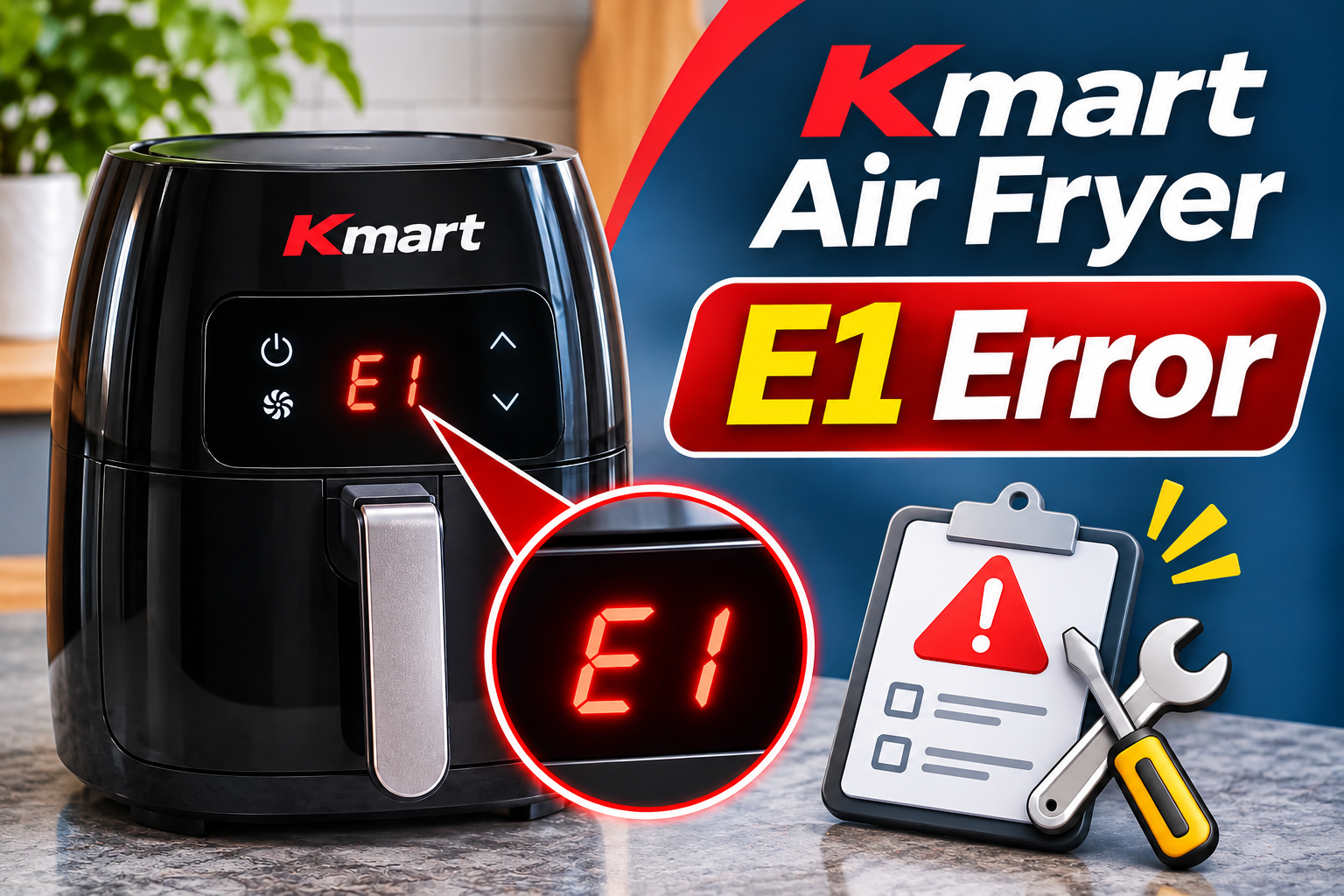
What Does the E1 Error Mean on a Kmart Air Fryer?
The E1 error on many Kmart Anko air fryers indicates a broken or open temperature sensor circuit. For example, the Anko KAF228 Vertical Twin Air Fryer manual identifies E1 as a broken thermal sensor circuit. Similarly, the AF7026 manual describes E1 as a sensor break error.
Your air fryer uses a temperature sensor to monitor heat inside the cooking chamber. The sensor sends electrical information to the control board, which uses these readings to regulate the heating element and maintain the selected cooking temperature.
When the sensor circuit becomes disconnected or develops an electrical fault, the control board may stop receiving reliable temperature readings. Consequently, the appliance may display E1 and interrupt cooking to prevent operation without proper temperature monitoring.
An open circuit means the electrical path is incomplete. This may happen because the sensor itself has failed, a wire has broken, or an electrical connector has become loose. On several Kmart Anko models, E2 indicates a short circuit, which is a different electrical condition.
You may notice the following symptoms:
- E1 appears immediately after connecting the air fryer to power.
- The appliance stops heating before the cooking timer finishes.
- The display shows E1 instead of the selected temperature.
- The buttons respond inconsistently or cooking won’t begin.
- The error returns after unplugging and restarting the appliance.
However, Kmart sells different air fryer models, and their error descriptions may vary. Check your appliance’s model number before assuming that E1 identifies a particular damaged component.
Kmart Air Fryer E1 Error: Common Causes
Several faults can interrupt the temperature monitoring system and cause your Kmart air fryer to display E1. Although the error points towards the sensor circuit on many Anko models, identifying the exact failed component requires further checks.
1. A Faulty Temperature Sensor
A defective temperature sensor is one of the main possible causes of the Kmart air fryer E1 error. This small electrical component monitors the temperature inside the cooking chamber and helps the appliance regulate heat.
Many air fryers use a thermistor, which changes its electrical resistance as the temperature rises or falls. The control board interprets these resistance changes to determine the approximate cooking temperature.
If the thermistor develops an internal break, the electrical circuit may become open. The control board can then detect an abnormal reading and display E1 instead of continuing the cooking program.
Temperature sensors experience repeated heating and cooling during normal operation. Over time, an internal component may fail because of wear, electrical damage, or a manufacturing defect.
You might notice that E1 appears immediately after switching on the appliance, even when it hasn’t been used for several hours. In other cases, the error may appear after the cooking chamber begins heating.
However, a faulty sensor isn’t the only explanation. Damaged wiring can interrupt the same electrical circuit, so replacing the sensor without proper testing may not resolve the problem.
2. Loose or Damaged Sensor Wiring
The temperature sensor connects to the electronic control board through electrical wires and connectors. These connections allow the sensor to send information about the cooking chamber’s temperature.
If a wire breaks or a connector becomes loose, the control board may stop receiving the expected signal. This can produce the open circuit condition associated with E1 on several Anko air fryers.
Heat exposure, vibration, accidental impacts, and manufacturing defects can contribute to wiring problems.
For example, a damaged conductor may make intermittent contact, causing the air fryer to operate normally during one cooking session but display E1 during another.
An error that appears after the appliance has warmed up may also suggest an electrical connection affected by temperature changes. However, the same pattern can occur with a defective sensor.
Since the wiring is located inside the appliance, checking it requires professional electrical testing. Don’t remove the housing or attempt to reconnect internal wires yourself. The appliance contains electrical components that can cause serious injury if handled incorrectly.
3. Moisture Around the Electrical Components
Water can interfere with your air fryer’s electronic components, particularly when it reaches electrical connectors or the control board.
Although removable baskets and cooking trays can usually be washed, the main appliance housing contains electrical circuits that must remain dry.
Moisture may enter through accidental spills, improper cleaning, or excessive water around the ventilation openings. If water reaches the sensor connections, it can interfere with electrical signals and contribute to corrosion.
You may suspect moisture damage if E1 appears shortly after water has spilled onto the appliance or entered its housing.
However, washing the removable basket correctly shouldn’t damage the temperature sensor. If you believe moisture has reached the internal electrical components, unplug the appliance and avoid using it until a qualified technician has inspected it.
4. A Malfunctioning Electronic Control Board
The electronic control board manages your Kmart air fryer’s heating system, cooking timer, temperature settings, and other functions.
It receives readings from the temperature sensor and uses them to control the heating element. If the circuit responsible for interpreting these readings becomes damaged, the board may report a sensor error even when the sensor itself is working.
Electrical component failure, moisture exposure, and damaged circuit connections are possible causes.
You might notice other unusual symptoms alongside E1, including a flickering display, unresponsive buttons, or unexpected shutdowns.
However, these symptoms don’t automatically confirm a defective control board. A qualified technician should check the sensor and its connections before considering control board replacement.
5. Heat Damage to Internal Sensor Connections
Air fryers operate at high temperatures, and their internal components must withstand repeated exposure to heat.
If the appliance experiences abnormal overheating, excessive heat may damage wiring insulation, connectors, or other electrical components associated with the temperature monitoring system.
Restricted airflow, excessive grease buildup, and internal electrical faults can contribute to overheating. However, these conditions don’t necessarily cause E1 directly.
You may notice a strong burning smell, melted plastic, unusual heat around the housing, or smoke before the appliance stops working.
These symptoms require immediate attention. Disconnect the air fryer if it’s safe to do so and avoid restarting it.
Cooling may reduce the temperature of the appliance, but it won’t repair damaged wiring or electrical components. A technician should inspect the unit before it is used again.
Kmart Air Fryer E1 Error: DIY Fixes
Since E1 generally concerns an internal temperature sensor circuit, home troubleshooting should focus on safe checks that don’t require opening the appliance. Some methods may help identify a temporary problem, but a confirmed sensor circuit failure requires professional repair.
1. Switch Off the Air Fryer and Allow It to Cool
If E1 appears during cooking, stop the appliance immediately. Press the power or cancel button if it responds, then unplug the power cord from the electrical outlet.
Allow the air fryer to cool completely before touching the cooking basket or inspecting its exterior.
The Anko KAF228 manual advises allowing approximately 30 minutes for the appliance to cool after use. Other models may require different cooling periods depending on their design and how hot they became.
While the appliance cools, note when the error first appeared.
If E1 showed up immediately after switching on the appliance, the control board may be detecting a persistent sensor circuit fault.
If the error appeared after several minutes of cooking, a fault affected by temperature changes may be involved. However, this observation alone cannot identify the damaged component.
Once the appliance has cooled, inspect its exterior for visible signs of damage.
Look for melted plastic, discoloration, cracks, or damage around the power cord. If you notice anything unusual, don’t reconnect the appliance.
Cooling is a useful safety precaution, but it won’t repair a physically broken temperature sensor or damaged electrical connection.
2. Perform a Basic Power Reset
A simple power restart may help if the air fryer’s electronic controls have temporarily stopped responding.
However, a reset isn’t a guaranteed repair for E1. If the temperature sensor circuit is physically damaged, disconnecting the appliance won’t restore the broken electrical connection.
For the Anko SAT15003 air fryer oven, Kmart’s manual recommends switching off the appliance, unplugging it, opening the door, and waiting approximately 8 to 10 minutes before restarting.
If you own this model, follow these steps.
- Turn off the air fryer oven.
- Disconnect the power cord from the wall outlet.
- Carefully open the oven door, keeping clear of hot steam.
- Leave the appliance unplugged for 8 to 10 minutes.
- Allow additional cooling time if the oven is still hot.
- Reconnect the appliance and check whether E1 remains on the display.
For other Kmart air fryer models, follow the restart procedure in the relevant user manual.
If the error disappears, the control system may have recovered from a temporary interruption. However, that doesn’t prove the sensor circuit is free from defects.
If E1 immediately returns, stop further troubleshooting and arrange professional assistance. The SAT15003 manual recommends returning the appliance to Kmart if the error continues after restarting.
3. Check for Moisture and Clean Accessible Areas
If E1 appeared after cleaning or an accidental spill, check whether moisture may have reached the appliance.
First, unplug the air fryer and allow it to cool completely.
Remove the cooking basket, tray, or other detachable accessories according to your model’s instructions. Examine the accessible cooking chamber and surrounding surfaces for visible moisture or food residue.
For removable accessories, use warm water, mild dish soap, and a soft sponge where permitted by the manufacturer.
Wipe accessible surfaces of the main appliance with a slightly damp cloth. Avoid applying excessive water or allowing cleaning liquid to enter electrical openings.
Pay attention to these precautions:
- Never immerse the main appliance in water.
- Don’t spray cleaning solutions into the ventilation openings.
- Avoid pouring water near the electronic control panel.
- Don’t insert cleaning tools behind protective covers.
- Make sure removable accessories are completely dry before reinstalling them.
If water may have entered the electrical housing, don’t attempt to restart the appliance simply because the outside feels dry.
Moisture can remain trapped inside, and corrosion or electrical damage may already have occurred.
Professional inspection is the safer option when internal water exposure is suspected. If no moisture damage is present, you can continue with the remaining external checks.
4. Check the Ventilation Openings and Remove Grease Buildup
Proper ventilation helps your Kmart air fryer maintain normal operating temperatures.
During cooking, the appliance circulates heated air while its ventilation openings allow air to move through the system. If these openings become blocked, excessive heat can build up around internal components.
Although blocked vents aren’t the documented direct meaning of E1, checking them can help identify conditions that may contribute to overheating.
Begin with the appliance unplugged and completely cool.
Inspect the visible air intake and exhaust openings for dust, grease, food particles, or nearby objects that may restrict airflow.
Use a soft, dry brush to remove loose debris from accessible exterior surfaces. Don’t push cleaning tools through the openings or attempt to reach internal electrical components.
Next, examine the removable basket and cooking accessories for excessive grease buildup.
Clean these parts according to your user manual and allow them to dry completely before reinstalling them.
Also, make sure the air fryer has adequate space around it. For example, the Anko KAF228 manual specifies at least 30 cm of clearance around the appliance, including above it. The AF7026 manual specifies at least 20 cm from the sides and back.
These requirements demonstrate why it’s necessary to check the instructions for your particular model.
However, cleaning the vents won’t repair a disconnected temperature sensor. If E1 continues appearing, avoid operating the appliance.
5. Inspect the Power Connection and Check the Display
If the error persists, inspect the external power connection for signs of damage.
Start by unplugging the air fryer. Check the power cord and plug for cracked insulation, discoloration, bent pins, or melted areas.
If any part appears damaged, don’t reconnect the appliance.
Make sure the electrical outlet matches the voltage and frequency requirements printed on the appliance’s rating label.
For example, the Anko AF7026 air fryer is designed for a 220 to 240V, 50 to 60Hz electrical supply. Other models may have different specifications.
Avoid overloaded power strips, loose electrical adapters, and unsuitable extension cords.
If the appliance shows no signs of damage and a restart is permitted by its manual, check whether the display returns to normal.
The following observations may help identify the nature of the problem.
- E1 appears immediately after switching on. A persistent temperature sensor circuit fault may be present.
- E1 appears after cooking begins. An electrical problem affected by rising temperature may be involved.
- The display flickers or switches off. A separate power supply or control board problem may require attention.
- The error disappears after restarting. The interruption may have been temporary, although a returning error still requires investigation.
These observations are useful when explaining the problem to a technician.
However, don’t keep restarting the appliance in an attempt to bypass E1. A damaged temperature monitoring circuit can prevent the air fryer from controlling heat reliably.
6. Contact Kmart Customer Service or a Qualified Technician
If the E1 error continues after completing the safe checks, professional assistance is the appropriate next step.
Kmart’s Anko KAF228 manual identifies E1 as a broken thermal sensor circuit and recommends contacting customer service. The AF7026 manual also states that a qualified electrician should repair a sensor break fault.
A technician can inspect the temperature sensor, its wiring, electrical connectors, and the control board to identify the actual source of the problem.
Depending on the findings, the appliance may require a replacement sensor, damaged wiring repair, or another electrical component.
However, repairs aren’t always economically practical. The cost of parts and labour may exceed the price of replacing some smaller air fryers.
For Kmart customers in Australia, the following contact information is listed in the manufacturer’s documentation.
- Kmart customer service: 1800 124 125
- Anko air fryer support listed in certain manuals: 1300 941 901
Before contacting support, locate the model number on the appliance’s rating label. Also, keep your purchase receipt and describe when the error first appeared.
If the air fryer is covered by a warranty, contact Kmart before arranging independent repairs. Australian consumers may also have rights under Australian Consumer Law that apply beyond the manufacturer’s stated warranty period.
Most importantly, don’t attempt to bypass the temperature sensor or repair internal electrical connections yourself. A properly functioning temperature monitoring system is essential for safe cooking.
Wrap-Up
The Kmart air fryer E1 error generally indicates a broken temperature sensor circuit. A defective sensor, loose wiring, moisture damage, or control board problem may prevent the appliance from monitoring cooking temperatures correctly.
Start by switching off the air fryer, allowing it to cool, and following the restart instructions for your model. You can also inspect accessible surfaces for moisture, grease buildup, or visible damage. If E1 continues appearing, contact Kmart or a qualified technician to identify the fault and determine whether repair or replacement is the better option.