The Russell Hobbs air fryer E2 error can interrupt your cooking without much warning. Your appliance might suddenly stop heating, produce a warning beep, or refuse to start another cooking cycle. Seeing the same code after restarting it can make the problem even more frustrating.
Fortunately, understanding what E2 indicates can help you avoid unnecessary repairs. Although some cases require a technician, a few safe checks can help you determine whether the problem is temporary or connected to a faulty internal component.
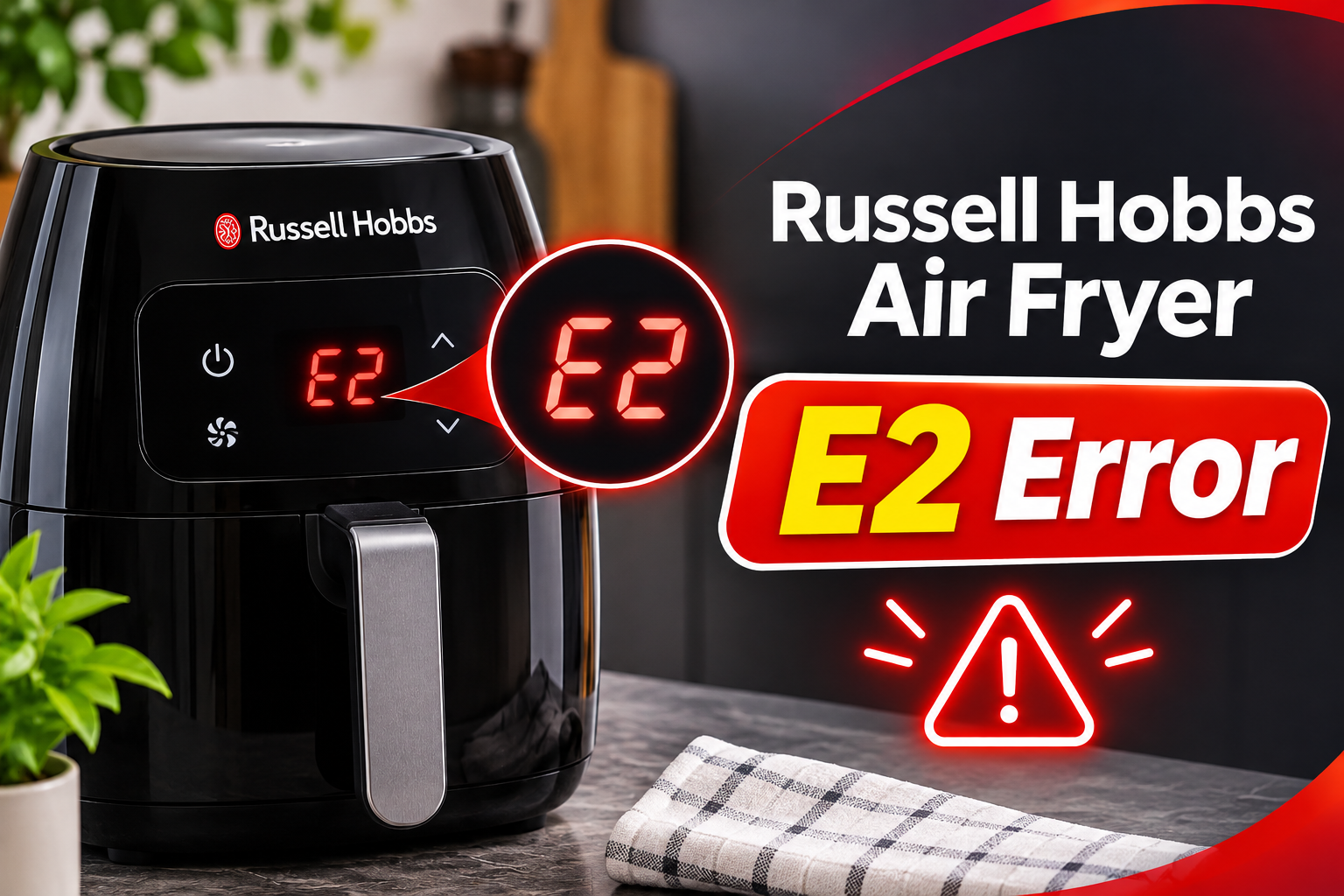
What Does the E2 Error Mean on a Russell Hobbs Air Fryer?
The E2 error on a Russell Hobbs air fryer generally points to a temperature sensing problem, although the exact definition depends on the model. It may indicate a short circuit or another malfunction involving the temperature sensor and its electrical connections.
Your air fryer uses a temperature sensor to monitor heat inside the cooking chamber. This component sends information to the electronic control board, allowing the appliance to adjust its heating element and maintain the selected cooking temperature.
Many air fryers use a negative temperature coefficient (NTC) thermistor for this purpose. Its electrical resistance changes as the temperature changes. If the sensor develops an electrical fault, the control board may receive an incorrect reading or one that falls outside its expected range.
When this happens, the appliance may display E2 and interrupt its normal operation. Depending on your model, you might notice several symptoms.
- The E2 code appears immediately after switching on the appliance.
- Cooking stops unexpectedly, sometimes with an audible beep.
- The fan or heating element refuses to operate.
- The display remains illuminated, but the controls won’t start a cooking program.
- The error disappears after restarting but returns during another cooking cycle.
Russell Hobbs doesn’t provide one universal E2 definition covering every air fryer model. For example, the official troubleshooting instructions for the RHAF09DSS 9L Digital Dual Air Fryer describe display error codes as possible component failures and recommend restarting the appliance before contacting customer service.
Therefore, E2 should be treated as a possible internal fault rather than proof that a particular component needs replacing. The correct diagnosis depends on the model and the circumstances surrounding the error.
Russell Hobbs Air Fryer E2 Error: Likely Causes
Several faults can interfere with the temperature monitoring system and trigger an E2 indication on models that associate this code with sensor problems. Understanding these possibilities helps you recognize useful warning signs before attempting any troubleshooting.
1. A Faulty Temperature Sensor
A defective temperature sensor is one of the main possibilities when a Russell Hobbs air fryer displays E2. The sensor measures changes in temperature and allows the control board to regulate the heating process.
During normal operation, the sensor’s electrical resistance changes in a predictable way as the appliance heats up. If the thermistor becomes damaged or develops an internal short circuit, its resistance may fall outside the range expected by the control board.
As a result, the appliance may stop cooking because it cannot reliably determine the temperature inside the chamber. On some models, the error appears immediately after powering on, while others may develop problems after operating for several minutes.
Repeated heating and cooling can place stress on components over time. However, an early sensor failure can also result from a manufacturing defect or another electrical problem.
A useful clue is an E2 code that returns consistently, even after the appliance has cooled completely and its controls have been restarted. If the fan and heating element remain inactive, that further supports the possibility of an internal monitoring fault.
Still, these symptoms cannot confirm that the sensor itself is defective. Damaged wiring or a malfunctioning control board can produce similar behavior.
2. Damaged or Loose Temperature Sensor Wiring
The temperature sensor communicates with the electronic control board through electrical wires and connectors. If these connections become damaged, the control board may receive incorrect temperature information.
For example, damaged insulation can allow two conductors to touch, creating a short circuit. A loose connection may interrupt the electrical signal, while corrosion can interfere with reliable communication between components.
Heat exposure, vibration during operation, manufacturing defects, and accidental physical damage are possible contributors. The risk may increase if the appliance has been dropped or previously repaired incorrectly.
One sign of a possible wiring problem is an error that appears intermittently. Your air fryer might operate normally during one cooking session but display E2 during another.
However, intermittent faults aren’t limited to damaged wires. A failing thermistor or electronic control board can behave similarly, especially as its temperature changes.
Because the wiring is located inside the appliance, checking it requires access to electrical components. Don’t remove the housing or attempt to reconnect sensor wires yourself. A qualified technician can safely inspect the connections and identify the actual fault.
3. Moisture Around the Electronic Components
Water and electronic components don’t mix well, particularly when moisture reaches electrical connections that aren’t designed to get wet.
Although the cooking baskets on many Russell Hobbs air fryers are washable, the main appliance contains electrical circuits, control boards, and temperature monitoring components that must remain dry.
Moisture may enter the housing through accidental spills, improper cleaning, or exposure to excessive water around the control panel and ventilation openings. If it reaches a connector or electronic circuit, it can interfere with electrical signals and potentially cause corrosion or short circuits.
The timing of the error may provide a clue. For instance, if E2 appeared shortly after water was spilled over the appliance or its housing was cleaned with excessive moisture, possible water damage deserves attention.
However, moisture isn’t automatically responsible simply because you recently washed the cooking basket. Properly washing and drying removable parts shouldn’t interfere with the sealed electrical sections of an undamaged appliance.
If water may have entered the main housing, disconnect the appliance and avoid using it until it has been assessed. Allowing the exterior to dry doesn’t guarantee that moisture or electrical damage inside the unit has been resolved.
4. A Malfunctioning Electronic Control Board
The electronic control board manages several important functions in your Russell Hobbs air fryer, including temperature monitoring, cooking time, and heating control.
It receives temperature information from the sensor and uses that information to regulate the heating element. If the board develops a fault in its sensor reading circuit, it may interpret the incoming signal incorrectly.
For example, a damaged circuit or electronic component could make a working sensor appear faulty. This may cause the air fryer to display E2 even when the temperature sensor itself is operating correctly.
Control board problems can develop because of electrical damage, moisture exposure, overheating of internal components, or component failure. However, identifying the exact reason requires testing.
You may notice additional symptoms alongside E2, such as an unresponsive touchscreen, unstable display, or cooking programs that stop unexpectedly. These signs can indicate a broader electronic problem, although they don’t establish which component is defective.
A control board fault becomes more plausible after a technician has confirmed that the temperature sensor and its connections are functioning correctly. Replacing the board without those checks can lead to unnecessary expense.
Russell Hobbs Air Fryer E2 Error: DIY Fixes
The safest troubleshooting approach begins with a complete power restart and checks that don’t require opening the appliance. These methods may resolve a temporary interruption or help identify an operating problem, but they cannot repair a physically damaged temperature sensor.
1. Switch Off the Air Fryer and Allow It to Cool
If E2 appears during cooking, stop using the appliance immediately. Press the power or cancel button if it responds, then disconnect the power plug from the wall outlet.
Allow the air fryer to cool completely before touching the cooking basket or inspecting its exterior. A cooling period of around 30 minutes may be appropriate after cooking, although the actual time depends on how hot the appliance became.
While it cools, pay attention to any warning signs you noticed before the error appeared. Unusual heat, a strong electrical smell, unexpected smoke, or repeated shutdowns may indicate a problem requiring professional attention.
Once the appliance has cooled, examine the accessible outside surfaces for visible damage. Don’t remove any protective covers or touch internal electrical components.
If the error appeared after an unusually long cooking session, cooling will help you establish whether the behavior was temperature related. However, a shorted temperature sensor won’t normally repair itself simply because the appliance cools down.
If E2 disappears but returns as soon as heating begins, stop further testing and arrange professional diagnosis.
2. Perform a Simple Power Reset
A power restart is one of the few troubleshooting methods specifically recommended in Russell Hobbs air fryer documentation when an error appears.
For example, the RHAF09DSS instruction manual advises disconnecting the appliance for 10 seconds and reconnecting it when the display shows an error code. If the problem continues, it recommends contacting Russell Hobbs consumer services.
Follow these steps to perform a basic restart.
- Turn off the air fryer using its power control if possible.
- Unplug the appliance from the electrical outlet.
- Leave it disconnected for at least 10 seconds.
- Make sure the appliance has cooled and shows no signs of damage.
- Reconnect the plug to a suitable wall outlet.
- Check whether the display returns to its normal standby screen.
If the E2 code disappears, the controls may have recovered from a temporary electronic problem.
However, a restart isn’t a guaranteed repair. It cannot restore broken sensor wiring, eliminate a short circuit, or replace a damaged electronic component.
If E2 appears immediately after reconnecting the appliance, avoid repeatedly unplugging and restarting it. Persistent errors should be treated as signs that further diagnosis is necessary.
3. Check the Air Vents and Improve Ventilation
Your air fryer needs sufficient airflow to operate properly. During cooking, the appliance circulates heated air around the food while its ventilation system helps manage the heat produced by internal components.
Blocked ventilation openings can contribute to excessive temperatures and poor cooking performance. Although restricted airflow isn’t a confirmed direct cause of the E2 code on every Russell Hobbs model, checking ventilation is a useful precaution if the error appeared during a cooking session.
Start by switching off and unplugging the appliance. Allow it to cool completely before examining the visible air intake and exhaust openings.
Look for anything that could interfere with airflow, including nearby objects, cloths, food debris, or grease around accessible vents.
Make sure the air fryer sits on a stable, level, heat resistant countertop with adequate space around it. Follow the clearance instructions for your model. For example, Russell Hobbs specifies different clearances across its product range, so one distance shouldn’t be applied to every air fryer.
If dust or loose debris is visible around an accessible external vent, remove it gently with a dry, soft brush. Avoid pushing objects through the openings or spraying cleaning products inside them.
Improved airflow can help prevent excessive heat during normal use. However, if E2 is caused by an electrical sensor fault, clearing the vents won’t correct that underlying problem.
4. Clean the Basket and Accessible Cooking Chamber
Grease and food residue can accumulate inside an air fryer after repeated use. Although this buildup doesn’t directly establish the cause of E2, cleaning can help prevent unnecessary heat and cooking problems.
Start by unplugging the appliance and allowing it to cool. Remove the basket and any detachable cooking plate or tray.
Wash the removable parts using warm water, mild dish soap, and a soft sponge. Follow your specific model’s cleaning instructions, particularly when determining whether individual components are dishwasher safe.
For accessible areas inside the cooking chamber, use a soft cloth that is only slightly damp. Avoid saturating the surfaces, applying excessive pressure, or allowing liquid to enter the ventilation openings.
Pay attention to visible grease deposits and food particles around the basket opening. Don’t attempt to dismantle the heating assembly or reach behind protective covers.
After cleaning, dry the removable parts thoroughly before putting everything back together. Moisture left around electrical areas can introduce another problem.
You should also check that the cooking basket slides smoothly into its normal position. On models with a basket detection mechanism, incorrect insertion can prevent cooking from starting.
However, a misplaced basket typically causes an operating interruption rather than a confirmed temperature sensor short circuit. If E2 remains displayed after cleaning and reassembly, further washing or adjusting the basket is unlikely to resolve an internal electrical fault.
5. Check the Power Connection and Observe the Display
Electrical supply problems can sometimes cause an appliance to behave unexpectedly. Although E2 commonly points toward a temperature monitoring fault, checking the external power connection can help rule out a separate operating problem.
With the appliance unplugged, examine the power cord and plug for visible damage. Look for cracked insulation, bent or damaged plug pins, discoloration, or signs of melting.
If you notice any damage, don’t reconnect the appliance. Damaged electrical connections require qualified attention.
If the cord and plug appear normal, confirm that the outlet is appropriate for the appliance’s voltage and power requirements. These specifications are printed on the rating label.
Avoid using an overloaded extension lead or power strip. A direct connection to a suitable wall outlet is preferable.
Once you’ve completed the other safe checks, observe the display during a single restart.
- E2 appears immediately after plugging in. This may indicate a persistent electronic or sensor circuit fault.
- E2 appears only after cooking begins. A problem affected by rising temperature may be present.
- The display flickers or loses power. An electrical supply or control system problem may require investigation.
- The controls respond normally after restarting. The interruption may have been temporary, although a returning error still needs attention.
These observations can help a technician narrow down the problem. However, they shouldn’t be used as proof that a particular component needs replacing.
If the E2 error returns, stop using the appliance until the cause has been identified.
6. Contact a Qualified Russell Hobbs Repair Technician
If the E2 error persists after restarting and completing the safe external checks, professional diagnosis is the appropriate next step.
A qualified technician can examine the temperature sensor, electrical connections, and control system to determine which component is responsible. Depending on the model and the confirmed fault, repairs may involve replacing a sensor assembly, damaged wiring, or an electronic control board.
The technician can also determine whether repairing the appliance is practical compared with replacing it.
Before contacting customer service, locate the model number on the appliance’s rating label. It may be printed underneath or on the rear of the housing.
Explain when the E2 code first appeared, whether it happens immediately or during cooking, and what happened after a basic power restart. A photograph of the display can also help.
If you’re in the United Kingdom, Russell Hobbs lists 0345 658 9700 as its customer support number for small domestic appliances. Customers elsewhere should use the contact information supplied with their appliance or the relevant regional Russell Hobbs website.
For products still covered by a warranty, contact the retailer or manufacturer before arranging independent repairs. Opening the housing or making unauthorized modifications may affect warranty coverage.
Most importantly, avoid bypassing temperature protection systems or attempting to operate the appliance with a suspected sensor fault. Reliable temperature monitoring is necessary for safe cooking.
Wrap-Up
The Russell Hobbs air fryer E2 error often indicates a problem involving temperature monitoring, although its exact meaning can vary between models. A damaged sensor, faulty electrical connection, or control board problem may require professional attention, while a temporary electronic interruption might clear after a safe restart.
Begin by disconnecting the appliance, allowing it to cool, and checking the accessible areas for obvious problems. If E2 continues to appear, avoid further cooking attempts and arrange a proper inspection. Identifying the fault early can prevent unnecessary repairs and help restore safe, reliable operation.