Although the error may indicate an internal problem, its exact meaning depends on your air fryer model. Understanding the possible causes and knowing which troubleshooting steps are safe can help you identify the problem without risking further damage.
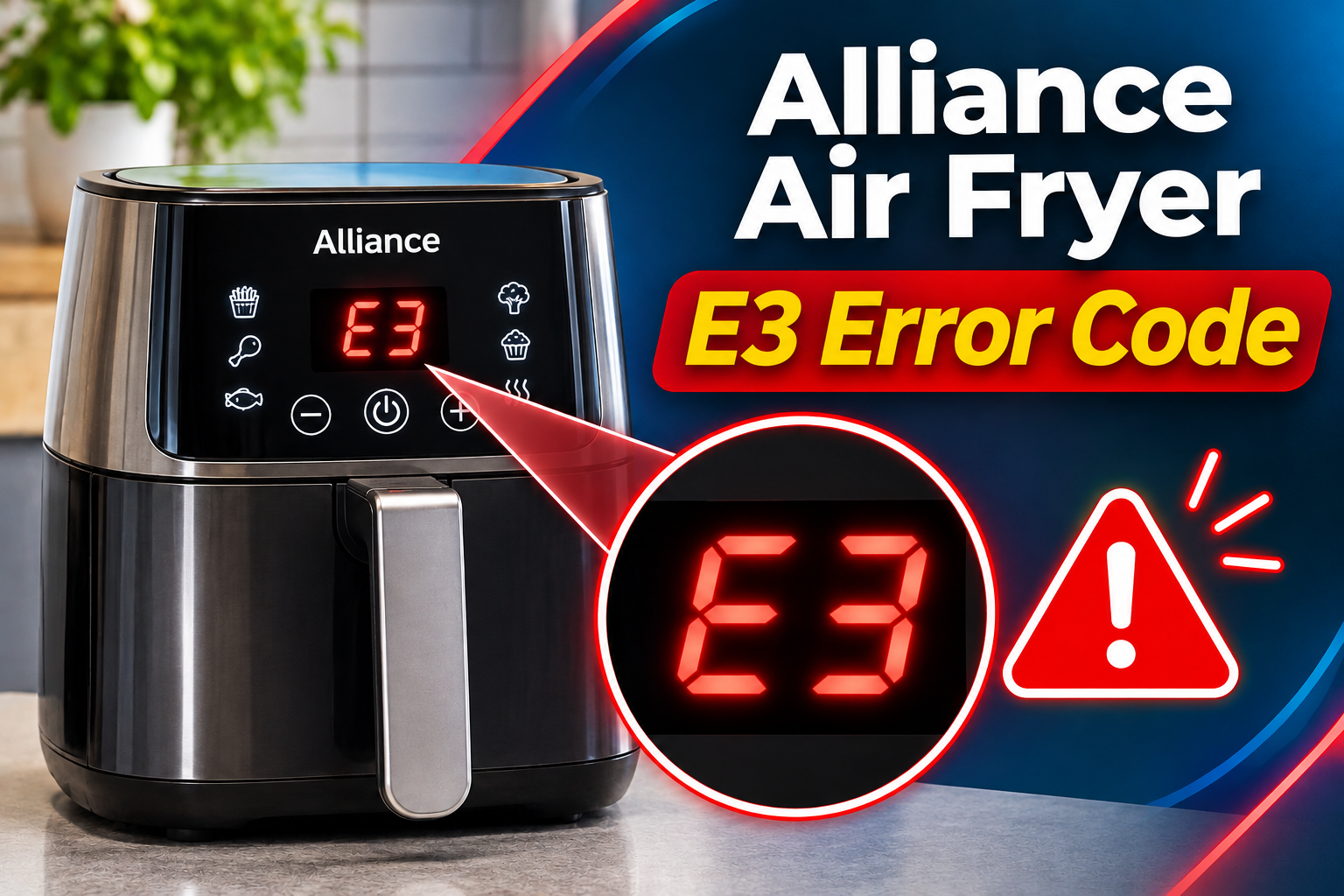
What Does the E3 Error Code Mean on an Alliance Air Fryer?
The E3 error code on an Alliance air fryer indicates a fault that needs investigation, but its exact meaning hasn’t been confirmed across Alliance models. Some air fryer manufacturers use E3 to indicate that an overheating protection system has activated. However, this definition shouldn’t automatically be applied to Alliance appliances.
For example, the instruction manuals for the Alliance AHA-AFS55001D 5.7L digital air fryer and the AHA-AF80002D 8L digital air fryer provide general troubleshooting guidance but don’t identify E3 or explain what triggers it. Therefore, the error code alone cannot confirm overheating, a defective temperature sensor, or control board failure.
Alliance Africa+1
During normal operation, your air fryer uses a heating element and a fan to circulate hot air around the food. An electronic control system regulates the cooking temperature using information from internal temperature monitoring components. If something interferes with these systems, the appliance may stop heating or behave unexpectedly.
You might notice the error immediately after switching on the appliance or after it has been cooking for several minutes. Other possible symptoms include unusual heat, a fan that doesn’t seem to be running, or a sudden shutdown. Stop using the air fryer if E3 appears, especially if you notice smoke, a burning smell, or unusual electrical behavior.
Alliance Air Fryer E3 Error Code: Common Causes
Several problems can interfere with an air fryer’s heating and temperature control systems. Since the exact meaning of E3 hasn’t been established for every Alliance model, the following are possible faults to consider rather than confirmed explanations for the error.
1. Blocked Ventilation Openings
Restricted airflow is one possible reason an air fryer may become excessively hot during operation. Your Alliance air fryer needs adequate ventilation to circulate heated air and release excess heat from the appliance.
If the air intake or exhaust openings become blocked, heat may accumulate around internal components. Depending on the appliance’s protection system, excessive temperature could cause the heating element to shut off or trigger a safety response.
This problem can develop when the air fryer is positioned too close to a wall or surrounded by other appliances. Kitchen towels, packaging materials, and accumulated debris can also obstruct ventilation openings.
You may notice that the appliance becomes unusually hot or stops cooking after operating for some time. However, these symptoms don’t prove that restricted ventilation is responsible for E3.
A simple external inspection can help you identify blocked vents without opening the appliance. If the openings are clear and the error persists, the problem may involve another component.
2. Excessive Food or Grease Buildup
Overloading the cooking basket can interfere with proper air circulation inside your Alliance air fryer. When too much food is packed into the basket, hot air cannot move evenly around the ingredients, potentially causing uneven cooking and poor performance.
Grease and food residue can also accumulate around the cooking compartment. When these deposits become hot, they may produce smoke, unpleasant smells, or excessive localized heat. This is particularly noticeable when cooking fatty foods such as chicken wings or sausages.
The Alliance AHA-AFS55001D manual specifically warns against overfilling the basket and recommends removing accumulated fat when necessary. However, neither overloading nor grease buildup has been established as a direct cause of E3 on that model.
If the error appeared while cooking a large batch of food, inspect the basket after the appliance has cooled. Excessive food or grease may explain separate cooking problems, although an internal fault could still be responsible for the displayed error.
3. A Malfunctioning Cooling or Circulation Fan
The fan is an essential component of your Alliance air fryer because it circulates hot air around the food during cooking.
If the fan motor becomes defective or its blades cannot rotate properly, air circulation may be reduced or interrupted. Depending on the appliance’s design, this can cause uneven cooking and may contribute to excessive heat around certain internal components.
A fan can stop working because of motor failure, damaged electrical connections, or mechanical problems. Internal wear may also affect the motor after prolonged use.
One possible warning sign is a noticeable change in the sound of the appliance. If your air fryer normally produces a steady fan noise but suddenly becomes unusually quiet during operation, the circulation fan may have stopped.
Alternatively, you might hear grinding, rattling, or repeated clicking sounds. These noises can indicate a mechanical problem, although they aren’t enough to identify the exact component responsible.
Since the fan and its motor are located inside the appliance, checking them requires professional servicing. Avoid inserting tools through the ventilation openings or attempting to move the fan blades yourself.
4. A Faulty Temperature Sensor or Thermal Protection Component
Your Alliance air fryer depends on temperature monitoring components to regulate heating and help prevent unsafe operating conditions.
Many electronically controlled air fryers use a temperature sensor called an NTC thermistor. Its electrical resistance changes with temperature, allowing the control board to monitor heat and adjust the heating element.
If the sensor develops an internal fault, the board may receive incorrect temperature information. Similarly, a problem with a thermal protection component can interfere with normal operation.
For example, an appliance may stop heating because a protective device has activated. However, a faulty sensor can sometimes produce symptoms that resemble overheating, even when the cooking chamber isn’t excessively hot.
An error that appears immediately after switching on may suggest a persistent electronic fault. One that develops after several minutes could involve a component affected by heat.
Neither behavior confirms that the temperature sensor is defective. A qualified technician must test the relevant components before recommending replacement.
5. A Defective Electronic Control Board
The electronic control board manages your air fryer’s heating, cooking timer, display, and responses to temperature readings.
When a component on the board becomes faulty, the appliance may struggle to regulate temperature or respond correctly to its controls. Depending on the model’s fault detection system, an electronic malfunction may cause an error to appear.
Electrical component deterioration, moisture exposure, and damaged internal connections can affect the control board. In some cases, you might notice an unresponsive display, irregular heating, or unexpected shutdowns.
However, these symptoms can also result from problems elsewhere in the appliance. For instance, a damaged sensor connection may prevent the board from receiving reliable temperature information even when the board itself is working correctly.
Because control boards can be expensive to replace, professional diagnosis is important. Replacing one without checking the other components may result in unnecessary repair costs.
Alliance Air Fryer E3 Error Code: How to Fix
When your Alliance air fryer displays E3, begin by switching it off and checking the manufacturer’s instructions. Some external problems can be identified safely, but a persistent error may require professional diagnosis.
1. Check Your Alliance Air Fryer Model and Manual
Before attempting any troubleshooting, identify the exact model of your Alliance air fryer.
Alliance produces several air fryer models with different capacities, operating controls, and internal designs. Consequently, instructions for one appliance may not apply to another.
First, unplug the air fryer and allow it to cool completely. Then check the identification label, usually located underneath or at the back of the housing.
Look for the following information.
-
Model number
-
Product code
-
Serial number, if available
-
Rated voltage and power
-
Manufacturer or distributor details
Once you’ve identified the model, find its corresponding instruction manual and read the troubleshooting section.
For instance, the Alliance AHA-AFS55001D and AHA-AF80002D manuals describe common operating problems but don’t define the E3 code. If your manual also lacks an explanation, contact Alliance customer support for clarification.
Avoid applying an E3 definition from another manufacturer’s air fryer without confirming that it applies to your particular appliance.
2. Switch Off the Appliance and Allow It to Cool
If E3 appears during cooking, stop the cooking process and unplug the appliance.
Allowing your air fryer to cool is an important precaution, particularly if the error appeared after the heating element had been operating for several minutes.
Follow these steps.
-
Press the power or stop button if it responds.
-
Disconnect the appliance from the electrical outlet.
-
Keep it on a stable, heat resistant surface.
-
Allow it to cool completely without covering the ventilation openings.
-
Once cool, inspect the exterior for visible damage.
Some Alliance manuals recommend allowing approximately 30 minutes for cooling before handling or cleaning the appliance. However, the actual cooling time can vary depending on the model and how hot it became during use.
During your inspection, look for melted plastic, discoloration, damaged cables, or anything unusual around the housing.
If you noticed smoke, sparks, a strong burning smell, or signs of electrical damage, leave the appliance unplugged and arrange professional inspection.
Cooling may resolve a temporary temperature related shutdown, but it won’t repair a damaged sensor, fan motor, or electronic control board.
Therefore, even if the display returns to normal after cooling, avoid assuming the original fault has been resolved.
3. Inspect the Ventilation Openings and Appliance Position
Once your air fryer has cooled completely, check that its ventilation openings aren’t blocked.
Air fryers need sufficient space around their housing to release heat and maintain proper airflow. Positioning the appliance too close to a wall or another object can interfere with this process.
Start by examining the air intake and exhaust openings. Look for packaging, kitchen towels, dust, or other materials that could restrict airflow.
Remove any external obstruction without inserting objects through the vents.
Next, check the space around the appliance. Alliance’s AHA-AF80002D manual specifies at least 10 cm of free space around the back, sides, and top, while the AHA-AFS55001D manual specifies at least 15 cm from walls or other objects. Follow the requirement for your model.
Alliance Africa+1
Place the air fryer on a stable, level surface that can tolerate heat. Avoid positioning it next to an operating stove or another heat producing appliance.
If ventilation was restricted, correcting the appliance’s position may help prevent future temperature problems.
However, blocked vents haven’t been confirmed as the cause of E3 on Alliance air fryers. If the error remains, don’t attempt repeated cooking cycles to test whether the new position has solved it.
4. Remove Excess Food and Clean the Cooking Basket
Another useful step is to check whether the cooking basket contains too much food or accumulated grease.
Overloading the basket restricts airflow around the ingredients and can cause uneven cooking. Although this condition doesn’t necessarily trigger E3, correcting it helps maintain proper operation.
After unplugging the appliance and allowing it to cool, remove the basket and inspect its contents.
If it contains food above the recommended maximum level, remove the excess. Also check the removable cooking tray for grease or food particles.
Next, clean the basket using the instructions supplied with your Alliance air fryer.
For models that permit handwashing, follow these steps.
-
Remove the cooking basket and any washable inserts.
-
Wash the approved components using warm water, mild dish soap, and a soft sponge.
-
Rinse them thoroughly.
-
Dry each component completely.
-
Reassemble the basket according to the manual.
Avoid using abrasive brushes or metal utensils that could damage the protective coating.
If your model allows cleaning the accessible cooking chamber, wipe the approved surfaces gently with a damp cloth. Don’t immerse the main housing in water or allow liquid to enter electrical openings.
You should also avoid using sharp tools to scrape grease from the heating element or reaching into internal electrical compartments.
Once everything is clean and dry, check that the basket slides smoothly into position.
Cleaning may eliminate problems involving grease, smoke, and restricted airflow. However, if E3 is caused by a defective electrical component, cleaning the basket won’t correct the underlying fault.
5. Try a Power Reset if the Manual Permits It
Some electronic appliances can develop temporary control problems that disappear after the power supply has been disconnected and restored.
A simple power reset may help determine whether your Alliance air fryer has experienced a temporary electronic fault.
However, resetting is only appropriate if your model’s instructions permit restarting after an error and there are no signs of overheating, electrical damage, or another serious malfunction.
If these conditions are satisfied, follow these steps.
-
Make sure the appliance is switched off.
-
Disconnect the power cord from the wall outlet.
-
Allow the air fryer to cool completely.
-
Leave it unplugged for approximately 10 minutes.
-
Reconnect the plug to a suitable electrical outlet.
-
Check whether E3 appears again.
The 10 minute waiting period is a general troubleshooting suggestion rather than a confirmed Alliance reset procedure.
If E3 appears immediately after restoring power, unplug the appliance again and arrange professional diagnosis.
If the error disappears, that doesn’t necessarily mean the appliance is safe to use. A defective sensor, loose connection, or other intermittent fault may temporarily stop producing symptoms.
Avoid repeatedly resetting the air fryer or running additional cooking cycles when the error has returned. If your manual directs you to seek service after an error, follow that instruction.
6. Contact Alliance Customer Support or a Qualified Technician
If E3 remains displayed, appears repeatedly, or is accompanied by unusual heat or electrical symptoms, contact Alliance customer support or a qualified appliance repair technician.
A technician may need to examine the temperature sensor, thermal protection components, fan motor, electrical connections, and electronic control board.
For example, if the fan motor isn’t operating properly, a technician can determine whether the motor itself has failed or whether another electrical component is preventing it from receiving power.
Similarly, if temperature monitoring appears to be the problem, the technician can test the relevant sensor against the manufacturer’s specifications.
The correct repair may involve replacing a damaged sensor, repairing an electrical connection, or replacing a defective control component.
These repairs should be carried out by trained personnel because the appliance contains internal electrical components and safety devices.
Before arranging repairs, check whether your air fryer is covered by a warranty.
Alliance product documentation provides customer support information through the brand’s website at allianceafrica.co.za. You can also contact the retailer where you purchased the appliance.
When requesting assistance, provide the model number, proof of purchase, and a description of the error.
Explain whether E3 appears immediately after switching on, during cooking, or after the appliance becomes hot. Mention any unusual noises, smoke, or burning smells as well.
If your appliance is out of warranty, request an estimate before approving the repair.
Depending on the damaged component, labor charges, and availability of replacement parts, buying another air fryer may be more economical.
Avoid purchasing generic temperature sensors or electronic control boards based solely on the E3 code. Replacement parts must be compatible with your model, and the defective component should be identified before any repair is attempted.
Wrap-Up
The Alliance air fryer E3 error indicates a problem that needs attention, although its exact meaning hasn’t been confirmed for every model. Restricted airflow, excessive heat, faulty temperature monitoring components, and electronic problems are possible explanations that require proper diagnosis.
Start by checking your user manual, switching off the appliance, and inspecting its accessible parts for obvious problems. If the manufacturer permits a reset, follow the instructions carefully. However, if E3 persists or returns, stop using the air fryer and contact a qualified technician. This will help you determine whether the appliance can be repaired safely.