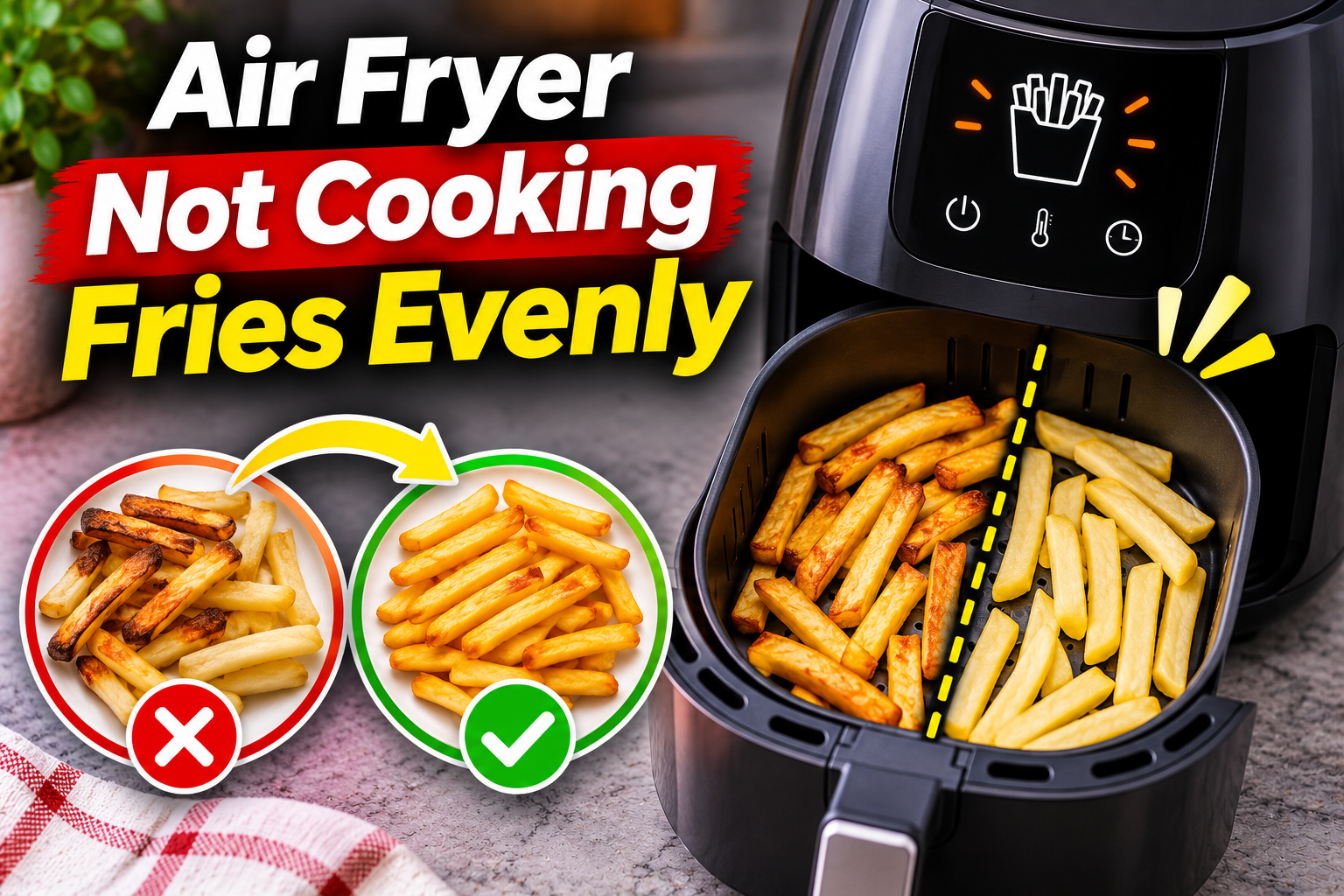
Although it’s easy to assume that your air fryer is defective, uneven cooking often results from how you prepare the potatoes, arrange them in the basket, or set the cooking temperature.
Understanding Why Your Air Fryer Cooks Fries Unevenly
An air fryer cooks food using a heating element and a powerful fan. The heating element generates heat, while the fan circulates hot air around the cooking chamber. As the air passes over the potatoes, it transfers heat to their surfaces, gradually removing moisture and creating a crispy exterior.
Unlike deep frying, where the potatoes are surrounded by hot oil, air frying depends heavily on the movement of heated air. Every fry needs sufficient exposure to this air to cook properly. Anything that interferes with its circulation can leave some pieces undercooked while others become excessively brown.
The appearance of your fries can provide useful clues about what’s happening. If those at the top of the basket are crispy while those underneath remain soft, overcrowding or insufficient shaking could be responsible. Meanwhile, fries that are burnt at the ends but firm in the middle may have been cooked at an excessively high temperature.
It’s also worth distinguishing uneven cooking from insufficient crispiness. Your fries may be thoroughly cooked but remain soft because they contain too much surface moisture. However, if some pieces are still raw while others are ready to eat, there’s likely a difference in how much heat each piece receives.
Air Fryer Not Cooking Fries Evenly [FIXED]: Common Causes
Several factors can affect how evenly your air fryer cooks french fries, and many have little to do with mechanical faults. Everything from the thickness of your potato slices to the quantity of fries in the basket can influence the final result.
1. Overcrowding the Air Fryer Basket
Filling your air fryer basket with too many fries is one of the most common causes of uneven cooking. Although your appliance may have a generous cooking capacity, filling the basket to its maximum level doesn’t necessarily produce the best results.
When fries are tightly packed together, they obstruct the movement of hot air. Those around the top and edges receive greater exposure to heat, while the pieces buried underneath receive less. Moisture released by the potatoes can also become trapped between them, leaving some fries soft and soggy.
This problem can occur with both fresh and frozen fries. Thick potato wedges are particularly susceptible because they occupy considerable space and may require longer cooking times. If your fries turn out considerably better when you prepare a smaller quantity, overcrowding is probably contributing to the problem.
2. Failure to Shake or Turn the Fries During Cooking
Even when you place a reasonable amount of fries in your air fryer, some pieces will inevitably overlap. If they remain in the same position throughout the cooking cycle, certain surfaces may receive considerably less heat than others.
Shaking the basket redistributes the fries and exposes previously covered surfaces to the circulating hot air. Without this movement, you may notice that one side of a fry is golden brown while the opposite side remains pale and soft.
Some air fryers have a shake reminder that produces a beeping sound during cooking. However, the reminder doesn’t necessarily mean that shaking the basket once will be sufficient. Larger portions may require several shakes before all the pieces receive reasonably even exposure to heat.
3. Unevenly Cut or Improperly Prepared Potatoes
If you’re preparing homemade french fries, the size and thickness of your potato sticks matter considerably. Thin pieces heat through much faster than thick ones because the heat has a shorter distance to travel before reaching their centers.
Consequently, cutting your potatoes into different sizes can produce a combination of burnt and undercooked fries, even when you’re using the correct temperature. Small fragments and pointed ends may become particularly dark before the thicker pieces are ready.
The way you prepare your potatoes also affects cooking performance. Excess surface starch can encourage the pieces to stick together, while excessive moisture delays crisping. If some potato sticks are considerably wetter than others, they may brown at different rates.
4. Incorrect Cooking Temperature or Duration
Cooking your fries at the highest available temperature doesn’t necessarily make them cook faster or more evenly. Excessive heat can brown the exterior before the inside of the potato has had sufficient time to soften. This is particularly common with thick homemade fries and steak fries.
On the other hand, cooking at a temperature that’s too low may leave your fries pale and soft, even after an extended cooking cycle. Different varieties of potatoes, fry thicknesses, and frozen products require different cooking conditions. Using the same settings for every type of french fry can therefore produce inconsistent results.
5. Restricted Airflow or Faulty Air Fryer Components
If your fries continue cooking unevenly despite proper preparation and suitable cooking settings, the appliance itself could be contributing to the problem. Accumulated food residue, an incorrectly positioned crisping tray, or unsuitable cooking accessories can interfere with the movement of heated air.
A defective convection fan may also reduce the circulation of hot air inside the cooking chamber. Similarly, a faulty heating element or temperature sensor can affect the appliance’s ability to maintain a consistent temperature. If other foods also cook unevenly, or you notice unusual noises and significant changes in cooking performance, your air fryer may require professional attention.
Air Fryer Not Cooking Fries Evenly [FIXED]: How to Fix
Getting your air fryer to cook fries evenly often requires a few simple adjustments to your cooking routine. Start with the following methods before considering repairs or replacing your appliance.
1. Reduce the Quantity of Fries in the Basket
Avoid filling your air fryer basket to the brim, even when you’re preparing enough fries for several people. Although cooking everything at once might seem convenient, it can compromise the quality of your food and increase the time needed to achieve satisfactory results.
Instead, spread the fries loosely across the basket, preferably in a single layer or with minimal overlapping. Some air fryers can accommodate several layers of fries, provided you shake the basket frequently. However, you should never exceed the maximum filling level specified in your instruction manual.
If you’re currently experiencing uneven cooking, try reducing your usual portion by half and keeping the other cooking settings unchanged. If the fries turn out significantly better, you’ll know that the quantity of food was contributing to the problem. You can gradually increase the portion until you find an amount that your air fryer handles comfortably.
2. Shake the Basket Several Times During Cooking
Make it a habit to redistribute your fries during the cooking cycle. This simple adjustment can make a considerable difference, particularly when cooking frozen french fries or preparing portions that contain overlapping pieces.
For instance, if your fries require approximately 20 minutes to cook, you could shake the basket after seven minutes and again after 14 minutes. Carefully hold the basket by its handle and shake it gently until the fries have changed positions. Alternatively, use silicone kitchen tongs to turn and redistribute them.
According to Philips’ air fryer cooking recommendations, larger portions of frozen fries may require shaking three or four times during cooking.
If you own an oven style air fryer, use heat resistant oven mitts to remove the cooking tray safely. Turn the fries with suitable kitchen tongs and rotate the tray where your manufacturer’s instructions permit it. This can help compensate for differences in heat distribution throughout the cooking chamber.
3. Cut, Soak, and Dry Your Potatoes Properly
When making homemade fries, consistent preparation is essential. Russet potatoes are generally a good choice because their high starch content helps produce a fluffy interior and crispy exterior.
Follow these preparation steps for better results:
-
Wash and peel your potatoes, if desired.
-
Cut them into sticks of approximately ¼ to ⅜ inch in thickness.
-
Remove unusually small pieces that could burn before the remaining fries are cooked.
-
Soak the potato sticks in cold water for at least 30 minutes.
-
Drain the water and dry the potatoes thoroughly using a clean kitchen towel or paper towels.
-
Toss the potato sticks in a small amount of cooking oil until they’re lightly and evenly coated.
Soaking helps remove excess surface starch, while drying reduces the amount of moisture that must evaporate during cooking. A thin coating of oil can also encourage more consistent browning. Philips recommends this preparation method for homemade air fryer fries.
However, you generally don’t need to follow these preparation steps for commercially prepared frozen fries. Many frozen varieties have already been processed and coated with oil. Cook them directly from frozen unless the packaging instructs you otherwise, and avoid adding unnecessary oil.
4. Adjust the Cooking Temperature and Time
If your fries regularly burn on the outside before becoming soft inside, reduce the cooking temperature and allow them to cook a little longer. Conversely, if they’re thoroughly cooked but remain pale and soft, a brief period at a higher temperature may help improve their texture.
The following settings provide reasonable starting points for experimenting with different types of fries.
| Type of fries | Temperature | Approximate cooking time |
|---|---|---|
| Thin frozen fries | 375°F to 400°F | 10 to 15 minutes |
| Regular frozen fries | 375°F to 400°F | 15 to 20 minutes |
| Thick frozen fries | 375°F to 400°F | 18 to 25 minutes |
| Fresh homemade fries | 350°F to 390°F | 18 to 25 minutes |
| Thick potato wedges | 375°F to 400°F | 20 to 30 minutes |
These settings are general estimates rather than universal cooking instructions. Your air fryer’s power, basket capacity, potato thickness, and portion size will influence the actual cooking duration. Start with the instructions on the frozen fries packaging or your appliance’s cooking chart whenever available.
If your homemade fries consistently brown too quickly, try cooking them at approximately 350°F until the centers become tender. You can then increase the temperature for the final few minutes to develop a crispier exterior. Check their progress frequently to prevent burning.
Also, follow your manufacturer’s preheating recommendations. Some Ninja air fryer recipes require three minutes of preheating, while certain Philips models don’t require preheating at all. Using the correct procedure for your appliance helps produce more consistent results.
5. Clean the Air Fryer and Remove Airflow Obstructions
If changing your cooking habits doesn’t improve the results, examine the condition of your air fryer. Grease and hardened food particles can accumulate around the basket openings and crisping tray, restricting the movement of heated air.
Unplug the appliance and allow it to cool completely. Remove the basket and crisping tray, then wash them with warm water, mild dishwashing liquid, and a soft sponge. Pay particular attention to the perforations through which hot air circulates. Allow everything to dry thoroughly before reassembling the appliance.
Consider whether you’re using accessories that interfere with airflow. Solid silicone liners, aluminum foil, and ordinary parchment paper can cover the openings beneath your fries and reduce their exposure to heat. Philips advises against using foil or baking paper in its air fryers for this reason, among other safety concerns.
Try cooking your next batch directly in the original basket with its crisping tray correctly installed. Keep the external air vents unobstructed and position the appliance according to the manufacturer’s clearance requirements. If the fries cook more evenly afterward, restricted airflow was likely part of the problem.
6. Contact a Qualified Appliance Repair Technician
If your air fryer continues cooking fries unevenly despite making the necessary adjustments, there could be a mechanical or electrical fault. This possibility becomes more significant if the appliance previously cooked food evenly under similar conditions.
Pay attention to persistent grinding noises, unusually long cooking times, weak heating, or repeated temperature related error messages. If several different foods consistently cook poorly, a defective fan, heating element, or temperature sensor may require professional diagnosis.
Contact the manufacturer’s customer support team before arranging independent repairs, particularly if your air fryer is still under warranty. Avoid opening the appliance’s outer housing or attempting to repair its electrical components yourself. If repairs are expensive and your appliance is relatively old, purchasing a replacement may be a more economical decision.
Wrapping Up
Unevenly cooked french fries can be frustrating, especially when you’ve followed the recommended cooking time and temperature. Fortunately, improving your potato preparation, reducing the quantity of fries in the basket, and redistributing them during cooking can make a noticeable difference.
Give yourself room to experiment with different cooking temperatures and portion sizes until you find what works best for your particular air fryer. However, if cooking performance continues to decline despite these adjustments, have the appliance professionally inspected. A properly functioning air fryer should produce reasonably consistent results without requiring constant adjustments.