Your Black and Decker air fryer makes preparing meals convenient, but that convenience quickly disappears when the appliance refuses to work. You might notice that the display remains blank, the fan doesn’t spin, or the air fryer switches off before your food is ready.
Although these problems can indicate a faulty internal component, they’re sometimes caused by minor issues you can resolve yourself. Knowing where to look and what to check can help you get your appliance working again.
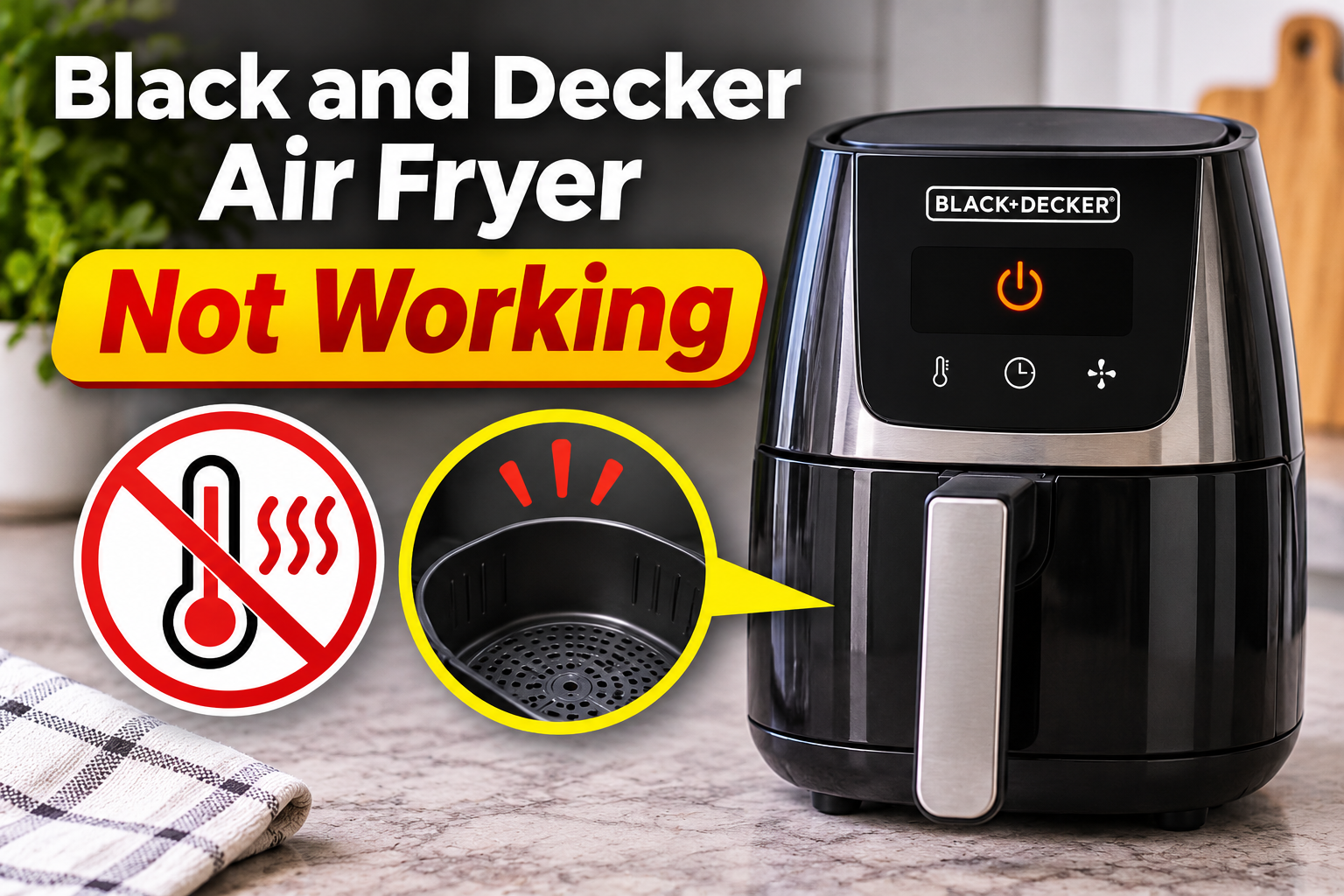
Understanding Black and Decker Air Fryer Problems
Your Black and Decker air fryer contains several components that work together to cook food. A heating element generates heat, a motorized fan circulates hot air around the cooking chamber, and a temperature control system regulates the cooking temperature. The timer determines how long the appliance operates before switching off automatically.
Depending on your model, the appliance may also contain safety switches, temperature sensors, and an electronic control board. These components help regulate its operation and prevent potentially dangerous situations. A problem with any of them can affect cooking performance or prevent the appliance from starting altogether.
The symptoms you experience can provide useful clues about the underlying issue. For instance, a completely unresponsive air fryer could have a power supply problem, whereas an appliance that runs without producing heat may have a defective heating element. Similarly, an air fryer that repeatedly stops during cooking could be overheating.
However, some behaviors are perfectly normal. A heating indicator that periodically switches off or a fan that continues running briefly after cooking doesn’t necessarily indicate a fault. Black and Decker manufactures several air fryer models with different operating features, so understanding how your particular appliance works is helpful before attempting any repairs.
Black and Decker Air Fryer Not Working: Likely Causes
Your air fryer can stop working for several reasons, ranging from an interrupted electricity supply to damaged internal components. Examining the circumstances surrounding the malfunction can help you narrow down the possible causes.
1. Faulty or Interrupted Power Supply
Your air fryer cannot operate without a reliable electricity supply. If the wall outlet isn’t working, the power cord is damaged, or the plug isn’t firmly connected, electricity may not reach the appliance. Consequently, the display, heating element, and fan may all remain inactive.
An overloaded electrical circuit is another possibility. Air fryers require considerable electrical power to generate heat, particularly during the initial heating period. Operating your air fryer alongside other appliances, such as a microwave or electric kettle, on the same circuit can cause the circuit breaker to trip.
Sometimes, the problem develops gradually. A loose connection inside a wall outlet may cause the appliance to switch on and off unexpectedly. You might also notice discoloration around the outlet, an electrical burning smell, or excessive heat around the plug. These symptoms require immediate attention because they may indicate a serious electrical hazard.
2. Improperly Inserted Frying Basket
Several Black and Decker air fryers feature a safety mechanism that prevents operation when the frying basket or pan isn’t correctly positioned. This mechanism helps prevent accidental exposure to the heating element and hot air during operation.
For example, the Black and Decker HF100WD and HF110SBD Purifry models automatically interrupt cooking when the pan is partially or completely removed. Interestingly, the mechanical timer can continue counting down even though the cooking functions have stopped.
An improperly fitted frying tray, excessive food in the basket, or debris around the drawer opening can prevent the basket from closing correctly. Over time, physical damage to the basket or its locking mechanism can also interfere with the safety switch. If the appliance works intermittently after you reposition the basket, this area deserves closer attention.
3. Incorrect Cooking Settings or Control Panel Problems
Setting your air fryer to the desired temperature doesn’t always mean you’ve started the cooking process. On models with mechanical controls, the timer generally activates the appliance. If the timer remains in the OFF position, the heating element and fan won’t begin operating.
Digital models work differently. You may need to select a cooking program, adjust the temperature and cooking duration, and press the appropriate button to begin cooking. Accidentally activating the pause function or switching off the appliance during cooking can also interrupt operation.
In other cases, the controls themselves may be faulty. A damaged mechanical timer, worn control knob, or unresponsive touch panel can prevent the appliance from receiving your commands. Moisture and physical damage may contribute to problems with electronic controls.
4. Overheating and Activation of the Safety System
Air fryers generate considerable heat within a relatively small space. To prevent excessive temperatures from damaging internal components, certain Black and Decker models feature overheating protection systems that interrupt operation when temperatures become unsafe.
Restricted ventilation can contribute to overheating. This may happen if you position your air fryer too close to a wall, cover its ventilation openings, or operate it inside a confined space. A faulty fan or malfunctioning temperature control system can also cause excessive heat to build up inside the appliance.
Depending on the model and the nature of the fault, your air fryer may resume operation after cooling or require a manual reset. However, repeated shutdowns shortly after starting a cooking cycle could indicate an unresolved internal problem rather than a temporary interruption.
5. Damaged Internal Components
If your air fryer receives electricity and the controls respond normally but the appliance still doesn’t cook, one or more internal components could be defective. The heating element, fan motor, temperature sensor, thermal fuse, and control board are all possible sources of trouble.
A damaged heating element may leave the fan running without producing sufficient heat. Meanwhile, a defective fan motor can prevent hot air from circulating properly, resulting in uneven cooking or overheating. Grinding or scraping noises may accompany certain fan problems.
A faulty temperature sensor can also interfere with the appliance’s ability to regulate heat. Some Black and Decker digital air fryers display error codes when they detect sensor problems. However, identifying the exact defective component generally requires specialized equipment and professional diagnosis.
Black and Decker Air Fryer Not Working: DIY Fixes
Before spending money on replacement parts or purchasing another air fryer, work through some basic troubleshooting methods. Begin with the easiest checks and proceed according to the symptoms your appliance displays.
1. Inspect the Power Supply and Electrical Connections
Start by switching off your air fryer and unplugging it from the wall outlet. Examine the power cord carefully for damaged insulation, exposed wires, burn marks, or melted sections. Pay particular attention to the areas near the plug and where the cord enters the appliance.
If the cord and plug appear undamaged, perform the following checks:
-
Connect a working lamp or another small electrical device to the wall outlet to confirm that electricity is available.
-
Check whether the circuit breaker has tripped.
-
Check the GFCI outlet and reset it if necessary, provided there are no signs of electrical damage.
-
Disconnect other appliances that may be overloading the electrical circuit.
-
Plug your air fryer directly into a suitable wall outlet and attempt to start it.
Avoid connecting your air fryer through an extension cord or power strip. The U.S. Fire Administration recommends connecting cooking appliances directly to wall outlets.
If the air fryer repeatedly trips the circuit breaker or you discover signs of electrical damage, stop using it. Never attempt to repair a damaged power cord using electrical tape.
2. Check and Reposition the Frying Basket
Unplug the appliance and allow it to cool before removing the frying basket. Examine the edges of the drawer, the basket compartment, and any accessible surfaces where food particles or hardened grease could interfere with proper closure.
Check that the removable frying tray is sitting evenly inside the basket. If you’ve recently washed the removable components, you may have accidentally reassembled them incorrectly. Also, remove excess food that extends above the basket’s maximum filling line.
Slide the basket back into the appliance gently until it’s fully seated. Some models produce an audible click when the basket reaches its proper operating position. Reconnect the air fryer and attempt to start a cooking cycle.
If the appliance remains unresponsive, despite the basket fitting correctly, the safety switch or locking mechanism may need professional attention. Never bypass the basket safety mechanism to force your air fryer to operate.
3. Adjust the Timer and Temperature Settings
The correct procedure for starting your Black and Decker air fryer depends on whether it uses mechanical or digital controls. Understanding this distinction can help you avoid mistaking an operating error for a mechanical fault.
If you own an HF100WD or HF110SBD Purifry air fryer, the manufacturer’s operating manual instructs you to select the temperature, turn the timer dial to 20 minutes, and then adjust it to the required cooking duration, allowing an extra three to five minutes for preheating.
For digital models, switch on the appliance, select an appropriate cooking temperature and duration, and press the Start or Play button if your model requires it. Observe whether the fan begins running and the cooking timer starts counting down.
If the touch controls remain unresponsive, disconnect the appliance from electricity and wipe the control panel with a soft, dry cloth. Reconnect it and try again. Persistent problems with the timer or control panel may require repairs.
4. Reset Your Black and Decker Air Fryer
Resetting your air fryer may restore operation following a temporary electronic error or activation of its overheating protection system. However, the reset procedure varies between models, and some appliances have a dedicated physical reset button.
The Black and Decker HF100WD and HF110SBD Purifry models have a reset button underneath the appliance. If your model’s manual confirms that it has this feature, follow these instructions:
-
Switch off the air fryer and unplug it.
-
Carefully remove the food and frying basket.
-
Allow the appliance to cool for at least 30 minutes and ensure it’s completely cool.
-
Carefully position the appliance on its side on a stable surface.
-
Locate the RESET button underneath the appliance using the illustration in your instruction manual.
-
Press the designated button with a suitable pointed object and hold it for two seconds, as specified by the manufacturer.
-
Return the appliance to its upright position, reassemble it, and reconnect the power supply.
For models without a physical reset button, switching off the appliance, disconnecting it, and allowing it to cool completely may help restore operation.
Don’t insert objects into unidentified openings while searching for a reset button. If the appliance continues overheating or requires frequent resetting, discontinue use and contact a qualified technician.
5. Clean the Air Fryer and Clear Its Ventilation Openings
Grease, crumbs, and food residue gradually accumulate inside your air fryer. Apart from producing unpleasant smells and smoke, excessive buildup can interfere with airflow and affect cooking performance. Cleaning the appliance regularly helps prevent these problems.
Disconnect the air fryer from its power source and wait until it cools completely. Remove the basket and frying tray, then wash them with warm water, mild dishwashing liquid, and a soft sponge. Use a slightly damp cloth to clean accessible interior surfaces according to your model’s cleaning instructions.
Examine the external ventilation openings and remove any visible debris using a soft brush or dry cloth. Avoid inserting cleaning tools into the vents or allowing water to enter the electrical housing. Make sure all components are completely dry before reassembling the appliance.
Consider where you position your air fryer, too. The Black and Decker AFBD Series manual specifies a clearance of at least five inches from other appliances during operation. Follow the spacing requirements for your particular model and avoid placing objects on top of the unit.
6. Contact Black and Decker Customer Support or a Qualified Technician
If your air fryer still doesn’t work after completing these troubleshooting methods, an internal component may have failed. A technician can determine whether the problem involves the heating element, fan motor, thermal fuse, temperature sensor, or electronic control board.
Professional attention is particularly necessary if the appliance displays persistent error codes. For example, on Black and Decker AFBD Series air fryers, an E1 error indicates an open circuit in the temperature sensor, while an E2 error indicates a short circuit in the sensor. Both faults require further diagnosis.
Before arranging repairs, locate your appliance’s model number, purchase receipt, and warranty information. You can contact Black and Decker’s American appliance customer support team at 1-800-465-6070 or through its official customer support page.
Avoid opening the appliance’s outer housing yourself. Apart from exposing you to electrical hazards, unauthorized repairs may affect your warranty coverage. If your air fryer is relatively old and requires expensive replacement components, compare the repair estimate with the cost of purchasing a new appliance.
Wrapping Up
A Black and Decker air fryer that suddenly stops working doesn’t necessarily need extensive repairs. Minor problems involving the electricity supply, frying basket, cooking settings, or overheating protection system can often be resolved through careful troubleshooting.
Pay attention to how your appliance behaves, particularly when the problem first develops. Unusual noises, persistent error codes, electrical smells, and repeated shutdowns shouldn’t be ignored. By performing safe checks, keeping your air fryer clean, and seeking professional assistance when necessary, you can protect the appliance from further damage and restore its cooking performance whenever possible.