Seeing E0 on your KitchenAid refrigerator’s display can be confusing, especially if the ice maker has stopped producing ice or the appliance isn’t working as expected. You might assume the code indicates a faulty component that needs replacing.
However, E0 has a different meaning on many KitchenAid refrigerators. Understanding what the display actually indicates can save you from unnecessary repairs and help you identify any genuine problem affecting your appliance.
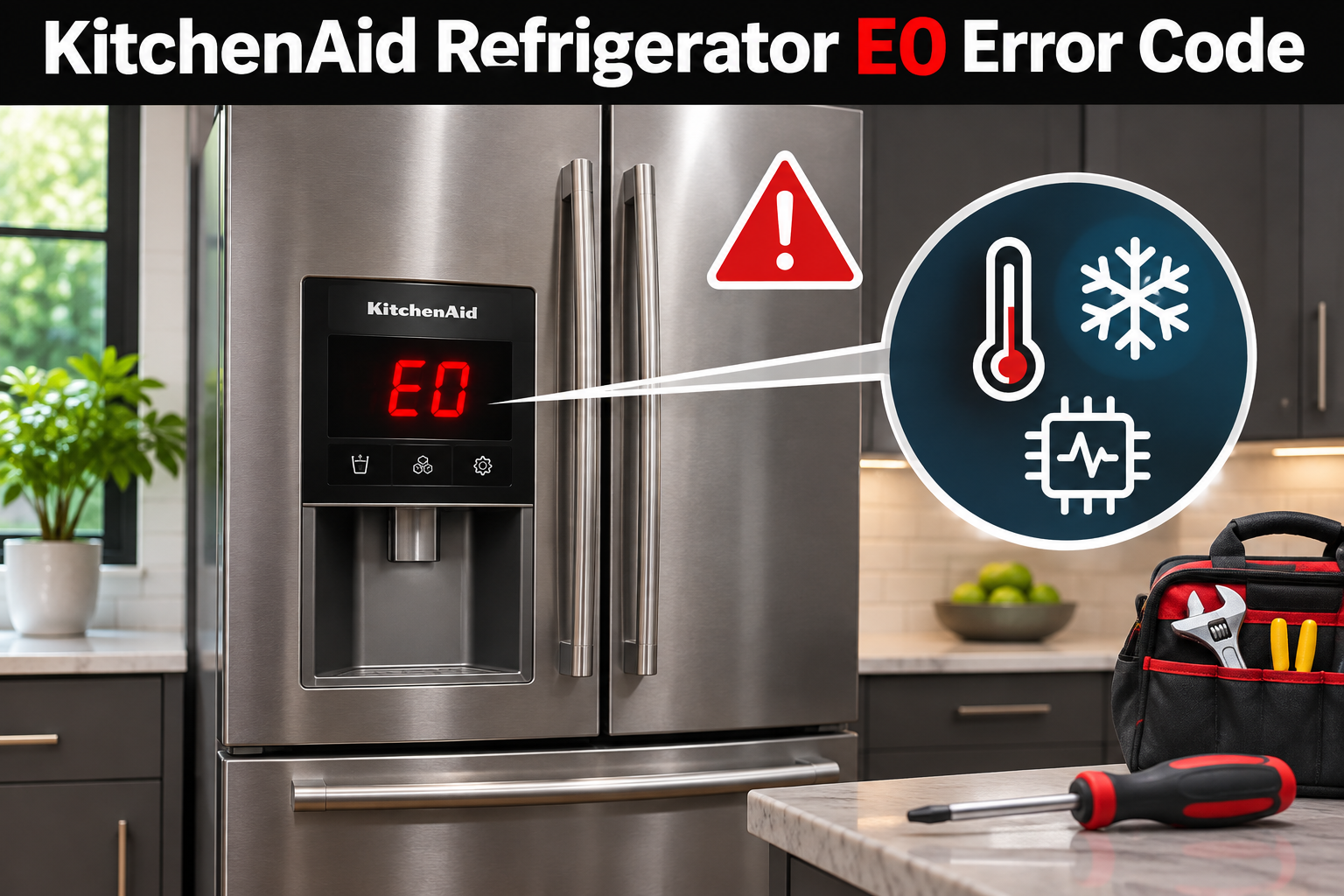
What Does the E0 Error Code Mean on a KitchenAid Refrigerator?
On many KitchenAid French door refrigerators, E0 means that the ice maker’s diagnostic system has detected no errors. It is generally a normal status indication rather than a warning that something has failed.
KitchenAid refrigerators use electronic controls to monitor various functions, including cooling, temperature regulation, and ice production. Certain models also have a built in diagnostic system that technicians use to check components and identify problems.
For example, KitchenAid’s technical service documentation identifies E0 as “No Errors” under Service Test 56, which displays ice maker error codes. The same documentation uses E0 to indicate no error under Service Test 66, which checks manufacturing codes. Other diagnostic results, such as E1, E2, and E3, identify specific ice maker problems. You can verify these meanings in KitchenAid’s official technical service sheet.
However, an E0 reading doesn’t guarantee that every refrigerator component is working perfectly. An ice maker might stop producing ice because its water supply is restricted, its controls are switched off, or the freezer isn’t cold enough. These conditions may require attention even when the diagnostic display shows no stored ice maker fault.
The exact interpretation also depends on your refrigerator model and where the code appears. If E0 is displayed during diagnostic testing, it may simply confirm a normal test result. If it appears unexpectedly during ordinary operation, check your model’s documentation before deciding that anything needs repairing.
KitchenAid Refrigerator E0 Error Code: Common Causes
Since E0 often indicates a normal diagnostic result, there isn’t necessarily an underlying fault causing the display. However, several conditions can explain why you’re seeing E0 or why your refrigerator may still have problems despite showing this code.
1. Normal Ice Maker Diagnostic Results
The most straightforward explanation is that your KitchenAid refrigerator is displaying a normal result from its ice maker diagnostic system.
When a compatible refrigerator enters Service Test 56, its control system checks the ice maker’s recorded fault status. If no applicable error is present, the display shows E0. This indicates that the diagnostic system hasn’t identified one of the faults covered by that test.
You may encounter this reading while checking the ice maker, following troubleshooting instructions, or having the appliance inspected by a technician.
Some KitchenAid models also include a manufacturing diagnostic test that can display E0. Although this test has a different purpose, E0 similarly means no error in that particular test. Therefore, knowing which diagnostic function is active is essential when interpreting the display.
2. Ice Maker Turned Off or Ice Bin Full
Your refrigerator’s ice maker might stop producing ice because it has been switched off or its ice storage bin is already full.
Depending on your KitchenAid model, the ice maker may use a control panel setting, a physical switch, or a wire shutoff arm. If the control is in the off position, the appliance won’t continue making ice.