You open your Bosch fridge late at night, reaching for that leftover slice of pizza, and… total darkness. The light that’s supposed to brighten up your fridge shelves stays off. It’s frustrating, especially when you’re trying to find something quickly.
This might seem like a small problem, but a dark fridge can make your daily routine much harder. You’ll learn why your Bosch fridge light stopped working, what causes this issue, and exactly how to fix it yourself without calling an expensive technician.
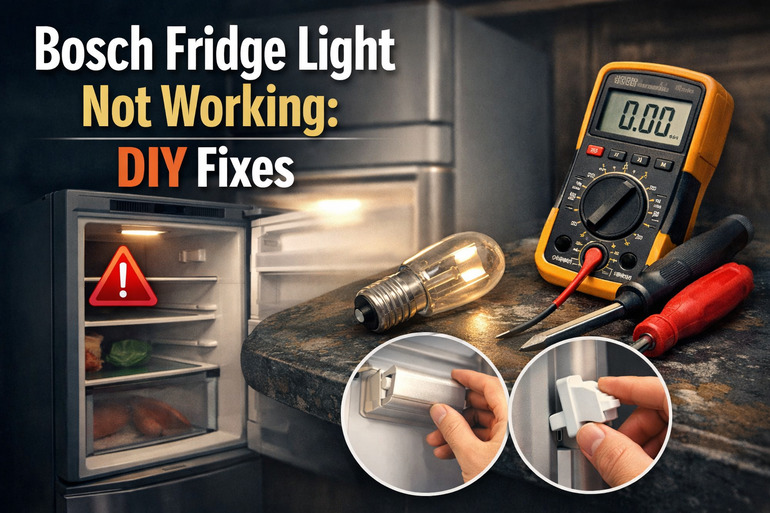
Understanding Your Fridge Light Problem
The light inside your Bosch fridge does more than just help you see your food. It’s part of a simple electrical system that includes a bulb, a door switch, and wiring that connects everything together. Most people think the bulb is always the problem, but that’s only part of the story.
Your fridge light turns on through a basic mechanism. When you open the door, a small switch gets released and completes the electrical circuit. This tells the bulb to light up. Close the door, and the switch gets pressed again, cutting off the power. It’s a straightforward system, but several parts can break down.
If the light stays off, you’re left squinting at your shelves, moving items around blindly, and probably wasting time every single day. This gets old fast. Beyond the inconvenience, a broken light might signal other electrical issues in your fridge that could affect its performance. Fixing this quickly makes sense.
Here’s what could happen if you ignore the problem:
- Food spoilage: You might miss expired items hidden in dark corners, leading to wasted groceries and potential health risks
- Energy waste: You’ll keep the door open longer while searching for items, letting cold air escape and making your fridge work harder
- Safety concerns: Reaching blindly into a dark fridge increases the chance of knocking over containers or spilling liquids
- Missed maintenance signs: The light failure could point to electrical problems that might affect your fridge’s cooling ability later
Bosch Fridge Light Not Working: Likely Causes
Several things can stop your Bosch fridge light from turning on. Figuring out which one is causing your specific issue will save you time and money on repairs.
1. Burned Out Bulb
Your light bulb has a limited lifespan, usually lasting a few years depending on how often you open your fridge. Every time you open the door, the bulb goes through a heat cycle. Over time, the filament inside weakens and eventually breaks.
This is by far the most common reason your fridge goes dark. The fix is cheap and takes just minutes. You’ll know it’s the bulb if everything else seems fine, like the door closing properly and the fridge cooling normally.
2. Faulty Door Switch
That little plastic button near the door frame controls everything. Press it with your finger, and the light should go off. Release it, and the light turns back on. If this switch gets stuck, worn out, or damaged, your light won’t respond to the door opening.
Sometimes food particles or sticky residue can jam the switch in the pressed position. Other times, the internal spring mechanism wears out after years of use. The switch might look fine from the outside but be completely dead inside.
You can test this by manually pressing and releasing the switch while the door is open. If nothing happens, the switch is probably your problem.
3. Loose or Damaged Wiring
Vibrations from your fridge’s compressor can loosen wire connections over time. The wires that supply power to your light socket might come disconnected or develop breaks in the insulation. This is less common than bulb or switch failures but still happens, especially in older fridges.
Damaged wiring often shows other signs too. You might hear buzzing sounds, notice the light flickering before it died completely, or see burn marks near the socket. Water leaks inside the fridge can also corrode wiring connections, creating resistance that stops electricity from flowing properly.
4. Tripped Circuit or Power Issue
Your Bosch fridge runs on household electricity, and sometimes the problem isn’t with the fridge at all. A tripped circuit breaker, a loose plug connection, or even a partial power outage can affect just the lighting circuit while leaving the cooling system running.
This happens because modern fridges often have separate circuits for different functions. Your compressor might still work fine while the light circuit has lost power. Check if other electrical items near your fridge are working normally.
5. Failed Light Socket
The socket that holds your bulb can crack, corrode, or stop conducting electricity properly. This part rarely fails, but it does happen after many years. The metal contacts inside the socket can become bent or covered with oxidation, preventing good electrical contact with the bulb.
Sometimes moisture buildup inside the fridge creates this corrosion faster. If you’ve replaced the bulb and checked the switch but still have no light, the socket itself might need replacing. This is a bit more involved than changing a bulb but still manageable for most people.
Bosch Fridge Light Not Working: How to Fix
Getting your fridge light working again usually takes less than 30 minutes. Start with the simplest fixes first before moving to more complex solutions.
1. Replace the Light Bulb
This should always be your first step. Unplug your fridge from the wall outlet for safety. Locate the light cover inside your fridge, which is usually a clear or white plastic shield. Most Bosch models have a cover that either snaps off or slides out.
Remove the old bulb by turning it counterclockwise. Take it to a hardware store to match the exact type and wattage. Bosch fridges typically use 40-watt appliance bulbs, but check your manual to be sure. Installing the wrong wattage can cause problems.
Screw in the new bulb clockwise until snug, but don’t overtighten. Replace the cover, plug your fridge back in, and test the light. If it works, you’re done. If not, keep going through these fixes.
2. Clean and Test the Door Switch
Find the door switch, which looks like a small button or plunger near the top of the door opening. With the fridge still unplugged, press and release it several times to feel if it moves freely. Clean around it with a damp cloth to remove any buildup.
If the switch feels stuck or doesn’t spring back properly, it needs replacing. You can buy a replacement switch from appliance parts stores for around $10 to $20. The switch usually pops out with a flathead screwdriver and the new one clicks right in. Test it by plugging the fridge back in and pressing the switch manually. The light should respond immediately.
3. Check the Electrical Connections
This requires a bit more care. With the fridge unplugged, remove the light cover and bulb. Look for any loose wires connected to the light socket. Gently wiggle each wire to see if it’s secure. If you spot a loose connection, push it back firmly into place.
Look for signs of damage like:
- Frayed or exposed wiring showing copper strands
- Burn marks on wires or connectors indicating overheating
- Corrosion appearing as green or white crusty deposits
- Disconnected wires hanging loose from terminals
If you find damaged wiring, you can often fix it by trimming the damaged section and reconnecting it with wire nuts or electrical tape. Make sure all connections are tight before testing.
4. Inspect and Reset the Circuit Breaker
Walk over to your home’s electrical panel and find the breaker that controls your kitchen or fridge. Even if it doesn’t look tripped, flip it completely off and then back on. This resets the circuit and can solve hidden electrical glitches.
While you’re there, check that the breaker isn’t warm to the touch or showing any signs of damage. A functioning breaker should feel cool and switch smoothly. If your fridge keeps tripping the breaker repeatedly, that’s a bigger electrical problem requiring a professional electrician.
Plug your fridge back in after resetting the breaker and see if the light comes on. Sometimes a power surge or electrical hiccup just needs a fresh start.
5. Replace the Light Socket
If none of the previous fixes worked, the socket itself is probably bad. You’ll need to buy a replacement socket compatible with your specific Bosch model. Check the model number on the inside wall of your fridge and order the correct part online or from an appliance store.
With the fridge unplugged, disconnect the wires from the old socket by either unplugging them or unscrewing the wire nuts. Remove any screws or clips holding the socket in place. Install the new socket by reversing these steps, making sure all wire connections are secure.
This fix takes a bit more time and confidence with basic electrical work. If you’re uncomfortable working with wiring, this might be the point to call a professional. Testing the new socket is the same as before: plug in the fridge and open the door.
6. Contact a Qualified Appliance Technician
Sometimes the issue runs deeper than what you can fix safely at home. If you’ve tried all these solutions and your light still won’t work, there could be a control board failure or complex electrical fault that needs professional diagnosis. A certified Bosch technician has the training and tools to identify and repair these problems correctly.
Wrapping Up
A dark fridge is more than annoying. It affects how efficiently you use your appliance and can lead to bigger problems if electrical issues go unchecked. Most light failures trace back to simple causes like burned out bulbs or sticky door switches that you can fix yourself in under an hour.
Start with the easiest solutions and work your way through the list systematically. Most people find their answer in the first two or three fixes. If your fridge light still refuses to cooperate after trying everything, bringing in a pro makes sense. Your food storage is too important to leave in the dark.