Holding a Rebel T7 steady for a long exposure or a group shot is harder than it looks, and a shaky tripod can ruin an otherwise great photo. If you have ever ended up with blurry night shots or a wobbly video, you already know why the right support matters.
This guide breaks down five tripods that actually work well with the Rebel T7, based on real specs, build quality, and what other Canon shooters have experienced with each one. We looked at everything from budget travel tripods to premium options built for serious use.
By the time you finish reading, you will know exactly which tripod fits your shooting style, your budget, and how often you plan to use it. Let’s look at how we picked these five.
How We Selected the Best Tripods for Canon Rebel T7
We compared each tripod’s build quality, weight capacity, and height range against what a Rebel T7 setup typically needs, since this camera can weigh more once a lens is attached. We also looked closely at how each one performed in real shooting conditions, from windy outdoor sessions to tight indoor spaces.
- Weight capacity: The tripod needs to comfortably support the Rebel T7 body plus a lens without sagging or tipping.
- Height range: A useful tripod should adjust low enough for tabletop shots and tall enough for eye level shooting.
- Build material: Aluminum and carbon fiber each affect weight, stability, and how the tripod holds up over time.
- Portability: Folded length and overall weight matter if you plan to travel or hike with your gear.
- Head type: Pan heads and ball heads offer different control, so we noted which one suits which kind of shooting.
- Value for the price: We weighed what each tripod includes against its price point to see which ones offer the most for typical buyers.
Every tripod on this list earned its place through a mix of specs, hands on impressions, and consistent feedback from Canon users. That combination gives you a shortlist you can trust before you spend a dollar.
Best Tripods for Canon Rebel T7 (Detailed Review)
Here are the five tripods we found worth your attention, ranked with your budget and shooting needs in mind. Each one brings something different to the table, so pay attention to what fits your specific situation.
1. Endurax 60” Travel Tripod: The Budget Friendly All Rounder

This tripod stands out because it does a little bit of everything without asking you to spend much money. It handles a Rebel T7, a smartphone, or a tablet using the same quick release plate, which makes it genuinely flexible for someone who shoots on more than one device.
It’s best suited for beginners, casual shooters, or anyone who wants a light travel companion rather than a studio workhorse. The included remote shutter adds real value here, letting you snap group photos or long exposures without touching the camera.
Built from aluminum, it folds down to about 17.5 inches and extends up to 60 inches, with a bubble level built into the head for keeping horizons straight. The whole unit weighs under two pounds, so it disappears into a backpack without you noticing it.
We found the 3 way pan head easier to use than expected for a tripod at this price, and the carrying bag that comes with it is a nice touch for anyone who travels often.
Key Specs
- Maximum height: 60 inches
- Minimum height: 17.5 inches
- Weight limit: 6.6 pounds
- Item weight: 1.5 pounds
- Head type: 3 way pan head
- Material: Aluminum
Pros
- Works with cameras, phones, and tablets
- Comes with a remote shutter and carry bag
- Very lightweight for travel
Cons
- Weight limit may not suit heavier lens setups
- Legs can feel less sturdy on uneven ground
The Endurax is a smart starting point, but if you want a bit more height and load capacity, the next option pushes both further.
2. VICTIV 74” Professional Tripod: More Height, More Muscle
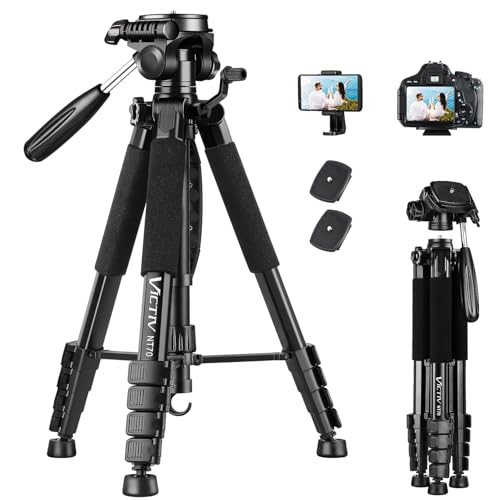
Built from aluminum with a foldable design, this tripod has a noticeably wider stance than the Endurax, which helps it stay planted even at its full 74 inch height. The legs use slip resistant feet that grip well on both hardwood floors and outdoor terrain.
The standout feature here is the weight limit of 9.5 pounds, giving your Rebel T7 and a heavier zoom lens plenty of headroom without straining the tripod’s joints. That extra capacity is one reason this model shows up so often in gear bags belonging to hobbyist videographers.
It’s a good match for anyone recording sports, family events, or YouTube content, since the 3 way pan head allows smooth panoramic and tilt movement during video. A hook on the center column lets you hang a bag for added stability in windy conditions.
We appreciated how the spare quick release plate makes it painless to switch between a phone and the Rebel T7 mid shoot, something casual tripods often overlook.
Key Specs
- Maximum height: 74 inches
- Minimum height: 19.5 inches
- Weight limit: 9.5 pounds
- Item weight: 3 pounds
- Head type: 3 way pan head
- Material: Aluminum
Pros
- Higher weight limit than most budget tripods
- Includes a spare quick release plate
Cons
- Heavier than ultralight travel options
If you want that same sturdiness in a slightly different package with a distinct look, the CAMBOFOTO below is worth a close look too.
3. CAMBOFOTO 74″ Aluminum Tripod: Best for Everyday Reliability

Photographers who shoot a mix of stills and casual video will appreciate how this tripod balances weight, height, and price without forcing any major compromise. It fits naturally into a routine where you might photograph a portrait session in the morning and record a vlog in the afternoon.
We were impressed by how steady it felt once a DSLR and lens combo were mounted, thanks to the telescoping legs and spirit level that helps confirm a flat setup before you start shooting. The center hook also lets you add extra weight for outdoor use.
Its gunmetal gray aluminum build has a clean, sleek look that feels more polished than many tripods in this price range, and the three leg sections keep the folded length manageable for a backpack or car trunk.
The 360 degree pan and tilt head moved more smoothly than we expected, and the included phone mount and carrying bag round out a package that gives you very little to complain about at this price.
Key Specs
- Maximum height: 74 inches
- Minimum height: 19 inches
- Weight limit: 8.8 pounds
- Item weight: 2.8 pounds
- Head type: Pan head
- Material: Aluminum
Pros
- Smooth 360 degree pan and tilt head
- Includes phone mount and carry bag
- Sturdy feel for its price
- Spirit level helps with framing
Cons
- Leg locks take a little practice to master
For shooters who want to shave off weight without giving up stability, the carbon fiber option below is the natural next step.
4. K&F Concept 60″ Carbon Fiber Tripod: Best for Serious Hikers and Travelers

We consistently found this tripod easier to carry over long distances than any aluminum model on this list, mostly because carbon fiber cuts the weight down to about 2.2 pounds without sacrificing much rigidity. That makes a real difference on a full day hike.
The 360 degree ball head handles smoothly and holds an 8 kilogram load, which comfortably covers a Rebel T7 with most standard lenses attached. A detachable monopod section adds flexibility for anyone who also shoots fast moving subjects like sports or wildlife.
It suits landscape photographers and travelers who prioritize packability, since the tripod folds to just 13.8 inches, small enough to meet most airline carry on limits. The inverted center column also allows for low angle macro shots when you need to get close to the ground.
Its carbon fiber legs resist corrosion and wear better than aluminum over time, and the 5 section leg design gives you fine control over height in tight or uneven spots.
Key Specs
- Maximum height: 60 inches
- Minimum height: 18 inches
- Weight limit: 8 kilograms (about 17.6 pounds)
- Item weight: 1 kilogram (about 2.2 pounds)
- Head type: 360 degree ball head
- Material: Carbon fiber
Pros
- Very light for its stability level
- Converts into a monopod
- Folds down small enough for travel
Cons
- Full height extension can feel less stable with heavier lenses
- Higher price than aluminum alternatives
If budget is not a concern and you want the most refined tripod experience possible, the final pick on our list takes things a step further.
5. Peak Design Travel Tripod: Best Premium Choice for Serious Photographers
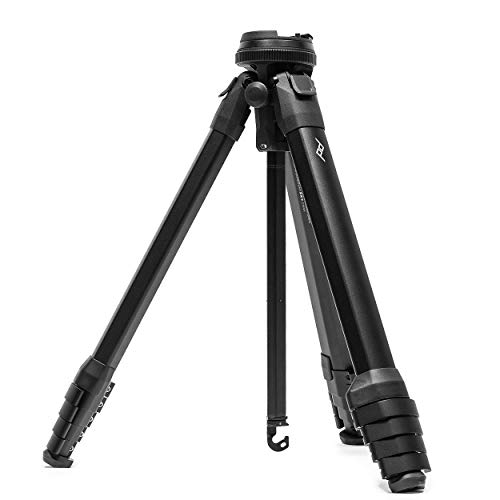
This tripod folds down to roughly the size of a water bottle, which is a genuinely different experience compared to every other model here. The compact design comes from a completely reworked leg mechanism that avoids the bulky center column found on most traditional tripods.
It’s built for photographers who shoot often enough to justify a higher price tag, especially those who already value quick setup and dependable gear in the field. The flip style leg locks let you deploy the tripod in seconds instead of fumbling with twist locks.
The single ring ball head is the standout feature, letting you adjust the camera’s angle with one smooth motion instead of juggling multiple knobs. With a 20 pound weight capacity, it handles a Rebel T7 and telephoto lens combination with room to spare.
We noticed the built in phone mount that pops out of the center column adds real convenience for anyone who splits time between a DSLR and a smartphone, and the included weatherproof case protects the whole unit during transport.
Key Specs
- Maximum height: 60 inches
- Minimum height: 5.5 inches
- Weight limit: 20 pounds
- Item weight: 3.44 pounds
- Head type: Ball head
- Material: Aluminum
Pros
- Exceptional weight capacity for its size
- Extremely compact folded design
- Fast, tool free setup
Cons
- Price is significantly higher than other options here
Best Tripods for Canon Rebel T7: A Quick Rundown
- Endurax 60” Travel Tripod: Best budget pick for beginners
- VICTIV 74” Professional Tripod: Best for higher weight capacity
- CAMBOFOTO 74″ Aluminum Tripod: Best all around value
- K&F Concept 60″ Carbon Fiber Tripod: Best for travel and hiking
- Peak Design Travel Tripod: Best premium option overall
Final Thoughts
Choosing the right tripod comes down to matching the build to how you actually shoot. If you travel light and often, weight and folded size should guide your decision. If you shoot heavier lenses or record long sessions, look closely at the weight limit and head type before anything else.
There is no single perfect option here, only the one that fits your budget and your habits best. Think about how often you’ll use it, where you’ll be shooting, and how much weight you’re willing to carry, then pick with confidence.