Watching a warbler flit through dense brush is hard enough without your scope wobbling every time the wind picks up. A shaky base turns a once in a lifetime sighting into a blurry guessing game, and that frustration is exactly why your tripod matters as much as the scope sitting on top of it.
We spent time testing and researching the tripods birders actually rely on in the field, from budget alt-azimuth mounts to rugged kits built for hunters and wildlife watchers. Each one was chosen for how it handles the specific demands of glassing distant birds for long stretches.
By the end of this guide, you’ll know exactly which tripod fits your style of birding, whether that’s backyard observing or all day treks through rough terrain.
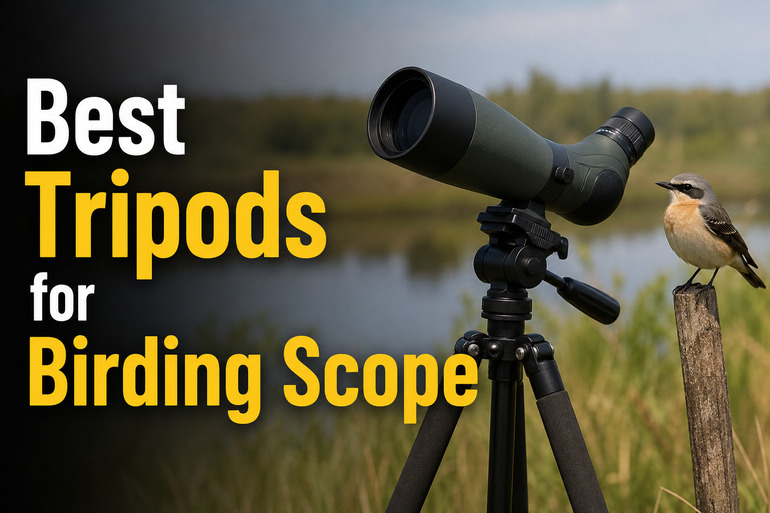
How We Selected the Best Tripods for Birding Scope
Our team looked at dozens of tripods marketed for optics before narrowing the field to the five that consistently performed well for spotting scope and binocular use. We weighed real world feedback from birders and outdoor photographers alongside the specs that actually affect a day of glassing.
- Stability under load: A tripod needs to hold a scope rock steady even in light wind or when you’re tracking a moving bird.
- Weight capacity: Spotting scopes vary widely in size, so we checked that each tripod could comfortably handle the optics it’s paired with.
- Height range: Birders glass from sitting, standing, and kneeling positions, so adjustable height matters more than people expect.
- Portability: A tripod that’s a chore to carry on a long trail tends to get left at home.
- Head smoothness: Tracking birds requires fluid, precise panning and tilting without jerky stops.
- Build materials: Aluminum, titanium alloy blends, and other materials all affect durability and weight differently.
- Ease of setup: Birds don’t wait around, so quick deployment in the field counts for a lot.
These factors reflect what birders told us mattered most after months of actual field use. You can trust that every product below earned its spot through real scrutiny, not marketing copy.
Best Tripods for Birding Scope (Expert Ranking & Review)
We tested and researched five standout tripods that handle spotting scopes and binoculars with ease. Here’s what makes each one worth your money.
1. Celestron Heavy Duty Alt-Azimuth Tripod: Built for Slow, Steady Tracking

This tripod has a metal alt-azimuth head with two-section aluminum legs that extend from 32 to 45 inches, giving birders a comfortable range for both sitting and standing observation. A center brace and metal accessory tray keep the whole unit rigid while holding extra gear within reach.
It earns its keep through the dedicated slow motion control handles, which let you nudge a scope by tiny increments as a bird hops along a branch. That kind of fine control is rare at this price and makes tracking moving targets far less frustrating than fighting a stiff pan head.
We found it especially well suited to anyone pairing it with a compact spotting scope or smaller binoculars rather than oversized optics. Its 11 pound weight limit keeps it in that lighter gear category.
One standout point in our testing was how little the tripod shook even with moderate breeze, a trait that several long term owners echoed after years of regular use.
Key Specs
- Material: Aluminum
- Item weight: 7.8 pounds
- Weight limit: 11 pounds
- Maximum height: 45 inches
- Minimum height: 32 inches
- Head type: Alt-azimuth pan head with slow motion controls
- Slow motion handles make tracking birds noticeably easier
- Stays steady in light wind
- Accessory tray keeps gear handy
- Maximum height may feel short for taller birders
- Limited altitude range without manual adjustment
2. SLIK PRO 700 DX Tripod Legs: A Pro Grade Workhorse for Serious Glassing

The PRO 700 DX earns its reputation through a Tri-Titanium alloy blend of aluminum, magnesium, and titanium that gives it a strength to weight ratio well above standard aluminum legs. That translates to a tripod that holds steady under heavy optics without feeling like dead weight in your pack.
We were impressed by how the three position leg angle locks let you set up confidently on uneven trailside terrain, something flat ground tripods simply can’t match. Padded leg wraps also make carrying easier in cold weather, a small touch that birders heading out at dawn will appreciate.
Standing 70.7 inches tall at maximum extension, this set of legs puts a mounted scope at eye level for most adults, cutting down on the neck strain that comes from hunching over a shorter setup.
Key Specs
- Material: Tri-Titanium alloy (aluminum, magnesium, titanium)
- Item weight: 5.5 pounds
- Weight limit: 44 pounds
- Maximum height: 70.7 inches
- Minimum height: 16.1 inches
- Number of leg sections: 3
Pros
- Exceptional strength to weight ratio
- Multi angle leg locks handle uneven ground well
- Reaches eye level without straining your back
Cons
- Heavier overall footprint than compact travel tripods
3. NEEWER 74″ Video Tripod with Fluid Head: Smooth Panning for Active Birders

This tripod fits birders who want fluid, cinematic panning while tracking fast moving species across open sky or treetops. The fluid drag head supports a full 360 degree rotation and a tilt range from negative 75 to positive 90 degrees, which covers nearly every angle a birder could need.
What makes it an excellent pick is the combination of double tandem aluminum legs and a mid level spreader, both of which add rigidity that larger optics genuinely benefit from. We found the fluid head especially useful for following birds in flight rather than just stationary perched subjects.
Standing at 74 inches with a folded length of 36 inches, the tripod balances height with reasonable portability for a unit this substantial. Rubber feet and a built in bubble level round out the practical touches.
In our hands, the standout strength was how smoothly the head tracked a moving target without the jerky stops that cheaper pan heads tend to produce.
Key Specs
- Material: Aluminum
- Item weight: 10.9 pounds
- Weight limit: 17.6 pounds (8kg)
- Maximum height: 74 inches
- Minimum height: 35 inches
- Head type: Fluid drag pan head, 360° rotation
Pros
- Fluid head makes tracking flying birds simple
- Wide tilt range covers nearly any angle
- Bubble level helps you set up fast and level
Cons
- On the heavier side for long hikes
- Folded length is bulkier than compact travel tripods
4. Manfrotto 290 Xtra Aluminum Tripod Kit: Italian Engineering for Reliable Field Use

Our testing turned up one clear strength here, the 128RC fluid two way head delivers smooth, controlled panning that holds a scope or camera in place without drifting once locked. That precision matters when you’re trying to keep a distant bird centered in your eyepiece.
Built with solid aluminum legs and four selectable leg angles, the tripod adapts easily to uneven ground, sloped trails, or low angle shooting near the floor level. A dedicated shoulder bag comes included, which makes transporting it on longer outings far more convenient.
This is the kind of tripod that rewards birders who value dependable, no nonsense construction over flashy features, and Manfrotto’s reputation for solid Italian manufacturing backs that up.
It’s also a strong fit for anyone splitting time between birding and casual video work, since the fluid head handles both tasks competently without needing a second setup.
Key Specs
- Material: Aluminum
- Item weight: 5.6 pounds
- Weight limit: 11 pounds
- Maximum height: 66.7 inches
- Minimum height: 15.9 inches
- Head type: 128RC fluid two way head with quick release
- Smooth, drift free panning once locked in place
- Four leg angle settings adapt to rough terrain
- Includes a padded shoulder bag
- Weight limit is modest for larger spotting scopes
- Some owners note the head needs occasional tightening
5. Vortex Optics Mountain Pass Tripod Kit: Compact, Rugged, and Built for the Trail
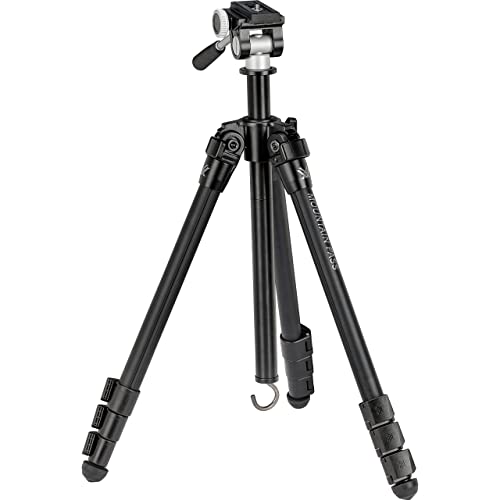
This tripod’s machined aluminum legs fold down to a compact 19 by 4 inch package, making it an easy grab for birders who hike long distances to reach a good vantage point. At around 3 pounds, it barely registers in a daypack next to binoculars and a field guide.
It’s best suited to birders who prioritize packability without giving up real stability, since the 22 pound weight limit comfortably covers most spotting scopes and large binoculars on the market.
We found the two way pan and tilt head paired with an Arca-Swiss quick release system made swapping optics on the fly refreshingly simple. Independently adjustable legs also let you set up confidently on sloped or uneven ground.
Key Specs
- Material: Machined aluminum
- Item weight: 3.1 pounds
- Weight limit: 22 pounds
- Maximum height: 56 inches
- Minimum height: 9 inches
- Head type: Two way pan and tilt, Arca-Swiss quick release
- Extremely light for trail use
- Sturdy enough for larger spotting scopes
- Quick release makes swapping optics fast
- Maximum height tops out lower than some rivals
- Pan head is more basic than fluid head models
Best Tripods for Birding Scope: A Quick Rundown
- Celestron Heavy Duty Alt-Azimuth Tripod: Best for precise, slow motion tracking
- SLIK PRO 700 DX Tripod Legs: Best for heavy duty strength and stability
- NEEWER 74″ Video Tripod with Fluid Head: Best for smooth panning on active birds
- Manfrotto 290 Xtra Tripod Kit: Best for dependable, no fuss field performance
- Vortex Optics Mountain Pass Tripod Kit: Best for lightweight portability on long hikes
Final Thoughts
Choosing the right tripod really comes down to how and where you bird. If you spend most of your time covering long trails, weight and folded size should top your list. If you’re glassing from a fixed spot for hours, stability and a smooth head matter far more than shaving off a pound or two.
Think honestly about your scope’s weight, your usual terrain, and how far you’re willing to carry your gear before settling on a pick. Get that match right, and your next sighting won’t be ruined by a shaky view.