Buying a tripod for the Sony A6700 sounds simple until you actually start shopping. Suddenly you’re staring at carbon fiber versus aluminum, ball heads versus fluid heads, and load capacities that range from “barely holds a phone” to “could anchor a boat.”
We get it. You just want something steady enough to keep your shots sharp, light enough that you’ll actually bring it along, and built well enough that it won’t wobble the moment you extend the legs. The A6700 is compact, but pair it with a longer lens and your tripod choice suddenly matters a lot more than you’d expect.
That’s exactly why we put together this guide. We tested and researched five tripods that cover every situation an A6700 owner might run into, from pocketable mini stands to serious carbon fiber travel rigs. By the end, you’ll know exactly which one fits your shooting style and your budget.
How We Selected the Best Tripods for Sony A6700
We started by looking at the real demands of the A6700 itself. It’s small and light, but it’s also capable of holding longer telephoto lenses, so we needed options that could handle a range of setups without tipping or sagging under pressure.
- Load capacity: Each tripod needed enough headroom to comfortably support the A6700 body along with common lens combinations, not just the bare minimum.
- Build material: We looked closely at carbon fiber and aluminum construction, since both affect weight, vibration dampening, and how the tripod performs outdoors.
- Portability: Folded length and overall weight mattered a lot, since a tripod that stays in the closet doesn’t do you any good.
- Head type and control: We paid attention to how each ball head or video head locks, adjusts, and holds position once you’ve found your shot.
- Height range: We compared minimum and maximum heights to see which tripods handle tabletop work, eye-level shooting, or both.
- Versatility: Features like detachable monopod legs, invertible center columns, and low-angle modes earned extra credit.
- Overall value: We weighed what each tripod offers against its price point, since spending more should mean getting more.
We didn’t just skim spec sheets. We dug into how each tripod actually performs in the field, what real owners say after months of use, and where the inevitable compromises show up. That groundwork is what makes these five picks worth your trust.
5 Best Tripods for Sony A6700 (Detailed Review)
Here are the five tripods that earned a spot on this list, each suited to a different kind of shooter and shooting style. We’ll break down what each one does well, where it falls short, and who should actually buy it.
1. Manfrotto PIXI Mini Tripod: Pocket-Sized Powerhouse

If you’ve ever skipped bringing a tripod because it felt like dead weight, the PIXI solves that problem instantly. This mini tripod from Manfrotto closes down into a handgrip, making it just as useful for steady handheld video as it is for tabletop stability.
We found the push-button ball head to be one of the standout features here. Press it down, angle your camera however you like, and release. The ball locks itself in place without any fumbling for a separate knob.
Made in Italy from aluminum and technopolymer, the PIXI feels sturdier than its tiny footprint suggests. The rubber feet grip surfaces well, whether that’s a restaurant table or a flat rock on a hiking trail.
This is best suited for A6700 owners who want a grab-and-go option for vlogging, travel content, or quick tabletop shots rather than full standing photography setups.
Key Specs
- Maximum height: 13.5 centimeters
- Weight: 0.24 kg
- Weight limit: 1 kg
- Head type: Ball head with push-button lock
- Material: Aluminum and technopolymer
- Mount: Universal 1/4 inch screw thread
Pros
- Converts instantly between tripod and handgrip
- Push-button ball head locks securely with one motion
- Extremely lightweight and pocket-friendly
- Solid build quality despite the small size
Cons
- Maximum height is limited to tabletop use only
- Not suited for longer or heavier lens combinations
2. K&F Concept 60 Inch Carbon Fiber Tripod: The Do-It-All Traveler

This K&F Concept tripod earns its spot through sheer flexibility. It extends from a compact 18 inches up to a full 60 inches, covering everything from low-angle macro work to standing eye-level shots.
We particularly liked the detachable monopod feature. Pull one leg free, attach it to the center column, and you’ve got a quick monopod for tracking moving subjects or shooting in tighter spaces. That’s a genuinely useful trick for anyone who shoots events or wildlife alongside regular photography.
The carbon fiber legs keep total weight down to about 1 kilogram, which makes a real difference on long hikes. A 180 degree leg fold also means it packs down to just 13.8 inches, small enough to meet most airline carry-on restrictions.
Reviewers do mention that the ball head’s plastic clamp section isn’t quite as refined as the metal components elsewhere on the tripod, though most found this to be a minor tradeoff given the price.
Key Specs
- Maximum height: 60 inches
- Minimum height: 18 inches
- Weight: 1 kg
- Weight limit: 8 kg
- Folded length: 13.8 inches
- Head type: 360 degree ball head
Pros
- Converts to a monopod in seconds
- Lightweight carbon fiber build
- Wide height range from low to standing shots
- Folds down small enough for travel
Cons
- Ball head clamp uses a resin component rather than full metal
- Some flex noticeable at maximum extended height
3. Peak Design Travel Tripod (Carbon Fiber): The Premium Pick
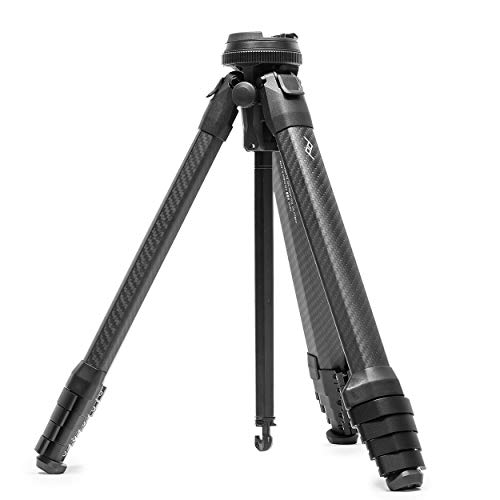
Peak Design rebuilt the travel tripod from scratch with this model, and it shows. The legs fold into a trapezoidal shape that eliminates wasted space, letting the whole thing collapse down to roughly the size of a water bottle.
We were impressed by how fast this tripod deploys. Three clips release the legs simultaneously, and there’s no twisting or fumbling required to get it standing and locked. For run-and-gun shooting with the A6700, that speed difference is noticeable.
The omnidirectional ball head uses a single adjustment ring instead of the usual cluster of knobs, which makes fine-tuning your angle far more intuitive once you get used to it. A built-in phone mount also pops out of the center column, giving you a backup option for casual content.
At 1.29 kilograms, the carbon fiber version supports up to 9.1 kilograms, more than enough headroom for the A6700 paired with a substantial telephoto lens. The tradeoff is the price tag, which sits well above every other option on this list.
Key Specs
- Maximum height: 60 inches
- Minimum height: 5.5 inches
- Weight: 1.29 kg
- Weight limit: 9.1 kg
- Leg sections: 5
- Head type: Omnidirectional ball head with single ring control
Pros
- Exceptionally fast setup and takedown
- Folds down smaller than most competitors
- High weight capacity relative to its size
- Built-in phone mount adds versatility
Cons
- Premium price compared to other tripods on this list
4. SIRUI Traveler 7C: Best Balance of Height and Value

The SIRUI Traveler 7C stretches up to 65.55 inches, the tallest reach in this lineup, while still folding down to a manageable 18.9 inches. For A6700 owners who want eye-level shots without crouching, that extra height is a real advantage.
Like the K&F Concept model, this tripod can convert into a monopod by combining the center column with one detached leg. We also liked the invertible center column, which drops the camera close to the ground for macro shots or creative low angles without needing a separate piece of gear.
The E-10 ball head uses two independent control knobs, giving you separate control over horizontal panning and vertical tilt. That setup makes it easier to nail a precise composition compared to single-knob designs, especially for panoramic work.
At 1.57 kilograms, it’s a bit heavier than some travel-focused alternatives, but the tradeoff buys you a higher max height and a sturdier overall feel. Owners do note that the thin plastic leg caps can crack over time, though SIRUI has a reputation for replacing them without much hassle.
Key Specs
- Maximum height: 65.55 inches
- Minimum height: 18.9 inches
- Weight: 1.57 kg
- Weight limit: 8 kg
- Head type: E-10 360 degree ball head
- Leg sections: 4
Pros
- Tallest maximum height in this lineup
- Converts easily between tripod and monopod
- Two-knob ball head allows precise panoramic control
- Strong overall value for the features included
Cons
- Slightly heavier than other travel options
- Plastic leg end caps are a known wear point
5. SmallRig Carbon Fiber Tabletop Tripod: Best for Stationary Setups

Not every shoot calls for a full-height tripod, and that’s where this SmallRig tabletop model comes in. It’s built for desk setups, low-angle product shots, or stable spotting-scope-style configurations where height isn’t the priority.
We found the load capacity surprisingly strong for its size. The tripod legs themselves support up to 10 kilograms, while the included video head handles up to 3 kilograms, plenty for the A6700 with a moderate lens attached. That combination makes it one of the sturdiest small-format options around.
The pan and tilt video head tilts from plus 90 to minus 70 degrees and swivels a full 360 degrees, controlled through a small handle that gives you smoother adjustments than a typical ball head at this size. Reviewers specifically praised how stable it felt even with heavier gear like spotting scopes mounted on top.
Standing just 17 inches at full extension, this isn’t a tripod for standing shots. It’s built for tabletop work, streaming setups, or any situation where you need rock-solid stability in a compact footprint.
Key Specs
- Maximum height: 17 inches
- Minimum height: 11.4 inches
- Weight: 845 grams
- Weight limit: 10 kg (tripod), 3 kg (video head)
- Head type: Pan and tilt video head
- Material: Carbon fiber
Pros
- High load capacity relative to its compact size
- Smooth pan and tilt control via handle
- Lightweight carbon fiber construction
- Excellent stability for tabletop and desk use
Cons
- Limited to tabletop height only
Best Tripods for Sony A6700: A Quick Rundown
- Manfrotto PIXI Mini Tripod: best for portability and grab-and-go use
- K&F Concept 60 Inch Carbon Fiber Tripod: best all-around versatility
- Peak Design Travel Tripod (Carbon Fiber): best premium option
- SIRUI Traveler 7C: best balance of height and value
- SmallRig Carbon Fiber Tabletop Tripod: best for tabletop and stationary shooting
Final Thoughts
Picking the right tripod really comes down to matching the tool to how you actually shoot. If you’re constantly on the move, weight and folded size should top your priority list. If you’re shooting from a desk or a fixed spot, load capacity and head control matter far more than height or portability.
Think about your typical lens setup, how often you travel, and how much you’re willing to spend before locking in a choice. There’s no single best option for everyone in this category, just the one that fits your specific habits and budget. Pick with your own shooting style in mind, and you’ll end up with a tripod you actually reach for instead of one collecting dust in a closet.