The code can follow a door being left open for too long, but a stuck fan, failed motor, or electrical fault may also be responsible. Identifying the likely cause will help you choose a safe fix and determine whether professional repair is necessary.
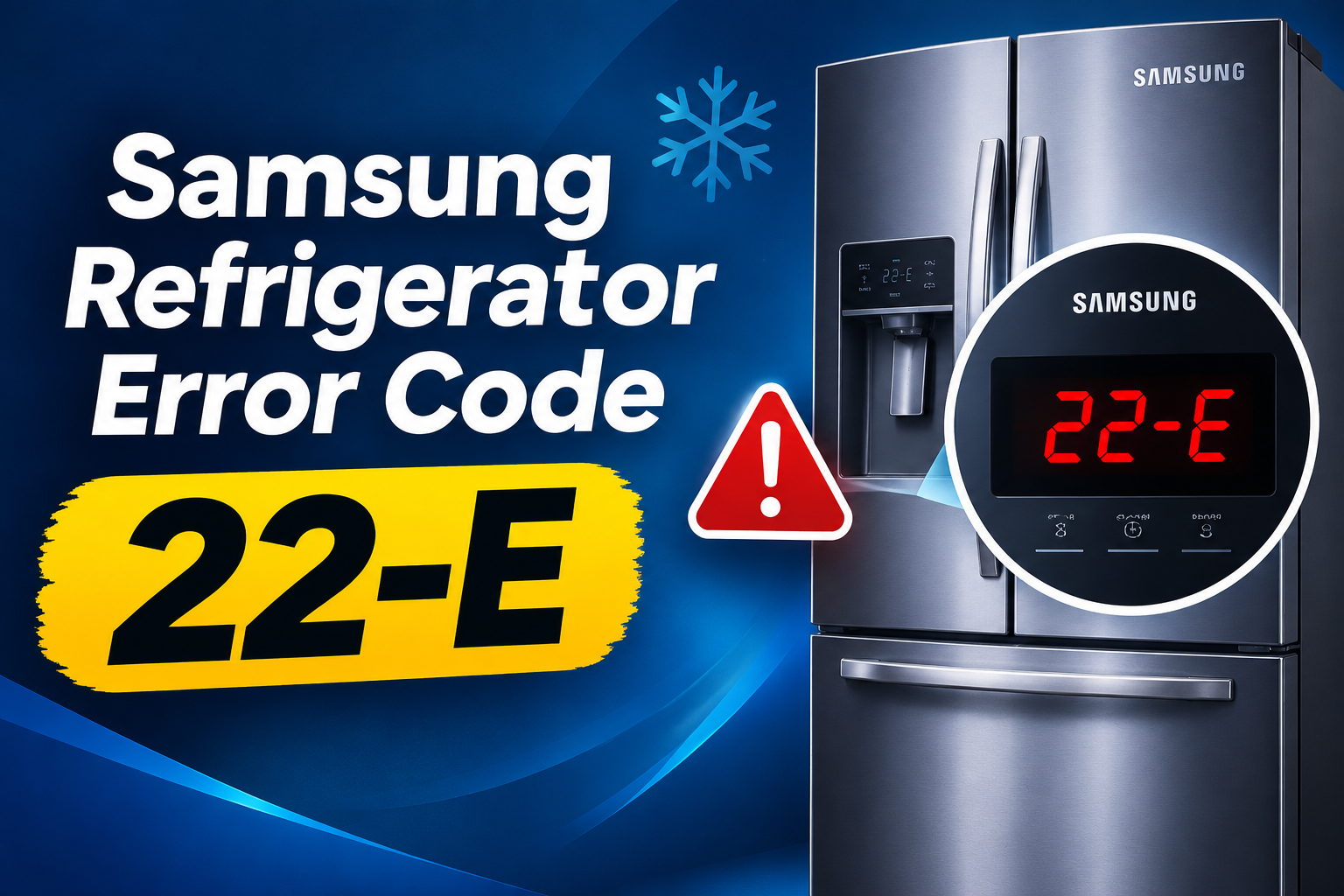
What Does Samsung Refrigerator Error Code 22-E Mean?
Samsung refrigerator error code 22E indicates a refrigerator compartment fan error. The fan circulates cold air through the fresh food compartment, helping maintain an even temperature so that food stays properly chilled. Samsung also identifies 22C as a version of this error on supported refrigerator models. Samsung’s official error code guide recommends defrosting the appliance when appropriate and seeking service if the error returns.
The refrigerator fan works alongside the cooling system. As cold air is produced, the fan helps distribute it through the compartment and its air passages. If the fan stops turning, becomes obstructed by ice, or fails to send the expected operating signal to the control board, the refrigerator may detect an abnormal condition and display the code.
Several symptoms may accompany this fault. The refrigerator section might become warmer, food may not feel as cold as usual, and airflow from the interior vents may weaken. In some cases, you may hear clicking, scraping, or intermittent fan noise. These symptoms can help identify the affected system, although they don’t prove that the fan motor itself has failed.
It’s also useful to distinguish code 22E from code 21E. Samsung identifies 22E and 22C with the refrigerator fan, while 21E relates to the freezer fan. The distinction matters because the affected fans serve different compartments and may require different diagnostic procedures.
If you see 22E, check whether the refrigerator is still cooling effectively and whether the doors have been left open. A temporary fan obstruction may clear after proper defrosting, but a persistent error can indicate a problem that needs professional attention.
Samsung Refrigerator Error Code 22-E [FIXED]: Common Causes
Several conditions can prevent the refrigerator fan from operating correctly. The most relevant possibilities include frost buildup, poor door sealing, motor failure, wiring problems, and faults in the electronic control system.
1. Ice or Frost Buildup Around the Fan
Ice buildup is a common reason a refrigerator fan may stop turning. When warm, moist air enters the refrigerator through an open door or a poor door seal, moisture can freeze around cold internal components and interfere with the fan blades.
The fan may then struggle to rotate or become completely stuck. You might hear a scraping or clicking sound as the blades encounter ice, although some fans remain silent when obstructed.
A fan affected by frost may work normally again after the ice melts. However, if the frost returns repeatedly, the initial cause may remain unresolved. A problem with the defrost system or an ongoing door sealing issue may need further investigation.
2. The Refrigerator Door Was Left Open Too Long
Leaving the refrigerator door open for an extended period can allow warm, humid air to enter the compartment. When that moisture encounters cold internal surfaces, it can freeze and interfere with fan operation.
This situation can occur while loading groceries, cleaning the refrigerator, or accidentally leaving a door slightly open. Food containers that prevent the door from closing fully can create the same condition.
Inspect the door gasket for tears, gaps, or areas that no longer contact the cabinet properly. Check that shelves and drawers sit correctly and that food packages aren’t obstructing the door. Samsung specifically identifies prolonged door opening as a possible cause of the 22E or 22C error.
3. A Failed Refrigerator Fan Motor
The fan motor may fail because of internal electrical damage, worn moving parts, or other component faults. When the motor cannot turn the fan correctly, cold air may no longer circulate through the refrigerator compartment.
You might notice that the refrigerator is warmer than usual even though the freezer appears to be working normally. The fan may also fail to produce its usual sound when cooling is active.
A motor failure can resemble an ice obstruction, so replacing the motor based on the error code alone isn’t a reliable approach. A technician can check whether the blades are obstructed and test the motor using the specifications for the exact refrigerator model.
If the fan remains inoperative after a proper defrost and the door seals correctly, a motor or associated electrical fault becomes a stronger possibility.
4. Damaged Wiring or a Loose Electrical Connection
The refrigerator fan needs a reliable electrical connection to operate and communicate its status to the control board. A loose connector, damaged wire, or broken connection can interrupt that process.
This fault may produce symptoms similar to a defective motor. The fan might stop working completely, operate intermittently, or fail to send the feedback signal expected by the control electronics.
A wiring problem cannot always be identified through visual inspection from outside the refrigerator. Diagnosing it may require removing an internal panel and testing the circuit. Leave that work to a qualified appliance technician rather than handling internal wiring yourself.
5. An Electrical or Control Board Fault
The refrigerator’s control board manages the operation of several components, including the fan. A power interruption or electrical disturbance may occasionally affect the refrigerator’s electronic operation, while a defective control circuit can also prevent the fan from operating as intended.
If the code appeared immediately after a power interruption, the timing is worth recording. However, that does not establish that the control board is damaged. Ice, a failed motor, or a loose connection may still be responsible.
A control board problem should generally be considered after the fan, wiring, and relevant connections have been checked. Replacing the board without confirming the fault can add unnecessary expense and leave the original problem unresolved.
Samsung Refrigerator Error Code 22-E [FIXED]: How to Fix
You can start with a few safe checks before arranging a repair. Since Samsung recommends defrosting for this specific error, begin with the door seals and any obvious signs of frost before deciding whether the fan or its electrical circuit needs attention.
1. Check the Door Seals and Remove Airflow Obstructions
Start by making sure every refrigerator door closes completely. Look for food containers, shelves, or drawers that may be preventing the door from shutting properly.
Next, inspect the visible door gaskets. Wipe away dirt with a soft cloth and mild soapy water, then dry the seals. If you find a torn gasket or a section that no longer seals properly, arrange a suitable replacement.
Check the interior air vents as well. Food packages pressed against the vents can restrict the movement of cold air, even when the fan is working. Move items away from the openings while keeping the compartment organized.
Once these checks are complete, close the doors and observe whether the refrigerator cools normally. If 22E remains displayed, continue with the next step rather than assuming that better airflow alone will clear the fault.
2. Defrost the Refrigerator Properly
When ice is holding the fan in place, allowing it to thaw may restore normal operation. Samsung’s guidance for error 22E or 22C recommends unplugging the refrigerator, leaving the doors open for a few hours, and then restarting the appliance.
Before doing this, transfer perishable food to a suitable cooler or another refrigerator. Put towels around the appliance to collect melting water, and keep the floor dry.
Do not chip ice away with a knife or screwdriver. Avoid using a hair dryer, heat gun, or boiling water because these methods can damage plastic parts and create electrical hazards.
If substantial frost is present, it may take longer to thaw completely. Don’t force the process by dismantling internal panels or attempting to reach the fan directly. Once the ice has melted and the interior is dry, proceed according to Samsung’s restart instructions.
3. Restart the Refrigerator After Defrosting
After the defrosting process is complete, restore power to the refrigerator and close the doors. This follows Samsung’s recommended recovery procedure for the 22E or 22C error when frost or prolonged door opening may have affected the fan.
Allow the appliance time to resume normal cooling. The fan may not run continuously because its operation depends on the refrigerator’s cooling cycle, so an immediate lack of fan noise does not automatically mean the repair has failed.
Check the display for the error code and monitor the refrigerator compartment’s temperature. If the code disappears and cooling returns to normal, the fault may have resulted from a temporary obstruction. However, keep an eye on the appliance to see whether the problem returns.
If the code reappears, don’t keep repeating the same reset in the hope that the fault will disappear permanently. A recurring error requires further diagnosis.
4. Check Cooling Performance and Record the Symptoms
After restarting the refrigerator, verify that the fresh food compartment is cooling properly. A refrigerator thermometer can help you monitor the actual temperature rather than relying on how cold the air feels when you open the door.
For many household refrigerators, the recommended temperature is 40°F (4°C) or below, while the freezer should generally be set to 0°F (-18°C). Follow your model’s manual for its settings and allow time for the appliance to stabilize after defrosting.
Pay attention to any recurring scraping sounds, visible frost, or repeated error messages. Note whether the freezer continues to work normally while the refrigerator compartment becomes warm.
These observations can help a technician distinguish a temporary obstruction from a motor, wiring, or control problem. If the refrigerator fails to maintain a safe temperature, transfer perishable food to appropriate cold storage rather than waiting for the code to clear.
5. Have the Fan Motor and Electrical Circuit Tested
If error 22E persists after proper defrosting, the fan assembly and its electrical circuit may need to be tested. This work usually requires access to internal components and the technical documentation for your refrigerator model.
A qualified technician can check for residual ice, a damaged fan blade, a motor fault, loose connectors, and wiring problems. If those components test correctly, the technician can investigate the control board or other relevant circuitry.
Avoid applying power directly to the fan, measuring live electrical connections, or removing internal panels unless you have suitable training. The refrigerator contains electrical components that can cause injury or be damaged by incorrect testing.
The goal is to confirm the actual fault before ordering replacement parts. Depending on the results, the repair may involve clearing an obstruction, replacing the fan motor, repairing a connection, or addressing a control circuit problem.
6. Contact a Qualified Appliance Technician
Arrange professional service if the error remains after defrosting, returns shortly afterward, or is accompanied by inadequate cooling. A technician can use model specific procedures to establish whether the fan is stuck, the motor has failed, or an electrical fault is preventing normal operation.
Provide the refrigerator’s model number, the exact displayed code, and a description of what happened before the error appeared. Mention any unusual noise, visible frost, recent power interruptions, or temperature changes. These details can help narrow the diagnosis.
If you notice a burning smell, smoke, sparking, or signs of electrical damage, stop using the appliance and seek qualified assistance. Avoid touching exposed wiring or damaged components.
Professional diagnosis is particularly valuable when defrosting does not resolve the problem. It helps prevent unnecessary part replacements and addresses faults that a simple restart cannot correct.
Wrap-Up
Samsung refrigerator error code 22E points to a problem with the refrigerator compartment fan. Ice buildup following a prolonged door opening can sometimes explain the fault, but a defective motor, damaged wiring, or control board issue may produce the same code.
Begin by checking the door seals and visible airflow obstructions. If appropriate, follow Samsung’s recommended defrosting procedure and monitor the refrigerator afterward. When the error persists or returns, arrange professional diagnosis instead of repeatedly resetting the appliance. Confirming the cause helps restore proper cooling and protects the food stored inside.