A Samsung air conditioner displaying a C4 error code may stop cooling, shut down unexpectedly, or refuse to operate normally. The exact meaning depends on the model and the complete code displayed, so identifying the fault before attempting a repair is essential.
On some Samsung air conditioners, C4 is part of a longer diagnostic code that points to a specific problem. A display that alternates between C4 and two digits, for example, may represent a code such as C422 or C458. Checking the complete code helps you identify the correct troubleshooting procedure.
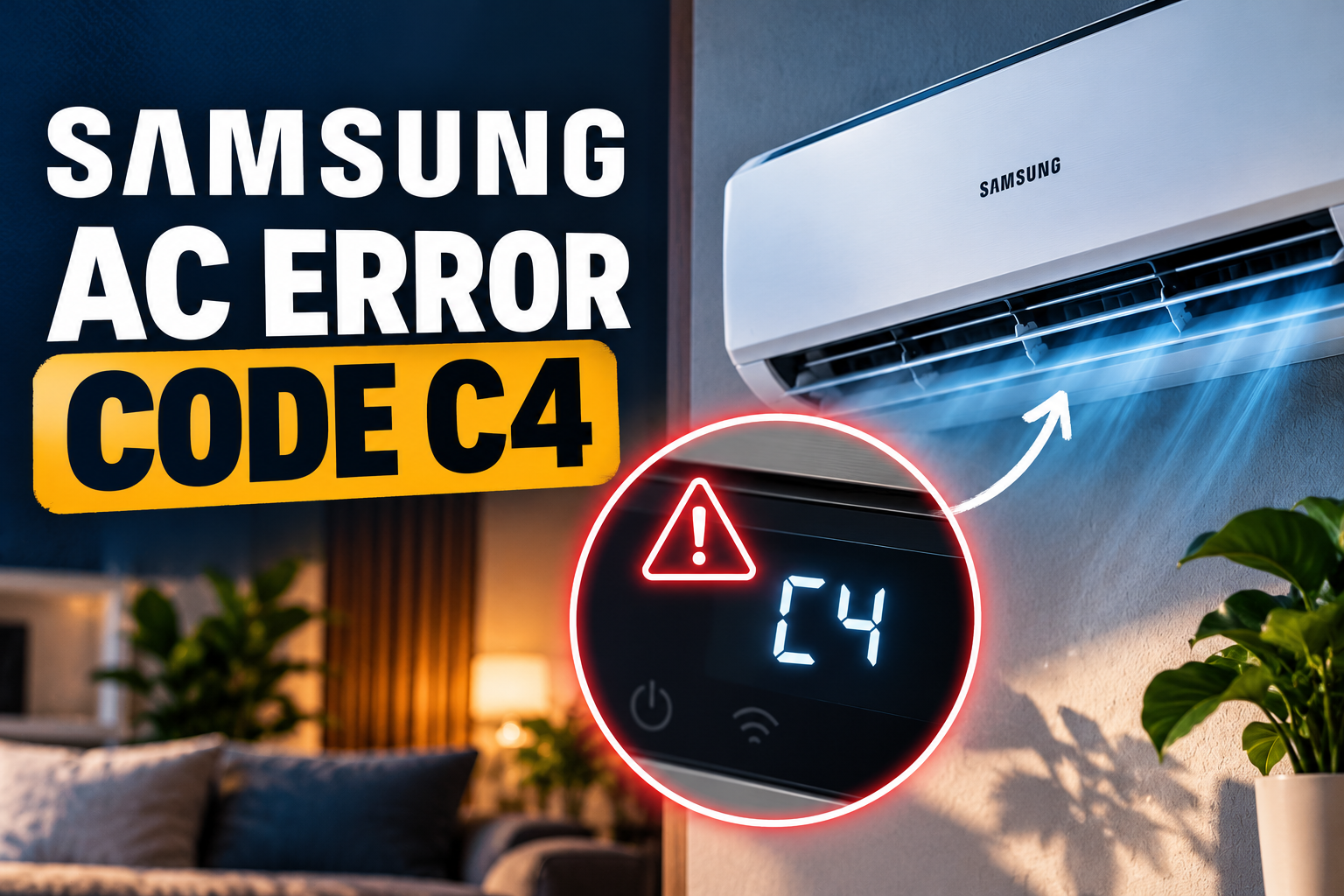
What Does the Samsung AC C4 Error Mean?
The C4 indication does not have one universal meaning across every Samsung air conditioner. Its meaning can vary according to the model, product generation, and additional digits shown on the display. Some models use a C4 prefix within a longer diagnostic code, while other models use different error reporting conventions.
When the error appears, you may notice that the indoor unit stops blowing cold air, the display flashes repeatedly, or the air conditioner shuts down after running briefly. These symptoms indicate that the unit needs attention, but they do not identify the failed component on their own.
The distinction matters because a sensor fault, refrigerant circulation problem, and control system fault require different repairs. Replacing a component based only on the C4 prefix can waste money and leave the underlying issue unresolved.
Before troubleshooting, record the complete code, including any digits that appear alternately on the display. Find the model number on the unit’s identification label and consult the manual for that exact model.
Samsung AC Error Code C4: Likely Causes
The cause depends on the complete diagnostic code and your air conditioner model. The following are possible causes to investigate, not confirmed diagnoses for every Samsung unit displaying C4.
1. A Temperature Sensor Fault
Some Samsung air conditioners use temperature sensors called thermistors to measure the temperature of the indoor heat exchanger and other parts of the system. The control board uses these readings to regulate cooling and protect the equipment.
A sensor that has failed, become disconnected, or developed a wiring problem may provide incorrect temperature readings. Depending on the model and the full error code, this can cause abnormal operation or a shutdown.
A technician can test the sensor’s electrical resistance against the manufacturer’s specifications and check its wiring. The complete diagnostic code must be confirmed before linking a sensor fault to the C4 indication.
2. A Refrigerant Circulation Problem
Your air conditioner relies on refrigerant circulating between the indoor and outdoor units to transfer heat. A refrigerant leak, restricted flow, or problem with a valve can interfere with cooling and cause the system to operate outside its intended conditions.
You may notice weak cooling, unusually long running times, or frost forming on the indoor coil. These symptoms can have other causes, including restricted airflow, so they do not prove that refrigerant is low.
A qualified air conditioning technician can check operating pressures, temperatures, and the refrigerant circuit. Do not open refrigerant lines or add refrigerant based on the C4 display alone.
3. A Communication or Control System Fault
The indoor and outdoor units exchange control signals so their fans, compressor, and other components operate in the correct sequence. If communication is interrupted or a control component malfunctions, the air conditioner may stop working or display a diagnostic code.
Possible contributing factors include a power interruption, damaged wiring, a loose connection, or a faulty control board. These are general possibilities for air conditioner faults and should not be treated as the established meaning of C4 on your particular model.
If the error appeared after electrical work, a power surge, or installation, tell the technician. Diagnosing control wiring and circuit boards requires appropriate electrical testing and should not involve opening energized equipment.
4. Restricted Airflow or a Dirty Filter
Dust on the indoor filter can reduce airflow across the heat exchanger. When insufficient air passes through the coil, cooling performance may decline and the coil can become unusually cold under certain operating conditions.
A blocked filter may contribute to poor cooling, but there is insufficient information to conclude that it is responsible for the C4 error. Filter cleaning is a useful maintenance step, although Samsung’s diagnostic codes vary by model.
Check whether the filter is visibly dusty and whether the indoor air outlet is obstructed. Cleaning the filter according to your model’s manual is reasonable, but a persistent error requires further diagnosis.
5. An Installation or Electrical Supply Problem
Incorrect wiring, an unsuitable electrical supply, or a poor connection can interfere with an air conditioner’s operation. Problems may become apparent after installation, maintenance, or repeated power interruptions.
Look for clues such as the error appearing immediately after the unit starts, the display resetting unexpectedly, or the circuit breaker tripping. None of these symptoms confirms a specific C4-related fault, but they can help a technician identify where to begin.
If the breaker trips repeatedly, you notice a burning smell, or you hear electrical buzzing accompanied by abnormal operation, switch off the unit and seek qualified assistance. Do not repeatedly reset a tripping breaker or attempt to repair the electrical supply yourself.
Samsung AC Error Code C4: How to Fix
Start with simple checks that do not require opening the appliance or handling internal electrical components. Some faults may clear with a model-appropriate reset, while others require electrical or refrigeration testing.
1. Record the Complete Error Code
Before switching the air conditioner off, observe the display long enough to see whether additional digits appear. Write down the entire sequence, including any letters or numbers that alternate on the screen.
Some models display a C4 prefix alongside two additional digits. Those digits form part of the diagnostic code and help determine the appropriate troubleshooting procedure.
Find the model number on the unit’s identification label, usually located on the indoor or outdoor unit. Use that information to locate the correct manual through Samsung Support.
This step is particularly useful because it prevents you from applying instructions intended for a different air conditioner model.
2. Perform a Safe Power Reset
A temporary operating fault may sometimes clear after a reset. However, a reset will not repair a damaged sensor, refrigerant leak, faulty control board, or persistent electrical problem.
If the unit shows no signs of electrical damage and its manual permits a reset, follow these steps.
-
Switch off the air conditioner using the remote control.
-
Isolate its power at the dedicated breaker or accessible isolator, provided you can do so safely.
-
Wait for the interval specified in the model’s instructions.
-
Restore power and restart the unit.
-
Observe whether the error returns.
Never open the electrical compartment or touch exposed wiring. If the breaker trips, the unit smells burnt, or the error returns immediately, switch it off and arrange service rather than repeating the reset.
3. Clean the Indoor Air Filter
A dirty filter can restrict airflow and reduce cooling performance. Although this may not explain the C4 code itself, cleaning the filter is useful maintenance when cooling is weak or airflow seems reduced.
Turn the unit off and follow the manual’s instructions for removing the filter. Wash or vacuum it only as permitted by the manufacturer, then allow it to dry completely before reinstalling it.
Make sure the filter is seated correctly and that furniture, curtains, or other objects are not blocking the air inlet or outlet.
Restart the unit only if it is otherwise safe to operate. If C4 remains on the display, continue with model-specific diagnosis rather than assuming the filter was the cause.
4. Check for Visible Signs of Cooling or Drainage Problems
With the unit switched off, look for visible signs such as water dripping from the indoor unit, ice on accessible coil surfaces, or unusual noise from the outdoor unit. Do not remove covers or touch refrigerant pipes.
These observations can help a technician narrow down the problem. Ice may indicate restricted airflow or a refrigerant-related fault, while water leakage may indicate a condensate drainage issue. Neither symptom confirms the meaning of C4 without the complete code.
If ice is present, stop cooling operation and allow the unit to defrost naturally. Do not chip away the ice or apply direct heat. If the problem returns, have the system inspected before continuing to use it.
5. Arrange Sensor, Wiring, or Refrigerant Diagnosis
If the error persists, a qualified air conditioning technician should identify the code and test the relevant components. Depending on the model and diagnosis, this may involve checking temperature sensor readings, inspecting control wiring, testing the electronic control board, or evaluating refrigerant circulation.
A proper diagnosis should establish the failed component or underlying condition before parts are replaced. If refrigerant is suspected, the technician should investigate possible leaks and determine whether the refrigerant charge and circulation meet the manufacturer’s specifications.
Avoid buying a sensor, control board, or refrigerant based solely on the C4 prefix. The wrong repair can increase costs without resolving the fault.
6. Contact a Qualified Samsung AC Technician
Professional service is necessary if the complete code remains unclear, the error repeatedly returns, the air conditioner stops cooling, or a reset fails to resolve the issue.
Contact Samsung support or a qualified technician familiar with your model. Provide the full error code, model number, and details about when the fault occurs. Mention any recent installation, electrical work, or maintenance, as this information may help narrow the diagnosis.
If the unit trips its breaker, produces a burning smell, or shows signs of electrical damage, leave it switched off until it has been inspected.
Wrap-Up
The Samsung AC C4 error cannot be diagnosed reliably from the first two characters alone. The complete code and model number are essential because diagnostic systems vary across different air conditioner models.
Start by recording the code, checking the manual, and performing only the safe maintenance steps applicable to your unit. If the error persists, professional testing can distinguish a sensor fault from a control, electrical, or refrigeration problem. This approach helps you avoid unnecessary parts replacement and identify the appropriate repair.
For further guidance, consult Samsung’s official air conditioner support page.