The cause may be a temporarily overloaded drum, a mechanical obstruction, a wiring problem, or a faulty motor-related component. Before arranging a repair, you can perform a few safe checks to determine whether the problem is related to the laundry load or requires professional attention.
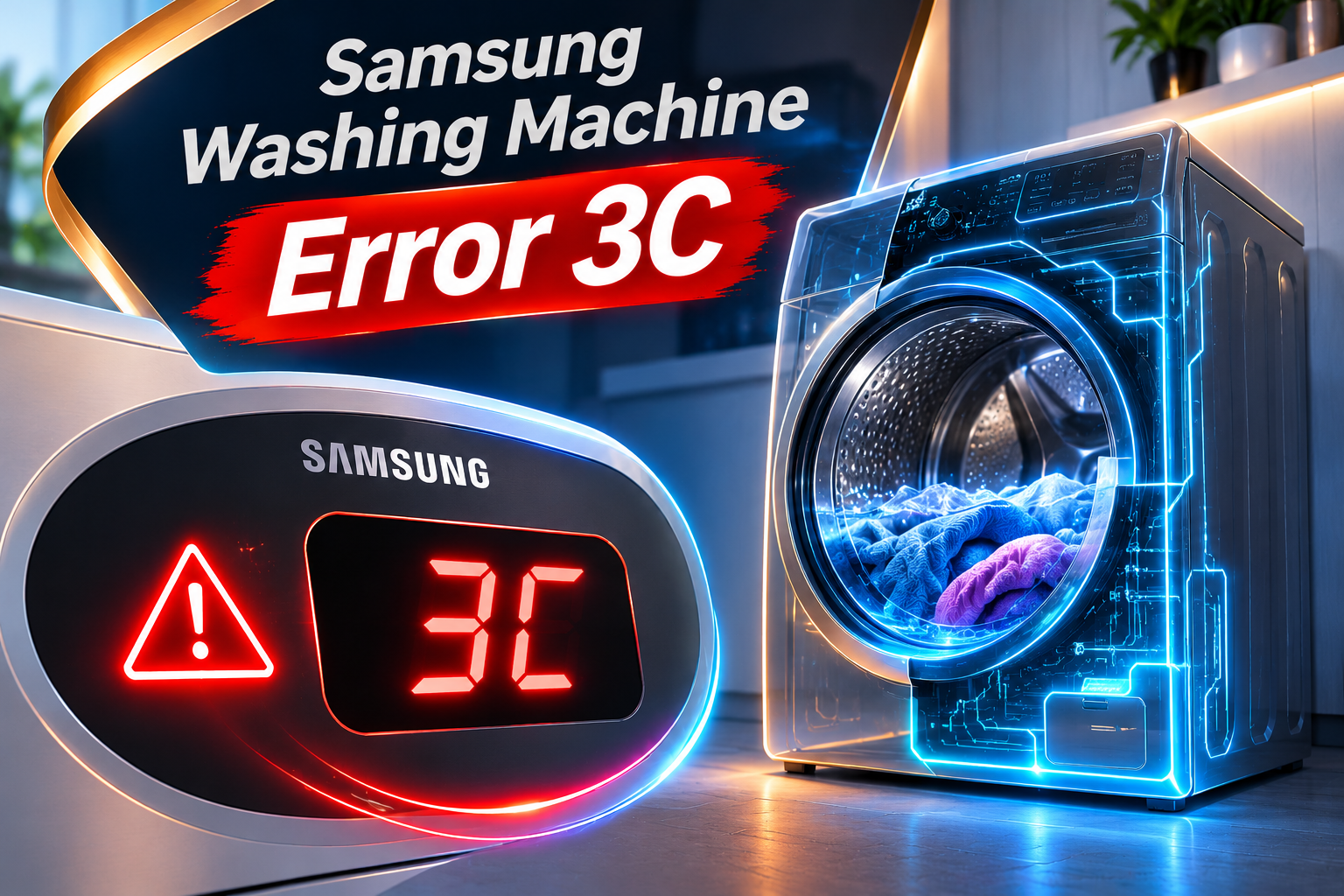
What Samsung Washing Machine Error 3C Means
Samsung washing machines use a motor to rotate the drum during washing and spinning. The electronic control system monitors motor operation and may stop the cycle when it detects that the motor is not operating as expected.
The 3C error generally points to a motor-related problem. Depending on the model, the issue may involve the motor itself, its electrical connections, the control board, or a condition that prevents the drum from rotating properly.
You may notice that the drum stops turning, the machine makes repeated attempts to start, or the error appears shortly after the wash cycle begins. In some cases, the washer may fill with water normally but fail when it tries to agitate or spin.
A single error does not automatically mean the motor needs replacement. An overloaded drum or a temporary operating problem may produce similar symptoms. If the code returns after the basic checks, further diagnosis is necessary.
Samsung Washing Machine Error 3C: Common Causes
Several problems can interfere with motor operation. Identifying the likely cause helps you avoid replacing expensive components unnecessarily.
1. Overloaded Washing Machine
Putting too many clothes into the drum can make it difficult for the motor to rotate the load. Heavy items such as wet towels, jeans, and bedding place additional strain on the motor, particularly during spinning.
The washer may attempt to turn the drum several times before stopping and displaying the 3C error. This is more likely when the drum is tightly packed or the load contains several heavy items.
Reduce the load to the capacity recommended in the owner’s manual. If the machine operates normally with a smaller load, overloading may have contributed to the problem.
2. Jammed Drum or Mechanical Obstruction
A foreign object trapped between the drum and the surrounding tub can prevent normal rotation. Small items such as coins, bra wires, or metal fasteners may become lodged in places where they interfere with drum movement.
You might hear scraping, clicking, or grinding sounds before the machine stops. In some cases, the drum may struggle to turn or remain stationary.
A mechanical obstruction should be investigated before replacing the motor. Never reach into the machine while it is connected to power, and do not force a drum that appears jammed.
3. Faulty Motor or Motor Components
The motor provides the force needed to rotate the washing machine drum. If the motor develops an electrical or mechanical fault, the drum may fail to start, stop unexpectedly, or struggle under load.
Depending on the model, the fault may involve the motor windings, rotor, or other motor-related components. Some machines use digital inverter motors, while others have different motor arrangements, so the exact repair depends on the design.
A technician can test the motor and associated components to determine whether the motor itself has failed. Replacing it without confirming the diagnosis can lead to unnecessary expense.
4. Damaged Wiring or Electrical Connections
The motor relies on electrical connections to receive power and communicate with the control system. Loose connectors, damaged wiring, or corroded terminals can interrupt normal motor operation.
This problem may cause the washer to stop intermittently or display the error when the drum attempts to accelerate. The fault can become more noticeable during spinning because the motor’s operating demands change.
Internal wiring should be inspected by a qualified technician with the appliance safely disconnected from power. Do not remove electrical covers or attempt to repair motor wiring yourself.
5. Faulty Control Board or Motor Control Circuit
The electronic control board coordinates the washing machine’s functions and regulates motor operation. If the board or its motor control circuitry develops a fault, the drum may not respond correctly to the selected cycle.
A control problem can produce symptoms similar to a defective motor, making diagnosis difficult without proper testing. The washer may stop shortly after starting or repeatedly display the same code even when the drum is not overloaded.
A technician should check the motor, wiring, and relevant control circuitry before deciding whether the board needs replacement.
Samsung Washing Machine Error 3C: How to Fix
You can begin with simple checks that do not require opening the washing machine. If the error persists, avoid dismantling the appliance because motor and control system repairs require appropriate tools and technical knowledge.
1. Reduce the Laundry Load
If the drum is heavily packed, remove some clothes and redistribute the remaining items evenly.
Follow these steps.
-
Switch off the washing machine.
-
Wait until the drum has stopped completely.
-
Open the door only when the machine unlocks normally.
-
Remove enough laundry to bring the load within the recommended capacity.
-
Untangle the remaining clothes and spread them evenly around the drum.
-
Restart the wash or spin cycle.
If the washer operates normally with a smaller load, excessive weight may have contributed to the error. If the code returns with a modest load, investigate other possible causes.
2. Check for a Jammed Drum
Switch off the washing machine and disconnect it from power before performing any external checks. If the drum is accessible and safe to inspect, look for visible objects that may be obstructing its movement.
Check the laundry for coins, metal fasteners, or other loose items. Remove anything that can be reached safely without dismantling the machine.
If the drum appears jammed, makes grinding sounds, or will not move normally, do not force it. An object may be trapped between the drum and tub, requiring professional removal.
3. Perform a Safe Power Reset
A temporary control interruption may sometimes affect the washing machine’s operation. A power reset can help clear a temporary fault, although it will not repair a damaged motor or control board.
-
Turn off the washing machine using its controls.
-
Disconnect it from power if the plug is accessible and safe to reach.
-
Wait approximately one minute.
-
Restore power.
-
Select a suitable cycle and observe whether the drum starts turning normally.
If the 3C error returns, avoid repeatedly resetting the machine. A persistent motor-related error requires further investigation.
4. Check the Drum’s Movement
With the machine switched off and disconnected from power, check whether the drum appears to have unusual resistance or excessive movement, provided your model’s design permits a safe external check.
A drum that turns abnormally, scrapes against another surface, or appears loose may indicate a mechanical problem. Normal resistance can vary between models, especially those with different motor and drive arrangements.
Do not remove the rear panel, reach into internal components, or attempt to turn a jammed drum by force. If you notice unusual resistance or movement, arrange professional servicing.
5. Check the Installation and Operating Conditions
An unstable washing machine can vibrate excessively during spinning. Although an uneven floor is not necessarily the direct cause of a 3C error, excessive movement may complicate normal operation.
Check that the washer stands firmly on a solid, level surface. If it rocks when gently pressed at the corners, consult the installation manual for instructions on adjusting the leveling feet.
Avoid placing loose objects beneath the feet or moving a heavy appliance alone. If the machine vibrates violently or moves across the floor, stop the cycle and arrange an inspection.
6. Contact a Qualified Washing Machine Technician
If the 3C error continues after reducing the load, checking for visible obstructions, and performing one safe reset, professional diagnosis is the appropriate next step.
A technician can test the motor, inspect the wiring and connectors, and examine the motor control circuitry. Depending on the model, additional checks may be necessary to determine whether the motor or another component has failed.
Provide the technician with the model number, a photograph of the error display, and details about when the problem occurs. Mention any unusual noises, burning smells, or previous repairs.
Stop using the machine if you notice smoke, a burning smell, electrical damage, or violent mechanical movement. If the washer is under warranty, contact the manufacturer’s service department before authorizing major repairs.
Wrap-Up
Samsung washing machine error 3C generally indicates a problem with motor operation. An overloaded drum, mechanical obstruction, damaged wiring, faulty motor, or control circuit problem may explain the symptoms, but the exact cause depends on the model and diagnostic results.
Start by reducing the laundry load, checking for visible obstructions, and performing one safe power reset. If the drum still fails to rotate or the error returns, arrange professional servicing rather than replacing parts without testing them. A confirmed diagnosis helps prevent unnecessary repair costs and gets your washing machine back to normal operation safely.