Before replacing any parts, check the model number and confirm the code in the corresponding service manual. This helps prevent unnecessary repairs and makes it easier to identify the underlying fault.
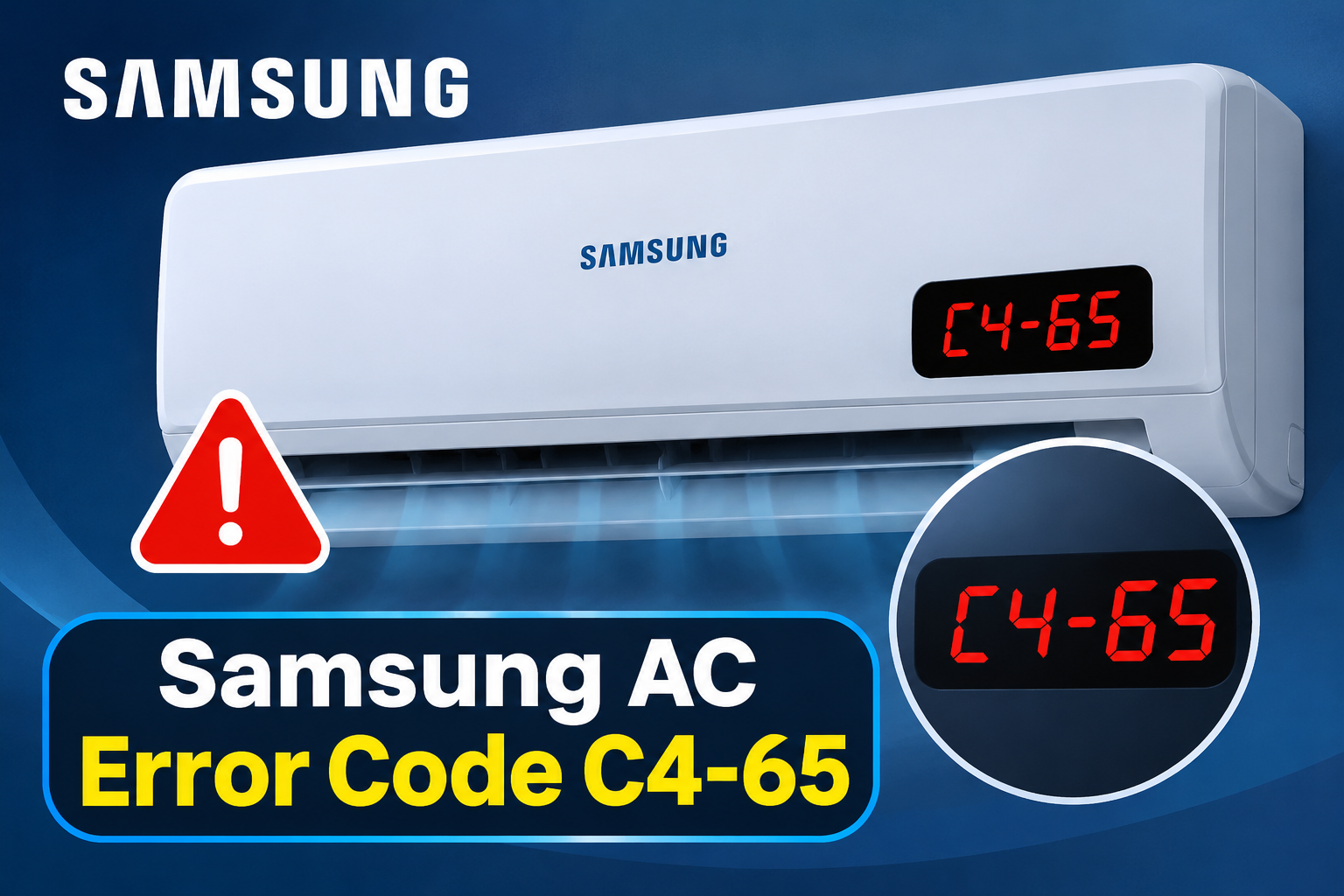
What Samsung AC Error Code C4-65 Means
Samsung air conditioners monitor their electrical circuits, sensors, fans, compressors, and other components to detect abnormal operating conditions. When the control system identifies a problem, it may display an error code and stop some or all cooling functions to protect the equipment.
The first detail to establish is whether the display shows C4-65, C465, or C4 alternating with 65. Some Samsung models display longer diagnostic codes in separate portions. The complete code matters because similar-looking codes can indicate different faults.
The exact meaning of C4-65 must be confirmed using the service information for your specific unit. Certain Samsung commercial air conditioning systems include C465 among their diagnostic codes, but that does not establish that every Samsung split air conditioner displaying a similar code has the same problem.
Common symptoms that may accompany a control or compressor-related fault include the following.
-
The indoor unit starts, but the room does not cool.
-
The outdoor unit fails to start or stops shortly after starting.
-
The display flashes the same code repeatedly.
-
Cooling stops unexpectedly, even though the remote control settings appear normal.
-
The air conditioner runs briefly after a reset before the fault returns.
These symptoms are clues rather than proof of a particular failed component. A damaged sensor, poor electrical connection, faulty control board, or compressor protection condition can require very different repairs.
If you notice burning smells, smoke, repeated electrical tripping, or unusual overheating, switch off the air conditioner at its dedicated breaker if you can do so safely. Do not keep restarting it in an attempt to clear the fault.
Samsung AC Error Code C4-65: Common Causes
Several faults can produce similar shutdown symptoms, so the displayed code alone may not identify the failed part. The following are possible causes to investigate after confirming the code against your model’s service manual.
1. Unstable Power Supply
An unstable electrical supply can interfere with the air conditioner’s electronic controls. Sudden voltage changes may cause a protection circuit to stop the compressor or another component to prevent electrical damage.
This possibility deserves attention if the error appears after a power outage, generator changeover, or noticeable fluctuation in household electricity. However, the timing of the fault does not prove that the power supply is responsible. A technician may need to measure the incoming voltage under operating conditions and compare it with the manufacturer’s specifications.
2. Faulty Compressor or Inverter Control Circuit
Inverter air conditioners use electronic circuitry to regulate compressor speed according to cooling demand. The control system monitors electrical conditions and may stop operation when it detects an abnormal current or voltage condition.
A compressor that struggles to start, an inverter power module that has failed, or a damaged electronic connection may produce related symptoms on some models. These are distinct faults, so a technician must identify the exact code before selecting a repair.
3. Damaged Wiring or Electrical Connections
A loose connector, damaged cable, or deteriorated terminal can interrupt signals between components. Heat, vibration, moisture, and previous repair work can contribute to connection problems.
An intermittent fault may disappear temporarily after the unit is restarted, then return when the compressor begins operating. A qualified technician can inspect the relevant connections with the power safely isolated and check them against the wiring diagram. Do not remove electrical covers or handle internal wiring yourself.
4. Defective Sensor or Current Monitoring Circuit
Sensors help the air conditioner monitor temperatures and electrical operating conditions. If a sensor provides an implausible reading or its monitoring circuit develops a fault, the control system may stop operation or display an alarm.
The precise sensor involved depends on the code assigned to the model. A sensor error should be confirmed through the manufacturer’s diagnostic procedure rather than assuming that every C4-related code indicates a temperature sensor failure.
5. Faulty Electronic Control Board
The control board processes signals from sensors and other circuits, then coordinates the compressor, fans, and protective functions. A defective board can interrupt normal operation or misinterpret a signal from another component.
However, replacing the board before testing the connected components can waste money. A technician should establish whether the board itself is defective or is responding correctly to a separate fault, such as abnormal current, a damaged connection, or a failed component.
Samsung AC Error Code C4-65: How to Fix
You can safely perform a few external checks before arranging a repair. These steps may eliminate simple operating problems, although they cannot repair a failed compressor or internal electronic component.
1. Confirm the Complete Error Code
Start by recording exactly what appears on the indoor unit display or wired controller. Take a photograph or short video if the characters alternate, and check whether the display reads C4-65, C465, or a different combination.
Next, locate the model number on the unit’s identification label or product documentation. Use that number to find the correct Samsung manual or contact Samsung support for help interpreting the code.
This step matters because the meaning of a code can vary between product families. Confirming the code before ordering parts can save you from replacing a component that has nothing to do with the fault.
2. Check the Airflow and Outdoor Unit
Restricted airflow can reduce cooling performance and contribute to abnormal operating conditions. A dirty indoor filter or debris obstructing the outdoor unit can make heat transfer less effective.
With the air conditioner switched off, clean the removable filters according to the instructions in your owner’s manual. Allow them to dry fully before reinstalling them. Also check from a safe distance that leaves, rubbish, or stored items are not blocking the outdoor unit’s air inlet or outlet.
Do not remove the outdoor unit’s electrical covers, reach into its fan, or spray water into its electronic compartments. If the code remains after these basic checks, further diagnosis is necessary.
3. Perform One Safe Power Reset
A temporary control interruption can sometimes leave an air conditioner displaying an error even after the original condition has cleared. A reset may help determine whether the problem was temporary, but it will not repair a defective component.
Follow these steps.
-
Turn the air conditioner off using its normal controls.
-
If there are no signs of electrical damage, switch off its dedicated breaker if you can do so safely.
-
Leave the power off for approximately one minute, unless the model’s manual specifies another procedure.
-
Restore power and start the unit using its normal controls.
-
Observe whether the error returns and whether the indoor and outdoor units operate normally.
If the code reappears, switch the unit off and arrange professional diagnosis. Avoid repeated resets, especially if the breaker trips or the compressor repeatedly attempts to start.
4. Check the External Power Supply
If the fault began after a power interruption or generator changeover, consider whether the electrical supply is stable. Observe whether other household equipment is also experiencing unusual power interruptions, but do not treat this as proof of an air conditioner fault.
A properly rated electrical protection device may be appropriate for some installations, depending on the model’s requirements and the quality of the supply. Have a qualified electrician verify the installation and select suitable protection equipment. Avoid choosing a stabilizer solely by guesswork or assuming that it will correct every compressor or inverter fault.
If the supply is confirmed to be within specification and the code persists, the next step is component-level diagnosis.
5. Arrange Professional Electrical and Compressor Testing
If the preceding checks do not resolve the error, an HVAC technician should follow the diagnostic procedure for the exact Samsung model. Depending on the confirmed code, this may involve reading stored fault information, measuring supply voltage, checking electrical connections, testing current sensing, or evaluating the compressor and inverter circuitry.
These tests require appropriate instruments and training. Inverter air conditioners can contain hazardous voltages even after the power has been disconnected, so internal testing and component replacement are not suitable DIY tasks.
Ask the technician to identify the failed component before authorizing replacement. If the diagnosis points to a control board or compressor, request an explanation of the test results and confirmation that the replacement part matches the unit’s model and specifications.
6. Contact an Authorized Samsung Service Provider
Professional service is the appropriate next step if the error returns immediately after a reset, the air conditioner repeatedly shuts down, or the exact meaning of the code remains uncertain.
Provide the technician with the model number, a photograph of the display, the circumstances in which the fault began, and the results of your external checks. Mention any recent electrical interruptions or previous repairs.
If the unit is still covered by warranty, contact Samsung before allowing an independent repairer to replace major components. This helps you understand the available service options and avoid unnecessary work.
Wrap-Up
Samsung AC error code C4-65 needs to be identified against the correct model documentation before a repair can be chosen. Power interruptions, wiring problems, sensor faults, and compressor control issues can produce overlapping symptoms, so replacing parts based on the display alone is unreliable.
Start with the complete error code, the model number, basic airflow checks, and one safe power reset. If the fault persists, leave internal electrical and compressor testing to a qualified technician. A confirmed diagnosis gives you a clearer idea of the repair required and helps prevent further damage from repeated operation.