Your Quooker tap has been working perfectly for months, maybe even years. Then one day, you press the button expecting that reassuring blue glow, and nothing happens. The light stays dark.
This can feel frustrating, especially if you depend on that little indicator to tell you your filtered water is ready. But here’s what you need to know: a dead blue light doesn’t always mean something expensive or complicated is broken. Most times, it’s a simple fix you can handle yourself.
This guide walks you through why that blue light stops working and exactly what you can do to bring it back to life. You’ll learn about the common culprits behind this issue and get step-by-step solutions that take just minutes to try.
What the Blue Light Actually Does
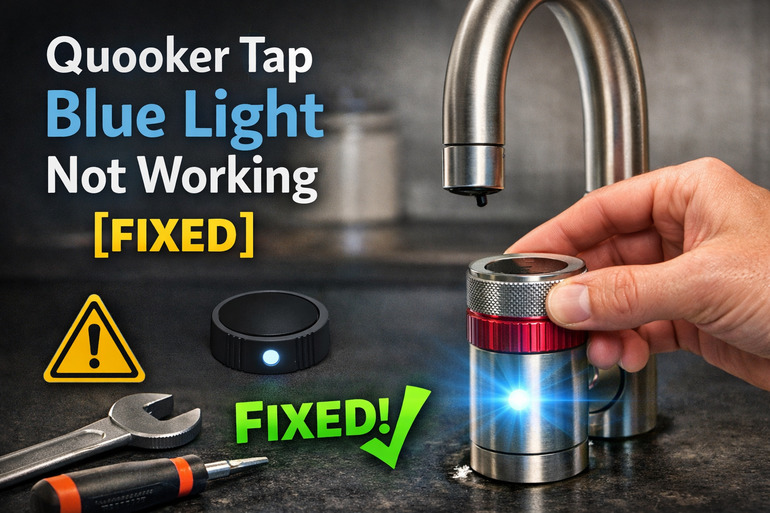
That blue light on your Quooker tap isn’t there just for looks. It serves a real purpose. The light tells you when filtered, chilled water is available to pour. Different Quooker models use this indicator in slightly different ways, but the core function stays the same.
When the light goes off, your tap might still dispense water. This confuses a lot of people. They think the whole system is broken. But in many cases, the water functions keep working fine even though the light has failed. The light itself is a separate component, usually an LED bulb connected to a small circuit board inside the tap body.
Over time, these small electrical parts can wear out or lose connection. Moisture sometimes gets where it shouldn’t. Electrical contacts can corrode. The LED itself might simply reach the end of its lifespan. All of these scenarios are fixable, and most don’t require calling in a professional.
If you ignore a non-working indicator light, you won’t know when your filtered water is actually ready. You might pour expecting cold, filtered water and get something else. That defeats the purpose of having a smart tap system in the first place.
Quooker Tap Blue Light: Likely Causes
Several things can make that blue light stop working. Most of them are electrical or connection-based rather than mechanical. Let’s look at what might be going on inside your tap.
1. LED Bulb Has Burned Out
LEDs last a long time, but they don’t last forever. If your tap has seen heavy use over several years, the bulb itself might have simply reached its end. This happens gradually, so you might notice the light getting dimmer before it goes out completely.
LED bulbs can fail faster if they’ve been exposed to heat or moisture repeatedly. Since your tap deals with both hot and cold water, temperature changes can shorten the bulb’s life. Manufacturing defects can play a role too, though that’s less common with Quooker’s quality standards.
You might have noticed the light flickering before it stopped working entirely. That’s usually a clear sign the bulb was on its way out. Once it fails, replacing it brings the light right back.
2. Loose or Corroded Electrical Connection
The blue light connects to the tap’s internal wiring through small contact points. These connections can loosen over time, especially if your tap gets bumped or moved during cleaning. Even a slight separation between contacts stops the electrical flow that powers the light.
Corrosion is another big issue. Water vapor can creep into places it shouldn’t, and over months or years, this moisture causes metal contacts to corrode. Corroded contacts can’t conduct electricity properly, so your light goes dark even though the bulb itself is fine.
3. Faulty Circuit Board
Inside your Quooker tap sits a small circuit board that controls the light and other electronic functions. This board can develop problems just like any other electronic component. Solder joints can crack from repeated heating and cooling cycles. Components on the board can fail.
Circuit boards are sensitive to moisture. If water has gotten inside the tap housing, it could have damaged the board’s circuits. This type of failure is less common than a burned-out bulb or loose connection, but it happens.
When the circuit board fails, you might notice other issues beyond just the light. Buttons might not respond correctly, or the tap might behave unpredictably.
4. Power Supply Issues
Your Quooker system needs electricity to work. If there’s a problem with the power supply getting to your tap, the light won’t work. This could be as simple as a tripped circuit breaker or a loose plug connection at the tank underneath your sink.
Sometimes the issue is with the transformer that converts your home’s voltage to what the tap needs. These transformers can fail, cutting power to the entire system. You’ll usually notice other problems along with the dead light if this is the case.
Check whether your tap’s other functions are working. If nothing responds when you press buttons, power supply is a strong suspect.
5. Water Damage to Internal Components
Taps live in wet environments, but the internal electronics should stay dry. If a seal has failed or if water has leaked past protective barriers, it can damage the delicate parts that control the light. This type of damage can be hard to spot without taking the tap apart.
Water damage often causes corrosion and short circuits. You might see white or green residue on metal parts if moisture has been getting in. The damage can happen slowly over time or suddenly if there’s been a leak.
Your tap might still work for water delivery even with water damage to the light circuit. The systems are somewhat separate, which is why one can fail while the other keeps functioning.
Quooker Tap Blue Light: DIY Fixes
Now that you understand what causes the problem, let’s fix it. These solutions start with the easiest and move toward more involved repairs. Try them in order for the best results.
1. Check the Power Connection
Start with the simplest possible fix. Go under your sink and locate the Quooker tank. Look at where the power cord plugs in, both at the tank and at the wall outlet. Make sure everything is firmly connected.
Unplug the system completely and wait about 30 seconds. This lets any residual power drain away. Then plug everything back in firmly. You’d be surprised how often this simple reset fixes electronic glitches.
While you’re down there, check your circuit breaker panel. Find the breaker that controls your kitchen outlets. Make sure it hasn’t tripped. If it has, flip it off completely and then back on.
2. Clean the Tap’s Contact Points
Turn off power to your Quooker system before you do this. Then carefully remove the tap’s top section where the light sits. Most Quooker taps have a removable top that twists or unclips.
Once you can access the interior, look for small metal contact points where wires connect. These might have a thin layer of corrosion or gunk on them. Use a clean, dry cloth to gently wipe these contacts. For stubborn corrosion, a tiny bit of rubbing alcohol on a cotton swab works well.
Make sure all connections are pushed together firmly. Sometimes a contact has simply worked loose and needs to be reseated. After cleaning and checking connections, reassemble the tap and restore power.
3. Replace the LED Bulb
If cleaning contacts didn’t help, the bulb itself might be dead. You’ll need to order a replacement LED from Quooker or an authorized parts supplier. Make sure you get the exact model that matches your tap.
Replacing the bulb means taking apart the tap’s upper section. Here’s how:
- Turn off power to the system
- Remove the decorative cap or top piece of your tap
- Locate the small LED bulb inside
- Carefully disconnect the old bulb from its socket
- Connect the new bulb in its place
- Reassemble everything in reverse order
The bulb should light up immediately when you restore power. If it doesn’t, the problem lies elsewhere in the electrical system.
4. Inspect and Dry Out Internal Components
Water inside your tap’s electronics causes all sorts of problems. If you suspect moisture has gotten in, you need to dry things out. Turn off the power and disassemble the tap carefully.
Look for any signs of water droplets, condensation, or corrosion inside the housing. Use a clean, lint-free cloth to wipe away any moisture you find. A hairdryer on the cool or low setting can help dry hard-to-reach spots. Never use high heat, as this can damage plastic components.
Pay special attention to the circuit board if you can see it. Look for any signs of corrosion or water damage. If you see white crusty deposits, gently clean them away with rubbing alcohol on a cotton swab. Let everything dry completely before reassembling and testing.
5. Test with a Different Power Source
Sometimes the transformer that powers your Quooker system starts to fail. It might provide inconsistent voltage that keeps the light from working properly. If you have a voltage tester or multimeter, you can check whether the right amount of power is reaching the tap.
Testing requires some electrical knowledge, so skip this if you’re not comfortable with it. You’re checking whether the voltage at the tap matches what the manufacturer specifies. If the voltage is low or absent, the problem is with the power supply, not the tap itself.
Replacing a faulty transformer means getting a new one from Quooker. This part connects at the tank under your sink and usually has clear labeling showing the model number.
6. Contact a Quooker Technician
If none of these fixes work, something more serious might be wrong. The circuit board could be damaged beyond simple repair, or there might be a defect that needs professional attention. At this point, your best move is calling a qualified Quooker technician.
Professional repair makes sense for issues that require special tools or deep knowledge of the system’s wiring. Technicians have access to diagnostic equipment and replacement parts that aren’t available to regular users. They can also check your system’s warranty status, which might cover the repair.
Don’t feel bad about calling for help. Some repairs really do need an expert’s touch. What matters is getting your tap working properly again.
Wrap-Up
That dark blue light on your Quooker tap usually points to something fixable. Start with the easy stuff like checking power connections and cleaning contacts. These simple steps solve the problem more often than you’d think.
If basic fixes don’t work, you might need a new LED bulb or deeper cleaning to remove moisture damage. Most of these repairs take under an hour and cost very little. But if the issue persists after trying everything, a qualified technician can diagnose and fix whatever’s wrong. Your tap will be glowing blue again before you know it.