That blinking sense light on your Maytag washer just turned your simple laundry day into a puzzle. One minute everything was fine, the next minute you’re dealing with a flashing light that seems to mock every attempt at washing clothes.
Here’s the thing—that little light is actually trying to help you. It’s your washer’s way of saying “Hey, something’s not right here, and I need you to figure it out before we can get back to business.”
The good news is that most sense light problems are easy fixes. You don’t need to call a repair guy or spend a fortune on parts. Just a little detective work and some basic troubleshooting will get your washer back to doing what it does best.
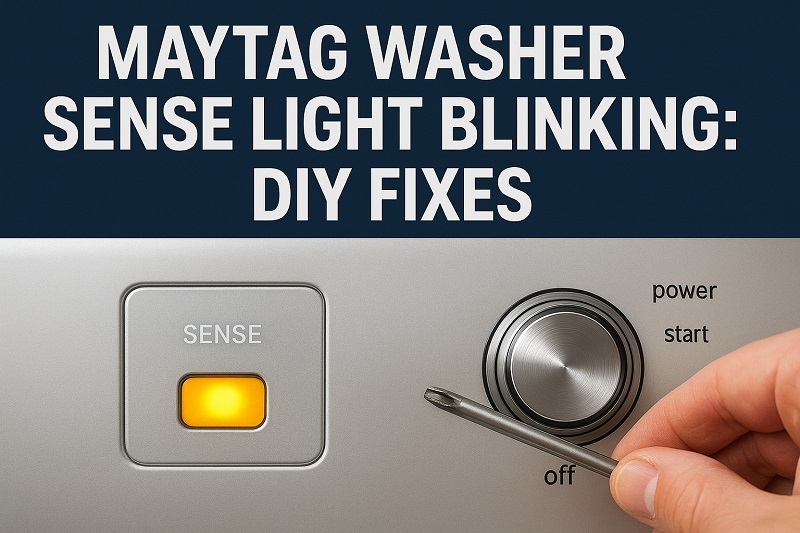
What’s Really Going On With That Blinking Light
Your Maytag washer has a pretty smart system built into it. Before every wash, it runs what’s called a sensing cycle. Think of this as your washer taking a moment to size up the situation—how many clothes are in there, how much water they need, and what kind of wash cycle will work best.
When that sense light starts blinking, it means this smart system hit a roadblock. Maybe it can’t figure out how much water to use, or maybe something is preventing it from getting an accurate reading of your load. Either way, your washer is stuck in the thinking phase and can’t move forward.
The blinking usually happens right at the start of your wash cycle, during those first few minutes when you hear the machine making those initial sounds. Different types of blinking can mean different things, but most of the time it’s your washer saying “I’m confused about this load.”
You might be tempted to ignore it and hope it goes away, but that’s not a great idea. When your sensing system isn’t working right, your clothes won’t get clean properly. Plus, forcing your washer to work around sensing problems can cause bigger mechanical issues that cost real money to fix.
Maytag Washer Sense Light Blinking: Common Causes
Most blinking sense lights come from a handful of common problems. Once you know what usually goes wrong, you can zero in on the real culprit instead of trying random fixes.
1. You’ve Stuffed Too Much In There
This is the big one. Most people think their washer can handle way more than it actually can. When you pack that drum full of clothes, your washer’s sensing system gets completely thrown off. It’s trying to figure out how much water to add, but there’s barely any room for water to move around.
Uneven loads mess things up too. Ever try washing a heavy blanket with a few t-shirts? Your washer can’t make sense of that kind of lopsided weight distribution. The sensing system knows something heavy is in there, but it can’t figure out the right water level or how hard to agitate.
Even loads that start out balanced can shift around during the wash. All your clothes end up bunched on one side, creating an unbalanced mess that triggers the sense light. Your washer basically gives up and asks for help.
2. Water Pressure Issues
Your washer expects water to flow at a certain speed. When water pressure is too low, it takes forever for the tub to fill, and the sensing system gets tired of waiting. It times out and starts blinking because something obviously isn’t right.
Too much water pressure creates the opposite problem. Water rushes in so fast that the sensors can’t keep up. They’re trying to measure and calculate, but everything is happening too quickly. The result is the same—a confused sensing system and a blinking light.
3. Gunked Up Sensors
Over time, your water level sensor collects all kinds of nasty stuff. Lint from your clothes, soap scum from detergent, and general grime all build up on this important part. When the sensor is dirty, it can’t get accurate readings.
Liquid detergent is particularly bad about leaving sticky residue behind. This gummy buildup acts like a coating over your sensors, blocking them from working properly. Your washer thinks it’s getting weird readings and responds with that blinking light.
If you have hard water, mineral deposits make the problem even worse. These crusty white buildups stick to everything and create barriers that prevent your sensors from doing their job correctly.
4. Lid Switch Problems
Your washer won’t start its sensing cycle if it thinks the lid is open. A broken or worn-out lid switch sends mixed signals to your washer’s brain. The machine starts the sensing process, then gets interrupted by false “lid is open” messages, so the sense light starts blinking.
Front-loading washers have door locks that can cause similar headaches. When these locks don’t click into place properly or send spotty signals, your washer’s sensing system gets confused. It starts and stops over and over, never finishing the sensing cycle.
The tricky thing about lid switch problems is they often work sometimes but not others. Your washer might run perfectly through some cycles while failing completely on others, making it hard to figure out what’s wrong.
5. Computer Brain Freeze
Your washer has a control board that acts like its computer brain. Sometimes this brain has a temporary glitch, just like your laptop might freeze up occasionally. Power surges, electrical hiccups, or just random electronic weirdness can cause the sensing cycle to malfunction.
These computer problems often fix themselves with a simple restart, but sometimes they get stuck in a loop. Your control board keeps trying to complete the sensing cycle but never succeeds. That blinking light just keeps going and going, no matter what you do.
Maytag Washer Sense Light Blinking: DIY Fixes
Time to roll up your sleeves and fix this thing. These solutions work for most blinking sense light problems, and you can do them all yourself with basic tools and a little patience.
1. Fix Your Load Size and Balance
Open up that washer and take a hard look at what you’ve crammed in there. Can your clothes move around freely, or are they packed in like sardines? Your washer drum should be about two-thirds full at most, with plenty of room for everything to swish around.
If you’ve overloaded it, pull out some clothes and save them for the next load. Spread the remaining clothes evenly around the drum so the weight is balanced. Heavy items like towels and jeans should be mixed with lighter stuff, not all bunched together.
Big items like comforters need special treatment. Wash them alone or with just a couple of small things to keep everything balanced. Your sensing system needs to feel consistent weight all around the drum, not random heavy spots that throw everything off. Close the lid and try starting your cycle again.
2. Give Your Washer a Brain Reset
Pull the plug on your washer and leave it unplugged for at least five minutes. This complete power reset clears out any electronic hiccups and gives your control board a fresh start. It’s the same idea as restarting your phone when it starts acting weird.
Plug it back in and pick a regular wash cycle. Let your washer run through its sensing phase without opening the lid or messing with anything. Your machine needs time to recalibrate its sensors and get back to normal operation.
This simple reset fixes a surprising number of sensing problems. Many washers just need a chance to clear their electronic memory and start fresh. Don’t be surprised if your sense light problem disappears completely after this quick fix.
3. Clean That Dirty Sensor
Your water level sensor is usually located under the top panel or somewhere near the main tub. Check your owner’s manual to find the exact spot on your model. Make sure you unplug the washer before you start poking around in there.
Use a soft cloth and some mild dish soap to gently clean the sensor. You want to remove all that built-up lint, soap scum, and general gunk that’s interfering with proper operation. A cotton swab works great for getting into small spaces and cleaning around connection points.
Rinse everything with clean water and dry it completely before putting your washer back together. Even tiny drops of water can mess with sensor readings, so take your time with the drying step. Run a test load after you’re done to see if the cleaning solved your problem.
4. Check Your Lid Switch
Press down on your lid switch and listen for a solid click sound. A good switch makes a clear, definite click every time you press it. If it feels mushy or doesn’t make any sound, there’s probably something wrong with the internal mechanism.
Clean around the switch area with a dry cloth, getting rid of any lint or crud that might be preventing good contact. Sometimes just removing built-up grime is enough to get the switch working properly again.
A loose or unreliable switch usually needs to be replaced. This isn’t a super complicated job, but make sure you get the right part for your exact model number. Using the wrong switch can create new problems even if it seems to fit okay.
5. Check Your Water Supply
Turn on a sink faucet near your laundry area to test your water pressure. If the flow seems weak or sputtery, that could be throwing off your washer’s sensing timing. Your machine expects steady, consistent water pressure to work properly.
Take a look behind your washer and make sure both the hot and cold water valves are turned all the way open. Partially closed valves restrict water flow and confuse the sensing system. These valves should turn easily—if they’re stuck, you might need to replace them.
Look over your water supply hoses for any obvious kinks, clogs, or damage. Even small restrictions can mess up the timing your sensing system depends on. Replace damaged hoses right away, because they tend to get worse fast and can cause flooding if they burst.
6. Time to Call in the Pros
If you’ve tried all these fixes and that sense light is still blinking at you, there’s probably something more serious going on inside your washer. Problems with the control board, motor issues, or complicated sensor malfunctions need professional tools and know-how to fix safely.
Wrap-Up
Most blinking sense lights come from pretty basic problems that you can handle yourself. Load issues, dirty sensors, and simple system glitches account for the majority of these headaches.
Working through these fixes step by step saves you money and gets your laundry routine back on track. Your washer’s sensing system is built to last for years, so taking care of these small issues now prevents bigger, more expensive problems later on.