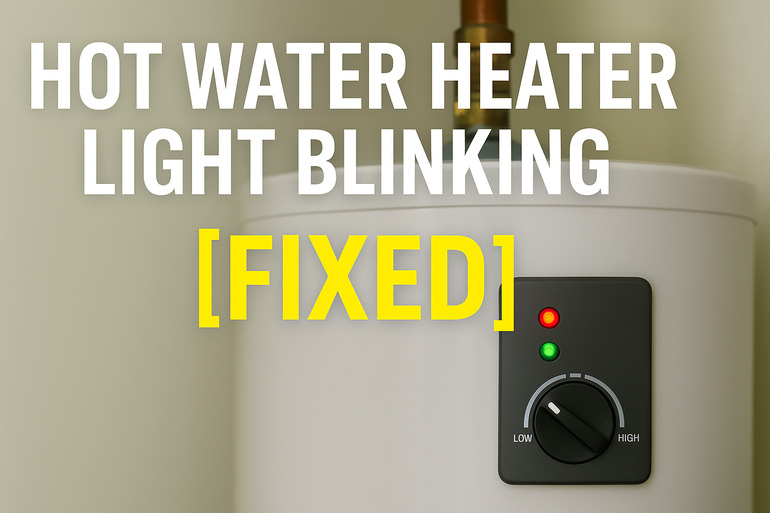
Your hot water heater has this little light on it, and suddenly, it starts blinking. You probably walked past it a dozen times before you even noticed. Now that you see it flashing away, you can’t help but wonder if something’s wrong.
That blinking light isn’t just there to look pretty. It’s actually your water heater trying to tell you something. Sometimes it’s a small issue you can fix yourself in minutes, and other times it might need a bit more attention.
What That Blinking Light Really Means
Your water heater’s blinking light works like a code. Different manufacturers use different patterns, but most of them follow a similar idea. The light blinks a certain number of times, pauses, and then repeats. This pattern tells you what’s going on inside your heater.
Think of it like your heater’s way of talking. Since it can’t actually speak or show you words, it uses that little light to send messages. Each blink pattern matches up with a specific problem. Your owner’s manual usually has a chart that shows what each pattern means.
Most modern gas water heaters have this feature built right in. The light sits near the gas control valve, usually down at the bottom of the tank. If your light is blinking steadily or in a specific pattern, it means the heater detected something off. The heater might still work, or it might have shut itself down completely to stay safe.
Here’s what could happen if you ignore that blinking light. Your heater might stop making hot water altogether. Worse, some problems could lead to gas leaks or carbon monoxide issues if they’re related to combustion. Other times, you might just end up with lukewarm showers until you fix whatever triggered the light.
Hot Water Heater Light Blinking: Common Causes
Several things can make that light start flashing. Let’s look at what usually triggers this warning so you know what you’re dealing with.
1. Dirty Flame Sensor
Your flame sensor is a small metal rod that sits right in the flame when your heater fires up. It checks to make sure there’s actually a flame burning. Over time, this sensor gets covered with soot, dust, and other gunk from the combustion process.
Once the sensor gets too dirty, it can’t detect the flame properly anymore. Your heater thinks the flame went out even though it’s still burning, so it shuts everything down as a safety measure.
This happens gradually. You might notice your water isn’t as hot as usual before the light starts blinking. The buildup happens faster if you have hard water or if your heater is in a dusty basement or garage.
2. Faulty Thermocouple or Thermopile
These parts work together to control your gas valve. The thermocouple is an older style component, while the thermopile is what newer heaters use. Both do the same basic job. They create a small electrical current when they get hot, which tells the gas valve it’s safe to stay open.
If these parts wear out or break, they stop making enough electricity. Your gas valve gets confused and shuts off the gas supply. That’s when the blinking starts.
3. Gas Supply Problems
Sometimes the issue isn’t with your heater at all. Your gas line might not be delivering enough gas to keep things running smoothly. This could be because the main valve isn’t fully open, there’s air in the line, or the gas pressure is too low.
Your heater needs a steady flow of gas at the right pressure to work correctly. If it’s not getting what it needs, the control board picks up on this and triggers the warning light. Low gas pressure can make your pilot light flicker or go out completely, which sets off the safety system.
4. Blocked Air Intake or Exhaust Vent
Your heater needs fresh air to burn gas properly, and it needs a way to get rid of the exhaust afterward. If either path gets blocked, your heater can’t function safely. Birds might nest in the vent pipe, lint can build up if your heater is near the laundry area, or debris can get sucked into the air intake.
A blocked vent means dangerous gases can’t escape. Your heater’s safety system picks up on this pretty quickly. The blinking light appears, and the heater shuts down before anything dangerous can happen.
This problem shows up more often in winter when small animals look for warm places to nest. Even a partial blockage can trigger the warning because your heater is really sensitive about proper ventilation.
5. Control Board Glitch
Your heater’s control board is basically its brain. It monitors everything, controls the gas valve, manages the ignition, and yes, makes that light blink when something’s wrong. Like any electronic component, these boards can develop issues over time.
Power surges can damage the circuits. Moisture can cause corrosion. Sometimes a wire connection gets loose and causes weird behavior.
Control board problems can be tricky because they might make the light blink even when everything else is working fine. The board might be misreading sensors or getting confused about what’s happening inside the heater.
Hot Water Heater Light Blinking: DIY Fixes
You’ve got options before calling a repair person. Many of these fixes are simple enough to try yourself. Let’s walk through what you can do.
1. Clean the Flame Sensor
Turn off the gas supply to your heater first. This is usually a valve on the gas line going into the heater. Turn it so it’s perpendicular to the pipe.
Find the flame sensor. It’s typically a thin metal rod positioned where the flame burns. You’ll need to remove a cover panel to reach it. Use a piece of fine-grit sandpaper or steel wool to gently clean the sensor. Rub it until you see shiny metal instead of the dark buildup.
Put everything back together, turn the gas back on, and relight your pilot. This fix works surprisingly well because the sensor really just needs to be clean to do its job. You should notice the blinking stop once the heater goes through a heating cycle or two.
2. Check Your Gas Supply
Walk over to your main gas shutoff valve and make sure it’s fully open. The handle should be parallel to the pipe. If it’s even slightly closed, open it all the way.
Check if other gas appliances in your house are working normally. Your stove burners should light easily, and the flames should be blue. If they’re yellow or orange, or if they seem weak, you might have a pressure issue with your gas supply.
Look at your pilot light too. A healthy pilot flame should be about half an inch tall and mostly blue with a little yellow at the tip. If it’s weak, flickering, or mostly yellow, there’s probably an issue with gas flow. Sometimes you just need to wait a few minutes for air to clear out of the line after turning the gas back on.
3. Clear the Vents
Go outside and find where your water heater vents to the outdoors. Look for any obvious blockages at the opening. Birds’ nests, leaves, or other debris should be removed carefully.
Check the air intake opening too. This is usually near the bottom of your heater. Make sure nothing is covering it or restricting airflow. Even a cardboard box sitting too close can cause problems.
If you have a direct-vent system, both the intake and exhaust might be on the outside wall. Clean both openings. Inside, make sure the area around your water heater is clear. Stored items, laundry, or clutter can interfere with proper air circulation even if the vents themselves are clear.
4. Reset the Control System
Many times, a simple reset can clear up electronic glitches. Find the gas control valve on your heater. It usually has a dial with settings like “On,” “Off,” and “Pilot.”
Turn this dial to “Off” and wait five minutes. This gives the control system time to fully power down. After waiting, turn it back to “Pilot” and relight following the instructions on your heater. Once the pilot is lit, turn the dial to “On.”
This process clears the error code causing the blinking. Think of it like restarting your phone when it’s acting weird. The reset lets the control board start fresh and check all the sensors again. If the original problem was temporary, the blinking should stop.
5. Test the Thermocouple or Thermopile
These parts can be tested, but it requires a multimeter if you want to be thorough. However, you can do a basic check without special tools. Light your pilot and watch how long it stays lit after you release the button.
If the pilot goes out immediately or within a few seconds, your thermocouple or thermopile probably needs replacing. These parts are fairly inexpensive and available at hardware stores. Replacing them involves shutting off the gas, disconnecting the old part, and installing the new one.
The connections are usually just compression fittings or screw terminals. Take a photo before you disconnect anything so you can see how it goes back together.
6. Contact a Licensed Plumber or HVAC Technician
If you’ve tried these fixes and your light is still blinking, it’s time to call someone who works with water heaters every day. Some problems need specialized tools or knowledge. A control board replacement, for instance, isn’t something most people should tackle on their own.
Gas appliances can be dangerous if something goes wrong. A professional can diagnose the exact issue, replace parts safely, and make sure your heater meets local codes. They can also spot other potential problems while they’re there. Your safety is worth the service call if you can’t solve it yourself.
Wrapping Up
That blinking light on your water heater is actually doing you a favor. It’s letting you know something needs attention before a small problem becomes a big one. Most of the time, the fix is simpler than you’d expect.
Start with the easy stuff. Clean that sensor, check your gas valve, clear any blockages. These quick checks solve a lot of blinking light problems. If your heater keeps signaling an issue after you’ve tried these fixes, bring in someone who fixes these things for a living. Your hot showers will be back before you know it.