You’re halfway through installing trim in your living room when your Dewalt nail gun decides to throw a tantrum. That little light starts blinking like a Christmas decoration, and suddenly your trusty tool won’t cooperate. Sound familiar?
I’ve been there more times than I care to count. After fixing nail guns for over a decade, I can tell you that flashing light usually means something simple that you can fix yourself in just a few minutes.
Here’s what I’m going to show you: exactly what that blinking light means, why it happens, and the step-by-step fixes that actually work. No fancy tools needed, no trip to the repair shop.
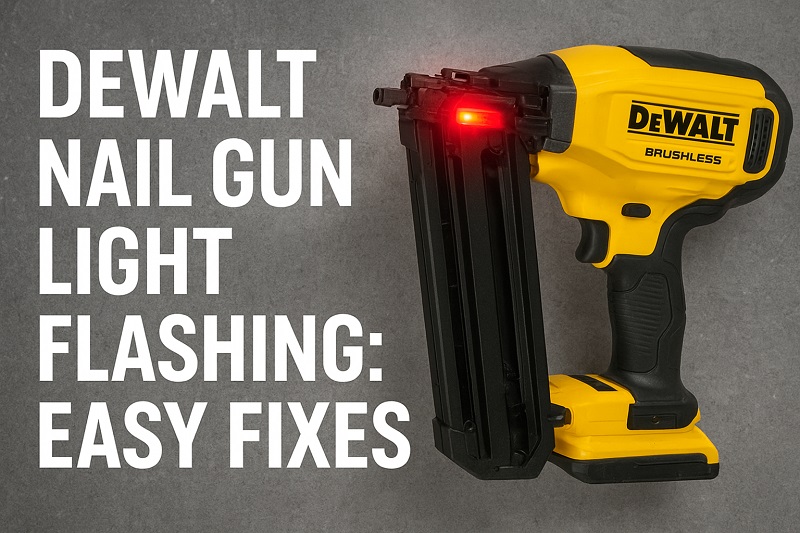
What’s Really Going On When That Light Starts Blinking
Your nail gun’s LED light is basically its way of talking to you. Think of it like your car’s check engine light, but way more helpful. Instead of leaving you guessing, it’s giving you a heads up about what’s wrong before things get worse.
Most Dewalt nail guns use pretty straightforward signals. Red light flashing? That’s your tool saying “Hey, I need help right now.” Other colors might pop up depending on your model, but red is the big one you’ll see most often. Each pattern tells a different story about what’s happening inside your tool.
Here’s the thing about these safety systems: they’re actually doing you a favor. When that light starts flashing, your nail gun stops working properly on purpose. It’s protecting itself and your project from getting damaged. Better to stop working than to fire nails crooked or jam up completely.
You’ll typically see flashing lights when something’s wrong with your battery, when nails get jammed up inside, or when safety features kick in. Sometimes it’s as simple as the tool getting too hot from heavy use. The key is figuring out which problem you’re dealing with so you can fix it fast.
The pattern matters too. Steady blinking usually means one thing, while rapid flashing tells you something completely different. Once you know what to look for, troubleshooting becomes much easier.
Dewalt Nail Gun Light Flashing: Common Causes
Let me walk you through the usual suspects that make these lights go crazy. In my experience, one of these five things is almost always the culprit.
1. Dead or Dying Battery
This one’s the winner about 60% of the time. Your nail gun needs steady power to work right, and when your battery can’t deliver, that warning light jumps into action.
Sometimes it’s obvious – your battery is just plain dead and needs charging. But here’s where it gets tricky: even batteries that seem fully charged can cause problems if they’re getting old or damaged inside.
I’ve seen plenty of batteries that read full charge but still trigger flashing lights because the cells inside are wearing out. The battery might work fine for a drill but struggle with the higher power demands of a nail gun. Heat damage, drops, and age all play a part in battery health.
2. Nails Stuck in the Magazine
Nail jams are probably the second most common reason for flashing lights. When nails get sideways, bent, or just plain stuck, your tool’s sensors pick up on the problem immediately.
This usually happens when you’re using nails that don’t quite fit right or when damaged nails make it into your magazine. I’ve pulled out some pretty mangled nails from guns over the years – bent ones, rusty ones, even nails that got crushed during shipping.
The feeding mechanism in these tools is pretty precise. Even small bits of debris or slightly oversized nails can throw everything off and trigger those safety warnings.
3. Safety Tip Acting Up
Every nail gun has that spring-loaded tip at the front that has to press against your work before the tool will fire. It’s a great safety feature, but when it gets gunked up or damaged, it causes headaches.
I see this a lot on job sites where there’s sawdust, paint overspray, or adhesive residue floating around. All that stuff builds up around the safety tip and prevents it from moving smoothly. The tool thinks something’s wrong and shuts down.
Sometimes the spring inside gets weak or breaks completely. The tip might look fine from the outside, but internally it’s not working right. Your nail gun’s sensors are smart enough to catch these problems before they cause bigger issues.
4. Tool Getting Too Hot
Heavy-duty work in hot weather can push your nail gun past its comfort zone. These tools have built-in temperature sensors that watch both the motor and electronics for overheating.
When things get too toasty, the protection system kicks in with that flashing light. It’s actually saving your tool from cooking its own circuits. I’ve seen what happens when these safety systems fail – it’s not pretty, and it’s expensive to fix.
This problem shows up most often when you’re doing marathon sessions without breaks, especially driving lots of nails into hardwood or engineered materials that require extra power.
5. Depth Setting Problems
The depth adjustment on your nail gun controls how far nails get driven into your material. When this system gets confused or jammed up, it can trigger warning lights even though everything else seems fine.
Debris loves to collect around the adjustment mechanism. Sawdust, metal shavings, and general grime can prevent smooth operation and confuse the internal sensors. Even something as simple as the adjustment being set wrong for your current job can cause issues.
Dewalt Nail Gun Light Flashing: How to Fix
Ready to get your nail gun back in action? These fixes work for most flashing light problems, and I’ve arranged them in order of what’s most likely to solve your issue.
1. Test Your Battery
Start here because it’s quick and solves the problem more often than anything else. Pull your battery out and really look at it. If there’s a charge indicator, check what it says. But don’t trust it completely – even batteries showing charge can be problematic.
Grab a different battery if you have one and swap it in. If the flashing stops, you found your problem. Clean both the battery contacts and the tool’s battery compartment with a dry rag or old toothbrush. Corrosion and dirt mess with the connection more than you’d think.
Try your original battery in another Dewalt tool if you have one. A battery that works fine elsewhere but causes problems in your nail gun tells you the issue might be with the tool itself, not the battery.
2. Hunt Down Nail Jams
Safety first – pull that battery out before you start poking around inside your tool. Open up the nail magazine and dump out all the nails. This gives you a clear view of what’s happening inside the feeding mechanism.
Look for obvious problems: bent nails, debris, or nails that are clearly the wrong size. Check the nose area too if your model lets you open it up. Sometimes nails get stuck right in the firing chamber, especially after hitting knots or really hard wood.
When you find stuck nails, use pliers to pull them out gently. Don’t force anything – you can damage expensive internal parts that way. Once everything’s clear, reload with fresh nails and make sure they’re feeding smoothly before putting everything back together.
3. Clean That Safety Tip
With the battery still out, take a close look at the contact tip at the business end of your tool. Press it against something and watch how it moves. It should slide in smoothly and pop back out immediately when you lift the tool.
Blast the area with compressed air if you have it. Pay attention to where the tip slides in and out – that’s where gunk loves to hide. For stubborn buildup, use a small brush or cotton swab with some rubbing alcohol to clean the visible parts.
Test the tip’s action on a piece of scrap wood after cleaning. It should feel crisp and responsive. Sluggish movement usually means you need to dig deeper or the internal spring might be wearing out.
4. Give Everything a Break
If you’ve been working hard and suspect overheating, just stop. Pull the battery and let both pieces cool down somewhere with good air flow. Stay away from direct sun or other heat sources – you want them cooling down, not staying warm.
This typically takes 15-30 minutes depending on how hot things got. Use this time to think about your work pace. Continuous heavy use without breaks is the main cause of overheating, especially when you’re working with tough materials.
While you wait, check if your work area is unusually hot or if you’ve been pushing the tool harder than normal. Sometimes backing off the pace slightly prevents future overheating problems.
5. Check Your Depth Setting
Look at your depth adjustment wheel or lever. It should turn or move smoothly through its range without sticking or jumping. If it feels rough, work it back and forth a few times to see if that helps.
Clean around the adjustment mechanism with compressed air or a brush. This area collects more debris than you’d expect, and even small amounts can interfere with proper operation. Make sure your current setting matches what you’re trying to accomplish.
Set the depth for your specific nails and material, then test fire into some scrap wood. The nails should sit just right – flush with the surface or slightly countersunk depending on your needs. Wrong depth settings can confuse the tool’s internal systems.
6. Call in the Professionals
When none of these fixes work, it’s time to admit defeat and contact a Dewalt service center. Internal electronics, worn sensors, or mechanical problems need professional attention. Trying to go deeper than these basic fixes usually makes things worse and can void your warranty.
Wrap-Up
That annoying flashing light doesn’t have to ruin your day or your project. Most of the time, one of these simple fixes will get you back to work in just a few minutes.
Keep your tool clean, use the right nails, and don’t beat it to death with continuous heavy use. A little preventive care goes a long way toward avoiding these problems in the first place. Your nail gun will thank you with years of trouble-free service.