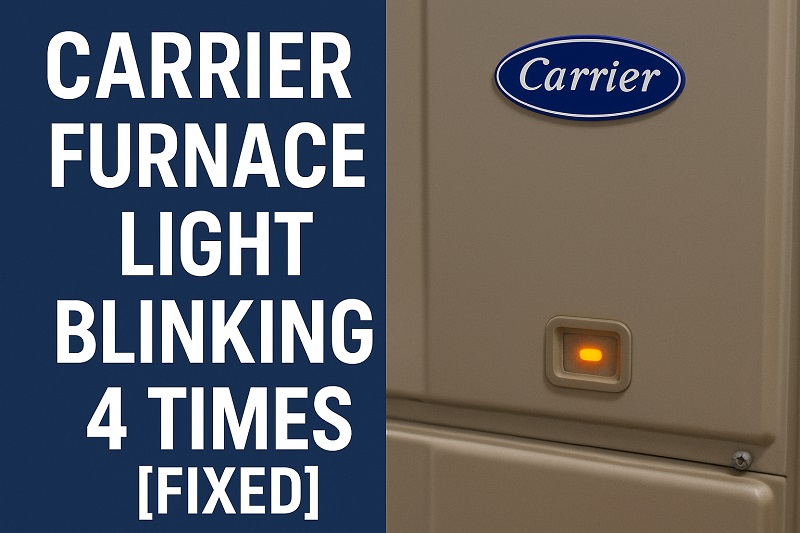
Your furnace has a built-in communication system, and right now it’s trying to tell you something important. That little LED light blinking four times in a row isn’t random. It’s your furnace saying there’s a problem with one of its safety features, and it needs your attention before it can heat your home again.
This particular blink code points to an open high limit switch, which might sound technical, but it’s actually something you can understand and often fix yourself. I’ll walk you through what’s happening inside your furnace, why this error shows up, and the exact steps you can take to get your heat back on.
What the Four Blinks Really Mean
When your Carrier furnace blinks its LED light four times, it’s specifically telling you that the high limit switch has opened. Think of this switch as a temperature guard that sits right next to your furnace’s heat exchanger. Its job is simple but critical: if things get too hot inside the furnace cabinet, this switch trips open and shuts everything down.
Your furnace has this safety feature for good reason. The heat exchanger is where the magic happens, where gas burns and creates the warm air that flows through your home. But if that area gets hotter than it should, you’re looking at potential damage to expensive components or even safety risks. The high limit switch acts like a circuit breaker, cutting power to the burners before temperatures reach dangerous levels.
Once the switch opens, your furnace won’t fire up again until the problem gets fixed. You might notice the blower fan running without any heat coming through your vents, or the furnace might try to start but shut off within seconds. Some homeowners hear the igniter clicking or see the flames light briefly before everything stops. All of these symptoms point back to that same issue: your furnace is overheating, and the high limit switch is doing its job by preventing further operation.
The tricky part is that the switch itself isn’t usually the problem. It’s working exactly as designed. Something else is causing the excessive heat buildup, and that’s what we need to identify and fix. Left unaddressed, this issue can lead to cracked heat exchangers, damaged ignition systems, or a complete furnace breakdown during the coldest weeks of winter.
Carrier Furnace Light Blinking 4 Times: Common Causes
Several different issues can trigger the high limit switch to open. Most of them involve restricted airflow or problems with how your furnace manages heat.
1. Dirty Air Filter Choking Your System
This is hands down the most frequent culprit behind overheating furnaces. Your air filter catches dust, pet hair, pollen, and all sorts of particles floating around your home. Over time, these particles build up and create a dense barrier that blocks airflow. When your furnace can’t pull enough cool air through the return vents, it can’t properly cool the heat exchanger.
Picture trying to breathe through a pillow. That’s essentially what your furnace experiences with a clogged filter. The blower motor works harder, making more noise and using more energy, but less air actually moves through the system. Meanwhile, the heat exchanger keeps getting hotter because there’s not enough air passing over it to carry that heat away.
Most people forget about their filters until something goes wrong. If you have pets or live in a dusty area, your filter might need changing every month. Even in cleaner homes, three months should be the absolute maximum between filter changes.
2. Blocked or Closed Supply Vents
Your heating system needs somewhere for the warm air to go. When too many vents get closed or blocked by furniture, curtains, or storage boxes, pressure builds up inside the ductwork. This creates what’s called static pressure, which reduces overall airflow through the furnace.
Some homeowners close vents in unused rooms thinking they’ll save money, but this actually forces your furnace to work harder and less efficiently. The system was designed to heat your entire home with all vents open. Closing off multiple vents throws off this balance and can cause the heat exchanger to retain too much heat.
3. Blower Motor Running Too Slow
The blower motor is your furnace’s workhorse, responsible for pushing air across the heat exchanger and through your ductwork. When this motor starts failing or gets set to the wrong speed, it can’t move enough air to keep temperatures under control. You might notice weaker airflow from your vents or hear the motor struggling to spin up to full speed.
Sometimes the issue isn’t the motor itself but the capacitor that helps it start and run. A failing capacitor causes the motor to run slower than normal, reducing airflow even though the motor sounds like it’s working. Dust buildup on the blower wheel can also slow things down, creating an imbalance that makes the wheel wobble instead of spin smoothly.
Age plays a role here too. Blower motors typically last 15 to 20 years, but as they near the end of their lifespan, they lose efficiency. The bearings wear out, electrical connections loosen, and performance drops off gradually until the motor can no longer move adequate air volume.
4. Restricted Return Air Path
Your furnace needs to pull in cool air from your home just as much as it needs to push out warm air. If the return air path gets blocked, the whole system suffers. Common culprits include furniture pushed against return vents, accumulated dust inside the return ductwork, or undersized return ducts that never provided enough airflow to begin with.
Some homes have only one or two return vents for the entire house. This creates a bottleneck where the furnace tries to pull more air than the returns can supply. The resulting negative pressure makes it harder for the blower to do its job, leading to reduced airflow and overheating.
5. Dirty or Failing Flame Sensor
The flame sensor monitors your burners to confirm they’re lit properly. When this sensor gets coated with carbon buildup or starts to fail, it can cause erratic furnace behavior. The burners might light and then shut off repeatedly, creating temperature spikes that trip the high limit switch.
This creates a frustrating cycle where the furnace tries to heat, shuts down, cools off enough for the limit switch to reset, then tries again. Each failed heating attempt adds stress to the system and can eventually lead to more serious problems if left unchecked.
Carrier Furnace Light Blinking 4 Times: How to Fix
You can tackle most of these issues without calling a technician. Start with the simplest solutions first, then work your way through the list until your furnace runs smoothly again.
1. Replace Your Air Filter Right Now
Head to your furnace and locate the filter slot. It’s usually near where the return duct connects to the furnace, either on the side or bottom of the unit. Turn off your furnace at the thermostat first, then slide out the old filter. Hold it up to a light. If you can’t see light passing through easily, it needs replacing even if it hasn’t been long since the last change.
Buy filters that match your current size. The dimensions are printed on the filter frame. Don’t cheap out here, but you don’t need the most expensive option either. A MERV 8 to MERV 11 filter balances good filtration with adequate airflow for most homes. Slide the new filter in with the arrows pointing toward the furnace, showing the direction of airflow.
Once the new filter is in place, turn your furnace back on and watch what happens. If a dirty filter was your only problem, the furnace should start heating normally within a few minutes. The high limit switch needs time to cool down and reset, so give it at least 15 minutes before deciding if this fixed the issue.
2. Open Up All Your Vents
Walk through your home and check every single vent. Open them fully, even in rooms you don’t use much. Move furniture, boxes, or anything else sitting within a foot of any vent. Pull back curtains or drapes that might be hanging over floor registers.
Pay special attention to return vents, which are usually larger and have no louvers or dampers. These absolutely must stay clear because they’re how your furnace breathes. Remove any dust buildup you see around the vent openings using a vacuum with a brush attachment.
3. Clean the Blower Compartment
Turn off power to your furnace at the breaker box, not just the thermostat. Locate the blower compartment door, usually on the lower front of your furnace. Remove the door by lifting it up and pulling it out. You’ll see the blower wheel, which looks like a cylindrical cage made of metal fins.
Vacuum out any dust and debris you can reach. If the blower wheel itself is dirty, you can carefully clean between the fins using a soft brush and more vacuuming. Avoid bending any fins or forcing anything between them. Clean the compartment floor and walls too, removing all the accumulated dust.
While you’re in there, look at the blower wheel when you turn the power back on. It should spin smoothly without wobbling or making grinding noises. Any unusual sounds or movements suggest the motor or wheel assembly needs professional attention. Replace the compartment door securely before testing the furnace.
4. Check and Reset the High Limit Switch
The high limit switch is a small round or rectangular device mounted on or near the plenum, which is the large metal box sitting right on top of your furnace. After fixing the airflow issues, this switch might still be open, preventing your furnace from starting.
Turn off power to the furnace. Locate the high limit switch and look for a reset button, which is usually red or white. Press it firmly and hold for a couple seconds. You might hear or feel a click. If there’s no button, the switch should reset automatically once it cools down, which can take 30 minutes to an hour.
5. Clean the Flame Sensor
Turn off the gas supply and power to your furnace. Remove the burner compartment door. The flame sensor is a thin metal rod, about the thickness of a pencil, positioned to sit in the flame when the burners are lit. It’s held in place by a single screw or mounting bracket.
Carefully remove the sensor by loosening its mounting screw. Don’t pull on the wire connected to it. Use fine-grit sandpaper or a dollar bill to gently polish the metal rod portion. You want to remove any white or dark coating without scratching deep into the metal. Wipe it clean with a dry cloth.
Reinstall the sensor in exactly the same position and orientation. Turn the gas and power back on, then test your furnace. The burners should light and stay lit if the sensor was causing your issue.
6. Inspect Your Ductwork
Look at all the visible ductwork you can access, starting from where it connects to your furnace. Check for any crushed sections, disconnected joints, or visible gaps. Pay attention to the main trunk line coming off the furnace. If you see flexible ductwork that’s kinked or compressed, straighten it out.
Feel for airflow at all your supply vents while the furnace is running. If some rooms get barely any air while others get plenty, you might have blockages or leaks in the ductwork serving those rooms. Seal any gaps you find with metal HVAC tape, not regular duct tape which doesn’t hold up to temperature changes.
7. Call an HVAC Technician
If you’ve worked through all these fixes and your furnace still blinks four times, something more complex is going on. The high limit switch itself might be faulty, or you could have a cracked heat exchanger, a failing control board, or undersized ductwork that needs professional evaluation.
A qualified technician has the tools to test components, measure airflow accurately, and diagnose problems that aren’t visible to the eye. Some issues require specialized knowledge about your specific furnace model. Don’t keep resetting the system repeatedly if it won’t stay running, as this can cause additional damage to expensive parts.
Wrapping Up
That four-blink error code might seem intimidating at first, but you now know it’s your furnace protecting itself from overheating. Most of the time, restoring proper airflow solves the problem completely. A fresh filter, open vents, and a clean blower compartment go a long way in preventing this error from coming back.
Make checking your filter a monthly habit, especially during heavy heating season. Keep those vents clear and your furnace will reward you with reliable warmth all winter long. If the problem persists after you’ve tried these fixes, getting professional help ensures your system gets back to working safely and efficiently.